
IoT supply chain metrics that expose hidden risk
author
In renewable energy IoT, hidden supply chain risk rarely appears in brochures—it surfaces in latency, compliance gaps, and field failure. This article examines the IoT supply chain metrics that matter most, from Matter protocol data and Zigbee mesh capacity to IoT hardware benchmarking and smart home hardware testing, helping procurement teams and operators identify verified IoT manufacturers and make smarter sourcing decisions with NHI’s data-driven lens.
For operators managing solar sites, battery storage assets, smart HVAC loads, or distributed energy controls, the real cost of a weak supplier is rarely visible at the quote stage. It appears 3 to 12 months later as unstable telemetry, poor battery endurance, firmware delays, or protocol incompatibility between field devices and energy management platforms.
For procurement teams and commercial evaluators, this creates a difficult question: which metrics actually reveal hidden risk before a purchase order is issued? Price, lead time, and claimed compatibility are not enough. In renewable energy environments, sourcing decisions need engineering-grade evidence that devices will perform across heat, interference, long duty cycles, and mixed-protocol deployments.
Why hidden IoT supply chain risk is growing in renewable energy projects
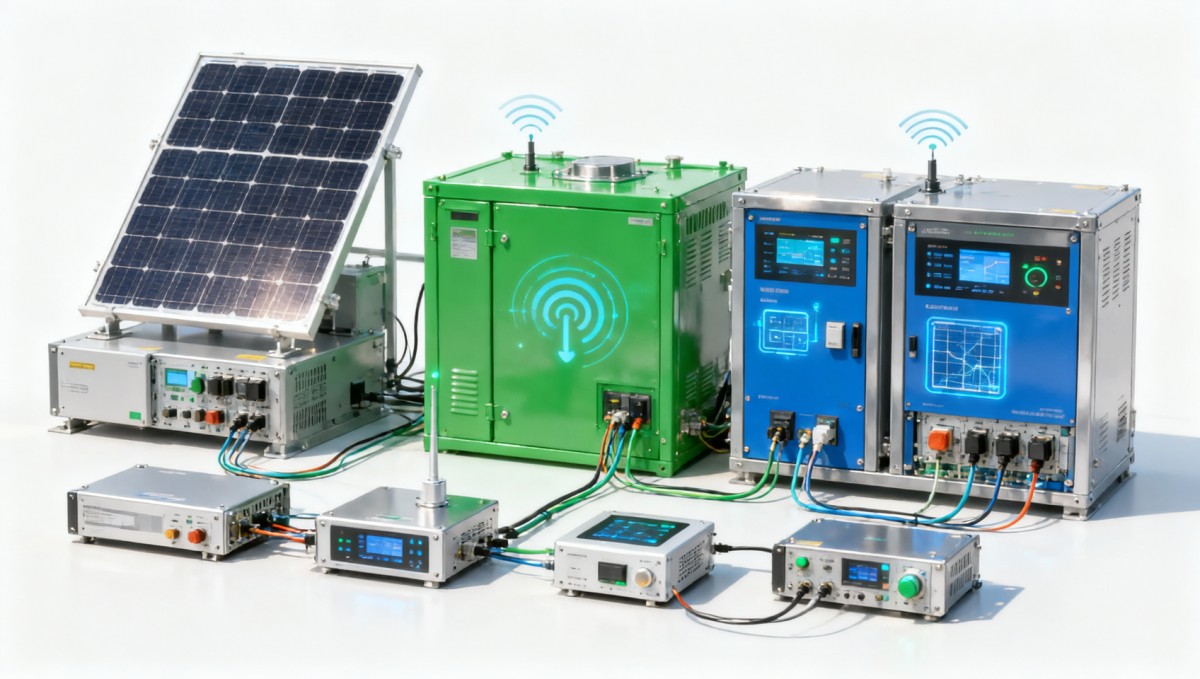
Renewable energy infrastructure is becoming more distributed and more data-dependent. A single project may connect inverters, meters, relays, environmental sensors, smart breakers, HVAC controllers, battery cabinets, and gateway devices across Zigbee, Thread, BLE, Modbus, Wi-Fi, and Ethernet. Once 5 to 7 communication layers interact in one operating environment, weak component quality is exposed very quickly.
This is where NexusHome Intelligence positions itself differently. NHI does not treat supply chain evaluation as a branding exercise. It applies a benchmarking mindset: measuring packet loss, standby power, protocol latency, sensor drift, FRR in access systems, and local processing speed under realistic stress. For renewable energy buyers, that matters because energy optimization depends on reliable data streams, not marketing language.
The risk is especially high in projects where smart home hardware testing overlaps with energy control. Many devices marketed for buildings or homes are later deployed in solar-linked properties, microgrids, and energy-aware commercial sites. A relay that looks acceptable in a demo room may fail when exposed to temperature swings from -10°C to 45°C, 24/7 polling intervals, and dense wireless interference near electrical equipment.
Procurement teams often focus on four visible variables: unit cost, MOQ, lead time, and certification paperwork. Operators, however, experience the hidden variables: reconnect time after a power event, telemetry consistency over 30 to 90 days, battery discharge stability, and firmware update resilience. The gap between those two views is where hidden supply chain risk lives.
In renewable energy IoT, the most expensive failure is not always device replacement. It can be inaccurate energy readings, delayed peak-load response, false alarms, or blind spots in remote asset monitoring. Even a 2% to 5% measurement deviation in distributed monitoring can distort operational decisions when rolled across dozens or hundreds of endpoints.
The operational signals buyers should not ignore
- Recurring packet retries during high-load periods, especially in mixed Zigbee and Thread environments.
- Battery-powered sensors that lose expected life by 20% to 40% after aggressive polling or unstable sleep cycles.
- Firmware release delays longer than 8 to 12 weeks for security patches or protocol updates.
- Protocol claims such as “Matter ready” without measured multi-node latency or compliance validation.
The core IoT supply chain metrics that expose hidden risk
A useful IoT supply chain metric must do more than describe a component. It must predict field performance. In renewable energy use cases, the most valuable metrics are those that reveal whether a device can deliver stable, timely, accurate data under electrical noise, temperature variation, and multi-protocol congestion.
NHI’s five verification pillars are highly relevant here. Connectivity and protocol data show whether an energy device can stay interoperable. Security and access metrics matter for battery rooms, control cabinets, and distributed sites. Energy and climate control metrics influence standby losses and automation efficiency. Hardware-level data reveal manufacturing quality. Wearable and health-tech methods also influence how low-power sensing and long-life batteries are assessed.
For buyers comparing verified IoT manufacturers, the goal is not to collect dozens of data points without context. It is to identify the small set of metrics that most reliably indicate hidden failure modes. The table below summarizes the metrics that most often change supplier selection in renewable energy projects.
The key insight is simple: hidden risk is usually measurable before it becomes visible. A supplier with slightly longer lead time but better benchmark transparency may reduce total field disruption far more than a low-cost supplier with vague claims.
Metrics that deserve extra weight in sourcing decisions
1. Protocol performance under real interference
Renewable energy environments are electrically busy. Testing should simulate high-density radio conditions, metallic enclosures, and periodic power disturbances. Clean-lab results are useful, but field-like stress data are more predictive.
2. Power efficiency in always-on devices
Microwatt-level standby improvements matter when systems remain active for years. This is especially important in battery-backed sensors, off-grid controllers, and auxiliary monitoring devices where maintenance visits are costly.
3. Firmware and compliance responsiveness
A supplier’s ability to deliver validated updates within a reasonable 2 to 8 week window often tells more about long-term reliability than a polished initial sample.
How procurement teams can benchmark suppliers beyond brochures
Procurement in renewable energy IoT should be structured as a staged validation process, not a simple quotation comparison. That means converting engineering requirements into measurable acceptance criteria before RFQ issuance. When this is done well, buyers can filter out high-risk suppliers early and shorten the total decision cycle by avoiding repeated pilot failures.
A practical sourcing workflow usually has 5 steps: requirement mapping, protocol and hardware screening, sample benchmarking, pilot deployment, and commercial negotiation. Each step should include at least 3 to 6 measurable checks. This approach aligns with NHI’s philosophy of turning opaque supplier claims into comparable evidence.
One common mistake is to validate only compliance documents while ignoring use-case fit. A gateway may pass basic connectivity tests yet still perform poorly in a solar-plus-storage installation where packet timing and reconnection behavior matter. Another mistake is to compare devices without normalizing test conditions such as polling interval, transmission power, node count, and ambient temperature.
The table below can be used as a procurement scorecard for operators, sourcing teams, and business evaluators assessing verified IoT manufacturers for renewable energy deployments.
This type of weighted scorecard helps commercial evaluators justify supplier choices internally. It also brings operators into the purchasing conversation early, reducing the chance that field teams inherit devices that were bought mainly on cost and claimed compatibility.
A practical 5-step benchmark process
- Define 8 to 12 measurable operating requirements, including latency, battery life, standby draw, temperature range, and update cadence.
- Request raw benchmark evidence, not only datasheets or declaration sheets.
- Test samples in a controlled setup that mimics actual node density and interference.
- Run a pilot for at least 2 to 6 weeks to observe reconnect behavior, packet stability, and drift.
- Negotiate commercial terms only after technical risk is scored and documented.
Field deployment metrics that matter after installation
A sourcing decision is only successful if devices remain stable after installation. In renewable energy IoT, post-deployment metrics are essential because many issues appear only after the system enters continuous service. This is particularly true for smart relays, environmental sensors, edge nodes, and battery-powered detectors integrated into energy optimization workflows.
Operators should track at least four operational categories during the first 30, 60, and 90 days: communication stability, energy efficiency, measurement accuracy, and maintenance burden. If a supplier performs well only in the first week but degrades under normal duty cycles, that is a supply chain quality issue, not merely a commissioning issue.
Communication stability includes packet delivery rate, time-to-reconnect after voltage fluctuation, and mesh route consistency. Energy efficiency includes actual current draw versus stated current draw. Accuracy includes drift in temperature, occupancy, or energy sensing logic. Maintenance burden includes the number of manual resets, truck rolls, or firmware escalations per 100 deployed units.
These field metrics are also useful for evaluating smart home hardware testing results in renewable contexts. Devices originally intended for residential automation are increasingly used in energy-aware buildings, EV-linked home systems, and prosumer solar environments. That makes real-world benchmarking far more important than nominal specifications.
Recommended post-installation KPI set
- Packet delivery success above 97% to 99% in normal site conditions.
- Reconnection time below 30 to 120 seconds after short power interruptions, depending on device class.
- Measured standby power within a narrow tolerance band against pre-purchase benchmark values.
- Sensor drift review at 30-day intervals and again at 90 days for critical control loops.
- Manual maintenance events kept below a predefined threshold such as 2 to 4 interventions per 100 units per month.
Why this matters for energy performance
When a relay misses timing windows or a sensor drifts beyond acceptable tolerance, the impact is not only technical. It can reduce demand response quality, weaken HVAC optimization, distort battery scheduling, or create unnecessary site visits. In other words, hidden supply chain risk becomes operational cost.
Common sourcing mistakes and how NHI’s data-driven model helps
The first common mistake is equating certifications with field reliability. Compliance is necessary, but it does not reveal how a device behaves during mesh congestion, thermal stress, or long-term battery discharge. In renewable energy projects, those practical behaviors often decide whether a deployment is stable or expensive to maintain.
The second mistake is accepting broad claims such as “ultra-low power” or “works with Matter” without asking for benchmark conditions. Was the test run across a single node or a congested network of 30 nodes? Was standby power measured at default settings or after realistic polling was enabled? Without those details, claims have limited procurement value.
The third mistake is ignoring manufacturing consistency. A supplier may present excellent engineering samples but fail to maintain PCBA precision, component sourcing consistency, or stable firmware control across production lots. This is why batch-level transparency matters. Hidden risk often sits not in the first sample, but in the 500th or 5,000th unit.
NHI’s role is valuable because it functions as an engineering filter between global buyers and manufacturing ecosystems. By converting technical claims into standardized benchmarking data, NHI helps procurement teams compare suppliers on measurable performance rather than presentation quality. That is especially relevant when renewable energy projects must align cost, uptime, compliance, and long service life.
FAQ for buyers and operators
How do I identify a verified IoT manufacturer for renewable energy use?
Ask for benchmark evidence in at least 4 areas: protocol latency, power consumption, environmental durability, and firmware support timing. A credible supplier should be able to explain test conditions, not only outcomes.
Which metric should procurement prioritize first?
If the project depends on remote monitoring or automation, start with communication stability. For battery-powered or off-grid devices, power consumption may be equally important. In most renewable energy projects, at least 3 metrics should be prioritized together rather than reviewed in isolation.
How long should a pilot test run?
A useful pilot usually runs 2 to 6 weeks. Shorter tests can identify obvious failures, but longer observation is often needed to detect drift, reconnect instability, or battery anomalies under real operating schedules.
Can smart home hardware be used in renewable energy systems?
Yes, but only after proper smart home hardware testing under energy-related conditions. Residential-grade claims do not automatically translate to reliable use in smart grids, solar-linked buildings, or battery-integrated properties.
Hidden risk in renewable energy IoT is rarely random. It usually leaves measurable clues in latency, standby draw, sensor drift, update responsiveness, and batch consistency. Teams that evaluate these signals early can reduce commissioning friction, improve uptime, and make supplier decisions with stronger technical confidence.
NexusHome Intelligence brings value by translating fragmented protocol claims and manufacturing narratives into benchmark-driven insight. For operators, procurement leaders, and commercial evaluators, that means clearer supplier comparison and a more defensible sourcing process.
If you are assessing IoT hardware for solar, storage, smart buildings, or distributed energy control, now is the time to move beyond brochures. Contact NHI to explore benchmark-based supplier evaluation, request a tailored assessment framework, or learn more about data-driven sourcing strategies for renewable energy IoT.
Protocol_Architect
Dr. Thorne is a leading architect in IoT mesh protocols with 15+ years at NexusHome Intelligence. His research specializes in high-availability systems and sub-GHz propagation modeling.
Related Recommendations
- NHI Data Lab (Official Account)IoT supply chain metrics that expose hidden risk
- NHI Data Lab (Official Account)How to use an IoT supply chain audit before switching
- NHI Data Lab (Official Account)IoT OEM compliance roster: useful list or false comfort?
- NHI Data Lab (Official Account)Verified IoT manufacturers: what proof should you ask for?
- NHI Data Lab (Official Account)Trusted smart home factories: how to verify them
- NHI Data Lab (Official Account)What a hardware compliance inquiry should uncover
- NHI Data Lab (Official Account)Smart home PCB assembly compliance: where issues start
- NHI Data Lab (Official Account)How to compare IoT PCBA manufacturers with less risk
- NHI Data Lab (Official Account)Is SMT Assembly Right for Smart Home Devices
- NHI Data Lab (Official Account)ESP32 Custom Board Maker: What to Check
Analyst