
Is SMT Assembly Right for Smart Home Devices
author
As smart homes evolve into energy-aware infrastructure, choosing the right manufacturing process matters. From SMT assembly for smart home devices to HVAC integration with Matter, smart home peak load shifting, and smart plug standby power consumption, every PCB decision affects reliability, efficiency, and scale. This guide explores whether SMT assembly is the best fit for performance-driven smart home products in today’s data-focused renewable energy ecosystem.
The short answer is: yes, SMT assembly is the right choice for most modern smart home devices—especially products that need compact design, stable wireless performance, low standby power, and scalable production. But it is not automatically the best fit for every product. The right decision depends on device complexity, thermal profile, serviceability, certification needs, and how the product will be deployed in real homes, buildings, or energy-management systems.
For buyers, engineers, and decision-makers evaluating smart home hardware, the real question is not simply “Is SMT better?” It is whether SMT assembly supports the performance, cost, reliability, and energy targets your device must meet in the field. That is where a practical assessment matters.
What decision-makers really need to know before choosing SMT assembly
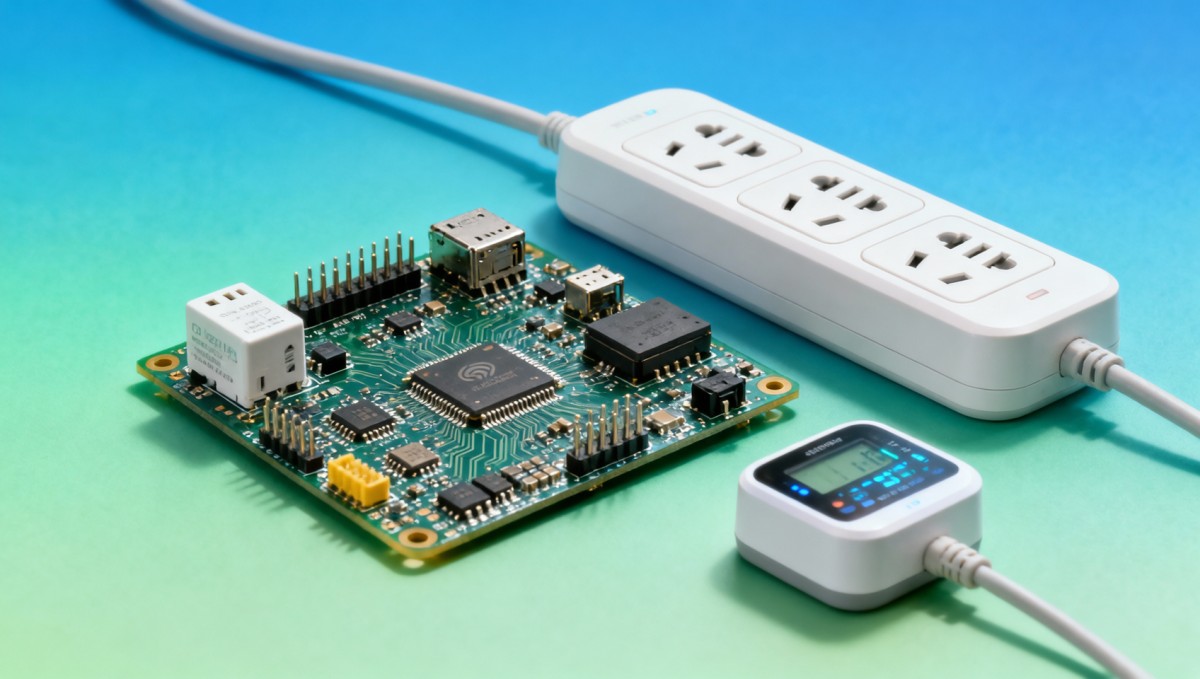
If you are researching SMT assembly for smart home devices, your likely intent is practical: you want to know whether this manufacturing method will improve product quality, reduce risk, and support business goals such as faster scale-up, lower failure rates, and better energy efficiency.
For the target audience in smart home and renewable-energy-related applications, the biggest concerns usually include:
- Reliability: Will the PCB hold up under continuous operation, wireless traffic, and temperature variation?
- Power efficiency: Can the assembly process support low-leakage, low-standby designs for devices such as smart plugs, relays, thermostats, and energy monitors?
- Miniaturization: Can the product remain compact while integrating radios, sensors, control ICs, and protection circuits?
- Production scalability: Can the same design move from prototyping to high-volume manufacturing without major process disruption?
- Cost and ROI: Is SMT assembly economically justified for the product category and expected volume?
- Field performance: Will it support stable operation in real smart home ecosystems using Zigbee, Thread, BLE, Wi-Fi, or Matter?
That means the most useful article is not one that repeats textbook definitions of SMT. It should help readers judge fit-for-purpose value: where SMT clearly wins, where it may not, and what technical checks should be made before committing to a supplier or production strategy.
Why SMT assembly is usually the best fit for smart home devices
Surface Mount Technology is the dominant assembly method for today’s smart home electronics because it aligns with how these products are actually designed and used.
Most smart home devices rely on densely integrated PCBAs that combine microcontrollers, RF modules, power management, sensors, memory, and communication interfaces within a small footprint. SMT supports this architecture far better than traditional through-hole assembly in most cases.
Here is why SMT assembly is typically the right choice:
1. It supports compact, modern product design
Smart thermostats, occupancy sensors, smart switches, gateway modules, and energy monitoring nodes all benefit from smaller PCB layouts. SMT components occupy less board space and allow higher placement density, which is critical when industrial designers and engineers are working within tight enclosure constraints.
2. It improves manufacturing speed and consistency
Automated SMT lines are built for repeatability. For businesses scaling smart home products across markets, this matters. Consistent solder paste deposition, precise component placement, and controlled reflow profiles can reduce variation between batches—assuming the line is well managed and inspection is robust.
3. It is better suited to low-power electronics
Many smart home products remain in standby for long periods while waiting for triggers, commands, or scheduled events. Low standby power is essential in battery devices and increasingly important even in mains-powered products such as smart plugs and relays. SMT enables compact routing, efficient power architectures, and support for modern low-power IC packages that are often unavailable or impractical in through-hole formats.
4. It matches wireless and sensor-heavy device architecture
Devices using Matter, Thread, Zigbee, BLE, or Wi-Fi require careful RF layout, short signal paths, controlled grounding, and dense integration around antennas and chipsets. SMT is far better aligned with these needs than older assembly approaches. For products that must perform reliably in congested smart building environments, PCB layout quality and assembly precision directly affect packet stability, latency, and energy use.
5. It reduces cost at scale
For medium to high production volumes, SMT assembly is generally more cost-effective due to automation, reduced manual labor, and efficient material usage. The cost advantage becomes more obvious for products with many small components and multi-function boards.
When SMT assembly may not be enough on its own
Although SMT is the default choice for most smart home PCBAs, there are cases where relying on SMT alone is not ideal.
Some devices still need a mixed assembly strategy that combines SMT with through-hole or manual insertion for specific parts. Examples include:
- High-current connectors in energy control units
- Large relays in HVAC or load-switching products
- Mechanically stressed terminals
- Transformer-related power sections
- Components exposed to repeated user interaction or installation force
For renewable-energy-adjacent smart home products—such as demand-response controllers, smart EV charging accessories, solar monitoring interfaces, or peak load shifting modules—mechanical and thermal stress can be more significant than in standard consumer IoT devices. In these cases, the best solution is often SMT-led design with selective through-hole reinforcement, not SMT-only design.
So if your product handles mains power, switching loads, or thermal cycling, the question should become: Which sections should be SMT, and which require stronger mechanical anchoring or heat tolerance?
How SMT affects energy efficiency in smart home and renewable energy applications
In energy-aware smart homes, manufacturing decisions are not separate from energy outcomes. The way a PCBA is assembled can influence power consumption, thermal behavior, measurement stability, and long-term control accuracy.
This is especially relevant for products tied to renewable energy and home energy optimization, such as:
- Smart plugs measuring standby loads
- HVAC automation controllers
- Smart relays for demand response
- Battery-backed occupancy sensors
- Energy monitoring gateways
- Load balancing or peak load shifting devices
SMT helps these products in several ways:
Lower standby consumption potential
Modern ultra-low-power regulators, MCUs, PMICs, and RF chipsets are typically available in SMT packages. This gives designers access to components optimized for microamp-level standby behavior. For products where smart plug standby power consumption is a selling point or compliance issue, component choice and assembly precision both matter.
Better signal integrity for sensing and control
Energy monitoring depends on stable analog front ends, proper grounding, and precise component placement. Poor assembly or inconsistent solder joints can degrade accuracy over time. In systems intended for smart home peak load shifting or HVAC optimization, even small measurement drift can reduce control quality and energy savings.
Improved thermal optimization in compact devices
Thermal design is often underestimated in smart home hardware. A poorly managed hot spot can shorten component life, increase power leakage, or create sensor error. SMT allows more controlled placement and thermal path planning, though it must be paired with correct PCB stack-up, copper design, and enclosure ventilation.
What buyers and product teams should evaluate before approving an SMT supplier
Choosing SMT assembly is only part of the decision. The bigger business risk is choosing the wrong manufacturing partner or approving a process that looks good on paper but fails in real deployment.
For business evaluators and enterprise decision-makers, here are the checks that matter most:
DFM and DFT capability
Can the supplier provide meaningful design-for-manufacturing and design-for-test feedback? A strong SMT partner should identify risk areas such as tombstoning, insufficient pad design, thermal imbalance, RF keep-out violations, or test-point limitations before production begins.
Inspection and process control
Ask about SPI, AOI, X-ray inspection, reflow profiling, traceability, and defect escape rates. For dense smart home PCBAs, invisible defects can become intermittent field failures that are expensive to diagnose.
Experience with wireless and low-power IoT boards
A factory that builds generic consumer electronics is not necessarily qualified to support smart home products requiring reliable RF performance, low standby current, and protocol-sensitive behavior. Ask for examples involving Zigbee, Thread, Matter, BLE, or Wi-Fi modules.
Power electronics competence
If the product touches energy control, HVAC, or mains switching, confirm experience with creepage/clearance, thermal management, relay integration, isolation, and regulatory preparation.
Pilot validation and stress testing
Do not evaluate only by sample appearance. Validate with real tests: standby current measurement, thermal imaging, packet stability under interference, sensor drift, load switching cycles, and long-duration burn-in.
How to decide if SMT assembly is right for your specific smart home product
A simple decision framework can help.
SMT assembly is likely the right choice if your product has most of these traits:
- Compact enclosure requirements
- Wireless connectivity
- Low-power or battery-driven operation
- Medium to high component density
- Medium to high production volume
- Need for automated, repeatable assembly
- Integration into smart energy or building automation systems
You may need mixed assembly or additional design review if your product includes:
- High-current switching
- Large electromechanical parts
- Frequent physical stress on connectors
- High thermal loads
- Harsh environmental exposure
- Requirements for easy manual repair or field replacement
For most smart home products in today’s market, the answer will still be yes: SMT is the core manufacturing path. But the best-performing products are those that pair SMT efficiency with application-specific engineering discipline.
Final verdict: SMT is right for most smart home devices—if performance validation comes first
SMT assembly is the right choice for the majority of smart home devices because it supports the core demands of the category: compact design, automated production, wireless integration, and low-power performance. In renewable-energy-connected homes, that advantage becomes even more important, because hardware quality directly affects standby efficiency, control accuracy, and long-term system reliability.
Still, the smartest decision is not to treat SMT as a generic box to check. It should be evaluated in the context of real product goals: power consumption, RF stability, thermal behavior, service life, and deployment conditions. For buyers and decision-makers, the best approach is to combine SMT adoption with measurable validation standards and supplier-level technical scrutiny.
In other words, SMT assembly is usually right for smart home devices—but only when the process is matched to the product, tested against real operating conditions, and judged by engineering data rather than marketing claims.
Protocol_Architect
Dr. Thorne is a leading architect in IoT mesh protocols with 15+ years at NexusHome Intelligence. His research specializes in high-availability systems and sub-GHz propagation modeling.
Related Recommendations
- NHI Data Lab (Official Account)Is SMT Assembly Right for Smart Home Devices
- NHI Data Lab (Official Account)Industrial 3D printing service in China for low-volume metal parts
- NHI Data Lab (Official Account)EDM surface integrity analysis — hidden microcracks that survive post-process inspection
- NHI Data Lab (Official Account)Heavy duty CNC machining supplier — how to verify claimed capacity beyond brochure specs
- NHI Data Lab (Official Account)Where 5 axis CNC wins when machining aerospace impellers
- NHI Data Lab (Official Account)What EDM surface integrity analysis reveals after fine cutting
- NHI Data Lab (Official Account)What a 5 axis CNC surface finish Ra target really depends on
- NHI Data Lab (Official Account)When EDM wire cutting service in China makes sense for tight profiles
- NHI Data Lab (Official Account)Industrial 3D printing service in China for short runs or bridge production?
- NHI Data Lab (Official Account)5 axis CNC machining for aerospace in China and the tolerance tradeoff
Analyst