
Lidar for AGV obstacle avoidance in tight warehouse aisles
author
In renewable-energy warehouses where AGVs move batteries, inverters, and critical components through narrow aisles, lidar for AGV obstacle avoidance has become essential for safer, faster automation. By combining sensor fusion lidar and camera with industrial IoT data collection architecture and edge computing for smart city–grade responsiveness, operators and buyers can reduce collision risk, improve navigation stability, and make smarter procurement decisions based on measurable performance.
Why tight warehouse aisles in renewable energy demand more than basic AGV sensing
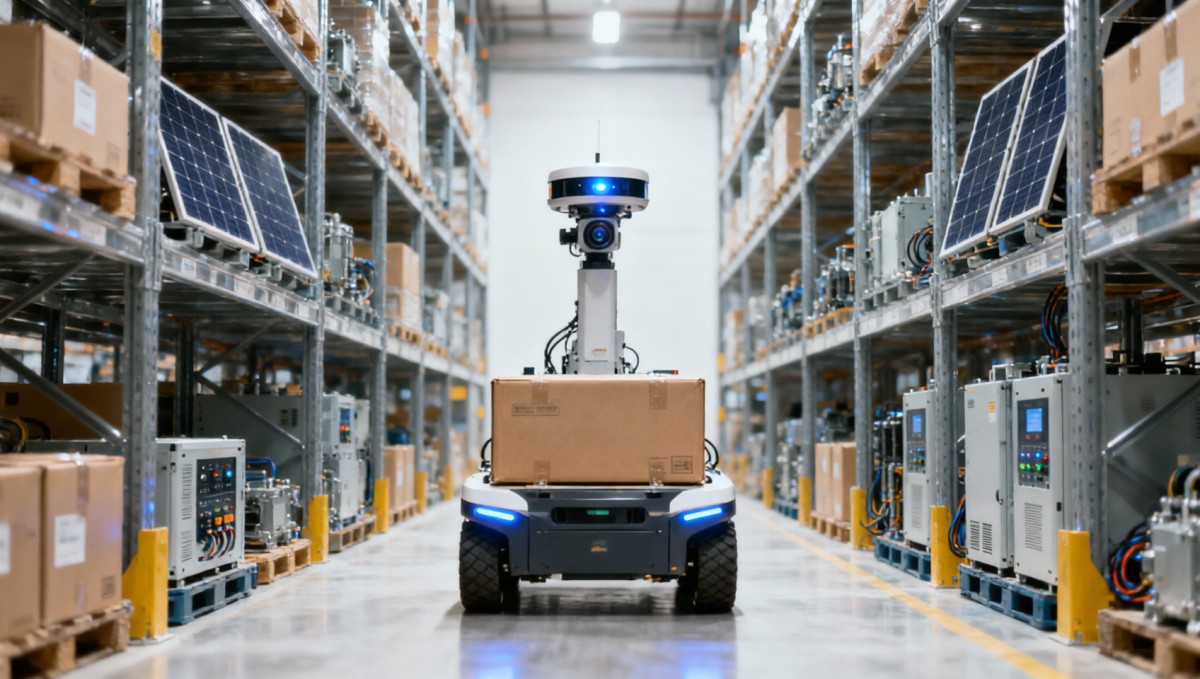
Renewable-energy logistics is different from ordinary pallet transport. Warehouses handling lithium battery packs, PV inverters, junction boxes, power electronics, and spare parts for wind or solar projects often rely on high-density storage to control footprint costs. In many facilities, aisle widths fall into typical ranges such as 1.8–2.8 meters for compact movement paths, leaving very little room for AGV obstacle avoidance error.
That is where lidar for AGV obstacle avoidance matters. A forklift-style AGV or low-profile transporter may still move safely in open areas with simpler sensors, but tight aisles create blind corners, reflective wrapping film, mixed pedestrian access, and changing pallet overhang. These conditions increase the likelihood of false stops, missed obstacles, or unstable path corrections if the sensing architecture is not designed for warehouse reality.
For operators, the pain point is straightforward: too many nuisance stops reduce throughput, while too little sensitivity increases safety risk. For procurement teams, the challenge is harder: brochures often describe detection distance, but not how the system behaves when racks, shrink wrap, battery housings, and mobile workers all compete in the same field of view. For decision-makers, the concern is business continuity. A 2–4 hour stoppage in internal material flow can delay assembly, charging, packaging, and outbound loading.
NexusHome Intelligence approaches this from a data-first perspective. Instead of accepting generic claims such as “high precision” or “smart detection,” the better evaluation method is to ask how lidar responds under interference, whether the controller supports edge-based processing, and how the full sensor stack fits into a broader industrial IoT data collection architecture. In renewable-energy operations, engineering truth beats marketing language every time.
What makes these aisles harder than standard intralogistics lanes?
The environment is dense, reflective, and operationally dynamic. Battery modules may be staged temporarily in buffer zones. Inverters can arrive in mixed carton and metal-frame packaging. Maintenance tools, mobile ladders, and service carts often appear without warning. In addition, many renewable-energy warehouses operate in 2-shift or 3-shift schedules, which means variable lighting, dust levels, and traffic intensity throughout a 24-hour cycle.
- Reflective or dark surfaces can distort simpler optical sensing, especially around battery casings, wrapped modules, and metal rack posts.
- Narrow lanes reduce braking margin. At modest AGV speeds such as 0.8–1.5 m/s, a late detection event can still trigger hard stops or route instability.
- Mixed traffic is common. Human pickers, maintenance staff, and manual pallet trucks can enter AGV paths unexpectedly during replenishment windows.
- Inventory shape varies. Solar components, cable reels, and battery containers do not always present clean obstacle geometry for simplistic sensors.
This is why a renewable-energy site should evaluate lidar not as a standalone feature, but as part of a safety, navigation, and data feedback system. The best-fit solution is usually the one that balances reliable object detection, controllable slowdown zones, protocol compatibility, and maintainable diagnostics.
How lidar for AGV obstacle avoidance works in real warehouse operations
At a practical level, lidar emits laser pulses and measures returned signals to build a 2D or 3D understanding of surrounding space. In AGV obstacle avoidance, that map is used to create warning zones, slowdown zones, and stop zones. The exact geometry depends on vehicle type, payload, speed, turning radius, and aisle width. In narrow renewable-energy aisles, zone tuning is often more important than maximum advertised range.
A typical deployment may define 3 layers of response. First, a pre-warning field identifies moving or static objects early enough for speed reduction. Second, a protective field triggers deceleration or path recalculation. Third, an emergency stop field prevents collision if a person, pallet edge, or protruding component enters the immediate travel envelope. These fields should change dynamically based on travel speed and direction, especially for reversing or turning maneuvers.
However, lidar alone is not always enough. Sensor fusion lidar and camera often improves decision quality by helping distinguish a rack edge from a suspended plastic film or a floor marking from a partial obstacle. In complex warehouses, combining lidar with wheel encoders, IMU data, and supervisory controls can reduce false positives while improving route confidence. This matters when AGVs move high-value energy components where unnecessary jolts or emergency stops may affect product handling safety.
The role of edge computing is also growing. If object filtering and event processing occur locally rather than through a delayed centralized path, the AGV can respond faster and report richer diagnostics. In facilities already using industrial IoT data collection architecture, local edge nodes can also support event logging, heat maps of obstacle hotspots, and maintenance alerts tied to actual traffic conditions rather than fixed service intervals.
Key technical layers buyers should evaluate
Buyers often focus on detection range first, but that is only one part of the decision. For tight aisles, the more useful evaluation is whether the lidar stack supports stable short- to mid-range detection, repeatable filtering, and reliable integration with vehicle controls. That usually means reviewing 5 core dimensions instead of one headline specification.
- Detection geometry: How the sensor handles rack legs, pallet overhang, and low-profile obstacles near the floor.
- Update responsiveness: Whether the control system can process obstacle changes quickly enough for speeds common in 1.8–2.8 meter aisles.
- Environmental tolerance: How the system performs in dust, reflective surfaces, variable lighting, or partial occlusion.
- Integration protocol: Compatibility with AGV controller logic, safety PLCs, and industrial IoT gateways.
- Data transparency: Availability of logs, event records, and field diagnostics for debugging and procurement validation.
This is also where NHI’s verification philosophy becomes useful. In fragmented ecosystems, protocol and device compatibility are not details; they are risk factors. A lidar sensor that performs well in isolation but creates latency or data translation issues in a multi-vendor AGV stack can become an operational bottleneck long after installation.
Typical performance questions worth asking suppliers
Ask suppliers how many configurable safety fields are supported, whether field switching is automatic by speed state, and how event logs are exported. Ask how the unit behaves after 8–16 hours of continuous operation in a working warehouse. Ask whether edge filtering can distinguish between a static rack pattern and a transient obstacle. These questions reveal implementation maturity more reliably than broad claims about intelligence.
Lidar only, sensor fusion, or hybrid safety stack: which option fits your aisle risk?
Not every warehouse needs the same AGV obstacle avoidance architecture. A low-traffic spare-parts warehouse with predictable routes may perform well with a simpler lidar-led design. A battery assembly or inverter dispatch center with mixed traffic, variable packaging, and frequent temporary staging usually benefits from sensor fusion lidar and camera. The right answer depends on traffic density, obstacle diversity, and the business cost of false stops versus collision risk.
The table below compares common approaches in renewable-energy warehouse settings. It is not a ranking, but a decision aid for matching technology with aisle complexity, implementation effort, and operational visibility needs.
The comparison highlights a common procurement mistake: selecting by sensor category instead of operational consequence. If your warehouse experiences repeated emergency stops caused by wrapped edges, inconsistent pallet placement, or cross-traffic during peak loading windows, sensor fusion may generate better total value than a cheaper single-sensor setup.
It is also worth separating safety sensing from navigation sensing. Some projects assume one lidar unit can efficiently handle both. In practice, the performance requirements may differ. Safety functions prioritize deterministic response and field integrity, while navigation may prioritize mapping continuity and localization confidence. A hybrid architecture can reduce compromise if aisle conditions are demanding.
When does a more advanced stack justify the budget?
A stronger architecture is easier to justify when three conditions exist together: aisle congestion, product sensitivity, and workflow urgency. Battery and inverter logistics often match all three. If delays affect outbound project schedules or internal assembly sequencing, the cost of poor detection logic may exceed the savings from a minimal sensor configuration. Procurement should therefore compare not just component price, but also downtime exposure, tuning effort, and change-management cost.
What procurement teams should check before buying lidar for AGV obstacle avoidance
For buyers, the goal is not simply to purchase a lidar unit. The goal is to procure a workable system that can be validated, maintained, and scaled. In renewable-energy warehousing, that usually means aligning the AGV obstacle avoidance stack with route design, WMS or MES data exchange, safety logic, and internal acceptance criteria. A lower quote can become more expensive if it triggers longer commissioning, more false alarms, or recurring support dependency.
A practical RFQ should cover at least 6 checkpoints: aisle dimensions, AGV speed range, payload type, expected stop distance logic, communication interface, and diagnostic visibility. Without these, suppliers may answer with generic product sheets that look similar on paper but produce very different outcomes on site. This is exactly the gap that data-led benchmarking is meant to close.
The following table can be used as a procurement evaluation framework. It helps technical teams, sourcing managers, and enterprise decision-makers compare solutions on engineering fit rather than only purchase price.
After the table, one decision principle stands out: choose the supplier that can explain operational behavior, not only sensor theory. The best technical partner should be able to discuss acceptance tests, integration assumptions, and failure modes using the language of warehouse flow, not just component features.
A 4-step sourcing checklist
- Define the aisle envelope and motion envelope. Include narrowest width, typical payload projection, and target speed bands.
- Request a scenario matrix. Cover pedestrians, pallet overhang, reflective packaging, static rack edges, and temporary staging obstacles.
- Confirm integration path. Verify controller interfaces, data export methods, edge processing role, and testing responsibilities.
- Plan acceptance before purchase. Set 5–6 measurable site tests, such as turning, reverse travel, emergency stop, and nuisance-stop frequency review.
This checklist protects all four audience groups. Researchers get comparable data, operators gain safer workflows, procurement reduces ambiguity, and enterprise leaders improve confidence in investment decisions.
Implementation, compliance, and common mistakes that delay ROI
Even a strong lidar for AGV obstacle avoidance solution can underperform if implementation is rushed. A realistic project usually includes 3 phases: pre-survey and requirement mapping, system integration and field tuning, then live-site validation. Depending on vehicle count and software readiness, this can range from roughly 2–6 weeks for a contained deployment, or longer for multi-zone fleet integration.
Compliance should also be addressed early. While exact obligations vary by market and application, buyers should check machinery safety expectations, electrical integration requirements, and any local warehouse operating rules. If camera-based fusion is used, internal policies for image handling, data retention, and access control should be clarified. In many industrial settings, privacy and cybersecurity are operational issues, not just legal ones.
One frequent mistake is assuming factory settings will work after installation. Tight renewable-energy aisles usually require field tuning for protective zones, speed-state switching, rack-side filtering, and corner behavior. Another mistake is treating false stops as acceptable noise. In reality, repeated nuisance stops erode operator trust and can reduce AGV utilization enough to undermine the business case.
A third mistake is neglecting data feedback. If obstacle events are not logged in a usable format, the team cannot distinguish whether stoppages come from poor route design, unstable pallet placement, sensor contamination, or controller logic. NHI’s broader emphasis on transparent protocol compliance and measurable performance is relevant here: systems improve faster when every event can be traced, reviewed, and compared.
Common risk points during rollout
- Underestimating reflective interference from battery housings, wrapped pallets, and metal shelving.
- Skipping reverse-motion validation, even though many close-call events happen during repositioning.
- Failing to align the AGV integrator, sensor vendor, and warehouse IT team on data handoff responsibilities.
- Using a price-led decision model without calculating downtime cost, tuning cost, and operator retraining impact.
FAQ: what buyers and operators usually ask
Below are concise answers to questions that often appear during solution evaluation and deployment planning.
Is lidar enough for AGV obstacle avoidance in narrow aisles?
Sometimes yes, but not always. If routes are stable and obstacles are predictable, a lidar-led setup may be sufficient. If your warehouse includes mixed traffic, reflective surfaces, irregular packaging, or frequent temporary staging, sensor fusion lidar and camera usually offers better resilience and fewer nuisance stops.
What should operators monitor after go-live?
Track at least 4 items during the first 2–4 weeks: emergency stop events, slowdown frequency, repeat obstacle hotspots, and sensor contamination or cleaning intervals. These indicators help distinguish environmental issues from tuning problems and support faster process stabilization.
How long does procurement-to-deployment usually take?
For a defined use case with clear interface requirements, sample evaluation and technical confirmation may take 1–3 weeks, while integration and site validation may take another 2–6 weeks. Multi-vendor environments with custom protocols or fleet-level analytics often require more time because interface and acceptance work becomes more complex.
What is the most overlooked buying factor?
Data visibility. Many teams compare detection claims but overlook event logging, protocol compatibility, and edge diagnostics. Without these, troubleshooting becomes slow and expensive, especially in facilities running continuous or near-continuous internal logistics.
Why choose a data-driven evaluation partner for your AGV sensing project
In a fragmented industrial ecosystem, the real risk is not a lack of products. It is a lack of verified fit. Renewable-energy warehouses need more than generic vendor promises about smart sensing. They need measurable guidance on lidar for AGV obstacle avoidance, sensor fusion lidar and camera trade-offs, industrial IoT data collection architecture, and edge computing readiness under real operational constraints.
That is where NexusHome Intelligence adds value. NHI’s core approach is to bridge ecosystems through data, not slogans. For buyers and decision-makers, this means focusing on protocol behavior, integration realism, and benchmark-driven verification. For operators, it means solutions that can be examined through field performance, not just brochure language. For procurement teams, it means clearer comparison criteria and fewer hidden implementation surprises.
If you are evaluating AGV sensing for battery warehouses, inverter storage, solar component logistics, or mixed renewable-energy distribution, you can contact us for practical support around parameter confirmation, product selection logic, delivery-cycle expectations, custom scenario matching, interface review, sample evaluation planning, and quotation communication. We can also help structure a comparison framework for narrow-aisle risk, sensor architecture choice, and data visibility requirements before you commit budget.
The fastest way to reduce project uncertainty is to start with your actual constraints: aisle width, AGV type, payload profile, traffic mix, target deployment window, and compliance expectations. Bring those inputs into the conversation, and the path from initial research to shortlist decision becomes much clearer.
Protocol_Architect
Dr. Thorne is a leading architect in IoT mesh protocols with 15+ years at NexusHome Intelligence. His research specializes in high-availability systems and sub-GHz propagation modeling.
Related Recommendations
- Lina Zhao(Security Analyst)Vision AI Edge Cameras: What to Look For
- Lina Zhao(Security Analyst)Starlight Night Vision Lux Rating: How Low Is Good
- Lina Zhao(Security Analyst)4K PTZ Camera Bit Rate: How Much Is Enough
- Lina Zhao(Security Analyst)Sensor fusion with lidar and camera in low-visibility conditions
- Lina Zhao(Security Analyst)How to choose a vision camera for PCB inspection defects
- Lina Zhao(Security Analyst)Lidar for AGV obstacle avoidance in tight warehouse aisles
- Lina Zhao(Security Analyst)3D vision for robotic bin picking when parts keep overlapping
- Lina Zhao(Security Analyst)Edge AI for smart manufacturing without sending data to the cloud
- Lina Zhao(Security Analyst)Machine vision for defect detection on reflective metal surfaces
- Lina Zhao(Security Analyst)Lidar for autonomous driving vehicles in short-range blind spots
Analyst