
Zigbee Smart Plug Test: Which Metrics Reveal Real Stability
author
In a Zigbee smart plug test, real stability is not proven by claims but by measurable protocol latency benchmark results, Zigbee mesh capacity under interference, and precise IoT power monitoring. For buyers, operators, and sourcing teams navigating the IoT supply chain, this data-driven view reflects the IoT engineering truth behind smart home hardware testing and Matter standard compatibility.
Why does real stability matter more in renewable energy IoT deployments?
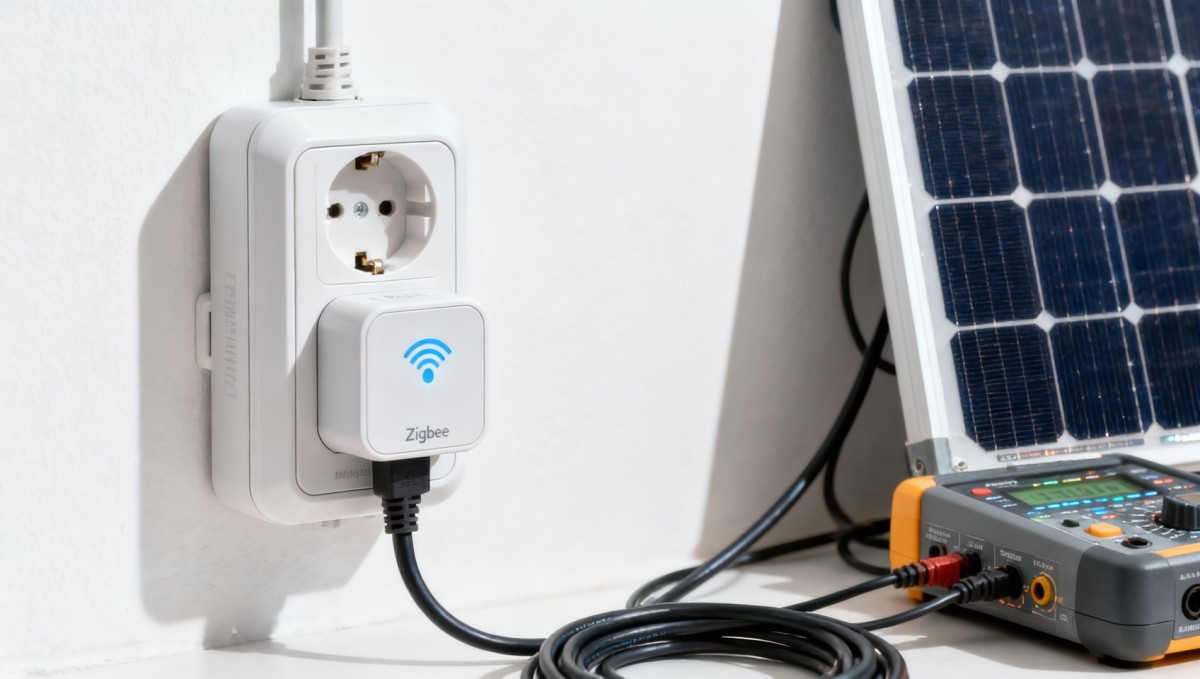
A Zigbee smart plug test is often treated as a basic consumer device check, but in renewable energy environments it plays a wider role. Smart plugs can act as node-level control points for distributed energy loads, backup circuits, appliance scheduling, and demand response logic in homes, microgrids, and light commercial buildings. In these settings, a single unstable device can distort power data, delay switching behavior, or weaken the mesh that supports energy automation.
This is why stability should be examined through engineering metrics instead of brochure language. For operators, the question is not whether a plug can turn on and off during a short demo. The question is whether it can maintain packet reliability over 24–72 hours, recover after repeated power cycles, and continue reporting under 2.4 GHz congestion caused by Wi-Fi, BLE, and nearby industrial electronics.
For procurement teams in renewable energy projects, the risk is practical. If a low-cost smart plug drops from the Zigbee mesh during peak-load shifting, the result may be incorrect load shedding or missed automation events. If metering drift becomes visible after 3–6 months, billing reconciliation and energy optimization reports become less trustworthy. This is especially relevant for solar self-consumption systems, battery-assisted homes, and retrofit energy management projects.
NexusHome Intelligence approaches this issue from a benchmarking perspective. Instead of accepting generic claims such as “stable mesh” or “low power,” the NHI view is to quantify latency, resilience, reporting continuity, and standby draw. In fragmented ecosystems where Zigbee, Thread, BLE, and Matter coexist, that approach helps R&D teams and enterprise buyers avoid sourcing decisions based on incomplete or misleading product messaging.
What stability means in practice
In a renewable energy workflow, stability combines at least 4 dimensions: communication continuity, relay response consistency, power monitoring accuracy, and interoperability behavior. A plug that performs well in only one of these areas may still fail in real deployments. For example, fast relay switching does not compensate for delayed telemetry, and accurate telemetry does not solve poor mesh recovery after a gateway restart.
- Communication continuity: whether reports and commands remain reliable across dense Zigbee networks with 20–50 nodes.
- Relay response consistency: whether on/off execution remains predictable across repeated triggers, schedules, and cloud-independent local routines.
- Power monitoring behavior: whether wattage, voltage, and cumulative energy readings remain useful for solar load shifting and consumption profiling.
- Interoperability behavior: whether the device remains dependable when bridged into mixed platforms that may include Matter gateways, energy dashboards, or building control layers.
When these dimensions are tested together, buyers gain a more realistic picture of lifecycle value. That is particularly important when projects involve 50 units, 500 units, or staged deployment across several buildings where field replacement costs can quickly exceed the initial hardware savings.
Which test metrics actually reveal Zigbee smart plug stability?
The most useful Zigbee smart plug test metrics are not the most advertised ones. In renewable energy and smart building scenarios, real stability is usually exposed through command latency, packet loss under interference, mesh rejoin behavior, relay endurance, and metering consistency over repeated cycles. These metrics are actionable because they connect directly to operations, maintenance, and ROI.
Latency should be read as a range, not as a single isolated result. A device may look responsive in a clean lab, yet slow down when commands travel across 2–4 mesh hops or when 2.4 GHz occupancy increases. For load control and scheduled demand management, teams should examine average latency, peak latency, and variance over longer sessions. High variance often reveals hidden instability before complete disconnections appear.
Packet reliability is equally important. In a crowded environment, dropped reports can lead to misleading assumptions about appliance usage or battery-assisted switching events. A useful test should therefore include normal conditions, moderate interference, and heavy interference windows. It should also track whether the device misses state acknowledgements after rapid command bursts, such as 10–20 switching events in sequence.
Metering consistency matters because many renewable energy use cases depend on small but cumulative optimization decisions. If plug-level energy reports drift over time, the operator may misclassify flexible loads, and the buyer may overestimate actual savings. While exact acceptable tolerance depends on application design and certification scope, a procurement review should always ask how readings behave during low load, medium load, and near-rated load intervals.
Core metrics that expose hidden instability
The table below translates a Zigbee smart plug test into procurement language. It helps teams compare which metrics are useful for engineering review and which ones merely sound attractive in marketing material.
These metrics reveal whether a device can remain useful outside of a showroom demo. They also align with the NHI philosophy that protocol claims should be validated by repeatable stress testing, especially when systems must survive interference, mixed ecosystems, and long operating windows.
Three metrics many buyers overlook
Three checks are often missed during sourcing. First, standby consumption should be reviewed because large plug fleets add up. Second, report interval behavior should be tested because some devices become unstable when telemetry is configured too aggressively. Third, gateway compatibility should be examined beyond pairing success, especially when the roadmap includes Matter bridges or mixed-protocol buildings.
- Standby draw review over continuous operation, especially where dozens of devices remain energized year-round.
- Telemetry interval tuning, such as whether stable reporting is maintained at short intervals versus conservative intervals.
- Cross-platform behavior during coordinator replacement, firmware update, or bridge migration.
For decision-makers, these details are not minor. They affect maintenance hours, support tickets, and data confidence over the 12–36 month period when energy automation value is expected to appear.
How should buyers compare smart plugs for solar homes, microgrids, and energy retrofits?
A procurement team should not compare Zigbee smart plugs only by price, claimed compatibility, or mobile app design. In renewable energy projects, the better comparison frame is deployment fit. A plug for a small solar household may only need stable local scheduling and clear metering behavior. A plug for a retrofit commercial site may need stronger mesh routing, higher switching frequency tolerance, and cleaner data export into a larger energy management stack.
The comparison also depends on how many devices will be deployed. A small batch of 10–20 units can tolerate more manual intervention during commissioning. A medium deployment of 50–200 units needs faster onboarding, more predictable firmware behavior, and lower support overhead. At larger scale, weak devices create a compounded burden because each instability event can propagate across maintenance workflows.
Operators should also compare the device by its behavior with real loads. Resistive loads, small pumps, heaters, and scheduled appliances do not stress a plug in the same way. If the project includes renewable energy balancing logic, the plug should be evaluated against duty cycles that reflect actual appliance patterns rather than one-time bench tests.
The table below helps buyers align device evaluation with common renewable energy scenarios. It does not rank brands. Instead, it clarifies which factors matter most before sample approval and larger sourcing decisions.
Scenario-based procurement comparison
This comparison helps teams avoid the common mistake of selecting a device that looks inexpensive at unit level but creates avoidable integration and maintenance costs during deployment. In B2B renewable energy projects, operational predictability usually matters more than marginal upfront savings.
A practical shortlist for procurement review
Before moving from sample to volume purchase, buyers can use a 5-point review list. This is especially useful when delivery windows are tight, such as 2–4 weeks for pilot installation or 6–8 weeks for staged retrofit deployment.
- Confirm whether the plug is being tested as an end device only or also as a stable router within the Zigbee mesh.
- Review how the device behaves across low, medium, and near-rated electrical load ranges that match the intended application.
- Check whether the monitoring data is accessible in a usable format for energy dashboards, audits, or optimization logic.
- Ask how firmware updates, gateway migration, and coordinator restarts affect state retention and reporting continuity.
- Evaluate sample support, technical responsiveness, and test transparency before discussing large-volume pricing.
That shortlist reflects the NHI mindset: remove ambiguity early, measure what matters, and lower the risk of discovering hidden weaknesses only after the devices enter the field.
What implementation risks and misconceptions should teams watch for?
One of the biggest misconceptions is that successful pairing proves long-term stability. It does not. Many devices join a network correctly during commissioning but become unreliable after repeated routing changes, denser network growth, or longer reporting windows. In renewable energy deployments, these delayed failures can undermine automation logic at the exact moment when timing and data continuity matter most.
Another misconception is that “Works with Matter” automatically ensures dependable mixed-ecosystem operation. In practice, bridge-based architectures, firmware maturity, and implementation details still matter. Teams should ask whether the device has been evaluated only for initial interoperability or also for sustained command and telemetry consistency across 24-hour, 48-hour, or multi-day operating windows.
A third issue is underestimating environmental and electrical context. Renewable energy projects often involve load changes linked to solar availability, storage behavior, tariff schedules, or building occupancy. A smart plug that appears stable under static conditions may show weaker relay or reporting behavior once the operating pattern becomes dynamic.
Finally, many teams overlook the cost of poor data. If the metering layer is inconsistent, optimization software may recommend the wrong loads for shifting. The financial effect may be gradual rather than dramatic, but over 6–12 months the gap between expected savings and actual performance can become material.
Common mistakes during evaluation and rollout
- Testing only in a low-interference bench environment instead of in the actual installation site or a realistic 2.4 GHz simulation.
- Approving a sample based on 1–2 hours of operation instead of longer endurance checks that include restart and recovery events.
- Ignoring telemetry interval settings, which can change network behavior and device stability in larger fleets.
- Comparing unit price without estimating service overhead, replacement labor, and troubleshooting time across the deployment lifecycle.
These mistakes are avoidable when test plans are tied to actual application conditions. NHI’s data-first position is useful here because it focuses attention on verifiable behavior rather than broad compatibility slogans. That is particularly valuable when enterprise buyers must justify sourcing decisions to technical teams and management at the same time.
FAQ for researchers, operators, and buyers
How long should a meaningful Zigbee smart plug test last?
A meaningful evaluation usually needs more than a short pairing demo. For procurement screening, a 24-hour baseline is often the minimum useful window. For operational review, 48–72 hours with command bursts, coordinator restarts, and load variation gives a clearer picture. If the plug will be used in a larger renewable energy project, teams may extend testing through several daily scheduling cycles.
Which Zigbee smart plug metric matters most for energy management?
There is no single universal metric. For control-heavy use, command latency and recovery behavior are critical. For analytics-heavy use, metering consistency and report continuity carry more weight. Most renewable energy deployments need a combination of at least 3 metrics: communication reliability, relay consistency, and usable power monitoring behavior.
Are low-cost smart plugs always a poor choice for B2B renewable energy projects?
Not always, but they should be tested more carefully. Some lower-cost devices may be acceptable for limited, non-critical household automation. However, once the project includes fleet deployment, energy reporting, or integration into broader load management logic, hidden costs can emerge through instability, support burden, and replacement cycles. Total project cost matters more than entry price alone.
What should procurement teams request before approving volume orders?
They should request sample units, technical parameter details, test conditions, supported integration pathways, and realistic lead time ranges. It is also wise to clarify firmware maintenance approach, coordinator compatibility, and how the supplier handles issue tracing during pilot deployment. These details often determine whether a 50-unit pilot can scale to 500 units without avoidable redesign.
Why choose a data-driven evaluation partner for sourcing and technical validation?
In a fragmented IoT market, renewable energy buyers do not just need products. They need a reliable engineering filter. NexusHome Intelligence is positioned around that need. The value is not generic promotion, but clearer decision support based on benchmark thinking, protocol scrutiny, and stress-oriented evaluation. That helps information researchers, operators, sourcing teams, and enterprise decision-makers reduce uncertainty before deployment costs escalate.
For teams comparing Zigbee smart plugs, NHI can help frame the right questions before purchase: Which latency behavior is acceptable for this application? Which reporting pattern is useful for energy monitoring? Which mesh conditions should the sample survive? Which compatibility claims need further verification in a mixed Zigbee, Thread, BLE, or Matter roadmap? Those questions save time because they align testing with real project outcomes.
This approach is especially relevant when your project faces one or more of these constraints: a 2–4 week pilot deadline, multiple candidate suppliers, uncertain Matter migration plans, or a need to balance cost with technical integrity. By focusing on measurable stability instead of abstract promises, procurement and engineering teams can move faster with less downstream risk.
If you are reviewing smart plugs or other connected hardware for solar homes, microgrid pilots, smart buildings, or energy retrofits, the next step should be specific. Bring the real questions forward early so the sourcing path becomes shorter and more defensible.
What you can contact us about
- Parameter confirmation for Zigbee smart plug test plans, including latency, mesh behavior, and power monitoring review points.
- Product selection guidance for solar self-consumption, battery-assisted homes, retrofit buildings, and pilot microgrid scenarios.
- Lead time discussion for sample evaluation, phased procurement, and multi-stage deployment schedules.
- Custom benchmark planning for interoperability concerns involving Zigbee, Matter bridges, or mixed-protocol environments.
- Certification and compliance discussion where project documentation, reporting expectations, or regional requirements need clarification.
- Sample support and quotation communication for teams that want to compare technical fit before expanding to commercial volume.
When the goal is reliable connected hardware for renewable energy applications, better decisions begin with better evidence. That is the bridge NHI is built to provide: less marketing noise, more engineering truth, and a clearer path from evaluation to deployment.
Protocol_Architect
Dr. Thorne is a leading architect in IoT mesh protocols with 15+ years at NexusHome Intelligence. His research specializes in high-availability systems and sub-GHz propagation modeling.
Related Recommendations
- Dr. Aris ThorneZigbee mesh capacity limits show up before devices drop offline
- Dr. Aris ThorneZigbee smart plug test results can vary with mesh density
- Dr. Aris ThorneWhat to Compare in a Zigbee Mesh Capacity Test
- Dr. Aris ThorneZigbee Smart Plug Test: Which Metrics Matter Most
- Dr. Aris ThorneHow Many Devices Can a Zigbee Network Really Handle
- Dr. Aris ThorneZigbee Mesh Capacity vs Range: What Should You Prioritize
- Dr. Aris ThorneHow to Avoid Weak Zigbee Networks in Large Homes
- Dr. Aris ThorneZigbee Smart Plug Test: Which Metrics Reveal Real Stability
- Dr. Aris ThorneWhat to Ask for in a Zigbee Mesh Capacity Test
- Dr. Aris ThorneEN 303 647 V2.1.1 Mandatory for Zigbee/BLE Smart Devices in EU from Apr 2026
Analyst