
Zigbee Mesh Capacity vs Range: What Should You Prioritize
author
When evaluating Zigbee mesh capacity against range, the right priority depends on real deployment goals, interference levels, and device density. For renewable energy and smart building projects, NHI approaches this challenge through IoT hardware benchmarking, protocol latency benchmark analysis, and Zigbee mesh capacity testing—turning Matter protocol data and smart home hardware testing into practical engineering truth for buyers, operators, and decision-makers.
If you need a short answer first: in most real-world Zigbee deployments, capacity should usually be prioritized before raw range. A network that reaches farther but becomes unstable under load will create more operational risk than a slightly smaller footprint with predictable routing, low latency, and room for device growth. Range still matters, especially in distributed energy sites, multi-floor buildings, and retrofit projects, but it should be treated as a design constraint to solve intelligently—not the primary success metric.
What matters more in practice: Zigbee mesh capacity or range?
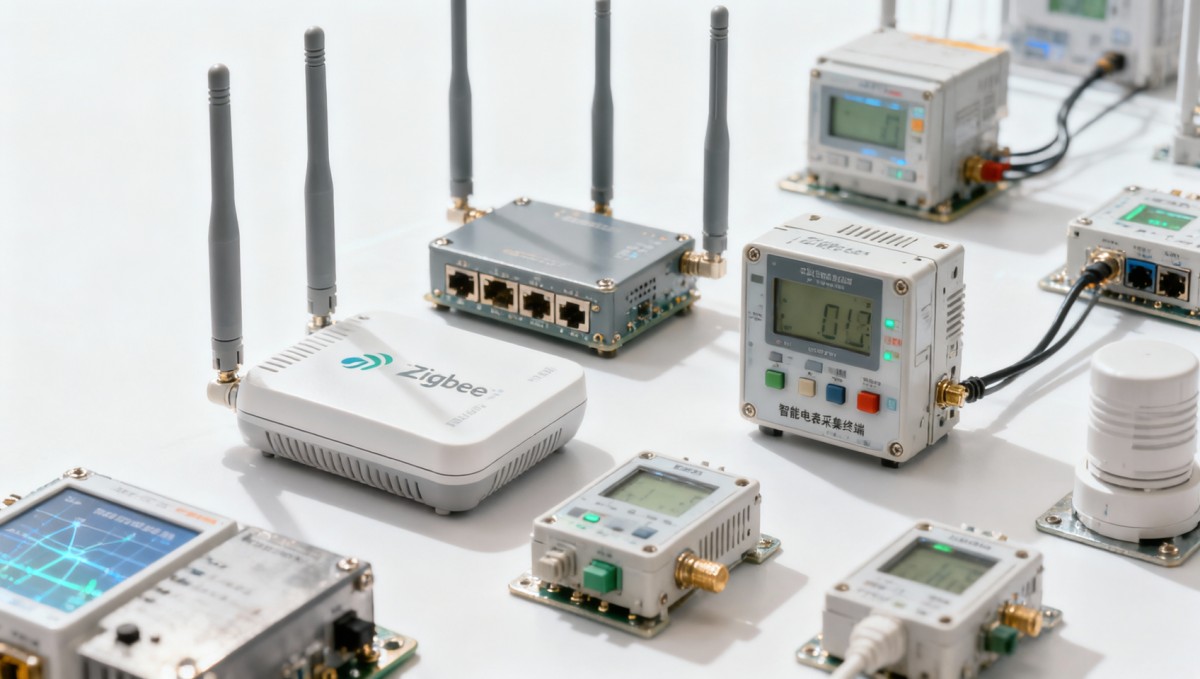
For most buyers, operators, and project leads, the real question is not theoretical radio performance. It is this: what will keep the system stable after deployment? In smart buildings, renewable energy control environments, and mixed-protocol IoT installations, that answer is usually mesh capacity.
Zigbee range tells you how far a signal may travel between nodes under specific conditions. Zigbee mesh capacity tells you how many devices, routes, retries, parent-child relationships, and simultaneous communications the network can sustain before performance drops. In other words, range helps you connect a device once; capacity helps you keep an entire system working every day.
This is especially important in renewable energy use cases such as:
- Building energy monitoring with many metering points
- HVAC automation across large commercial properties
- Solar storage environments with distributed sensors and relays
- Demand-response control scenarios with high reporting density
- Retrofit projects where RF conditions are unpredictable
In these environments, performance failure rarely comes from a simple lack of reach. It more often comes from congestion, poor routing, interference, weak coordinator planning, or too many end devices competing for limited network resources.
Why capacity often becomes the real bottleneck before range does
On paper, many teams worry first about distance. In the field, however, Zigbee networks usually encounter scaling problems sooner than maximum-range problems.
Here is why:
- Device density increases traffic: More sensors, switches, relays, thermostats, and energy nodes mean more status updates, acknowledgments, and route maintenance.
- Routers have finite resources: Parent tables, neighbor tables, buffer sizes, and routing memory are limited by hardware and firmware.
- Interference changes network behavior: Wi-Fi congestion, metal enclosures, concrete walls, electrical rooms, and inverter noise can increase retries and route instability.
- Latency compounds across hops: A mesh can technically reach a node, but if each hop adds delay under load, control quality suffers.
- Battery devices depend on network efficiency: Poor capacity planning causes excess polling, retries, and wake events, which directly affects battery life.
This is why NHI-style Zigbee mesh capacity testing matters more than vendor claims like “supports large networks” or “long-range performance.” The useful engineering question is not how far a single link can go in a clean lab. It is how many nodes the network can support under interference, with realistic traffic patterns, while maintaining acceptable latency and packet delivery.
How to decide what to prioritize based on deployment scenario
The best priority changes by use case. Decision-makers should map network goals to operational reality instead of looking for one universal answer.
Prioritize capacity first when:
- You expect medium to high device counts
- You are automating multiple zones or floors
- You need reliable telemetry from many endpoints
- You are planning phased expansion over time
- Control responsiveness matters more than edge-distance coverage
- The site has known RF interference or mixed wireless infrastructure
Prioritize range first when:
- The site is physically spread out with low node density
- Endpoints are located in detached plant rooms, utility spaces, or outdoor enclosures
- Installing extra routers is difficult or costly
- There are only a few critical devices at long distances
- The environment includes structural barriers that limit path options
Balance both when:
- You are managing a campus, hotel, factory, or energy complex
- You need both wide coverage and high device counts
- You are integrating Zigbee with gateways, cloud platforms, or Matter bridges
- You cannot tolerate blind spots or congestion-related failures
In enterprise procurement terms, this means a “long-range” product is not automatically the better investment. If it performs poorly at scale, total cost of ownership rises through truck rolls, troubleshooting, battery replacement, and operational downtime.
What buyers and operators should actually evaluate instead of marketing claims
If you are selecting Zigbee hardware for renewable energy or smart building projects, focus on measurable criteria that affect field outcomes.
1. Maximum practical node count, not theoretical node count
Ask how many devices the network supports with realistic reporting intervals and interference. A theoretical ceiling is far less useful than a validated practical limit.
2. Latency under load
In control systems, latency is a business issue, not just a technical one. Delayed relay switching, sensor lag, or missed triggers can reduce energy efficiency and weaken occupant comfort.
3. Packet delivery rate in congested environments
A network that drops packets at scale creates hidden operational cost. Reliable telemetry is essential for energy optimization, fault detection, and automation consistency.
4. Router quality and route recovery behavior
Not all routers are equal. Hardware design, firmware maturity, antenna layout, and memory allocation all affect mesh stability.
5. Battery impact on end devices
Weak mesh design often pushes battery devices into more retries and less efficient communication cycles. That matters in large estates where maintenance labor is expensive.
6. Interoperability with broader ecosystems
For organizations thinking ahead to Matter, multi-protocol gateways, or broader smart infrastructure integration, protocol behavior under translation layers also matters. A Zigbee network that looks acceptable in isolation may behave differently once bridged into a larger ecosystem.
Common mistake: designing for coverage maps instead of network behavior
One of the most common planning errors is overvaluing coverage diagrams. Coverage maps are useful, but they can create false confidence if they ignore traffic patterns and mesh behavior.
A site may appear fully covered while still suffering from:
- Overloaded routers serving too many children
- Unbalanced topology with weak alternate routes
- High retransmission rates in noisy electrical environments
- Coordinator bottlenecks
- Slow response time during simultaneous device activity
For procurement teams and enterprise decision-makers, this is where benchmarking data creates real value. It shifts evaluation from “Can the signal reach?” to “Can the system perform reliably at target scale?” That distinction directly affects project risk.
How this applies to renewable energy and smart building projects
In renewable energy environments, wireless networks often support more than convenience. They contribute to energy visibility, equipment coordination, load shifting, and climate control optimization. That makes stability more important than headline radio distance.
Examples include:
- Energy monitoring: High node counts across submeters and sensing points reward capacity-focused design.
- Smart HVAC control: Dense networks with frequent status updates benefit from low-latency routing and dependable parent-child relationships.
- Battery storage rooms and utility zones: Challenging RF conditions may require selective range reinforcement through router placement rather than a pure range-first hardware decision.
- Retrofit buildings: Old structures often create irregular signal paths, making mesh resilience more valuable than nominal maximum distance.
In short, projects tied to energy efficiency or operational continuity should usually choose a Zigbee architecture that can handle growth, interference, and sustained traffic. That is why capacity frequently deserves first priority.
A practical decision framework for procurement and deployment teams
To make a better choice, use this simple framework:
- Count expected devices at launch and at 12–24 months. If expansion is likely, capacity becomes critical.
- Map physical barriers and interference sources. If long-distance endpoints are few, solve them with topology design instead of over-prioritizing range.
- Define acceptable latency and reliability thresholds. Especially for automation and energy control.
- Evaluate router quality, not just endpoint specifications. A mesh is only as strong as its routing layer.
- Request test evidence under stress. Ask for benchmark data on packet loss, latency, and node stability under realistic conditions.
- Design for maintainability. Battery replacement cycles, troubleshooting effort, and future interoperability should be part of ROI analysis.
For many organizations, this process leads to the same conclusion: prioritize mesh capacity as the foundation, then engineer sufficient range through node placement, router density, and validated topology.
Final answer: prioritize the network that stays reliable at scale
When comparing Zigbee mesh capacity vs range, the better priority for most commercial, renewable energy, and smart building deployments is capacity first, range second. Range matters, but a network that only looks strong at the edge and weakens under device load will not support long-term operational goals.
The most useful buying and deployment decision is not based on maximum advertised distance. It is based on verified performance under realistic traffic, interference, and expansion conditions. For researchers, operators, procurement teams, and enterprise leaders, that is the difference between buying hardware and building infrastructure.
At NHI, that is exactly where data-driven benchmarking becomes essential: translating protocol claims into measurable engineering truth so teams can select Zigbee solutions that deliver stable performance, lower risk, and stronger long-term value.
Protocol_Architect
Dr. Thorne is a leading architect in IoT mesh protocols with 15+ years at NexusHome Intelligence. His research specializes in high-availability systems and sub-GHz propagation modeling.
Related Recommendations
- Dr. Aris ThorneZigbee mesh capacity limits show up before devices drop offline
- Dr. Aris ThorneZigbee smart plug test results can vary with mesh density
- Dr. Aris ThorneWhat to Compare in a Zigbee Mesh Capacity Test
- Dr. Aris ThorneZigbee Smart Plug Test: Which Metrics Matter Most
- Dr. Aris ThorneHow Many Devices Can a Zigbee Network Really Handle
- Dr. Aris ThorneZigbee Mesh Capacity vs Range: What Should You Prioritize
- Dr. Aris ThorneHow to Avoid Weak Zigbee Networks in Large Homes
- Dr. Aris ThorneZigbee Smart Plug Test: Which Metrics Reveal Real Stability
- Dr. Aris ThorneWhat to Ask for in a Zigbee Mesh Capacity Test
- Dr. Aris ThorneEN 303 647 V2.1.1 Mandatory for Zigbee/BLE Smart Devices in EU from Apr 2026
Analyst