
How Many Devices Can a Zigbee Network Really Handle
author
How many devices can a Zigbee network really support before latency, routing instability, and interference undermine performance? For renewable energy systems, smart buildings, and large-scale automation, Zigbee mesh capacity is not a marketing claim but a measurable engineering limit. This article examines protocol latency benchmark data, Matter standard compatibility, and smart home hardware testing insights from an IoT independent think tank to help researchers, operators, and procurement teams make evidence-based decisions.
The short answer is this: a Zigbee network may theoretically address thousands of nodes, but in real deployments, the practical device count is usually far lower and depends on topology, router quality, traffic pattern, interference, power design, and coordinator limits. For most stable commercial environments, the question is not “What is the maximum number on paper?” but “How many devices can this specific network handle while still meeting latency, resilience, and maintenance targets?” That distinction matters especially in renewable energy and building automation, where delayed telemetry, missed control packets, or unstable mesh behavior can directly affect efficiency, occupant comfort, and operational reliability.
What people really need to know about Zigbee network capacity
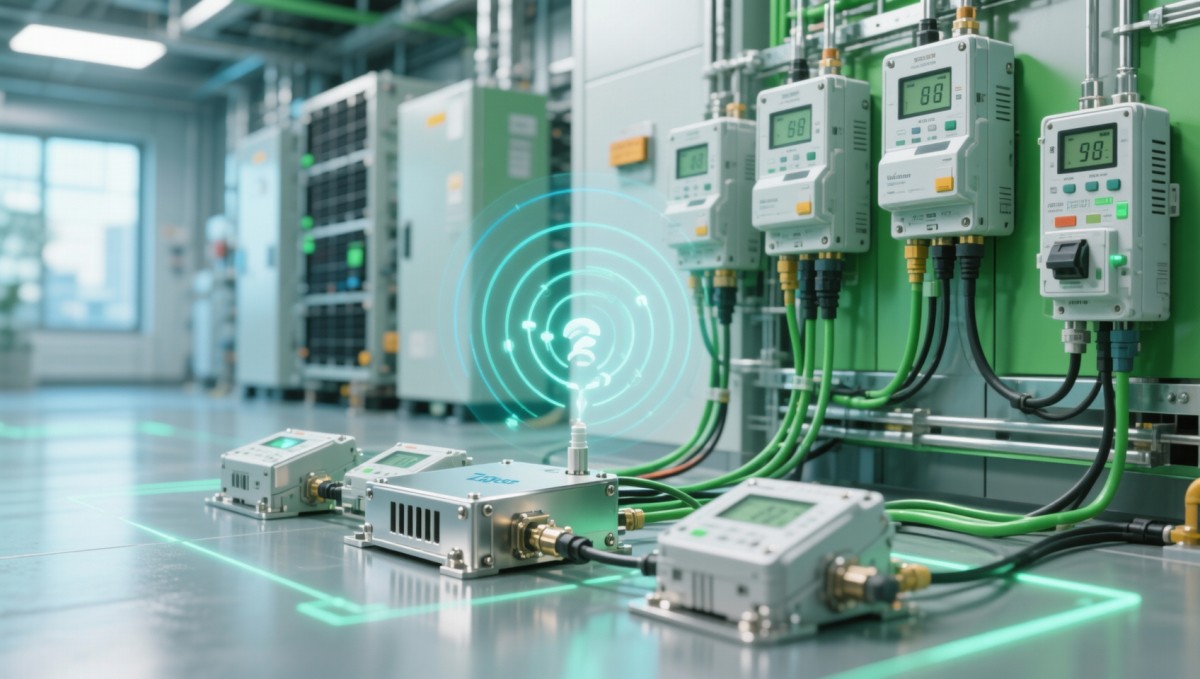
When users search “How Many Devices Can a Zigbee Network Really Handle,” their core intent is usually practical, not academic. They want to know whether Zigbee is suitable for a real project and where the failure point begins. Researchers want realistic benchmarks instead of protocol brochure claims. Operators want to know when a network becomes slow or unpredictable. Procurement and business evaluators want to understand whether a lower-cost Zigbee design will create hidden support costs later.
That is why the most useful answer starts with a reality check:
- Theoretical capacity is not the same as usable capacity. Zigbee specifications allow large node counts, but many installations become inefficient long before reaching the upper limit.
- Network behavior changes with traffic type. A network carrying infrequent sensor updates behaves very differently from one handling dense control traffic, energy monitoring reports, or frequent state synchronization.
- The coordinator and router implementation matter more than marketing labels. Two “Zigbee 3.0” products can perform very differently under the same load.
- Interference is often the hidden bottleneck. In buildings with Wi-Fi congestion, metal structures, inverters, and dense electrical equipment, mesh stability can degrade well before node count becomes the official problem.
For renewable energy use cases such as smart metering, distributed load control, HVAC coordination, battery system monitoring, and occupancy-aware energy optimization, the practical design question is not maximum node count alone. It is whether the network can deliver timely, repeatable communication under sustained operational stress.
How many devices can a Zigbee network handle in practice?
In practice, many well-designed Zigbee deployments operate comfortably in the range of tens to a few hundreds of devices per network segment. Some strong implementations can scale further, but only with disciplined planning. Once networks grow larger, performance depends heavily on how many devices act as routers, how often devices transmit, how many hops are required, and how intelligently the coordinator manages tables and routing updates.
A more useful way to think about Zigbee capacity is by deployment tier:
- Small deployment: 20 to 50 devices. Usually manageable with modest planning, low risk if the RF environment is clean.
- Medium deployment: 50 to 150 devices. Requires better router placement, channel planning, and attention to traffic intervals.
- Large deployment: 150 to 300+ devices. Needs careful engineering, stronger coordinators, better firmware maturity, and stress validation before production rollout.
- Very large deployment: 300+ devices. Possible in some architectures, but should not be attempted without real testing, segmentation strategy, and acceptance of higher commissioning complexity.
This does not mean 300 devices is a universal ceiling. It means that once deployments become large, the probability of routing inefficiency, rejoin events, packet collision, and troubleshooting overhead rises sharply unless the system has been engineered for scale.
In energy and climate-control scenarios, even a network with an acceptable total node count can still fail operationally if too many devices report simultaneously. For example, a network of 120 low-traffic environmental sensors may remain healthy, while a network of 80 devices performing frequent metering, relay switching, and status acknowledgment may already show noticeable latency.
Why theoretical Zigbee limits often mislead buyers and planners
Theoretical figures are often based on addressing structures and protocol definitions, not on sustained field performance. That creates a common misunderstanding during sourcing and project evaluation. Vendors may quote maximum supported node numbers without clarifying the testing conditions behind that claim.
Several factors explain why real capacity is lower than advertised:
- Routing table limits: Routers and coordinators have finite memory and finite routing efficiency.
- Application overhead: Real devices do not only “exist” on the network; they send reports, retries, polls, and commands.
- RF interference: Zigbee shares the crowded 2.4 GHz band with Wi-Fi, BLE, and industrial noise sources.
- Battery behavior: End devices that sleep aggressively reduce traffic, but poorly tuned retry logic can still increase network load and drain cells faster.
- Multi-hop latency: Each additional hop can increase delay and reduce determinism, especially under congestion.
For procurement teams, this means a capacity claim should never be accepted without context. Ask what packet interval was used in testing, how many routers were active, what RF conditions existed, and whether the benchmark reflected real control traffic or only idealized idle-state enrollment.
What usually breaks first: latency, instability, or interference?
In most real Zigbee systems, the first visible problem is not total network collapse. It is a gradual decline in responsiveness and predictability. Devices may still appear online, but the system becomes less trustworthy.
The most common failure progression looks like this:
- Latency increases. Commands take longer to complete, status updates arrive less consistently, and user-facing automation feels unreliable.
- Route quality degrades. Devices begin using less efficient paths, packet retries increase, and network healing becomes more frequent.
- Interference amplifies the problem. Wi-Fi overlap, reflective surfaces, switchgear, and power electronics increase packet loss.
- Battery-powered nodes suffer. More retries and rejoin behavior increase energy use and maintenance frequency.
- Operational confidence drops. At this point, even if the network is technically functioning, it may no longer meet the service expectations of building operators or energy managers.
For renewable energy environments, this is especially relevant near inverters, energy storage equipment, and electrically noisy infrastructure. RF planning is not optional. A Zigbee deployment that works well in a residential demo may behave very differently in a utility room, equipment corridor, or commercial retrofit site.
How to estimate the right Zigbee device count for your use case
A better sizing method starts with workload and environment, not device count alone. Before selecting hardware, teams should evaluate five variables:
- Message frequency: How often does each device transmit normal telemetry, exception events, and acknowledgments?
- Control criticality: Is this network handling non-critical sensing, or does it also support time-sensitive switching and automation?
- Physical layout: How many walls, floors, metal obstacles, and electrical interference sources exist between nodes?
- Router quality: Are mains-powered routers stable, well-distributed, and based on mature firmware?
- Expansion plan: Will the project remain at current scale, or will future phases add significantly more endpoints?
A practical planning rule is to leave capacity headroom rather than design to the maximum observed lab result. If the coordinator vendor says 200 nodes are supported, a production design may intentionally target a lower number depending on traffic density and environmental risk. Headroom protects performance during maintenance cycles, tenant changes, additional sensors, firmware updates, and abnormal event bursts.
For smart buildings and renewable energy controls, segmentation is often the smarter design choice. Multiple coordinated Zigbee networks, each with controlled scope, can outperform one oversized mesh that is harder to diagnose and maintain.
What benchmark data matters most before buying Zigbee hardware
If you are evaluating Zigbee products for energy management, building automation, or smart infrastructure, the most valuable data is not generic compatibility language but measurable field-oriented performance data.
Key evaluation criteria include:
- Latency under load: Response time across single-hop and multi-hop scenarios when many devices report concurrently.
- Packet delivery reliability: Success rate under interference, not just in clean lab conditions.
- Network recovery behavior: How devices rejoin after power loss, coordinator restart, or temporary RF disruption.
- Battery impact: Real discharge effects under realistic polling and retry patterns.
- Scalability validation: Evidence that the vendor tested at meaningful node counts with real traffic profiles.
- Protocol compliance: Whether the stack behaves consistently with Zigbee 3.0 expectations and mixed-vendor environments.
This is where independent testing adds real value. It helps separate brochure language from engineering behavior. For procurement professionals, this reduces the risk of choosing components that appear cost-effective at purchase time but create expensive service calls, battery replacements, or retrofit work later.
Does Matter compatibility change Zigbee capacity decisions?
Matter does not automatically solve Zigbee scaling constraints. Matter is primarily an application-layer interoperability standard, while Zigbee remains its own network technology. In many deployments, Matter compatibility may affect integration strategy, but it does not erase the physics and routing realities of a Zigbee mesh.
For buyers and planners, the right question is not “Does it work with Matter?” but “How does Matter coexist with the existing control architecture, gateway behavior, and protocol bridge performance?” If a Zigbee network relies on a bridge for integration into a broader ecosystem, then gateway quality, translation overhead, and state synchronization become part of the capacity discussion.
In other words, Matter may improve ecosystem interoperability, but it does not grant unlimited device scalability to an underlying Zigbee network. If the Zigbee side is overloaded, the user will still experience missed states, delayed updates, or automation inconsistency.
Best practices for stable Zigbee networks in renewable energy and smart building projects
To get predictable results from Zigbee at higher node counts, teams should treat network design as an engineering discipline rather than a device-pairing exercise.
- Use high-quality mains-powered routers and place them deliberately to reduce weak links and excessive hops.
- Select channels carefully to minimize overlap with dominant Wi-Fi activity.
- Control reporting intervals so devices do not flood the mesh with unnecessary updates.
- Test under realistic conditions including peak traffic, interference, and power cycling scenarios.
- Segment large deployments instead of pushing one mesh to its theoretical edge.
- Validate firmware maturity because routing behavior and recovery logic differ significantly between vendors.
- Plan for maintenance including battery replacement cycles, coordinator backup, and network health monitoring.
For renewable energy applications, it is also wise to isolate RF-sensitive network paths from electrically noisy equipment areas where possible. A strong topology on paper can still underperform if field installation ignores the real electromagnetic environment.
Final answer: how many devices can a Zigbee network really handle?
A Zigbee network can theoretically support very large numbers of devices, but the practical answer depends on what “handle” means in your project. If you mean devices that can join a network, the number may be high. If you mean devices that can communicate reliably with acceptable latency, low maintenance burden, and stable routing in a real commercial environment, the number is often much lower.
For most decision-makers, the correct conclusion is this: judge Zigbee capacity by performance under expected load, not by the largest number in a specification sheet. In renewable energy systems, smart buildings, and automation projects, stability, latency, and resilience matter more than headline node count. The best deployments are not the ones that chase the maximum theoretical limit, but the ones engineered with sufficient margin, tested under stress, and chosen with real operational data in mind.
If your team is comparing suppliers or architectures, ask for measurable benchmark evidence: latency across hops, packet reliability under interference, battery impact, and recovery behavior at realistic scale. That is how you determine how many devices a Zigbee network can really handle for your use case—not in theory, but in practice.
Protocol_Architect
Dr. Thorne is a leading architect in IoT mesh protocols with 15+ years at NexusHome Intelligence. His research specializes in high-availability systems and sub-GHz propagation modeling.
Related Recommendations
- Dr. Aris ThorneWhat to Compare in a Zigbee Mesh Capacity Test
- Dr. Aris ThorneZigbee Smart Plug Test: Which Metrics Matter Most
- Dr. Aris ThorneHow Many Devices Can a Zigbee Network Really Handle
- Dr. Aris ThorneEN 303 647 V2.1.1 Mandatory for Zigbee/BLE Smart Devices in EU from Apr 2026
- Dr. Aris ThorneWhy Zigbee smart plugs drop offline under load
- Dr. Aris ThorneWhat to know before a Zigbee smart plug test
- Dr. Aris ThorneZigbee mesh capacity: how many nodes is too many?
- Dr. Aris ThorneWhat Affects Zigbee TRV Battery Life Most
- Dr. Aris ThorneHow to Source Zigbee Radiator Valve TRVs
- Dr. Aris ThorneHow to Compare Zigbee Motion Sensor Suppliers
Analyst