
Zigbee Smart Plug Test: Which Metrics Matter Most
author
A reliable Zigbee smart plug test should go far beyond on/off control. For renewable energy teams, buyers, and operators, the metrics that matter most are IoT power monitoring accuracy, protocol latency benchmark results, Zigbee mesh capacity, standby consumption, and Matter standard compatibility. At NexusHome Intelligence, we turn smart home hardware testing into IoT engineering truth with data that supports sourcing, compliance, and real-world performance decisions.
If you are comparing Zigbee smart plugs for energy management, smart buildings, or distributed load control, the short answer is this: the most important test metrics are not the ones vendors highlight first. In real deployments, the best product is usually the one that delivers stable energy data, low standby loss, predictable response time, strong mesh behavior under interference, and clean interoperability with your gateway or future Matter roadmap. Those factors affect reporting quality, automation reliability, operating cost, and procurement risk far more than a generic “works with Zigbee” claim.
What should a Zigbee smart plug test actually measure?
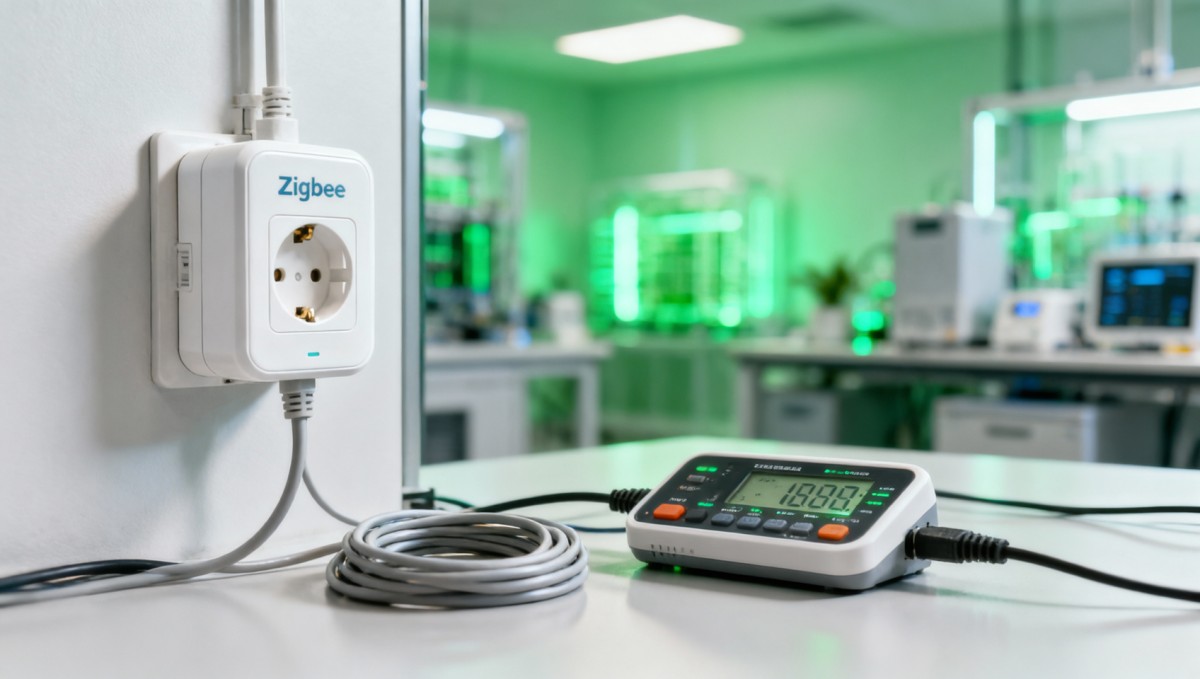
For information researchers, operators, procurement teams, and business evaluators, the core search intent behind this topic is practical: which test metrics help separate a truly deployable Zigbee smart plug from a marketing-friendly product sheet? A useful test framework should focus on measurable performance under real operating conditions, not only lab-perfect switching demos.
The most decision-relevant metrics usually include:
- Power monitoring accuracy: how closely the plug reports voltage, current, power, and energy versus calibrated reference instruments.
- Protocol latency benchmark: how fast on/off commands, telemetry updates, and automation triggers execute across the Zigbee network.
- Zigbee mesh capacity and routing stability: how well the device behaves as a router in larger networks with multiple endpoints.
- Standby power consumption: the device’s own idle energy draw when connected but not actively switching heavy loads.
- Relay endurance and switching reliability: whether repeated switching affects contact stability, heat, and long-term safety.
- Interference resilience: how performance changes in congested 2.4 GHz environments shared with Wi-Fi, BLE, and neighboring Zigbee nodes.
- Matter standard compatibility or migration readiness: whether the device can integrate into broader multi-protocol ecosystems through the intended hub architecture.
- Thermal behavior under continuous load: whether heat buildup remains within safe design limits.
These metrics matter because smart plugs are often treated as simple peripherals, while in reality they can become distributed sensing and control nodes inside energy programs, occupancy-based automation, and demand-response strategies. In renewable energy and smart building contexts, a plug that switches correctly but reports inaccurate energy data can still produce bad operational decisions.
Which metrics matter most for renewable energy and smart energy use cases?
Not every metric has equal importance. For renewable energy workflows, the priority order is usually tied to how the plug contributes to monitoring, control, and optimization.
1. IoT power monitoring accuracy
This is often the most important metric when the plug is used to track appliance consumption, validate peak-load behavior, or support energy-saving automation. Buyers should ask:
- What is the measurement error at low, medium, and near-rated loads?
- Does accuracy remain stable with inductive or non-linear loads?
- How often does the device update telemetry?
- Are active power, apparent power, voltage, current, and accumulated kWh all available?
A plug that is accurate only at one load point is not sufficient for real energy analysis. If a device underreports or overreports consumption, dashboards, peak-shifting logic, and ROI calculations may all be distorted.
2. Standby consumption
For energy-conscious projects, low standby power is not a minor detail. A smart plug deployed at scale across homes, apartments, offices, or commercial sites can create a measurable parasitic load. Even a small difference per unit becomes significant when multiplied by hundreds or thousands of devices.
A proper Zigbee smart plug test should measure:
- Idle consumption with relay on
- Idle consumption with relay off
- Power draw during network join and reporting bursts
This matters especially for organizations promoting energy efficiency, because a device that saves energy on paper but wastes too much power in standby can weaken the business case.
3. Protocol latency benchmark
Latency affects automation quality. In simple residential use, a slight delay may be acceptable. In managed properties or commercial energy environments, delayed switching or delayed state reporting can reduce trust in the system.
The most useful latency tests measure:
- Command-to-action response time
- State-report feedback delay
- Performance across one-hop and multi-hop mesh paths
- Behavior under network traffic load
If a plug is used in routines triggered by occupancy, pricing signals, solar surplus logic, or load-shedding events, predictable latency matters more than best-case vendor demos.
4. Zigbee mesh capacity
Many readers evaluating this topic are not buying a single plug. They are assessing whether a product can scale. Since smart plugs often function as routing devices, their impact on mesh quality is substantial. A strong product should not just stay connected itself; it should help the network remain stable as node count grows.
Key indicators include:
- Maximum reliable node density in a test environment
- Routing consistency after power cycles
- Rejoin behavior after temporary network loss
- Packet delivery reliability in mixed-vendor Zigbee networks
For procurement teams, this is directly tied to rollout risk. A plug that performs well in a five-device test may become problematic in a 100-device building deployment.
How should buyers interpret power monitoring accuracy claims?
Power monitoring is one of the most misunderstood selling points in this category. Some vendors advertise energy monitoring without clearly stating test conditions, tolerance range, calibration method, or supported load types. That creates procurement uncertainty.
A better evaluation method is to compare the plug against a reference meter across multiple operating scenarios:
- Low-load test: to assess performance with standby appliances or electronics.
- Mid-load test: to represent common appliance operation.
- High-load test: to evaluate thermal stability and measurement drift near rated capacity.
- Dynamic-load test: to observe how quickly and accurately the device tracks changing consumption.
Decision-makers should also distinguish between display precision and measurement accuracy. A dashboard showing detailed decimal values does not guarantee that the underlying data is correct. For renewable energy applications, good enough is only good enough if it supports the intended financial or operational decision.
Why do latency and mesh stability often matter more than a long feature list?
A Zigbee smart plug may support scheduling, scene control, overload protection, and app dashboards, but if command execution is inconsistent, the user experience and system value decline quickly. This is especially true for operators and facility teams who need predictable behavior, not feature abundance.
In practice, three issues often surface before feature limitations do:
- Delayed command execution in busy networks
- Packet loss or inconsistent state reporting
- Mesh instability after power interruptions
These problems create manual rework, user complaints, and extra support costs. For business evaluators, that means the real cost of ownership may rise even if the purchase price looks attractive. A narrower feature set with stronger core network performance is frequently the better long-term choice.
How important is Matter compatibility in a Zigbee smart plug test?
Matter compatibility is important, but it should be interpreted carefully. A Zigbee smart plug does not become universally future-proof just because a seller mentions Matter. In most cases, compatibility depends on the ecosystem architecture, the bridge or hub in use, and the maturity of the software stack.
For readers comparing options today, the practical questions are:
- Does the plug integrate through a gateway that supports Matter bridging?
- Which device attributes and energy functions are preserved through that bridge?
- Will automation, telemetry, and firmware updates remain consistent across ecosystems?
- Is the product tested in mixed environments where Zigbee and Matter coexist?
For sourcing decisions, real interoperability evidence is more valuable than generic compatibility language. If your deployment roadmap includes multi-ecosystem control, ask for test results showing command reliability, reporting integrity, and device behavior after firmware updates.
What test results are most useful for procurement and business evaluation?
Procurement teams and commercial evaluators need more than engineering metrics alone. They need metrics translated into risk, cost, and deployment impact. The most helpful Zigbee smart plug test report should connect technical performance to sourcing decisions.
Useful buying criteria include:
- Accuracy consistency between production batches
- Failure rate during extended switching cycles
- Thermal safety margin at rated load
- Firmware stability and update reliability
- Interoperability with major Zigbee coordinators and gateways
- Energy data availability for API or platform integration
- Compliance documentation and traceable test methodology
For B2B deployments, one of the biggest concerns is hidden post-purchase friction. A low-cost plug that causes integration delays, support tickets, inaccurate reporting, or field replacements can damage project economics. That is why independent benchmarking matters: it transforms unclear vendor claims into comparable engineering evidence.
What should operators and technical teams check before deployment?
For operators and hands-on users, the goal is not only to buy the right plug but to ensure it performs reliably after installation. Before rollout, verify:
- The actual load profile matches the plug’s rated switching capability
- The reporting interval is suitable for the energy use case
- The Zigbee channel plan avoids known Wi-Fi congestion
- The hub or controller supports the required clusters and reporting attributes
- The device rejoins correctly after outage or gateway restart
- The enclosure temperature remains acceptable in the real installation environment
These checks reduce the gap between lab results and field results. In many projects, deployment success depends less on advertised specifications than on whether the device is tested under the network density, RF interference, and load conditions it will actually face.
Final verdict: which metrics matter most in a Zigbee smart plug test?
If the goal is real-world value rather than brochure compliance, the most important metrics are power monitoring accuracy, latency, mesh stability, standby consumption, and practical interoperability. For renewable energy teams, these directly affect data quality, automation reliability, and total efficiency. For buyers and business evaluators, they determine whether the product will scale, integrate, and hold up over time.
The main takeaway is simple: a Zigbee smart plug test should not stop at basic on/off functionality. It should reveal whether the device can deliver trustworthy energy data, behave predictably in a busy network, and fit into an evolving multi-protocol ecosystem. That is the difference between buying connected hardware and making a sound infrastructure decision.
At NexusHome Intelligence, we believe smart device sourcing should be driven by benchmarks, not buzzwords. When metrics are measured rigorously and interpreted in context, procurement becomes clearer, deployment risk falls, and engineering decisions become far more defensible.
Protocol_Architect
Dr. Thorne is a leading architect in IoT mesh protocols with 15+ years at NexusHome Intelligence. His research specializes in high-availability systems and sub-GHz propagation modeling.
Related Recommendations
- Dr. Aris ThorneWhat to Compare in a Zigbee Mesh Capacity Test
- Dr. Aris ThorneZigbee Smart Plug Test: Which Metrics Matter Most
- Dr. Aris ThorneHow Many Devices Can a Zigbee Network Really Handle
- Dr. Aris ThorneEN 303 647 V2.1.1 Mandatory for Zigbee/BLE Smart Devices in EU from Apr 2026
- Dr. Aris ThorneWhy Zigbee smart plugs drop offline under load
- Dr. Aris ThorneWhat to know before a Zigbee smart plug test
- Dr. Aris ThorneZigbee mesh capacity: how many nodes is too many?
- Dr. Aris ThorneWhat Affects Zigbee TRV Battery Life Most
- Dr. Aris ThorneHow to Source Zigbee Radiator Valve TRVs
- Dr. Aris ThorneHow to Compare Zigbee Motion Sensor Suppliers
Analyst