
What changes palletizing robot ROI in high-mix warehouses
author
In high-mix warehouses, the ROI of automation is shaped by far more than cycle speed alone. For enterprise decision-makers evaluating palletizing robot suppliers, real returns depend on SKU variability, integration complexity, uptime under changing loads, and energy efficiency across dynamic operations. Understanding these factors is essential to choosing systems that deliver measurable value instead of costly deployment surprises.
Why scenario differences matter more than headline robot speed
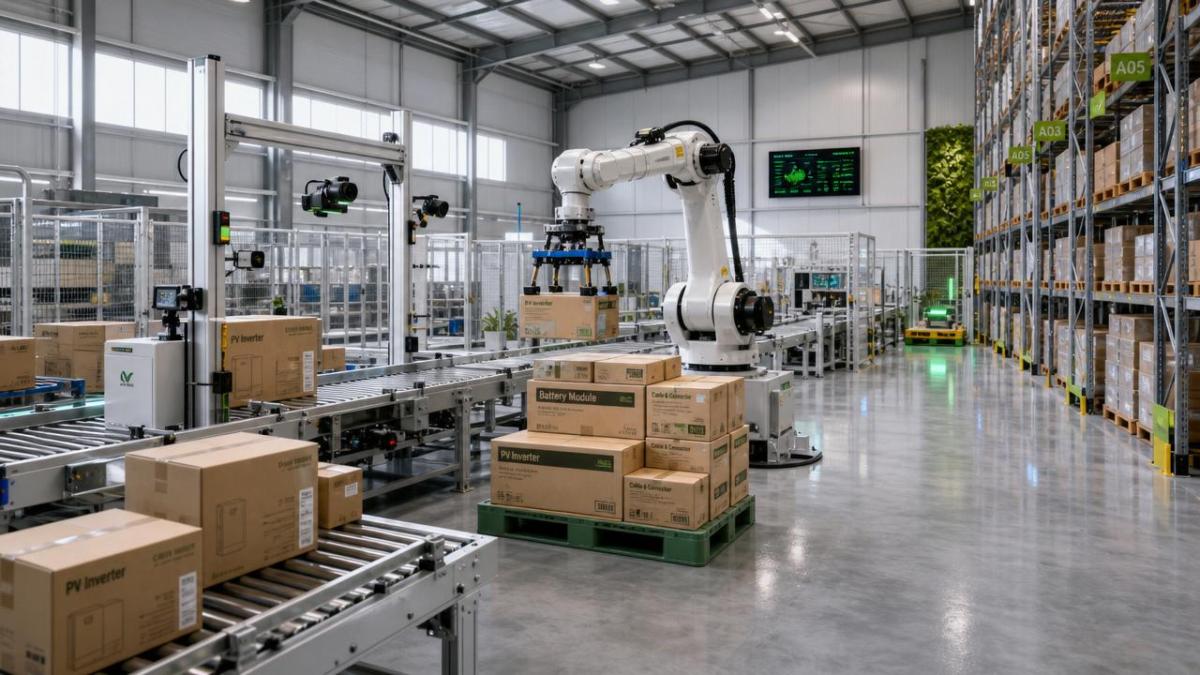
A palletizing robot that performs well in a stable beverage plant may underdeliver in a renewable energy warehouse handling mixed inverters, battery modules, mounting kits, cables, and fragile electronic components. That is why ROI cannot be judged by quoted picks per hour alone. In high-mix environments, returns are determined by how often the system needs recipe changes, how accurately it identifies cartons of different dimensions, and how smoothly it integrates with warehouse execution systems, energy monitoring layers, and safety protocols.
For renewable energy enterprises, the issue is even more specific. Warehouses often support project-based shipping, aftermarket parts, seasonal demand spikes, and outbound orders with varying pallet patterns. This creates a business case where the best palletizing robot suppliers are not necessarily those with the fastest machines, but those that can maintain reliable throughput under mixed-load conditions while controlling energy use, labor risk, and reconfiguration time.
Where palletizing robots show up in renewable energy warehouse operations
Decision-makers usually encounter palletizing automation in several practical scenarios. Each one changes the ROI equation.
- Finished goods staging for solar, storage, and smart energy equipment
- Spare parts fulfillment for distributed field service networks
- Cross-docking operations supporting rapid project deployment
- Regional hubs handling mixed supplier packaging standards
- Sites with sustainability mandates tied to energy efficiency and labor safety
In these settings, SKU diversity is usually high, packaging consistency is imperfect, and order profiles change frequently. A robotics investment succeeds when the chosen solution matches the actual operating pattern. This is why experienced buyers compare palletizing robot suppliers by application fit, not just brochure specifications.
Scenario comparison: what changes ROI from one warehouse to another
The table below highlights how business context shifts what matters most when evaluating palletizing robot suppliers.
Typical application scenarios and what enterprise buyers should prioritize
1. Spare parts warehouses with unpredictable daily order mix
This is a common renewable energy scenario, especially for inverter service parts, sensors, connectors, controllers, and replacement kits. Daily volumes may be modest, but the SKU count is large and carton dimensions vary. In this case, ROI depends less on maximum speed and more on reducing manual touchpoints without creating a complex engineering burden.
The best palletizing robot suppliers for this scenario typically offer intuitive software, rapid recipe setup, and flexible grippers that can handle varying case sizes. Buyers should ask how long a line lead or warehouse engineer needs to add a new SKU, whether pattern generation is automated, and how the system behaves when labels are partially obscured or boxes arrive slightly deformed.
2. Regional distribution hubs shipping complete project orders
When a warehouse supports solar farm, EV infrastructure, or distributed storage projects, each pallet often combines multiple product types destined for a specific site. Here, load integrity and traceability matter as much as labor reduction. A robot that can move boxes quickly but cannot build stable mixed pallets may create downstream losses through returns, repacking, and field delays.
In this scenario, evaluate palletizing robot suppliers on mixed-load software logic, carton orientation control, and data exchange with WMS or ERP systems. The automation should support project-specific pallet rules, not force the operation into a one-size-fits-all pattern.
3. Cross-docking operations under delivery pressure
Some renewable energy businesses operate fast transfer hubs where inbound products are sorted and repalletized for immediate outbound transport. In these environments, downtime destroys ROI faster than labor cost ever could. A ten-minute interruption before a departure wave may trigger cascading delays across installation schedules.
For this use case, decision-makers should focus on uptime architecture: remote diagnostics, local service coverage, spare parts availability, and failure recovery procedures. Strong palletizing robot suppliers will show mean time to repair data, escalation workflows, and examples of how operators recover from jams or barcode mismatches without waiting for a specialist.
4. Facilities with energy and sustainability targets
Because the industry is renewable energy, operating efficiency carries strategic value beyond simple cost reduction. Warehouses are increasingly expected to report energy intensity, reduce wasted motion, and support broader decarbonization commitments. In this case, ROI includes not only labor savings and throughput improvement, but also kilowatt-hour performance over real operating cycles.
This is where a data-driven mindset matters. Ask palletizing robot suppliers for energy consumption under mixed throughput conditions, not just full-speed benchmarks. Compare idle consumption, restart behavior, compressed air needs if applicable, and how software schedules low-activity periods. A system with moderate speed but better energy efficiency and higher real utilization may produce stronger long-term returns.
The hidden ROI variables buyers often underestimate
Many investments look attractive in early business cases because obvious variables are easy to model: headcount reduction, hourly throughput, and capital expense. However, high-mix warehouses expose less visible factors that can materially shift payback.
- Changeover time: If every new carton format requires engineering support, flexibility turns into hidden cost.
- Packaging inconsistency: Renewable energy supply chains often source from multiple contract manufacturers, so box quality and dimensions vary more than expected.
- Integration scope: ROI improves when robots connect cleanly with warehouse systems, label verification, and traceability tools.
- Operator adoption: If frontline teams cannot troubleshoot common exceptions, actual throughput falls below model assumptions.
- Floor space impact: Some cells reduce labor but create congestion around staging, wrapper access, or forklift paths.
- Energy profile: High power draw during low-volume periods can weaken sustainability and cost targets.
How to compare palletizing robot suppliers by scenario fit, not generic capability
Enterprise decision-makers should create a supplier scorecard based on the actual warehouse profile. This is especially important in a sector where product mix evolves with technology cycles, policy changes, and regional deployment patterns.
A practical approach is to ask each supplier to demonstrate performance under your own operating realities: mixed carton heights, uneven inbound packaging, fluctuating order waves, and energy reporting requirements. The most credible palletizing robot suppliers will welcome realistic acceptance criteria because it shows confidence in field performance rather than only lab results.
Common scenario misjudgments that weaken the business case
One common mistake is selecting a system designed for repetitive consumer packaged goods and assuming it will perform the same way in a renewable energy warehouse. Another is treating all labor savings as permanent while ignoring the effort needed for SKU onboarding, maintenance, and exception management. Buyers also sometimes underestimate the value of software ergonomics. In high-mix settings, a robot cell that only experts can adjust becomes a bottleneck instead of a productivity tool.
There is also a strategic error in choosing among palletizing robot suppliers purely on purchase price. Lower initial cost may hide weaker support, limited adaptability, or poor energy performance. In scenario-driven operations, total operating value matters more than upfront hardware cost.
FAQ for decision-makers evaluating palletizing robot suppliers
Is palletizing automation suitable for medium-volume, high-mix operations?
Yes, if the system is selected for flexibility rather than maximum speed. Medium-volume sites often gain ROI through labor stability, lower handling damage, and better shipment consistency.
What matters most when SKU counts change frequently?
Fast recipe management, adaptable tooling, and operator-friendly software usually matter more than peak cycle rate. Ask palletizing robot suppliers to prove real changeover workflows.
How should renewable energy companies include sustainability in ROI?
Include energy use per handled unit, idle consumption, reduced damage-related waste, and safer ergonomics. These factors align automation investment with broader environmental and operational targets.
A practical next step for your own warehouse scenario
The fastest route to a reliable automation decision is to define your warehouse by scenario before comparing vendors. Map your SKU variability, outbound order logic, packaging inconsistency, service expectations, and energy goals. Then ask palletizing robot suppliers to respond against those exact conditions with measurable assumptions, not broad claims.
For renewable energy enterprises, the strongest ROI comes from systems that fit the operating reality of mixed loads, changing project demand, and efficiency-focused logistics. When evaluation starts with scenario fit, buyers are far more likely to select palletizing robot suppliers that deliver durable value, stable uptime, and automation that supports both growth and sustainability.
Protocol_Architect
Dr. Thorne is a leading architect in IoT mesh protocols with 15+ years at NexusHome Intelligence. His research specializes in high-availability systems and sub-GHz propagation modeling.
Related Recommendations
- Lina Zhao(Security Analyst)How to Design a Smart Building Security Ecosystem That Integrates Access, Video, and Energy Data
- Lina Zhao(Security Analyst)How Lidar-Camera Fusion Improves Autonomous Inspection Robots for Solar Farms
- Lina Zhao(Security Analyst)How to Choose AI Security Cameras for Apartments Without Compromising Privacy
- Lina Zhao(Security Analyst)How to Evaluate a Commercial AI Camera Supplier for Long-Term Project Reliability
- Lina Zhao(Security Analyst)How to Plan Smart Security for Warehouses: Access Control, AI Monitoring, and ROI
- Lina Zhao(Security Analyst)How to Choose a Smart Traffic Sensor for Intersections: Key Specs and Deployment Factors
- Lina Zhao(Security Analyst)How to Evaluate Custom AMR AGV Navigation for Complex Warehouse Routes
- Lina Zhao(Security Analyst)METI Tightens Audit Rules for Vision AI Security Devices
- Lina Zhao(Security Analyst)Smart Camera Infrared Range Explained: What Affects Night Detection Distance?
- Lina Zhao(Security Analyst)Vision AI for Renewable Energy: 7 Inspection Tasks It Can Automate
Analyst