
6 axis robot arm wholesale: what affects total landed cost
author
For finance approvers evaluating 6 axis robot arm wholesale options in renewable energy manufacturing, unit price tells only part of the story. Total landed cost is shaped by logistics, tariffs, compliance, integration risk, maintenance, and supplier reliability. In a market where performance gaps can quietly erode ROI, understanding the real cost drivers is essential to making defensible, data-backed procurement decisions.
The core search intent behind this topic is not simply “where can I buy a robot arm cheaply?” It is “how do I evaluate the full financial impact of a wholesale purchase before approval?” For financial stakeholders, the real concern is avoiding hidden costs that appear after the PO is signed: customs surprises, retrofit expenses, commissioning delays, spare parts shortages, and underperformance in production environments.
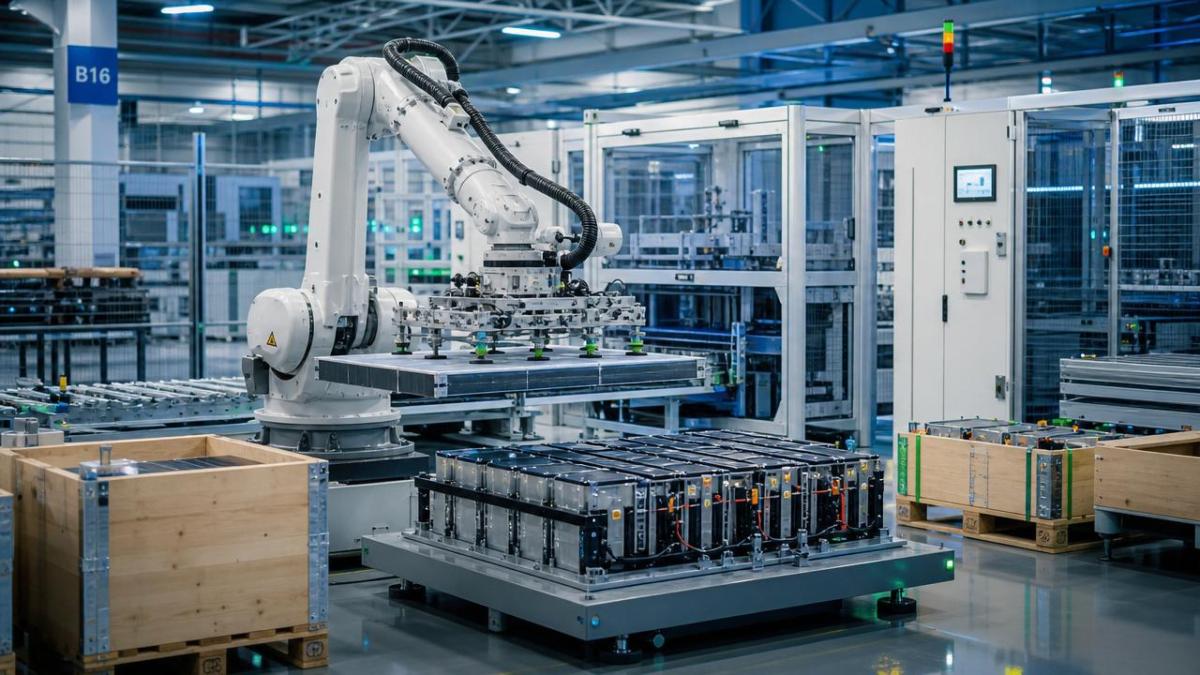
That means the most useful lens is total landed cost, not headline quotation. In renewable energy manufacturing, where robotic systems may be used for solar panel handling, battery module assembly, inverter production, or precision material movement, even a modest variance in uptime or integration complexity can materially affect payback. A cheaper robot can become the more expensive asset within months if deployment risk is underestimated.
Why unit price is the wrong starting point for 6 axis robot arm wholesale decisions
When procurement teams compare wholesale robot arm offers, the first visible number is usually EXW or FOB unit price. That figure is useful, but it is incomplete. It excludes the costs required to move the equipment into a productive, compliant, supportable asset within your facility. Finance approvers should treat the quoted robot price as only one line item in a broader cost stack.
A more realistic cost model includes shipping, insurance, duties, taxes, brokerage, inland transport, installation tooling, end-of-arm customization, control system integration, safety guarding, operator training, software licensing, acceptance testing, and expected maintenance. For multinational buyers, currency fluctuation and payment terms can also change the true cost materially.
In practice, wholesale buying creates both savings opportunities and concentration risks. Volume pricing may reduce unit cost, but a larger order magnifies any mistake in specification, compatibility, or supplier quality. For finance approvers, the right question is not whether a supplier offers a lower quote. It is whether the total commercial package reduces cost per productive hour over the useful life of the system.
What usually drives total landed cost the most
For most buyers, five factors have the greatest impact on total landed cost: commercial terms, logistics, import compliance, integration requirements, and lifecycle support. These categories often affect the final investment more than the difference between two initial quotations.
Commercial terms define what is and is not included. A low quote may exclude controller cabinets, teach pendants, cables, software modules, or end-of-arm tooling interfaces. It may also omit on-site commissioning support. Finance teams should request a line-by-line inclusion matrix, not just a summary quotation.
Logistics can vary significantly depending on robot size, shipping mode, destination, and required packaging. Industrial robot arms are not generic cartons. Crating standards, shock protection, moisture control, and insurance coverage matter. If delivery damage occurs, the cheapest freight option can become the most expensive decision in the process.
Import compliance is a frequent blind spot. Depending on the market, buyers may face tariffs, anti-dumping duties, VAT, import licensing requirements, and electrical or machinery compliance obligations. Delays at customs can also trigger storage fees and disrupt production schedules.
Integration requirements are especially important in renewable energy production lines. A 6 axis robot arm rarely works alone. It must communicate with conveyors, machine vision, PLCs, safety systems, and possibly MES or traceability platforms. If the robot’s communication stack or software environment is unfamiliar to your integrator, engineering hours rise quickly.
Lifecycle support affects the long tail of cost. Spare parts availability, lead time for replacement servo components, remote diagnostic capability, local service coverage, and firmware support all influence downtime. For capital approval, downtime risk should be translated into financial terms, not treated as a technical footnote.
How renewable energy manufacturing changes the cost equation
In renewable energy environments, the use case shapes the economics. A robot arm handling solar glass, assembling battery packs, dispensing thermal materials, or loading test fixtures faces different performance risks. This matters because application-specific demands influence the accessories, precision level, protection rating, and software integration needed.
For example, battery manufacturing often requires repeatable handling, controlled motion, and compatibility with traceability or inspection systems. Solar module production may emphasize speed, delicate handling, and low breakage rates. If the wholesale robot arm is selected on generic payload and reach alone, additional costs can appear later in the form of specialized grippers, motion tuning, or quality losses.
Environmental conditions also matter. Dust, temperature variation, static sensitivity, and continuous-duty cycles can affect maintenance schedules and component life. Finance approvers should ask whether the proposed robot configuration has been validated for the intended industrial setting, not merely demonstrated in a showroom environment.
In renewable energy manufacturing, throughput consistency often matters more than peak speed. A robot that is theoretically faster but unstable in real production conditions can reduce line yield and increase labor intervention. That directly weakens ROI. This is why technical benchmarking and FAT criteria should be tied to the real production scenario before approval.
Hidden cost categories that are often missed in approval workflows
Several expenses are routinely omitted from early-stage capex reviews. These omissions do not just create budget overruns; they can distort vendor comparisons and lead finance teams to approve the wrong offer.
One common omission is end-of-arm tooling. The robot arm may be quoted, but the gripper, vacuum system, torque tool, dispensing head, or sensor package may be separate. In many applications, tooling and its integration can represent a substantial share of the actual deployed cost.
Another is safety infrastructure. Depending on the cell design, you may need fencing, light curtains, scanners, interlocks, emergency stops, safety PLC logic, and certification work. These are not optional in most industrial settings, yet they are often budgeted outside the initial robot quote and therefore underestimated.
Software and licensing is another area of cost creep. Vision libraries, simulation packages, offline programming tools, fieldbus options, and remote monitoring modules may require paid licenses. The wholesale price of the robot may look attractive until these software dependencies are added.
Training and change management should also be priced realistically. If local maintenance teams are unfamiliar with the robot platform, training may require paid sessions, travel, translation, or external integrator support. A low-cost system that your team cannot independently maintain can create long-term service dependence.
Finally, acceptance and rework risk should be considered. If FAT and SAT criteria are vague, the buyer may end up funding post-delivery modifications that should have been addressed before shipment. Tight pre-shipment validation reduces both technical and financial uncertainty.
Supplier reliability affects cost more than many buyers expect
In 6 axis robot arm wholesale procurement, supplier reliability is not a soft consideration. It is a cost factor. A supplier with poor documentation, inconsistent quality control, or unstable component sourcing can increase commissioning time, spare parts mismatch, and after-sales delays. These failures eventually show up as labor cost, production loss, and emergency procurement.
Finance approvers should therefore assess more than the product brochure. Key indicators include manufacturing traceability, quality records, component brand consistency, test procedures, packaging discipline, export experience, and service response commitments. If the supplier cannot clearly answer these questions, the apparent savings may not survive deployment.
It is also worth distinguishing between a factory, a trading company, and an integration partner. Each can play a valid role, but the buyer needs transparency about who controls production, who holds technical accountability, and who provides support after delivery. Ambiguity here often leads to expensive blame-shifting when problems occur.
For larger wholesale orders, sample validation or pilot deployment is often financially prudent. Even if it slightly delays the transaction, it can prevent a larger-scale purchasing error. In capital-intensive manufacturing, protecting against one failed rollout often justifies the extra diligence.
How to compare wholesale offers using a finance-ready framework
A practical approval framework should convert technical differences into financial visibility. One effective method is to evaluate each supplier across four layers: acquisition cost, deployment cost, operating cost, and risk cost.
Acquisition cost includes unit price, packaging, shipping terms, insurance, duties, taxes, and payment structure. Here, finance should normalize quotations to the same Incoterm basis before comparing them. A cheap EXW quote may be less attractive than a slightly higher DDP-style structure once all external costs are added.
Deployment cost includes integration engineering, tooling, software options, safety systems, commissioning, training, and line modification. This is where many hidden differences appear. A technically mature supplier may look more expensive upfront but require fewer engineering hours and less troubleshooting.
Operating cost includes energy consumption, maintenance intervals, spare parts pricing, uptime, and labor impact. Even though robot electricity usage may not be the largest expense, maintenance frequency and unplanned downtime can be decisive over a multi-year horizon.
Risk cost includes delay probability, compliance exposure, documentation gaps, service limitations, and supplier continuity risk. Finance teams often struggle to quantify this category, but scenario-based costing helps. For example, what is the cost of a two-week commissioning delay? What is the cost of one day of line stoppage waiting for a failed component?
Once these layers are modeled, buyers can compare suppliers on total cost of ownership rather than purchase price alone. This approach is especially useful when management needs a defendable explanation for approving a quote that is not the lowest on paper.
Questions finance approvers should ask before signing off
Before approving a 6 axis robot arm wholesale purchase, finance leaders should request clear answers to several questions. These are not technical distractions; they are controls against budget leakage.
What exactly is included in the quoted price, and what is excluded? Which Incoterm applies? What duties, taxes, and import costs are expected in the destination country? Are software licenses perpetual or recurring? What local installation work is still required after delivery?
How quickly can the supplier provide critical spare parts? Is there a local or regional service network? What is the documented warranty scope, and what voids it? Has the exact application been deployed before in a comparable manufacturing environment?
What are the FAT and SAT acceptance criteria, and who pays if the system requires rework to meet them? What are the controller and communication protocol compatibilities with the existing line? Will your internal team be able to operate and maintain the platform after training, or will you remain dependent on external support?
If a supplier cannot answer these questions with precision, the financial risk premium should be considered high. In many cases, lack of clarity is itself a warning sign that future unplanned costs are likely.
The strategic takeaway: the cheapest robot arm is often not the lowest-cost investment
For renewable energy manufacturers, robotic automation decisions increasingly sit at the intersection of capex discipline, production reliability, and long-term competitiveness. That is why finance approvers should view wholesale robot sourcing as a system investment, not a catalog purchase.
The strongest procurement decisions come from matching the robot to the application, validating the supplier’s support capability, and modeling total landed cost before commitment. When done correctly, this prevents false savings, reduces deployment friction, and protects expected ROI.
In short, the true cost of 6 axis robot arm wholesale is determined by far more than the number on the first quotation. Logistics, tariffs, compliance, integration complexity, support quality, and downtime exposure all shape the final economics. A disciplined, data-backed evaluation helps finance teams approve with confidence and avoid paying later for costs that should have been visible from the start.
Protocol_Architect
Dr. Thorne is a leading architect in IoT mesh protocols with 15+ years at NexusHome Intelligence. His research specializes in high-availability systems and sub-GHz propagation modeling.
Related Recommendations
- Lina Zhao(Security Analyst)How to Design a Smart Building Security Ecosystem That Integrates Access, Video, and Energy Data
- Lina Zhao(Security Analyst)How Lidar-Camera Fusion Improves Autonomous Inspection Robots for Solar Farms
- Lina Zhao(Security Analyst)How to Choose AI Security Cameras for Apartments Without Compromising Privacy
- Lina Zhao(Security Analyst)How to Evaluate a Commercial AI Camera Supplier for Long-Term Project Reliability
- Lina Zhao(Security Analyst)How to Plan Smart Security for Warehouses: Access Control, AI Monitoring, and ROI
- Lina Zhao(Security Analyst)How to Choose a Smart Traffic Sensor for Intersections: Key Specs and Deployment Factors
- Lina Zhao(Security Analyst)How to Evaluate Custom AMR AGV Navigation for Complex Warehouse Routes
- Lina Zhao(Security Analyst)METI Tightens Audit Rules for Vision AI Security Devices
- Lina Zhao(Security Analyst)Smart Camera Infrared Range Explained: What Affects Night Detection Distance?
- Lina Zhao(Security Analyst)Vision AI for Renewable Energy: 7 Inspection Tasks It Can Automate
Analyst