
Vision AI Camera Accuracy: What Buyers Should Verify
author
Before comparing specs, buyers should verify how Vision AI camera accuracy performs in real environments, from glare and low light to edge processing delays. For renewable energy sites and smart infrastructure, NHI applies IoT hardware benchmarking, Matter protocol data, and smart home hardware testing to separate marketing claims from engineering truth—helping procurement teams identify verified IoT manufacturers and reduce risk across the IoT supply chain.
In renewable energy operations, camera accuracy is not just a security feature. It affects site access control, perimeter monitoring, asset protection, fault response, and even worker safety across solar farms, wind parks, battery storage systems, and distributed energy facilities. A Vision AI camera that performs well in a brochure demo may fail when exposed to dust, backlighting, vibration, rain, or constrained edge compute resources.
That is why procurement teams, technical evaluators, and site operators need a verification framework. Instead of accepting broad claims such as “99% detection accuracy” or “smart recognition,” buyers should ask how the device was tested, under what lux range, with what latency, and across which deployment conditions. In energy infrastructure, those details often determine whether a system reduces operational risk or quietly adds it.
Why Vision AI Camera Accuracy Matters in Renewable Energy Environments
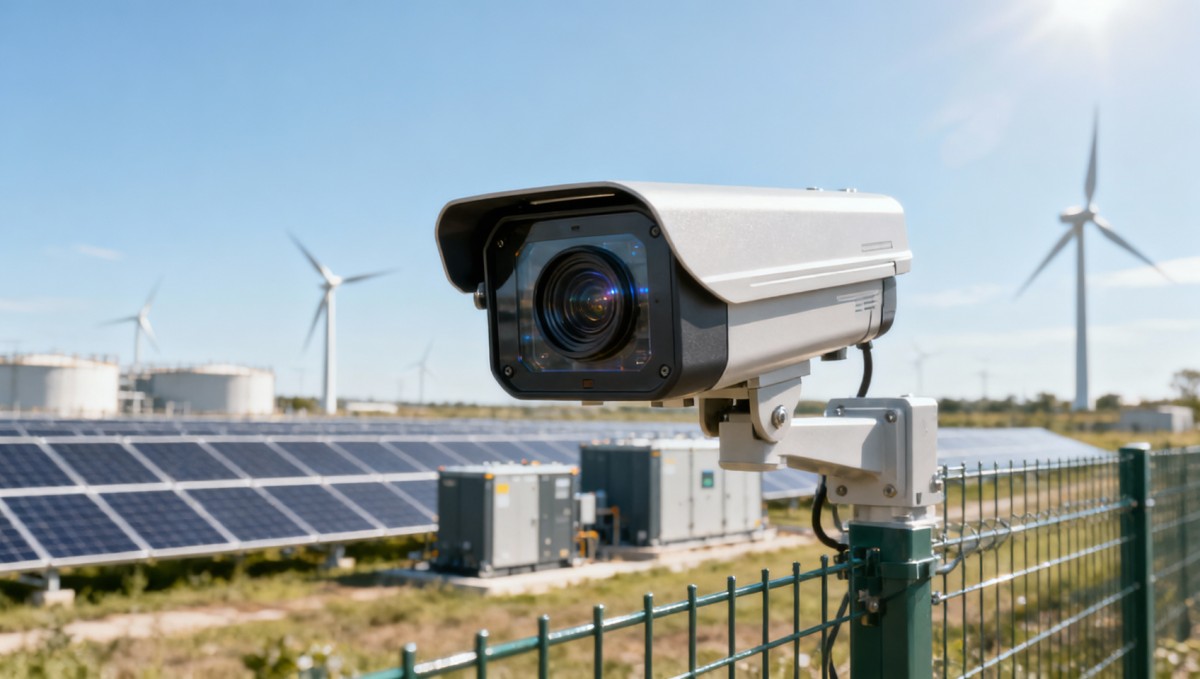
Renewable energy sites create unusually demanding imaging conditions. Utility-scale solar plants often combine high reflectivity, open-sky glare, and fine airborne dust. Wind facilities introduce tower vibration, shadow movement, and long-distance monitoring requirements. Battery energy storage systems add enclosed spaces, thermal events, and strict safety monitoring zones. In each case, camera accuracy directly affects whether people, vehicles, intrusions, or anomalies are recognized in time.
For operators, the problem is practical. If person detection fails during dawn and dusk, false alarms increase and real events are missed. If facial or object recognition degrades when illumination drops below 10 lux, access decisions may become slower or require manual intervention. If edge inference delay rises above 300–500 milliseconds during peak traffic, incident response may lag at the exact moment it is needed.
For procurement teams, inaccurate cameras create hidden lifecycle costs. A low-cost unit that needs frequent retuning, excessive cloud bandwidth, or manual event review can cost far more over 24–36 months than a better-tested device. In remote energy sites where truck rolls are expensive, even a 2-hour service visit can materially change total ownership economics.
NHI’s benchmarking approach is relevant here because it focuses on measurable performance rather than marketing labels. In fragmented IoT ecosystems, protocol compatibility, edge processing capability, and stress-tested reliability matter as much as image resolution. A 4MP camera with stable inference and verified local processing may outperform an 8MP unit that drops frames or misclassifies under field conditions.
Typical failure points buyers overlook
- Glare from solar panels causing overexposure and reduced object boundary detection.
- Night scenes below 5–10 lux where noise reduction interferes with classification accuracy.
- Edge devices throttling under sustained temperatures above 45°C in outdoor enclosures.
- Network congestion adding 100–300 milliseconds of delay in multi-node site architectures.
What Accuracy Buyers Should Verify Beyond the Datasheet
The first mistake is treating “accuracy” as a single number. In practice, Vision AI camera accuracy includes detection accuracy, classification accuracy, identification confidence, false positive rate, false negative rate, tracking stability, and processing latency. A camera can score well on one metric and still be operationally weak. For example, high detection sensitivity may generate too many false alerts in sites with moving vegetation, reflective fencing, or rotating turbine shadows.
Buyers should ask vendors for test conditions, not only outcomes. What was the distance from subject to camera: 3 meters, 10 meters, or 25 meters? What was the scene illumination: 1000 lux daylight, 50 lux indoor room, or 1–5 lux low light? Was the test done with local inference on the edge, or with cloud offload? These variables can change actual field performance by a large margin.
At renewable energy sites, another key issue is scene complexity. Detection on a clean background is very different from detection near inverter stations, cable runs, fencing, parked maintenance vehicles, and moving service crews. Buyers should request performance samples under at least 4 common site states: bright daylight, low light, rain or fog, and backlit conditions.
The table below summarizes the verification points that matter most when comparing Vision AI cameras for energy infrastructure procurement.
The key takeaway is that a single advertised accuracy figure has limited value. Buyers should look for scenario-based evidence, with quantified error behavior and timing data. That evidence is especially important when the camera is part of a larger IoT stack that includes gateways, edge nodes, and smart building or smart grid protocols.
Four questions every evaluator should ask
- How does recognition change from full daylight to low light and high glare conditions?
- What is the actual edge processing delay when multiple events occur within 1–2 seconds?
- How many false alarms are generated per day in a real outdoor energy site simulation?
- What protocol and integration limits appear when the camera joins broader IoT systems?
Environmental and System Conditions That Distort Real Accuracy
In renewable energy applications, environmental stress can distort camera performance more than nominal specifications suggest. Solar farms can produce strong albedo effects from panel surfaces, while dust and pollen reduce lens clarity over time. Wind sites may introduce mechanical vibration or micro-shifts in mounting angle. Coastal renewable assets can face salt exposure and haze, gradually altering image quality and contrast.
System architecture also matters. A Vision AI camera does not operate in isolation. It depends on firmware stability, image sensor quality, edge chip thermal behavior, network path reliability, and event management logic. If the site uses Matter bridges, Thread border routers, Zigbee security devices, or BLE maintenance tools, interoperability can affect end-to-end responsiveness even when the camera itself is technically capable.
NHI’s emphasis on protocol verification is useful because fragmented ecosystems often hide operational bottlenecks. A buyer may approve a camera based on image specs, only to discover later that multi-node communication adds jitter, event timestamps drift, or local storage fallback does not synchronize cleanly after outages. On remote energy assets, even a brief sync gap can complicate incident investigation.
The following table highlights common field conditions and the verification response buyers should require before approval.
The conclusion is straightforward: field accuracy is a system-level outcome. Buyers should test not only the camera image pipeline but also thermal, network, storage, and protocol behavior under realistic renewable energy operating conditions.
A practical threshold mindset
Rather than chasing the highest advertised number, teams should define acceptable thresholds. For many industrial security and monitoring tasks, it is more valuable to maintain stable accuracy within a known range over 12 months than to claim extreme peak accuracy in a controlled lab. Procurement decisions improve when thresholds are tied to site risk, staffing, and service model requirements.
Examples of threshold-based criteria
- Alert delivery within 1 second for restricted-zone intrusion events.
- Low-light detection retained at defined confidence levels down to 5 lux.
- Consistent operation across a seasonal temperature band such as -20°C to 50°C.
- Manual review rates kept low enough that one operator can manage the assigned zone.
How Procurement Teams Should Evaluate Vendors and Verified Manufacturers
When sourcing Vision AI cameras for renewable energy projects, buyers should evaluate the supplier as much as the product. A vendor with limited test transparency may still present polished claims, but without benchmark evidence, the risk remains with the buyer. NHI’s data-driven supply chain philosophy is particularly useful here: trust should be built on compliance testing, repeatable measurements, and engineering traceability.
A strong procurement review usually includes at least 5 dimensions: imaging performance, edge compute behavior, protocol compatibility, environmental resilience, and post-deployment support. If any one of these is weak, the camera may create downstream problems in installation, integration, or maintenance. For example, a camera that needs frequent firmware intervention may not suit remote wind assets with limited on-site technical staff.
Commercial teams should also compare test evidence formats. Some suppliers provide only brochure values, while stronger manufacturers can share structured reports with scene notes, event timing, firmware versions, and known limitations. That kind of detail does not guarantee perfection, but it significantly improves procurement confidence and vendor accountability.
The checklist below can help procurement and business evaluation teams organize supplier comparison in a way that aligns with real site risk.
Procurement checklist for Vision AI camera selection
- Request test evidence across at least 3 environmental conditions relevant to your energy site.
- Verify whether local inference remains stable during 4-hour or longer continuous operation.
- Confirm integration behavior with existing IoT gateways, access systems, or building controls.
- Ask for maintenance guidance, lens cleaning intervals, and firmware update process.
- Review failure handling after power loss, network interruption, or storage synchronization events.
Procurement teams should also define trial acceptance rules before pilot deployment. A 2–4 week pilot with measured pass/fail criteria is usually more useful than an open-ended evaluation. This reduces ambiguity and prevents commercial pressure from replacing technical judgment.
Signs of a more reliable manufacturer
Reliable suppliers generally discuss constraints openly. They can explain how performance changes with distance, lighting, or thermal load. They can also map their product into broader IoT infrastructure, including edge processing, local privacy handling, and interface expectations. In a fragmented supply chain, that engineering clarity is often more valuable than aggressive feature lists.
Implementation, Maintenance, and Common Buying Mistakes
Even a well-selected camera can underperform if installation and maintenance are treated as afterthoughts. Placement height, lens angle, scene calibration, enclosure cooling, and network design all influence usable accuracy. For solar and storage sites, a camera mounted too high may widen coverage but weaken identification detail. A camera mounted too low may increase occlusion, dust exposure, or tamper risk.
Maintenance planning is equally important. In many outdoor energy environments, lens cleaning cycles may need review every 30, 60, or 90 days depending on dust load, weather, and site traffic. Firmware updates should be scheduled with rollback planning, especially when cameras are integrated with edge analytics, access systems, or safety workflows.
One common buying mistake is prioritizing sensor resolution while ignoring processing architecture. Another is evaluating image quality on recorded clips without measuring alert timing or integration response. A third mistake is running pilots in clean conditions and then assuming equal performance during summer glare, winter haze, or storm conditions. These shortcuts create avoidable risk.
A more disciplined rollout follows a staged path from lab review to field pilot to monitored deployment. That approach supports better accountability across engineering, operations, and procurement.
Recommended 5-step deployment flow
- Define priority use cases such as perimeter intrusion, gate access, PPE checks, or thermal-risk zone monitoring.
- Set measurable thresholds for latency, low-light performance, and acceptable false alarm volume.
- Run a limited pilot in 1–2 representative site zones for 2–4 weeks.
- Review logs jointly with operators, integrators, and procurement stakeholders.
- Scale only after verifying maintenance effort, protocol fit, and field accuracy stability.
FAQ for buyers in renewable energy projects
How much low-light performance is enough for remote energy sites?
That depends on the task. For general perimeter awareness, performance at 5–10 lux may be acceptable if supplemental illumination or IR support is available. For identity-sensitive tasks such as gate verification, buyers should test at the actual scene illumination and subject distance rather than relying on generic low-light claims.
Is edge AI always better than cloud processing?
Not always, but local processing often improves responsiveness and reduces bandwidth dependency in remote renewable assets. Buyers should compare latency, privacy needs, outage behavior, and service costs over 12–36 months. In many field deployments, hybrid designs offer the best balance.
What pilot duration is usually practical before procurement approval?
A structured 2–4 week pilot is often enough to expose obvious failures in glare handling, low-light detection, false alarm rate, and integration responsiveness. For harsh environments or critical storage assets, a longer seasonal review may be justified.
Which teams should be involved in evaluation?
The best decisions usually involve at least four roles: operations, security or safety, IT or OT integration, and procurement. If the system supports access control or regulated data handling, legal or compliance review may also be necessary.
Vision AI camera accuracy should be evaluated as a field-proven operating capability, not a simple brochure specification. In renewable energy environments, glare, low light, heat, dust, network conditions, and protocol interoperability can all reshape actual performance. Buyers who verify detection quality, edge latency, false alarm behavior, and supplier test discipline are more likely to reduce lifecycle risk and deploy systems that genuinely support site resilience.
NHI helps global procurement leaders, technical evaluators, and operators move from vendor claims to measurable engineering evidence. If you are comparing Vision AI cameras for solar, wind, storage, or smart infrastructure projects, contact us to review benchmarking criteria, discuss procurement risk points, and get a more data-driven evaluation framework for your next deployment.
Protocol_Architect
Dr. Thorne is a leading architect in IoT mesh protocols with 15+ years at NexusHome Intelligence. His research specializes in high-availability systems and sub-GHz propagation modeling.
Related Recommendations
- Lina Zhao(Security Analyst)Machine Vision for Defect Detection in Solar Cells: EL vs. Visible-Light Imaging
- Lina Zhao(Security Analyst)Can a vision AI solution detect microcracks in solar cells?
- Lina Zhao(Security Analyst)How to Design a Smart Building Security Ecosystem That Integrates Access, Video, and Energy Data
- Lina Zhao(Security Analyst)How Lidar-Camera Fusion Improves Autonomous Inspection Robots for Solar Farms
- Lina Zhao(Security Analyst)How to Choose AI Security Cameras for Apartments Without Compromising Privacy
- Lina Zhao(Security Analyst)How to Evaluate a Commercial AI Camera Supplier for Long-Term Project Reliability
- Lina Zhao(Security Analyst)How to Plan Smart Security for Warehouses: Access Control, AI Monitoring, and ROI
- Lina Zhao(Security Analyst)How to Choose a Smart Traffic Sensor for Intersections: Key Specs and Deployment Factors
- Lina Zhao(Security Analyst)How to Evaluate Custom AMR AGV Navigation for Complex Warehouse Routes
- Lina Zhao(Security Analyst)METI Tightens Audit Rules for Vision AI Security Devices
Analyst