
IP Camera Hardware Benchmarks That Reveal Real Gaps
author
In renewable-energy facilities and smart buildings, IP camera hardware benchmarks expose the gap between vendor claims and field performance. NexusHome Intelligence applies IoT hardware benchmarking, Matter protocol data, and smart home hardware testing to reveal latency, power draw, image accuracy, and compliance risks—helping researchers, operators, buyers, and evaluators identify verified IoT manufacturers and trusted smart home factories with confidence.
For solar farms, wind substations, battery energy storage systems, and mixed-use green buildings, an IP camera is no longer just a security endpoint. It is part of an operational data layer tied to remote inspection, asset protection, safety compliance, incident response, and increasingly, cross-platform automation. When a camera underperforms, the cost is not limited to blurry footage; it can affect alarm verification time, maintenance scheduling, energy uptime, and procurement confidence across the whole project lifecycle.
That is why hardware benchmarking matters. In fragmented IoT environments where Matter, Thread, BLE, Zigbee, Ethernet, and Wi-Fi coexist, real performance must be measured under heat, dust, vibration, unstable network loads, and 24/7 duty cycles. For B2B buyers and technical evaluators, the useful question is not whether a vendor claims “AI-ready” or “low power,” but how the device behaves after 30 days of continuous recording, during a 150 ms network spike, or under enclosure temperatures above 45°C.
Why IP Camera Benchmarks Matter in Renewable-Energy Operations
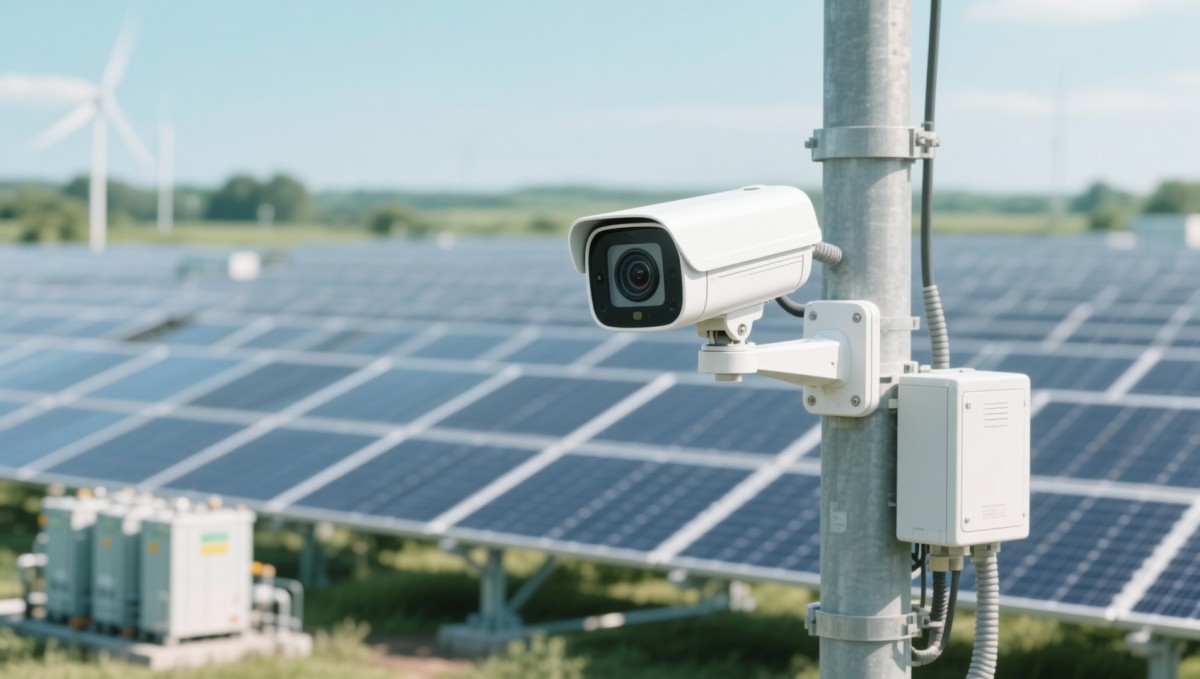
Renewable-energy sites operate under conditions that quickly expose weak hardware. Utility-scale solar plants often span hundreds of meters to several kilometers, with cameras mounted on perimeter fences, inverter stations, tracker rows, and access roads. Wind projects add tower vibration, lightning exposure, and remote backhaul constraints. In these settings, a specification sheet rarely predicts field reliability with enough accuracy for procurement teams.
NexusHome Intelligence approaches this gap with a benchmarking mindset rooted in measurable engineering variables. The focus is on latency, image retention under low lux conditions, packet loss in congested edge networks, standby and active power draw, thermal stability, and protocol behavior across mixed ecosystems. A 2 MP or 4 MP label alone tells very little if motion blur rises above operational thresholds or if the stream becomes unstable when bandwidth drops by 20% to 30%.
For operators, poor benchmarking translates into daily friction: false alarms increase guard workload, delayed video feeds slow incident confirmation, and unstable edge devices complicate predictive maintenance. For procurement managers, weak benchmarks create hidden lifecycle costs. A camera that is 8% cheaper upfront may require earlier replacement, more technician visits, or a separate integration gateway, turning short-term savings into a 12- to 24-month cost penalty.
This is especially relevant in green buildings that combine energy management systems, occupancy sensors, smart access control, rooftop solar, EV charging, and surveillance into one digital stack. If the camera cannot maintain protocol stability or secure local processing, it weakens the overall building intelligence layer. In a fragmented ecosystem, benchmark data becomes a procurement filter, not a technical luxury.
Operational consequences of unverified camera hardware
A camera selected without proper stress testing can fail in ways that standard office deployments rarely reveal. Renewable-energy projects typically require 24/7 availability, remote diagnostics, and reliable event capture across wide outdoor zones. The table below outlines where benchmark gaps create direct operational risk.
The main takeaway is simple: benchmark data reveals where a camera supports energy-site resilience and where it becomes a hidden liability. For teams comparing suppliers, these parameters provide a more useful baseline than feature-heavy brochures.
The Hardware Metrics That Reveal Real Gaps
In renewable-energy surveillance, meaningful benchmarking starts below the marketing layer. Image quality, SoC efficiency, sensor behavior, memory bandwidth, enclosure sealing, PCB consistency, and thermal design all affect whether a device performs reliably after months in the field. For technical buyers, the right metrics are those that predict uptime, not just showroom image sharpness.
Latency should be evaluated in at least 3 states: idle network, moderate congestion, and stressed traffic conditions. A camera that streams at 120 ms in the lab may exceed 300 ms once multiple nodes share the same wireless bridge or edge switch. For solar and storage sites, that difference matters when operators need to confirm intrusion, smoke, or equipment anomalies in near real time.
Power consumption is another overlooked benchmark. A difference between 4 W and 8 W may seem minor on one unit, but across 60 cameras, the continuous load gap becomes substantial. In remote renewable assets, this affects PoE planning, backup runtime, and solar-assisted surveillance poles. NHI’s hardware view treats low-power claims as measurable variables tied to operating mode, infrared activation, onboard analytics, and ambient temperature.
Image accuracy must also be tested in context. A device may advertise strong AI detection, yet struggle with reflective PV panel glare, low-angle sunrise conditions, dust haze, or fast motion near rotating infrastructure. Sub-pixel or model-level analytics claims should be evaluated against practical targets such as license plate legibility zones, person detection distance, or error rates during low-contrast scenes.
Core benchmark categories for site evaluators
- Imaging performance: low-light visibility, wide dynamic range behavior, motion blur control, glare resistance, and scene consistency over 12- to 24-hour cycles.
- Electrical efficiency: standby load, active streaming load, IR illumination load, and heat rise under continuous operation.
- Network resilience: packet recovery, bitrate adaptation, edge buffering, and response under 5% to 10% packet loss conditions.
- Mechanical durability: enclosure sealing, connector integrity, corrosion resistance, and vibration tolerance for wind and roadside installations.
Typical benchmark thresholds worth checking
Not every project needs the same threshold, but some ranges are useful during comparison. Outdoor monitoring often benefits from stable operation above 45°C enclosure temperature, end-to-end response below 250 ms for critical events, and predictable power draw within a ±10% variance across day and night modes. If a vendor cannot define the test method behind these numbers, the claim has limited decision value.
The next table summarizes how common hardware metrics should be interpreted in renewable-energy procurement rather than treated as isolated specifications.
For buyers comparing verified IoT manufacturers, the best benchmark report is one that links each metric to deployment impact. Raw numbers without context do not help an operator reduce risk or a commercial evaluator justify supplier selection.
Protocol, Power, and Compliance: Where Integration Failures Begin
Many surveillance failures in renewable-energy and smart-building projects are integration failures disguised as hardware failures. A camera may function correctly in isolation but break down when connected to edge controllers, occupancy logic, access management, or building dashboards. That is why protocol-level benchmarking is essential. Claims such as “works with smart platforms” are too vague for procurement decisions involving energy-critical infrastructure.
Matter is relevant because the market is moving toward interoperable device ecosystems, but camera deployments still involve mixed stacks and transitional architectures. In practice, buyers need to verify event latency, handoff reliability, local processing behavior, and whether the camera can coexist with other IoT nodes without causing traffic instability. A 4-node or 6-node mixed environment often reveals more than a single-device lab test.
Compliance also matters beyond cybersecurity slogans. Renewable-energy operators increasingly need local processing options, clear data-handling boundaries, audit-ready retention policies, and region-appropriate privacy controls. For European or multinational projects, the difference between local edge redaction and cloud-dependent analytics can affect approval timelines and contractual risk exposure.
Power and compliance intersect in remote deployments. If a camera depends on constant cloud uplink for analytics, bandwidth and power budgets rise together. If it supports efficient edge inference, traffic volume may fall, lowering ongoing operational load. NHI’s benchmarking perspective is to quantify these trade-offs rather than accept generic “smart AI” positioning.
Key integration checks before purchase approval
- Test event delivery across a mixed network for at least 72 hours instead of relying on a short demo session.
- Verify whether local analytics remain functional during uplink degradation or temporary cloud disconnection.
- Confirm actual compatibility boundaries, including what works natively, what requires gateways, and what remains roadmap-only.
- Review retention, encryption, and local access controls to ensure site-level compliance and internal governance alignment.
Common procurement mistake
A frequent mistake is approving a supplier based on video quality alone. For energy projects, the smarter approach is to score at least 4 dimensions together: hardware reliability, power efficiency, protocol integration, and compliance readiness. This reduces the chance of discovering hidden gateway costs or operational constraints after installation.
When buyers request benchmark evidence in these areas, they also gain a clearer view of factory maturity. Vendors that can explain test conditions, PCB consistency, firmware behavior, and thermal stress results usually present lower integration uncertainty than those offering only feature brochures.
How Buyers and Operators Should Evaluate Suppliers
For procurement teams, the goal is not to find the most feature-rich camera. It is to identify a supplier whose hardware behavior remains predictable across deployment, integration, maintenance, and scaling. In renewable-energy portfolios, this may involve 20 units on a pilot site or 200 units distributed across substations, rooftops, and perimeter assets. Supplier evaluation must therefore combine hardware evidence with manufacturing transparency.
NexusHome Intelligence emphasizes the value of verified IoT manufacturers and trusted smart home factories because consistency starts at the production level. PCB assembly precision, component sourcing discipline, firmware release control, and stress-testing routines influence field performance months after the purchase order is signed. A supplier that cannot document these fundamentals is harder to trust in long-cycle infrastructure projects.
Operators should also push for use-case-aligned pilots. A rooftop commercial building with PV, battery storage, and smart access control may need one benchmark profile, while a desert solar farm with dust and long-distance links needs another. A 2- to 4-week pilot can reveal issues that a one-day proof of concept will miss, especially under variable light, heat, and traffic conditions.
Commercial evaluators should pay attention to replacement risk. If spare parts, firmware support, or interoperability roadmaps are unclear, the buyer may inherit higher upgrade costs within 18 to 36 months. That risk often exceeds the initial difference between two competing quotations.
Supplier evaluation framework for renewable-energy projects
The following matrix can be used by researchers, users, procurement officers, and business reviewers when screening camera suppliers for clean-energy infrastructure and smart-building energy systems.
This framework helps teams shift the conversation from unit price to total deployment confidence. In a market crowded with vague promises, structured evidence is often the fastest path to a defensible buying decision.
Implementation, Maintenance, and Frequently Asked Questions
Benchmarking should continue beyond selection. Once hardware is shortlisted, deployment teams should validate mounting stability, thermal exposure, cable protection, stream continuity, and edge storage behavior on the live site. A staged process often works best: site survey, pilot deployment, stress observation, and final scale-up. For many projects, this can be completed within 3 to 6 weeks depending on the number of nodes and integration points.
Maintenance planning is equally important. Cameras installed near inverters, storage units, or dusty solar corridors should be reviewed on a defined cycle, often every 3 to 6 months for lens condition, connector integrity, enclosure cleanliness, and firmware stability. If the benchmark report includes thermal and power baselines, operators can detect drift faster and reduce reactive service calls.
For procurement and business evaluation teams, implementation quality is part of the commercial equation. A lower-cost unit that needs more frequent cleaning, power redesign, or firmware support may create a higher three-year operating burden than a more stable option. This is why benchmarking and lifecycle planning should be treated as one workflow.
FAQ: How should teams interpret IP camera benchmark results?
How long should a meaningful field pilot last?
A useful pilot usually runs for at least 2 weeks, while 4 weeks is stronger when the site has variable heat, glare, or network conditions. Shorter tests may confirm basic functionality but often miss thermal drift, unstable night performance, or intermittent protocol issues.
What power metrics matter most for off-grid or solar-assisted surveillance?
Buyers should review standby wattage, active streaming wattage, peak load with IR or analytics enabled, and the variance between daytime and nighttime operation. Even a 2 W to 3 W difference per unit can materially affect battery sizing and backup duration across larger deployments.
Are protocol claims enough if the camera image quality is strong?
No. Good image quality does not guarantee reliable event delivery, local processing, or long-term interoperability. In energy-focused smart buildings and remote assets, protocol behavior can determine whether the camera becomes part of a useful automation layer or remains an isolated video device.
What is the most common sourcing mistake?
The most common mistake is choosing based on headline features and price without asking for structured benchmark data. The better approach is to compare at least 4 areas together: hardware stability, power draw, integration readiness, and lifecycle support.
IP camera hardware benchmarks are valuable because they reveal the difference between specification language and operational truth. In renewable-energy facilities and smart buildings, that difference affects security response, maintenance efficiency, integration cost, and long-term supplier confidence. NexusHome Intelligence helps decision-makers turn fragmented technical claims into measurable selection criteria grounded in hardware evidence, protocol transparency, and deployment realism.
If you are comparing verified IoT manufacturers, reviewing trusted smart home factories, or planning surveillance for solar, wind, storage, or energy-efficient buildings, now is the time to evaluate hardware through benchmark data instead of marketing language. Contact NHI to discuss a tailored benchmarking framework, request deeper technical evaluation criteria, or explore solution paths aligned with your next procurement decision.
Protocol_Architect
Dr. Thorne is a leading architect in IoT mesh protocols with 15+ years at NexusHome Intelligence. His research specializes in high-availability systems and sub-GHz propagation modeling.
Related Recommendations
- Lina Zhao(Security Analyst)How to Design a Smart Building Security Ecosystem That Integrates Access, Video, and Energy Data
- Lina Zhao(Security Analyst)How Lidar-Camera Fusion Improves Autonomous Inspection Robots for Solar Farms
- Lina Zhao(Security Analyst)How to Choose AI Security Cameras for Apartments Without Compromising Privacy
- Lina Zhao(Security Analyst)How to Evaluate a Commercial AI Camera Supplier for Long-Term Project Reliability
- Lina Zhao(Security Analyst)How to Plan Smart Security for Warehouses: Access Control, AI Monitoring, and ROI
- Lina Zhao(Security Analyst)How to Choose a Smart Traffic Sensor for Intersections: Key Specs and Deployment Factors
- Lina Zhao(Security Analyst)How to Evaluate Custom AMR AGV Navigation for Complex Warehouse Routes
- Lina Zhao(Security Analyst)METI Tightens Audit Rules for Vision AI Security Devices
- Lina Zhao(Security Analyst)Smart Camera Infrared Range Explained: What Affects Night Detection Distance?
- Lina Zhao(Security Analyst)Vision AI for Renewable Energy: 7 Inspection Tasks It Can Automate
Analyst