
How Accurate Is Vision AI Camera Detection Today
author
How accurate is Vision AI camera detection today in real-world energy and smart building deployments? At NexusHome Intelligence, we examine Vision AI camera accuracy through smart home hardware testing, IP camera hardware benchmarks, and protocol latency benchmark data—helping procurement teams, operators, and evaluators cut through claims, compare verified IoT manufacturers, and make evidence-based decisions across the IoT supply chain.
What does Vision AI camera detection accuracy really mean in renewable energy environments?
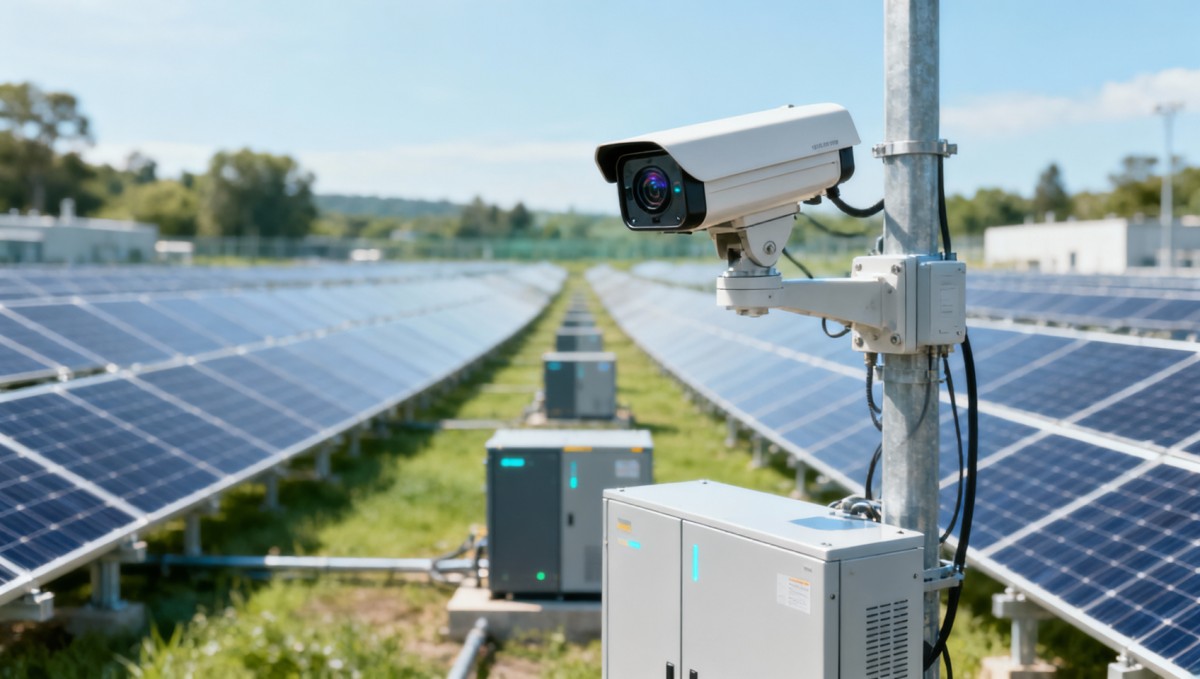
In renewable energy facilities, Vision AI camera detection is not just about whether a camera can “see” an object. It is about whether the system can classify events correctly, trigger the right workflow within milliseconds to seconds, and remain dependable across dust, glare, vibration, heat, and low-light conditions. In solar farms, battery energy storage systems, microgrids, and energy-efficient commercial buildings, detection accuracy directly affects safety response, site uptime, and labor efficiency.
Many buyers still evaluate AI cameras using broad marketing terms such as high precision, smart analytics, or edge intelligence. That approach is risky. A camera may perform well in a controlled demo but degrade sharply when exposed to backlighting from photovoltaic arrays, thermal variation between day and night, or network congestion in multi-protocol building systems. For operators and procurement teams, real accuracy means performance under operational stress, not showroom conditions.
At NHI, we view Vision AI camera accuracy through a data-first lens. That means correlating image quality, model behavior, protocol latency, edge processing response, and installation context. In practice, accuracy has at least 4 layers: object detection, classification reliability, event filtering, and decision latency. A system that identifies a person but fails to separate technician access from perimeter intrusion is not operationally accurate for energy infrastructure.
For renewable energy stakeholders, the key question is not whether Vision AI is accurate in general. The real question is whether it is accurate enough for the specific task, at the required distance, during the required operating window, and across a 12–24 month lifecycle without creating an unsustainable false alert burden. That is where benchmarking becomes more valuable than brochure claims.
Why the same AI camera behaves differently across sites
A rooftop solar installation, a utility-scale substation, and a net-zero office building create very different imaging conditions. Reflective panels can cause overexposure. Inverters and HVAC units introduce heat shimmer and vibration. Battery rooms may require low-light monitoring with strict privacy boundaries. Even a well-trained model can underperform if pixel density at target distance falls below a usable threshold or if the edge device throttles under sustained workload.
Protocol fragmentation matters as well. When cameras, gateways, access control nodes, and building management systems use different communication stacks, event timing becomes inconsistent. A detection event delayed by even 300–800 milliseconds may be acceptable for occupancy analytics, but it can be problematic for gated access, hazardous zone alerts, or automated lighting and ventilation control in energy-sensitive buildings.
- Environmental factors: glare, fog, rain, dust, temperature swings, and nighttime contrast.
- Deployment factors: lens angle, mounting height, target distance, and scene congestion.
- System factors: edge computing capacity, video compression, bandwidth, and protocol latency.
- Operational factors: maintenance intervals, firmware updates, and model tuning frequency.
Which performance metrics matter most for procurement and operational review?
When procurement teams compare Vision AI cameras, they often focus first on resolution and price. Those are necessary inputs, but they are not enough. In renewable energy and smart building projects, buyers should review at least 5 core dimensions: detection accuracy by scenario, false alarm rate, latency from detection to action, edge processing stability, and integration readiness with existing IoT infrastructure. These factors determine whether the camera reduces risk or simply creates more data to manage.
Operational staff should pay special attention to false positives and false negatives. A false positive may repeatedly trigger alarms from moving shadows or vegetation near perimeter fencing. A false negative may miss an unauthorized entry, unsafe worker behavior, or equipment area intrusion. Over a 30–90 day operating period, even a small error pattern can become expensive by increasing guard callouts, manual review time, and distrust in automation.
Business evaluators also need to separate image metrics from system metrics. A camera can produce clear footage yet still fail to support dependable decision-making if analytics are delayed, if metadata export is incomplete, or if interoperability with access control, HVAC, or energy monitoring platforms is limited. For B2B projects, procurement value comes from measurable workflow performance, not camera hardware in isolation.
The table below summarizes practical evaluation dimensions that are especially relevant for solar, storage, smart building, and distributed energy projects. These are not universal pass-fail values. They are decision prompts to help teams ask better technical questions during shortlisting, pilot testing, and supplier comparison.
A structured review like this prevents a common procurement mistake: selecting cameras based on nominal specifications while ignoring operational fit. In energy facilities, the most useful Vision AI system is often the one with the most stable event quality over 3 shifts and multiple weather conditions, not the one with the most aggressive marketing language.
Technical indicators that deserve deeper validation
Scene-specific testing beats generic demo footage
Ask suppliers to validate performance against your own use cases: perimeter intrusion, PPE recognition, vehicle entry, occupancy counting, fire lane blockage, or equipment area trespass. A model optimized for retail footfall is not automatically suitable for utility assets. The more safety-critical the scenario, the more scenario-matched the validation should be.
Event quality matters more than raw video quality
For procurement, event metadata, confidence scoring, timestamp reliability, and integration logs can be as important as image clarity. These outputs determine whether downstream systems can trigger ventilation, access locks, lighting schedules, or alarm escalations with acceptable reliability across 2–4 operational stages.
Where is Vision AI camera detection most useful in renewable energy and smart buildings?
Vision AI has practical value when it supports measurable operational decisions. In renewable energy settings, the strongest applications usually involve safety, access control, asset protection, and energy optimization. The key is matching the detection task to the environment, then matching the integration layer to the workflow. Not every site needs the same analytics stack, and over-specifying the system can waste budget without improving outcomes.
For operators, one major use case is perimeter and restricted-zone monitoring. Utility-scale solar and storage assets often cover large footprints with variable lighting, making manual patrols inefficient. Vision AI can pre-filter events and reduce review burden, provided the model is tuned to ignore repetitive non-threat movement such as shadow shifts, birds, or fence-line vegetation.
In energy-efficient buildings, Vision AI is often tied to occupancy analytics, access workflows, and energy automation. For example, occupancy signals can support lighting, HVAC, and space-use policies. However, the acceptable error tolerance is different from security use cases. A 1–2 second delay may be tolerable for room-level ventilation response, but not for unauthorized entry alerts or lift lobby incident detection.
Commercial teams should also consider mixed-use deployments where one camera network serves multiple stakeholders. Security, facility management, sustainability reporting, and operations may all need different outputs from the same system. This increases the importance of export formats, privacy zoning, local processing options, and role-based workflow design.
The following comparison helps clarify where Vision AI camera detection usually creates the most practical value, and where expectations should remain conservative during early project planning.
This scenario view helps buyers avoid overgeneralization. A camera system that works well for occupancy counting may still need different optics, model tuning, or edge hardware to perform credibly in a solar farm perimeter or battery containment area. Accurate procurement starts with accurate application framing.
A practical shortlist of high-value deployment goals
- Reduce manual review workload during 24/7 site monitoring.
- Support energy-saving automation through occupancy and zone analytics.
- Improve restricted-area supervision in battery, inverter, and control rooms.
- Create event-driven integration with access control, alarms, and building systems.
How should buyers compare vendors, hardware, and integration risk?
A reliable procurement process should compare more than AI claims. In fragmented IoT ecosystems, the biggest failures often happen between components: camera to gateway, gateway to platform, platform to action layer. That is why NHI emphasizes benchmarking across connectivity, security, energy behavior, and hardware integrity. In B2B energy projects, vendor comparison should cover the full system path from image capture to operational response.
Procurement teams can reduce decision risk by dividing evaluation into 3 stages. Stage one is paper review: supported protocols, edge processing mode, operating temperature range, firmware policy, and interface openness. Stage two is pilot validation over 7–30 days in one representative site. Stage three is rollout planning with maintenance, model update, and integration governance defined in advance. Skipping stage two is one of the costliest mistakes in complex energy environments.
Operators should insist on test conditions that resemble normal stress, not ideal demos. That includes dawn and dusk exposure, dusty surfaces, thermal cycling, intermittent bandwidth, and multiple simultaneous event streams. Procurement value increases when suppliers can explain not only what their Vision AI camera detects, but also how it fails, how quickly it recovers, and what thresholds can be tuned without destabilizing the workflow.
For business evaluators, total project risk also includes legal and compliance considerations. If facial attributes, identifiable movement patterns, or employee access behaviors are involved, local privacy obligations and retention rules must be reviewed early. Edge processing, privacy masking, and event-level export can be strong decision factors, especially in commercial buildings with cross-border reporting or tenant-sensitive operations.
A 6-point procurement checklist for Vision AI camera projects
- Define one primary outcome per zone, such as intrusion detection, occupancy count, or vehicle event recognition.
- Verify target distance, mounting height, and lighting profile before selecting lens and edge hardware.
- Test event latency through the full chain, not only inside the camera user interface.
- Review interoperability with ONVIF, APIs, gateways, and building or energy management platforms.
- Request a pilot period long enough to include weather and shift variation, typically 2–4 weeks.
- Confirm maintenance ownership for cleaning, firmware, retraining, and alert-rule updates.
Common sourcing mistakes
The most common mistake is assuming a higher-resolution IP camera automatically delivers better Vision AI accuracy. In practice, sensor quality, scene geometry, model optimization, and edge throughput often matter more. Another mistake is ignoring standby power and thermal load in distributed systems. In energy-conscious facilities, a camera fleet should support site efficiency goals rather than quietly undermining them.
A third mistake is choosing based on isolated unit cost. The lower-cost option may require more network upgrades, more cloud dependency, or more manual alert review. For renewable energy buyers, the better commercial question is total operational cost over 12–36 months, including downtime risk, maintenance frequency, and integration labor.
What standards, compliance checks, and implementation steps should teams plan for?
Implementation should begin with a compliance and system architecture review, especially when Vision AI connects to access control, building automation, or staff movement records. While exact obligations vary by market, commercial projects usually need to address video retention policy, cybersecurity hardening, user access control, and privacy-by-design choices such as masking or local inference. These topics should be resolved before scaling from pilot to multi-site deployment.
From an engineering perspective, site teams should define at least 4 implementation checkpoints: imaging survey, network and protocol mapping, pilot validation, and acceptance testing. In renewable energy projects, these checkpoints are especially important because devices often operate in mixed ecosystems that include IP cameras, smart relays, access nodes, energy dashboards, and HVAC or lighting controls. Weakness at any one layer can distort overall detection performance.
Acceptance criteria should be practical and documented. Examples include alert routing time, event export completeness, performance during a 24-hour continuous test, and operator review burden per shift. Teams should also schedule recurring review windows every quarter or every 6 months to account for changing seasons, altered lighting angles, vegetation growth, and firmware updates. Vision AI accuracy is not static once deployed.
NHI’s role in this process is to act as an engineering filter. We help global buyers move beyond generic sourcing claims by focusing on verifiable hardware behavior, protocol realities, and operational fit. That approach is particularly relevant when renewable energy projects depend on components from multiple suppliers across fragmented smart ecosystem standards.
FAQ: practical questions buyers often ask
How accurate is Vision AI camera detection in real use?
It depends on the task, distance, environment, and integration chain. Accuracy for occupancy analytics, perimeter intrusion, and access verification should not be treated as equivalent. Real evaluation should cover a defined scene over at least 7–14 days, across day and night, and include both missed events and nuisance alerts.
What should procurement teams ask suppliers first?
Start with scenario fit, edge processing mode, integration method, and test evidence. Ask how the system handles glare, low light, bandwidth fluctuation, and sustained runtime. Then ask how event data connects to your security, building, or energy systems. These answers are usually more valuable than headline resolution alone.
How long does a meaningful pilot take?
For most commercial and energy sites, 2–4 weeks is a practical minimum. That window allows teams to observe shift changes, weather variation, and integration response. Shorter pilots may confirm basic functionality, but they often miss the edge cases that shape long-term operating cost.
Is cloud AI always better than edge AI?
Not necessarily. Edge AI may improve privacy handling and reduce dependency on unstable connectivity, while cloud processing may support heavier analytics and centralized updates. The right choice depends on latency tolerance, compliance requirements, site bandwidth, and the number of locations to be managed.
Why work with NHI when evaluating Vision AI cameras for energy and smart building projects?
NexusHome Intelligence is built for buyers who need evidence, not slogans. Our focus is not limited to product descriptions. We analyze the interaction between hardware quality, protocol behavior, edge computing stability, and real deployment constraints. For renewable energy and smart building stakeholders, that means clearer visibility into how Vision AI camera detection will perform in mixed-vendor environments before procurement risk becomes operational pain.
If your team is comparing IP camera hardware, validating Vision AI camera accuracy, or reviewing integration feasibility across Zigbee, Thread, BLE, Matter-adjacent, or IP-based infrastructure, we can help structure the evaluation. We support discussions around parameter confirmation, scenario-based product selection, pilot planning, expected delivery windows, custom benchmarking priorities, and supplier comparison logic.
We are particularly useful when your challenge is not simply finding a camera, but choosing between manufacturers, identifying hidden technical risk, or translating engineering signals into procurement decisions. That may include support for sample assessment, event workflow mapping, edge-versus-cloud tradeoff review, and compliance-oriented architecture planning for commercial properties and distributed energy assets.
Contact NHI if you need a more structured path to decision-making. You can consult us on benchmark priorities, camera selection criteria, protocol compatibility, operating environment concerns, sample support strategy, implementation checkpoints, and quotation communication. In fragmented IoT supply chains, confident purchasing starts with verified data and a system-level view.
Protocol_Architect
Dr. Thorne is a leading architect in IoT mesh protocols with 15+ years at NexusHome Intelligence. His research specializes in high-availability systems and sub-GHz propagation modeling.
Related Recommendations
- Lina Zhao(Security Analyst)How to Design a Smart Building Security Ecosystem That Integrates Access, Video, and Energy Data
- Lina Zhao(Security Analyst)How Lidar-Camera Fusion Improves Autonomous Inspection Robots for Solar Farms
- Lina Zhao(Security Analyst)How to Choose AI Security Cameras for Apartments Without Compromising Privacy
- Lina Zhao(Security Analyst)How to Evaluate a Commercial AI Camera Supplier for Long-Term Project Reliability
- Lina Zhao(Security Analyst)How to Plan Smart Security for Warehouses: Access Control, AI Monitoring, and ROI
- Lina Zhao(Security Analyst)How to Choose a Smart Traffic Sensor for Intersections: Key Specs and Deployment Factors
- Lina Zhao(Security Analyst)How to Evaluate Custom AMR AGV Navigation for Complex Warehouse Routes
- Lina Zhao(Security Analyst)METI Tightens Audit Rules for Vision AI Security Devices
- Lina Zhao(Security Analyst)Smart Camera Infrared Range Explained: What Affects Night Detection Distance?
- Lina Zhao(Security Analyst)Vision AI for Renewable Energy: 7 Inspection Tasks It Can Automate
Analyst