
Medical IoT Battery Safety White Paper Released
author
On May 6, 2026, the International Medical Device Regulators Forum (IMDRF), together with UL and TÜV Rheinland, published the first global white paper on battery safety for Medical IoT devices. The document establishes foundational technical benchmarks—including thermal runaway warning thresholds, SOH algorithm deviation tolerance, and PCBA-level overcurrent protection response time (≤150 μs). It marks a pivotal reference point for manufacturers, regulators, and supply chain stakeholders in medical electronics, battery systems, and connected healthcare device development.
Event Overview
On May 6, 2026, the International Medical Device Regulators Forum (IMDRF), UL, and TÜV Rheinland jointly released the Medical IoT Battery Safety Best Practices White Paper. This is the first publicly available white paper to define quantitative safety requirements specific to batteries used in Medical IoT applications. Two China-based PCBA solutions providers—one headquartered in Shenzhen and the other in Suzhou—participated in all benchmark testing as the only Asian representatives.
Industries Affected by This Development
Medical device OEMs and ODMs: These companies integrate batteries into Class II/III connected diagnostic or therapeutic devices. The white paper introduces new functional safety expectations at the PCBA level—not just at the cell or pack level—requiring design validation against ≤150 μs overcurrent response and tighter SOH algorithm tolerances. Compliance may affect time-to-market for new wireless patient monitors, insulin pumps, or implantable telemetry modules.
Battery module integrators: Firms assembling medical-grade battery packs must now verify not only cell chemistry and BMS firmware but also the real-time performance of downstream PCBA protection circuits. The defined thermal runaway warning thresholds imply stricter calibration and traceability requirements across the assembly process.
PCBA contract manufacturers serving medtech clients: As demonstrated by the participation of two Chinese PCBA solution providers, this white paper elevates the technical scrutiny applied to printed circuit board assembly quality—particularly regarding current-sensing layout, fuse placement, and signal propagation latency. Clients may begin requesting test reports aligned with the white paper’s benchmark protocols.
Regulatory and quality assurance teams in Asia-Pacific: While the white paper is non-binding, its adoption by IMDRF—a forum comprising regulators from the US FDA, EU MDR authorities, Health Canada, and China’s NMPA—signals emerging alignment on battery safety expectations. Local QA departments may need to update internal design control checklists accordingly.
What Relevant Companies or Practitioners Should Monitor and Do Now
Track official regulatory uptake in key markets
Analysis shows the white paper is currently a harmonized best-practice reference—not a mandatory standard. However, the US FDA, EU Notified Bodies, and China’s NMPA are expected to reference it in upcoming guidance documents or audit checklists. Stakeholders should monitor updates from these agencies over the next 12–18 months.
Review PCBA-level protection architecture for high-risk Medical IoT products
Current more relevant focus is on devices where battery failure could directly impact patient safety—e.g., remote ECG patches, wearable defibrillators, or neurostimulator chargers. Engineering teams should assess whether existing overcurrent detection circuits meet the ≤150 μs response threshold, especially under worst-case temperature and voltage conditions.
Validate SOH estimation methods against the white paper’s stated deviation tolerance
The white paper specifies allowable error margins for state-of-health algorithms. Teams using proprietary or third-party battery analytics software should compare their reported SOH uncertainty ranges against this benchmark—and document any gaps before submitting new 510(k) or CE technical files.
Engage early with test labs offering IMDRF-aligned battery safety benchmarking
UL and TÜV Rheinland have announced capacity for white paper–based verification testing. Companies preparing for submissions in 2027–2028 should consider pre-compliance testing, particularly if their current battery validation relies solely on IEC 62133 or UN 38.3 protocols.
Editorial Perspective / Industry Observation
Observably, this white paper functions primarily as a coordination signal—not an enforcement tool. Its value lies in crystallizing previously fragmented technical expectations across jurisdictions into one coherent framework. From an industry perspective, it reflects growing regulator awareness that battery safety in Medical IoT cannot be outsourced to generic consumer-grade specifications. That said, adoption remains voluntary; actual regulatory weight will depend on how frequently it is cited in official decisions or inspection reports over the coming years. The participation of two Chinese PCBA firms signals increasing recognition of Asia’s role in medical hardware system integration—but does not yet indicate regional standardization momentum.
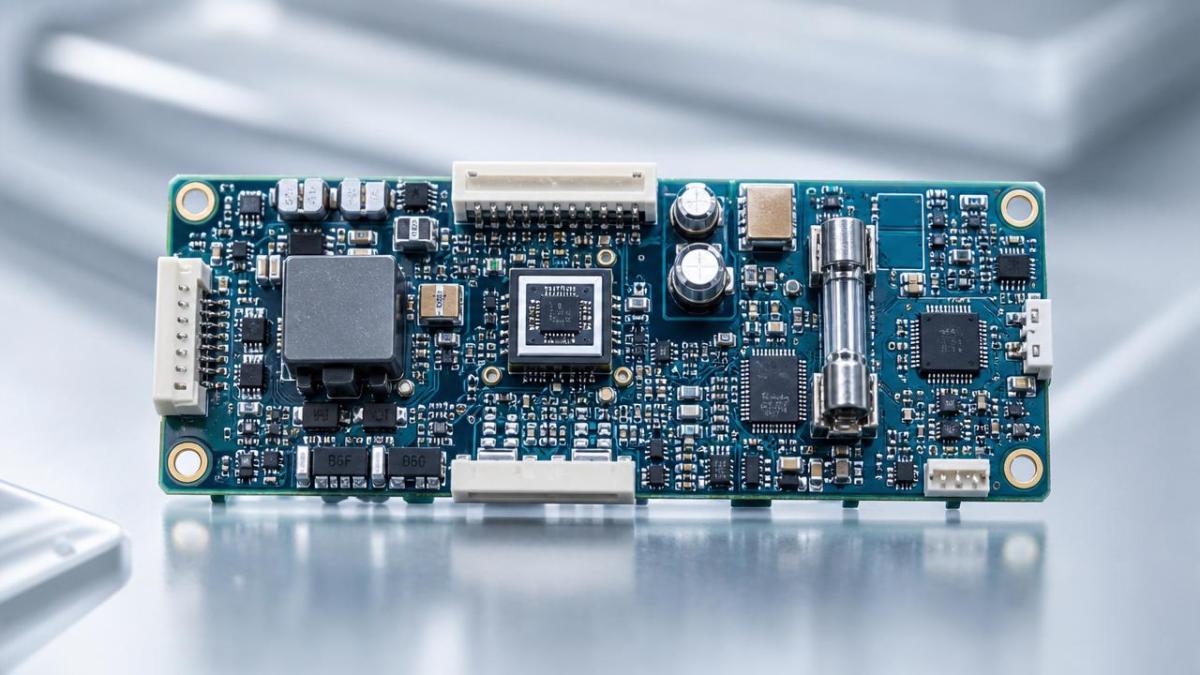
Conclusion: This white paper represents a foundational alignment effort—not a compliance deadline. Its significance lies in defining *what* technical parameters matter most for battery safety in connected medical devices, rather than mandating *how* they must be achieved. For stakeholders, the current priority is not immediate certification, but systematic gap assessment against newly clarified benchmarks—especially at the PCBA interface layer where hardware and firmware converge.
Source Information:
- International Medical Device Regulators Forum (IMDRF)
- UL
- TÜV Rheinland
- Public release date: May 6, 2026
- Note: Ongoing observation is recommended for formal references to this white paper in FDA guidance, EU MDR interpretations, or China NMPA technical review documents.
Protocol_Architect
Dr. Thorne is a leading architect in IoT mesh protocols with 15+ years at NexusHome Intelligence. His research specializes in high-availability systems and sub-GHz propagation modeling.
Related Recommendations
- NHI Data Lab (Official Account)Industrial cobot manufacturer China: quality checks that matter
- NHI Data Lab (Official Account)What makes custom 5-axis CNC machining aerospace so demanding
- NHI Data Lab (Official Account)How to read an AS9100 CNC machining tolerances chart correctly
- NHI Data Lab (Official Account)6 axis robot arm wholesale: what changes at different MOQs
- NHI Data Lab (Official Account)Where a collaborative robot payload 10kg becomes a limit
- NHI Data Lab (Official Account)When custom robotic end effectors solve tooling bottlenecks
- NHI Data Lab (Official Account)Pick and place robot manufacturer checklist for stable output
- NHI Data Lab (Official Account)Why welding robot arm price varies more than expected
- NHI Data Lab (Official Account)Palletizing robot suppliers compared by uptime and service scope
- NHI Data Lab (Official Account)Is a 15kg payload cobot enough for mixed factory lines
Analyst