
Where a collaborative robot payload 10kg becomes a limit
author
In renewable energy operations, knowing where a collaborative robot payload 10kg becomes a limit can prevent costly downtime, unsafe handling, and poor workflow design. For field teams working with solar modules, inverter parts, battery packs, cable trays, and inspection tools, this threshold is not just a catalog number. It directly affects gripping stability, cycle time, arm reach, mounting options, and long-term reliability. In practice, a collaborative robot payload 10kg may perform well in lab conditions yet struggle once real end effectors, off-center loads, and repetitive duty cycles are added. This article explains where that limit appears, how to evaluate it in renewable energy workflows, and what data-driven checks matter before deployment.
What does a collaborative robot payload 10kg actually mean in renewable energy work?
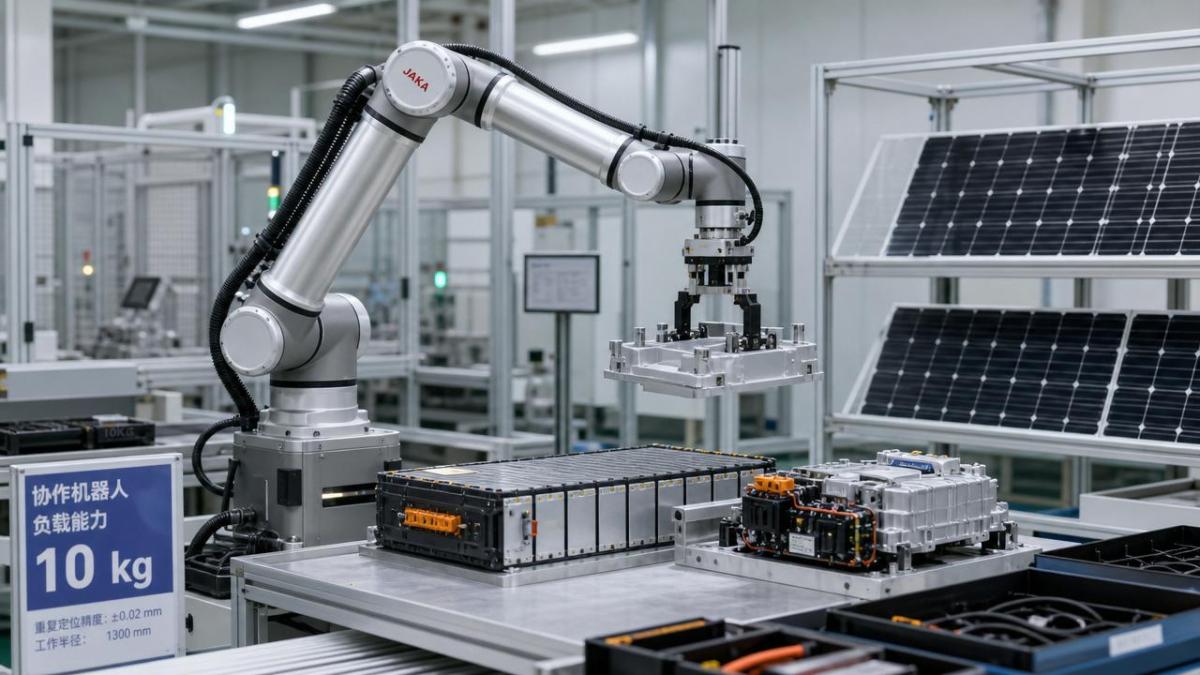
A rated collaborative robot payload 10kg usually refers to the maximum load the cobot can carry under specified conditions, often at a defined wrist orientation and speed. That rating does not automatically include the gripper, vacuum system, sensor bracket, cable set, or custom tool changer. In solar and energy storage environments, those additions can consume a surprising portion of the usable capacity.
For example, handling a 7.5 kg framed component with a 2.2 kg gripper means the system is already close to the limit before accounting for hose drag, moment load, and acceleration. If the arm extends farther from its base, the effective stress rises. This is why a collaborative robot payload 10kg may be acceptable for short, compact picks but unsuitable for long-reach transfers in panel assembly or battery module staging.
Renewable energy applications also differ from light consumer assembly. Components are often bulky, surfaces may be fragile, and safety margins must remain high to avoid microcracks, connector damage, or dropped parts. A payload number should therefore be read as a starting point, not a final answer.
When does a collaborative robot payload 10kg become a real operational limit?
The limit appears when the load is not only heavy but dynamically difficult. In renewable energy sites and production cells, that usually happens in five situations.
- Heavy tooling: Vacuum grippers for solar glass or multi-point clamps can weigh 1.5 to 3 kg on their own.
- Large moment arms: A long component creates torque that stresses joints more than a compact part of the same mass.
- High acceleration: Faster cycles increase dynamic load and reduce control margin.
- Continuous operation: Repetitive shifts in dusty, warm, or outdoor-adjacent conditions can push thermal and wear limits.
- Precision requirements: If placement tolerance is tight, operating near max payload may introduce vibration or positioning drift.
A common mistake is to assume the tipping point starts at 10 kg exactly. In reality, many renewable energy tasks become risky once the total moving mass reaches 70% to 85% of the nominal rating, especially for long-reach picks or fragile loads. That means a collaborative robot payload 10kg may practically behave like a 7 kg to 8.5 kg solution depending on tool weight and motion profile.
This matters in battery energy storage assembly, where modules can be compact but dense, and in solar subassembly, where parts may be light enough in mass yet difficult in geometry. The payload limit is often a combined issue of weight, center of gravity, and duty cycle rather than weight alone.
Which renewable energy applications fit a collaborative robot payload 10kg, and which do not?
A collaborative robot payload 10kg can be a strong fit for many renewable energy tasks if the workflow is designed correctly. Good-fit applications often include small inverter component transfer, cable harness loading, sealant or dispensing operations, thermal pad placement, screwdriving with moderate tooling, sensor-guided inspection, and moving compact junction box assemblies.
It can also work for selective handling of smaller photovoltaic components, provided the gripper is lightweight and the reach is controlled. In these cases, the cobot brings value through flexible programming, safer human interaction, and easier redeployment across changing production lines.
Less suitable scenarios include full-size solar panel lifting, large battery pack manipulation, oversized metal enclosure handling, or any operation requiring aggressive acceleration with a wide load. These jobs may exceed not only the mass capacity but also safe moment and stiffness thresholds. If the task includes vertical lifting over long distances or precise insertion under near-max load, a higher-capacity robot or a gantry-assisted architecture is usually the better route.
How can you tell if a collaborative robot payload 10kg is enough before deployment?
The most reliable approach is to replace brochure claims with measured task data. This aligns with the engineering-first mindset used by NHI: real performance must be verified under realistic load, protocol, and environmental conditions. For cobots in renewable energy, the following checks are essential.
- Calculate total moving mass. Include part weight, gripper, adapter plate, cables, valves, and sensors.
- Measure center of gravity. An off-center load can invalidate an otherwise acceptable payload.
- Map the full motion path. Long horizontal reaches and vertical lifts create different stress patterns.
- Test cycle time at realistic speed. Dynamic force rises with acceleration, not just static mass.
- Run endurance trials. Short demonstrations often hide overheating, repeatability drift, or vacuum losses over time.
- Check process quality. In solar handling, even minor oscillation can create cracks or alignment defects.
If a collaborative robot payload 10kg passes only under reduced speed, reduced reach, or reduced duty cycle, the system is already near its practical edge. That does not always mean failure, but it does mean the design margin is thin. For renewable energy lines expected to scale or operate under variable product formats, thin margins usually become hidden costs later.
What risks and misconceptions surround the collaborative robot payload 10kg threshold?
One misconception is that payload alone defines suitability. In truth, a collaborative robot payload 10kg can underperform with a bulky 6 kg part yet succeed with a compact 9 kg tool. Geometry, reach, and path complexity matter just as much. Another misunderstanding is that collaborative safety means the robot can handle all tasks more gently. Safety-rated speed reductions may protect people, but they do not fix poor mechanical matching between arm and load.
There are also cost-related risks. A smaller cobot may look attractive at first, but if it needs custom lightweight tooling, slower cycles, fixture redesign, or frequent maintenance, the total cost of ownership can rise. In renewable energy operations where uptime and throughput matter, undersizing often creates more expense than selecting a higher-capacity system from the start.
Environmental conditions should not be ignored either. Dust, temperature swings, and vibration from nearby equipment can affect gripping reliability and joint performance. A collaborative robot payload 10kg that works indoors on a clean bench may not behave the same way near panel staging, battery enclosure preparation, or field-adjacent service areas.
What is the smartest next step if the payload limit is close?
If the application sits near the threshold, the best decision is not always to abandon the cobot. Often, the first step is optimization. Reduce gripper mass, shorten the reach, improve part presentation, or split one difficult motion into two simpler ones. A lighter end effector can restore useful headroom. Better fixtures can reduce the need for long, unstable picks. Lower acceleration in only the critical path segments can protect accuracy without sacrificing the full cycle.
If those changes still leave the system operating too close to its limit, move to a larger payload class or redesign the cell around assisted handling. In renewable energy environments, hybrid approaches often work well: a cobot handles precision tasks while a lift assist or linear axis manages the heavier transfer. This preserves flexibility while keeping the process inside safe mechanical margins.
The key is to judge a collaborative robot payload 10kg by verified, task-specific data rather than nominal rating alone. That principle mirrors the broader NHI philosophy: engineering truth comes from measurable performance, not from simplified marketing claims. In practice, the real limit appears when payload, reach, tool weight, and duty cycle combine to erode stability and process quality. Before committing to deployment, document the complete load case, test it under realistic operating conditions, and decide based on repeatable evidence. That next step will produce a safer, more reliable renewable energy workflow and reduce expensive redesign later.
Protocol_Architect
Dr. Thorne is a leading architect in IoT mesh protocols with 15+ years at NexusHome Intelligence. His research specializes in high-availability systems and sub-GHz propagation modeling.
Related Recommendations
- NHI Data Lab (Official Account)How Customizable IoT Components Enable Scalable Solar and Energy Monitoring Systems
- NHI Data Lab (Official Account)Hardware Benchmarking for Vibration Testing: Metrics for Comparing Test Systems
- NHI Data Lab (Official Account)IoT Sourcing Guide for Distributors: Vet Suppliers, Certifications, and Supply Risk
- NHI Data Lab (Official Account)How to Evaluate a CNC Automation Manufacturer for Custom Production Lines
- NHI Data Lab (Official Account)Interactive Brokers Adds Bucharest Exchange Trading Access
- NHI Data Lab (Official Account)How to Plan RoHS Compliance for Commercial IoT Devices Before Mass Production
- NHI Data Lab (Official Account)How to Assess Supplier Capability in Southeast Asia for Renewable Energy Projects
- NHI Data Lab (Official Account)How Surface Mount PCB Assembly Improves Reliability in Renewable Energy Devices
- NHI Data Lab (Official Account)Sensor Surge Extends South China PCBA Lead Times
- NHI Data Lab (Official Account)SLA 3D Printing China: How to Evaluate Quality, Lead Time, and Export Support
Analyst