
Zigbee Smart Plug Test Results Can Be Misleading
author
A Zigbee smart plug test can look impressive on paper yet fail to reflect real-world energy loads, mesh interference, or protocol latency. For buyers, engineers, and procurement teams navigating the IoT supply chain, misleading results can distort sourcing decisions and Matter standard compatibility expectations. This analysis from NexusHome Intelligence applies smart home hardware testing and IoT hardware benchmarking to reveal what truly matters behind published test scores.
Why published Zigbee smart plug test results often fail in renewable energy deployments
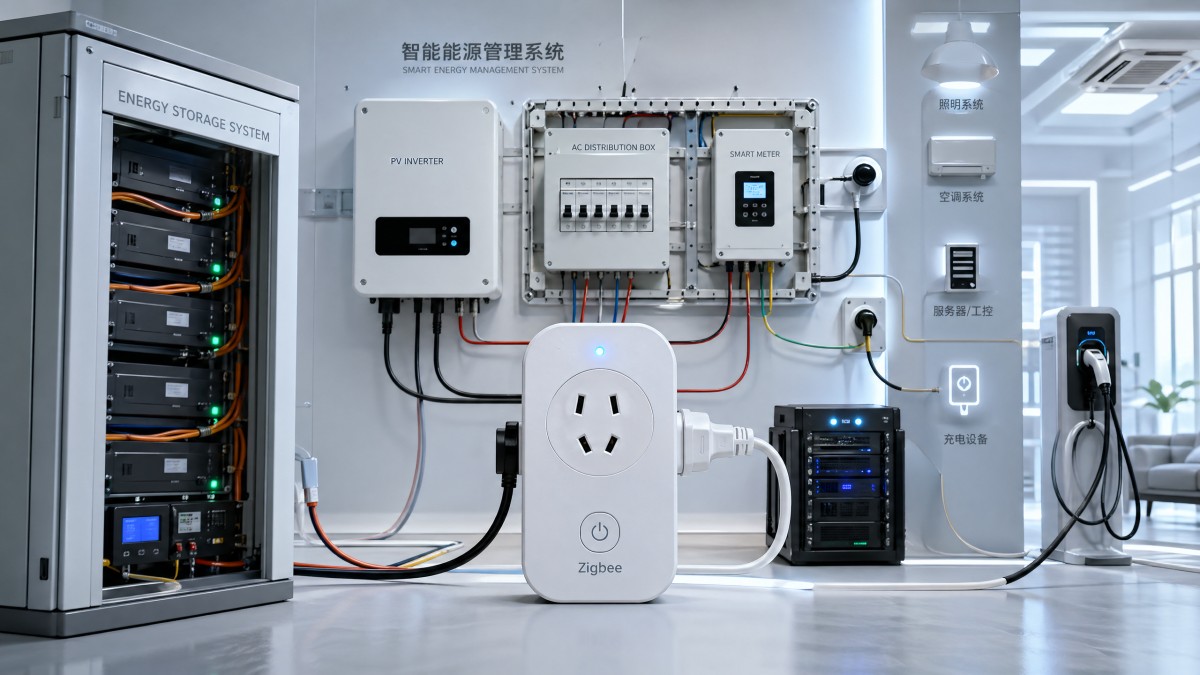
In renewable energy environments, a Zigbee smart plug is not just a convenience accessory. It may sit inside pilot microgrids, smart apartments with rooftop solar, battery-backed commercial spaces, or demand-response testbeds. In these settings, a lab score based on a single load, a short test window, or a quiet RF environment tells only part of the story. What matters is how the device behaves over 24-hour load cycles, across 2.4 GHz interference, and under repeated switching events tied to energy management logic.
Many published smart plug reviews focus on pairing speed, app polish, or basic on/off response. Those are relevant, but they are not enough for procurement teams evaluating hardware for solar self-consumption optimization or standby load control. A smart plug that responds in 300 ms during a clean bench test may behave very differently when connected through 3–5 Zigbee mesh hops in a dense building full of Wi-Fi access points, inverters, and BLE devices.
Another common issue is selective load testing. Some reports use resistive loads only, often in the 100 W–500 W range, while renewable energy projects may involve fans, pumps, chargers, dehumidifiers, or edge devices with variable power draw. These mixed loads reveal relay stress, metering drift, thermal rise, and communication instability more quickly than simplified test conditions do.
NexusHome Intelligence approaches Zigbee smart plug test interpretation as an engineering verification problem rather than a marketing comparison. That means examining protocol behavior, power measurement stability, standby consumption, firmware consistency, and interoperability risk before treating any score as decision-grade data.
What usually gets overlooked in a “good” test score
A high score can hide weak conditions. For example, a 48-hour test may miss drift patterns that only appear after 2–4 weeks of scheduled switching. A plug tested near the coordinator may show low latency, while field nodes installed behind reinforced walls or electrical cabinets may lose routing stability. A reported low standby draw may exclude the metering circuit’s active monitoring behavior.
- Short test duration that does not capture thermal buildup, firmware resets, or delayed meter variance.
- Single-node validation without mesh congestion, repeater burden, or cross-protocol interference.
- Resistive-only loads that ignore inductive or fluctuating demand common in energy-related automation.
- Basic compatibility claims such as “works with Matter bridge” without latency and reliability measurement.
For information researchers and enterprise decision-makers, this gap matters because an inaccurate test interpretation can scale into hundreds or thousands of units. A small error in energy monitoring or a modest packet loss rate becomes expensive when used for load scheduling, tenant billing support, or peak-load shifting programs.
Which technical indicators actually matter beyond the headline result
If the goal is reliable renewable energy orchestration, the value of a Zigbee smart plug depends on more than switching. Procurement and engineering teams should assess at least 5 core dimensions: communication latency, routing stability, metering accuracy across load bands, thermal behavior during continuous operation, and standby power consumption. These metrics together provide a better picture than any single benchmark number.
Communication performance should be checked under realistic topology conditions. A useful baseline is to evaluate direct control, 1-hop routing, and 3-hop routing separately. In many commercial buildings, response differences between these states influence automation quality. A plug used to shed discretionary load during a short demand event does not need only “fast enough” control; it needs predictable timing under congestion.
Metering performance also deserves closer attention. In renewable energy applications, the difference between relative consistency and absolute precision is important. For appliance-level insight, teams often care about repeatable trends across 10 W–100 W standby bands and 500 W–1500 W active bands. If a plug reports stable but biased numbers, analytics and optimization logic may still be compromised over time.
Thermal behavior is another hidden variable. A relay that survives intermittent tests may still run hot during repeated cycles in enclosed utility cabinets. Even where local regulations are met, elevated operating temperature can shorten component life, shift measurement behavior, and create maintenance burdens for operators managing distributed devices across multiple properties.
A practical evaluation matrix for Zigbee smart plug benchmarking
The table below summarizes the most decision-relevant test dimensions for Zigbee smart plug selection in renewable energy and smart building environments. It is designed for teams comparing published results against deployment reality.
This matrix helps distinguish device usability from device marketability. A vendor brochure may emphasize compatibility logos, but a serious IoT hardware benchmarking process asks whether the hardware remains stable under the exact operating windows that matter to energy and climate-control workflows.
Three layers of test interpretation
Decision teams can classify any published Zigbee smart plug test into 3 layers. First is the surface layer: setup, pairing, and nominal response. Second is the functional layer: routing, metering, and automation repeatability. Third is the deployment layer: long-cycle performance, mixed protocol coexistence, and maintenance burden. Most misleading conclusions happen when a surface-layer result is mistaken for deployment evidence.
How procurement teams should compare Zigbee smart plugs for solar, storage, and building energy projects
For procurement teams, the challenge is not simply choosing a compliant device. It is choosing a device whose test conditions align with the intended operating scenario. A smart plug for home energy dashboards has different risk tolerance than one used in a managed apartment portfolio or an SME facility with distributed solar and battery backup. The comparison process should therefore match commercial context, integration stack, and maintenance capacity.
A useful purchasing method is to divide projects into 3 deployment classes: small pilot, managed rollout, and scaled portfolio. A small pilot may accept narrower validation if engineering access is immediate. A managed rollout usually requires 2–4 weeks of field observation. A scaled portfolio should demand structured benchmarking, sample batch comparison, and firmware change visibility before a purchase order is expanded.
Another mistake is comparing unit cost without comparing operational cost. A lower-price plug may require more manual resets, more route planning, or more gateway support. In a 200-unit deployment, these hidden costs often exceed small savings on hardware line items. This is especially true where operators must maintain energy reports, demand response routines, or occupancy-linked load logic.
NHI’s value in this stage is to act as an engineering filter. Instead of accepting “seamless integration” at face value, teams can use independent benchmarking logic to ask whether the product is suitable for real protocols, real loads, and real deployment densities.
Procurement checklist: what to confirm before issuing RFQ or sample order
- Confirm whether the Zigbee smart plug was tested as an end device only or also as a mesh router supporting adjacent nodes.
- Request the load categories used in testing, including resistive, inductive, and variable-demand devices.
- Ask whether energy monitoring performance was checked at low loads such as 5 W–30 W, not only near nominal appliance loads.
- Verify coexistence assumptions: nearby Wi-Fi channels, BLE density, gateway distance, and enclosure conditions.
- Check firmware update policy, batch consistency, and whether the Matter bridge path adds measurable control delay.
These questions improve sourcing quality because they expose whether test results were created for consumers, for reviewers, or for engineering deployment decisions. In renewable energy projects, that distinction is critical.
Comparison table for sourcing decisions
The next table translates common smart plug comparison points into B2B purchasing logic. It can be used during supplier screening, sample evaluation, and internal approval reviews.
This comparison framework is especially useful for purchasers balancing budget pressure with operational accountability. It avoids a common trap: choosing the device that looks easiest to buy instead of the one that is cheapest to run and safest to scale.
What operators and integrators should test in the field before scaling up
Even the best lab report should be followed by a field pilot. For operators and system integrators, the goal is to validate not only function but serviceability. A 10-unit test across 2–3 building zones usually reveals more useful information than a desk review of published scores. The field pilot should mirror real topology, actual loads, and scheduled automation rules.
In renewable energy contexts, field tests should align with generation and load variation. For example, if plugs are expected to support solar self-consumption strategies, test them during midday generation peaks and evening fallback periods. If they are part of backup-aware load control, validate behavior during gateway restarts, power fluctuations, and reconnection windows rather than stable daytime operation alone.
Operators should also track maintenance signals. Does the plug rejoin the mesh gracefully after an outage? Does it preserve schedules after router changes? Can the energy monitoring data be exported consistently into building analytics or EMS layers? These questions matter because a device that works technically but fails operationally still creates project friction.
A disciplined field validation process usually runs in 4 steps over 7–21 days: bench confirmation, localized deployment, stress window observation, and procurement review. This structure allows teams to separate one-off issues from repeatable hardware behavior.
Suggested field validation workflow
- Bench phase: verify onboarding, switching, metering visibility, and baseline standby draw under controlled conditions.
- Pilot phase: deploy in 2–3 real rooms or load zones with different RF density and wall construction.
- Stress phase: run repeated schedules, outage recovery checks, and mixed load testing over several daily cycles.
- Review phase: compare event logs, user feedback, packet behavior, and maintenance burden before scaling.
This workflow helps avoid expensive rollout corrections. It also creates a stronger technical basis for decision-makers who need to justify spend, delivery timing, and integration risk across internal teams.
Common field mistakes that make results misleading again
Teams sometimes repeat the same mistakes they criticized in published tests. They place all pilot units near the coordinator, test only one load type, or stop evaluation after 48 hours because “everything worked.” Real validation needs environmental variation, route variation, and at least one interference-rich period. Otherwise the field pilot becomes another simplified benchmark rather than a deployment decision tool.
FAQ: how to read Zigbee smart plug test data without making a costly sourcing mistake
Search behavior around Zigbee smart plug test results usually reflects urgent decision needs: compatibility checks, procurement concerns, and performance doubts. The questions below address the most practical issues for researchers, users, buyers, and enterprise stakeholders.
How long should a credible Zigbee smart plug test run?
For basic usability, 24–48 hours can confirm onboarding and simple control. For procurement-grade confidence, a longer window such as 7–15 days is more useful because it captures mesh route changes, repeated switching stress, and intermittent anomalies. For large building or energy management deployments, many teams add a 2–4 week observation period before final approval.
Are Matter compatibility claims enough for renewable energy projects?
No. A Matter compatibility statement may describe ecosystem access, but it does not automatically prove reliable timing, route stability, or energy monitoring quality through the bridge path. In practice, buyers should ask whether the plug was tested with the actual hub or controller stack they plan to deploy, and whether latency remains acceptable across 1-hop and 3-hop conditions.
Which loads are most important to test?
At minimum, test three categories: low standby loads such as 5 W–30 W edge electronics, medium continuous loads such as network or climate accessories, and switching-prone loads such as fans or dehumidifiers. This mix exposes whether the smart plug behaves consistently in the kinds of distributed energy and building control tasks common in renewable energy sites.
What is the biggest misconception in published smart plug comparisons?
The biggest misconception is that a fast response in a review equals reliable performance in a project. It does not. A review usually proves the device can work. A deployment decision requires evidence that it will keep working across time, topology changes, RF interference, and operational routines. That difference is exactly where misleading Zigbee smart plug test results cause sourcing mistakes.
Why choose NHI when test data needs to support real procurement decisions
NexusHome Intelligence is built for organizations that cannot afford protocol guesswork. Our role is not to repeat vendor language, but to translate fragmented smart home and IoT claims into verifiable benchmarking logic. For renewable energy buyers and integrators, that means looking past surface compatibility and examining latency, coexistence, metering behavior, standby consumption, and deployment suitability.
We support teams that need clearer answers before committing to sample orders, RFQs, or scaled sourcing plans. Typical consultation topics include 5 key areas: parameter confirmation, product selection, delivery cycle expectations, customization feasibility, and protocol or compliance alignment. Where needed, discussions can also cover sample strategy, pilot design, and comparison logic for multiple suppliers.
If your project involves Zigbee smart plugs, Matter pathway questions, smart energy monitoring, or broader IoT hardware benchmarking, NHI can help you define what should be tested before cost, schedule, and interoperability risks expand. This is especially valuable for commercial buildings, solar-enabled residential portfolios, and data-driven procurement teams operating across multiple regions.
Contact NHI to discuss benchmark scope, sample evaluation priorities, realistic test conditions, expected delivery windows, and decision criteria for renewable energy use cases. A better sourcing outcome starts with better questions, and better questions start with data that reflects the field rather than the brochure.
Protocol_Architect
Dr. Thorne is a leading architect in IoT mesh protocols with 15+ years at NexusHome Intelligence. His research specializes in high-availability systems and sub-GHz propagation modeling.
Related Recommendations
- Dr. Aris ThorneIEEE 802.15.4z-2026 Sets New UWB Compliance Signal
- Dr. Aris ThorneIEEE 802.15.4z-2026 Sets New Zigbee UWB Test Bar
- Dr. Aris ThorneIEEE 802.15.4z-2026 Sets New UWB Benchmark for Zigbee Tech
- Dr. Aris ThorneIEEE 802.15.4-2026 Lifts Zigbee Mesh to 256 Nodes
- Dr. Aris ThorneZigbee Mesh Capacity in the USA: How Many Devices Can a Network Handle Reliably?
- Dr. Aris ThorneEU Enforces Matter 1.3 for Zigbee Device Imports
- Dr. Aris ThorneTelink Joins CSA Board as Multi-Protocol SoC Output Scales
- Dr. Aris ThorneEU Enforces EN 303 647 v2.1.1 for Zigbee Exports
- Dr. Aris ThorneEN 303 647 v2.1.1 Now Mandatory for Zigbee Devices
- Dr. Aris ThorneGSHE 2026 Adds Matter/Zigbee Sourcing Zone
Analyst