
Offline Voice Control Modules: When They Fit Best
author
In renewable energy smart buildings and homes, an offline voice control module fits best when reliability, privacy, and local response matter more than cloud dependence. For teams evaluating smart home local control hub design, HVAC integration with Matter, and smart home peak load shifting, understanding where offline voice delivers real operational value helps balance user experience, resilience, and energy efficiency.
When does an offline voice control module make the most sense?
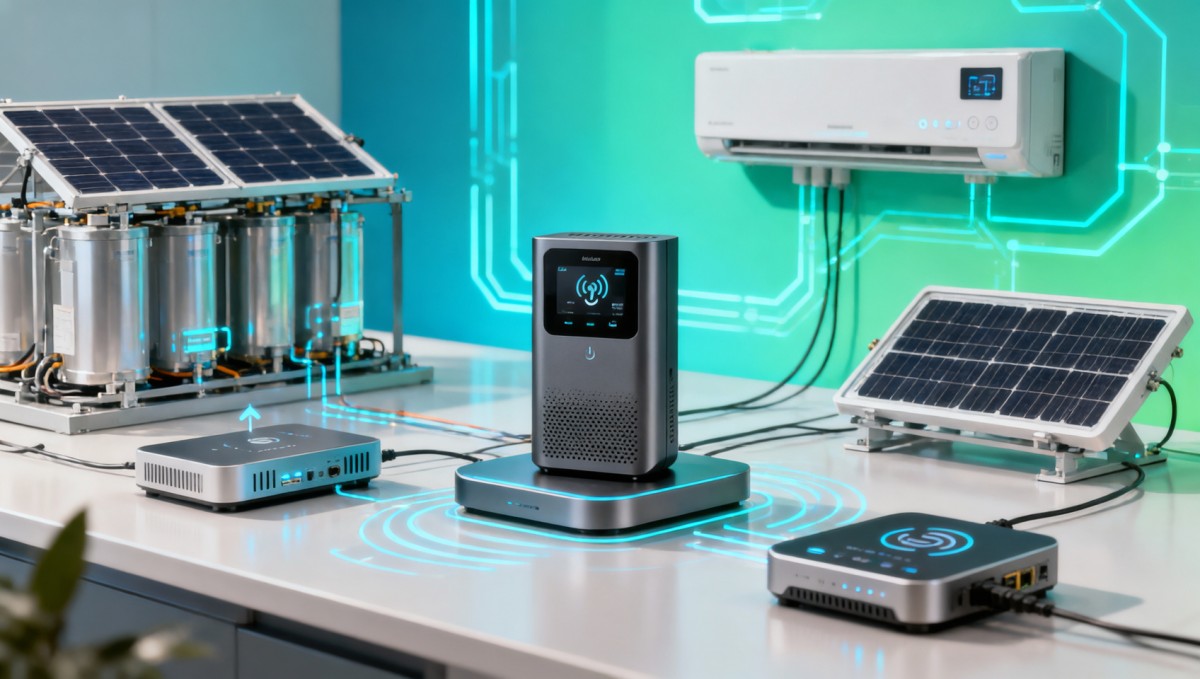
An offline voice control module fits best in environments where voice commands must work even if the internet is unstable, unavailable, or intentionally restricted. In practice, that makes it especially relevant for renewable energy smart homes, distributed energy systems, commercial buildings, and edge-controlled HVAC deployments.
For most buyers and project teams, the key question is not whether offline voice is “better” than cloud voice in general. The real question is: when is local voice control the smarter engineering and business decision? The answer is usually clear in five cases:
- Reliability-critical control: lighting, HVAC, ventilation, blinds, scene control, or safety-related commands that should not fail during connectivity loss.
- Privacy-sensitive spaces: homes, clinics, offices, hotels, senior care, and buildings where always-on cloud audio processing creates compliance or trust concerns.
- Energy-aware automation: projects where local commands support peak load shifting, occupancy-based climate control, and faster response to on-site energy conditions.
- Low-latency user experience: applications where users expect immediate response, without the delay of cloud routing.
- Hybrid smart home architectures: systems built around a smart home local control hub, local automations, and protocol bridging across Matter, Zigbee, Thread, BLE, or proprietary subsystems.
If your project depends on uninterrupted control, fast local execution, and reduced cloud dependence, offline voice is not just a convenience feature. It becomes part of system resilience.
Why is offline voice especially relevant in renewable energy buildings?
In renewable energy environments, building controls increasingly need to respond to local energy conditions in real time. That includes solar generation availability, battery storage state, dynamic electricity pricing, occupancy patterns, and HVAC optimization. In these settings, voice is not only a user interface. It can be a fast local trigger for energy actions.
For example, a resident or operator may say:
- “Set cooling to eco mode.”
- “Reduce non-essential loads.”
- “Start ventilation in meeting room B.”
- “Activate peak load reduction scene.”
When the voice control module works offline, these commands can be interpreted and executed through the local control stack without waiting for cloud processing. That matters in smart buildings where internet latency, outages, or cybersecurity restrictions would otherwise interrupt operations.
Offline voice also aligns well with smart home peak load shifting strategies. If a home energy management system or building management layer already makes local decisions about load scheduling, battery dispatch, or HVAC staging, local voice commands can support the same operating logic. This improves continuity and reduces the risk of command failure during critical periods such as grid stress events or network congestion.
What problems does offline voice actually solve for buyers and operators?
Many product pages position offline voice as a privacy upgrade. Privacy is important, but for technical buyers and operators, that is only part of the value. Offline voice control modules solve several operational problems that affect deployment outcomes and long-term satisfaction.
1. Internet dependence becomes a control risk
Cloud voice systems work well until connectivity becomes unstable. In residential developments, remote sites, or large commercial properties, this can create a poor user experience and support burden. Offline voice reduces this dependency for core commands.
2. Response time matters more than feature breadth
For lights, thermostats, blinds, switches, and scenes, users usually want fast and predictable control, not a conversational assistant. An offline module often provides a better experience because the command path is shorter and more deterministic.
3. Privacy concerns slow adoption
In projects involving hotels, healthcare, eldercare, multi-family housing, or energy-conscious homeowners, continuous cloud audio handling may raise objections from legal teams, procurement, or occupants. Local speech processing can lower adoption barriers.
4. Cloud costs and complexity accumulate
Cloud speech services may introduce recurring costs, account dependencies, vendor lock-in, and maintenance overhead. For some OEM/ODM or large-scale deployments, offline voice helps simplify ownership models.
5. Edge-first architectures need matching interfaces
As more smart home and building functions move to edge computing, it makes little sense for every voice interaction to leave the local environment. Offline voice is a more natural fit for systems already designed around local automation and protocol interoperability.
Where does offline voice perform best—and where does it not?
Offline voice is highly effective, but only when matched to the right use cases. Decision-makers should avoid viewing it as a universal replacement for cloud assistants.
Best-fit scenarios include:
- Direct device control: lights, relays, switches, outlets, blinds, door functions
- HVAC and climate actions: mode changes, setpoint adjustment, fan control, zone activation
- Energy scenes: away mode, eco mode, demand reduction, backup power mode
- Routine commands with limited vocabulary and high repetition
- Commercial or industrial edge environments with restricted internet exposure
Less suitable scenarios include:
- Open-ended conversational AI interactions
- Complex web-connected queries such as weather, news, or cloud account lookups
- Very large multilingual environments requiring broad natural language flexibility
- Use cases that depend on continuous remote model updates or cross-platform assistant ecosystems
In other words, offline voice is strongest when the goal is command execution, not general knowledge interaction. For renewable energy smart homes and buildings, that is often exactly the right priority.
How should teams evaluate offline voice for smart home local control hub design?
If you are assessing offline voice for a smart home local control hub or building edge controller, focus on engineering fit rather than brochure claims. A good evaluation framework includes the following questions:
Command scope
Can the module reliably handle the specific command set your users actually need? Many deployments do not require broad language support; they require accurate recognition of common controls under real conditions.
Latency under local execution
Measure actual response time from wake word or button trigger to device action. For control scenarios, milliseconds matter more than marketing language.
Noise resilience
Can the module perform in mechanical rooms, open-plan living spaces, near HVAC airflow, or in environments with echo and appliance noise?
Protocol integration
Does it connect cleanly with Matter, Thread, Zigbee, Wi-Fi, BLE, or local automation engines? In hybrid ecosystems, voice quality alone is not enough; orchestration quality matters just as much.
Privacy architecture
Is voice data processed entirely on-device, or does any metadata leave the network? Buyers in regulated or privacy-sensitive segments need precise answers.
Update and maintenance model
How are wake words, intents, and vocabulary updated? Local systems still need lifecycle management, especially in long-lived building deployments.
Energy overhead
For always-listening devices, standby power consumption matters. In energy-conscious projects, the voice interface should not undermine the efficiency strategy.
What should buyers know about HVAC integration with Matter and offline voice?
HVAC integration with Matter is one of the most practical areas for offline voice, especially in smart buildings and advanced homes focused on comfort and energy optimization. Users want fast, simple commands such as adjusting temperature, changing modes, or activating occupancy-based presets. These are ideal for local voice control.
However, buyers should separate three layers that are often blended together in marketing:
- Voice recognition layer: capturing and interpreting the spoken command locally
- Control logic layer: deciding what the building system should do
- Protocol execution layer: delivering the instruction through Matter or another protocol to the HVAC device or controller
A strong offline implementation coordinates all three layers with minimal delay. In well-designed systems, that means a user says “lower cooling by two degrees,” the local engine maps the intent, and the command is passed through the local network stack without round-tripping to the cloud.
This architecture is especially valuable where HVAC is linked to occupancy sensing, tariff signals, solar self-consumption, or battery discharge windows. Local voice becomes another trigger within a broader energy orchestration framework.
How does offline voice support resilience and energy efficiency at the same time?
Reliability and efficiency are often discussed separately, but in renewable energy systems they are closely linked. A control interface that fails during an outage, a weak network condition, or a cloud service interruption can reduce both user trust and system performance.
Offline voice supports resilience by keeping essential controls available locally. It supports efficiency by enabling immediate access to energy-saving modes and local routines. Examples include:
- switching to a lower-consumption HVAC profile during peak pricing
- activating a battery-preservation scene during outage risk
- reducing unnecessary lighting or plug loads
- adjusting ventilation based on occupancy needs instead of fixed schedules
For operators, this means fewer missed actions and less dependence on mobile apps during time-sensitive moments. For end users, it makes the system easier to use, which is often the hidden driver of actual energy savings. If efficient features are difficult to access, people do not use them consistently. Voice can improve adoption—but only if it works reliably when needed.
What are the main trade-offs before choosing an offline voice control module?
Offline voice offers clear advantages, but the trade-offs should be assessed honestly.
- Lower language flexibility: local models may support fewer accents, phrasing variations, or languages than major cloud assistants.
- Narrower intent coverage: best results usually come from well-defined command sets rather than unlimited natural conversation.
- Model update constraints: improvements may require firmware or package updates instead of instant cloud-side enhancement.
- Hardware resource requirements: on-device processing adds cost, memory, compute, and thermal considerations.
- Integration effort: the real complexity often lies in local orchestration across multiple protocols and devices.
For many buyers, the right answer is not purely offline or purely cloud. It is a hybrid strategy: keep essential building control local, and use cloud features selectively for non-critical or high-complexity interactions.
How can decision-makers tell if offline voice is worth the investment?
A practical decision comes down to three tests:
1. Is voice control tied to critical building functions?
If voice is being used for HVAC, lighting scenes, energy modes, or accessibility-related control, local reliability has high value.
2. Would internet loss create operational friction or support issues?
If yes, offline voice can reduce complaint rates, improve continuity, and strengthen user confidence.
3. Does privacy or compliance materially affect adoption?
If customers, legal teams, or procurement stakeholders care about local data handling, offline voice may shorten sales cycles and lower objections.
From a business perspective, offline voice is often worth the investment when it improves product differentiation in smart building control, reduces support costs related to cloud dependence, and strengthens trust in premium or infrastructure-grade deployments.
Conclusion: offline voice fits best when local control is part of the value proposition
Offline voice control modules fit best where reliability, privacy, and immediate local response matter more than broad cloud assistant features. In renewable energy smart homes and buildings, that makes them especially useful for smart home local control hub design, HVAC integration with Matter, and smart home peak load shifting.
The strongest use cases are not flashy. They are practical: controlling climate, lighting, scenes, and energy modes without depending on the cloud. For teams evaluating smart building architectures, the right question is not whether offline voice can do everything. It is whether it can do the most important things better, faster, and more reliably.
In many edge-first energy environments, the answer is yes.
Protocol_Architect
Dr. Thorne is a leading architect in IoT mesh protocols with 15+ years at NexusHome Intelligence. His research specializes in high-availability systems and sub-GHz propagation modeling.
Related Recommendations
- Dr. Aris ThorneHow to Build a Voice-Enabled Smart Home Ecosystem That Works Across Brands
- Dr. Aris ThorneHow to Choose a Jewelry Pliers Set for Precision Wirework and Small Repairs
- Dr. Aris ThorneSupplier Capability Criteria for Renewable Energy Projects: A Procurement Checklist
- Dr. Aris ThorneCustom Printed Lanyards for Renewable Energy Sites: What Buyers Should Specify
- Dr. Aris ThorneSmart Home Protocol Analysis: How to Compare Matter, Zigbee, and Wi-Fi for Device Interoperability
- Dr. Aris ThorneMatter 1.4 Released as EU CE Rules Add Mandatory Thread/Zigbee Interoperability Tests
- Dr. Aris ThorneNorth America Property Technology: Market Opportunities, Adoption Drivers, and Key Challenges
- Dr. Aris Thorne7075 vs 6061 Aluminum in Europe: Which Alloy Fits Renewable Energy Structures?
- Dr. Aris ThorneMatter Compatibility Certification: What Device Makers Need to Pass Testing
- Dr. Aris ThorneEU EN 303 647 v2.1.1 Makes New EMC Tests Mandatory
Analyst