
Why Amusement Equipment Safety Depends on Maintenance
author
Amusement equipment safety is never guaranteed by design alone; it is sustained through disciplined maintenance, verified data, and timely intervention. For after-sales maintenance teams, every inspection, lubrication cycle, sensor reading, and fault log becomes part of a larger safety system that protects riders, operators, and brand trust. As connected monitoring, energy-efficient controls, and IoT diagnostics reshape the industry, maintenance is no longer a reactive task—it is a measurable safeguard. This article explains why consistent upkeep is the foundation of safer, smarter, and more reliable amusement equipment operations.
For modern parks, resorts, family entertainment centers, and mixed-use renewable energy sites, amusement equipment is no longer isolated machinery. It is connected to power management systems, access control, edge sensors, smart relays, battery backup, and sometimes photovoltaic microgrids.
That connection creates new responsibilities for after-sales maintenance teams. Mechanical wear, control drift, unstable voltage, sensor latency, and poor data logging can each become a safety issue if not managed through a repeatable maintenance framework.
Maintenance Turns Design Safety into Operational Safety
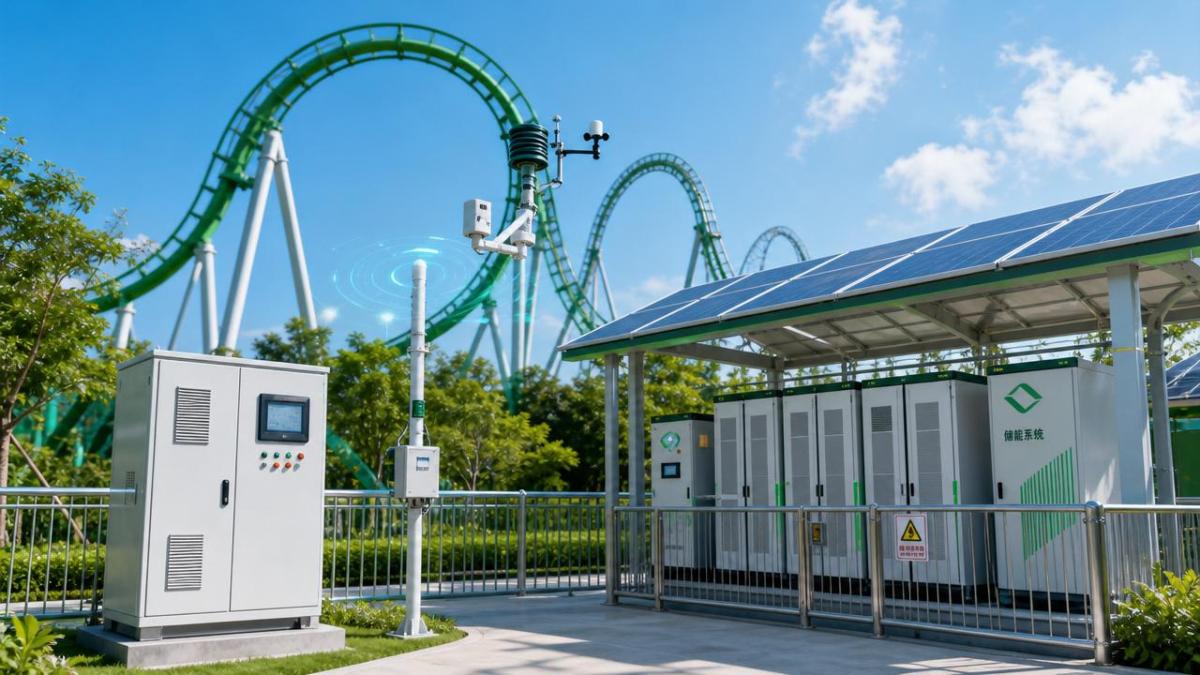
A ride may leave the factory with compliant brakes, rated steel structures, certified control cabinets, and emergency stop circuits. Yet real-world operation changes the risk profile within the first 30 to 90 days.
Outdoor amusement equipment faces heat, rain, salt air, dust, vibration, start-stop loads, and fluctuating visitor demand. Renewable energy integration adds another layer: inverters, storage batteries, smart meters, and load-shifting controllers must remain stable.
Why after-sales teams carry the safety burden
After-sales maintenance personnel are often the first to see weak signals before a visible failure occurs. A 2 mm increase in clearance, a 5℃ motor temperature rise, or a 300 ms control delay may look minor, but the trend matters.
In connected amusement equipment, these signals should not stay in paper notebooks. They need to become structured maintenance data that can be compared by date, operating hours, load conditions, and energy supply mode.
Core maintenance checkpoints
- Daily visual inspection of restraints, gates, platforms, guards, cables, and emergency stop accessibility.
- Weekly functional checks for brakes, limit switches, interlocks, overload alarms, and abnormal vibration.
- Monthly calibration review for speed sensors, position encoders, current sensors, and energy meters.
- Quarterly analysis of fault logs, standby power use, peak current, and battery backup discharge behavior.
The practical goal is simple: convert maintenance from a response after breakdown into a 4-layer control system covering people, mechanics, electronics, and energy performance.
The Safety Risks Hidden in Energy and Control Systems
Many failures in amusement equipment do not begin with a broken frame. They begin with unstable power, poorly tuned drives, aging relays, weak grounding, or sensors sending unreliable data under interference.
As parks adopt renewable energy, smart grids, and energy-saving controls, maintenance teams must understand both machine safety and power quality. A solar-supported facility may reduce energy costs, but it still needs stable voltage and predictable control response.
Typical risk areas in connected amusement environments
The following table helps after-sales teams classify common fault sources. It links mechanical symptoms with control and renewable energy variables that should be checked during service visits.
The key conclusion is that safety inspection must include energy behavior. If voltage dips, inverter overheating, or communication delay repeats under peak load, the maintenance plan should treat it as an operational risk, not only an electrical inconvenience.
The renewable energy connection
Renewable energy can support greener park operations, especially for lighting, ticketing systems, standby loads, monitoring gateways, and low-power auxiliary equipment. However, ride operation requires conservative engineering boundaries.
For critical amusement equipment, maintenance teams should document whether the power source is grid-only, hybrid solar-grid, or supported by energy storage. Each mode requires different inspection intervals and emergency procedures.
A practical rule is to verify 3 conditions before operation: stable incoming voltage, no unresolved inverter alarm, and confirmed emergency stop response under the current power mode.
Data-Driven Maintenance for Amusement Equipment
NexusHome Intelligence views connected systems through verified data rather than marketing claims. The same principle applies to amusement equipment maintenance: trust should be built from measured performance, not assumptions.
After-sales teams can use IoT diagnostics to monitor vibration, motor current, relay cycles, enclosure humidity, brake response, and controller temperature. Even a simple 10-point data log can improve fault isolation.
From manual checks to measurable safeguards
A traditional maintenance sheet may record that a component was checked. A connected maintenance system records the value, timestamp, technician, operating hours, and comparison with a predefined threshold.
This difference matters. If a gearbox runs at 62℃ today and 71℃ after 2 weeks under similar load, the trend provides a reason to inspect lubrication, alignment, bearing condition, and ventilation.
Useful data points for maintenance teams
- Operating cycles per day, separated by weekday, weekend, and holiday peak periods.
- Motor current during start, steady running, braking, and emergency stop tests.
- Brake response time and stopping distance under defined load conditions.
- Sensor signal delay, false alarm count, and communication interruption duration.
- Energy consumption per operating hour and standby power during closed periods.
When these 5 categories are tracked consistently, amusement equipment maintenance becomes easier to audit, easier to explain to operators, and easier to improve over time.
Protocol reliability matters in smart maintenance
Many parks now use gateways, wireless sensors, BLE tags, smart relays, and edge controllers. But not every connected device is suitable for safety-related monitoring or harsh outdoor service.
Maintenance teams should examine latency, packet loss, battery life, and environmental sealing. A sensor claiming long battery life is less useful if it drops data during heat, vibration, or electrical interference.
NHI’s wider principle of “Bridging Ecosystems through Data” is relevant here. Whether a system uses Zigbee, BLE, Wi-Fi, Thread, or wired industrial protocols, maintenance value depends on verifiable readings.
A Practical Maintenance Framework for After-Sales Teams
A strong maintenance plan should combine scheduled inspection, condition-based monitoring, fault escalation, spare parts readiness, and operator training. Each element reduces a different type of risk.
For amusement equipment operating 6 to 12 hours per day, service intervals should be based on both calendar days and cycle counts. A low-traffic site and a holiday park do not age at the same speed.
Recommended service rhythm
The table below provides a practical reference. Actual schedules should follow manufacturer manuals, local regulations, operating hours, climate conditions, and the risk level of each ride category.
The main lesson is that interval design should not be copied blindly. Maintenance frequency must reflect equipment duty cycle, climate exposure, visitor volume, renewable energy configuration, and historical fault data.
Five-step service workflow
- Collect operating data, including cycles, alarms, energy mode, and recent weather conditions.
- Inspect mechanical, electrical, and control components according to risk priority.
- Compare readings against thresholds, previous values, and manufacturer guidance.
- Correct faults, replace worn parts, recalibrate sensors, and document verification tests.
- Report risks to operators with clear severity levels and recommended shutdown criteria.
This 5-step workflow supports consistent decision-making. It also helps procurement teams evaluate whether a supplier provides usable maintenance documentation or only promotional product descriptions.
Choosing Suppliers and Systems That Support Safer Maintenance
Maintenance quality begins before installation. If amusement equipment is purchased without service access, diagnostic transparency, spare parts planning, or energy compatibility review, after-sales teams inherit avoidable problems.
For B2B buyers, the lowest quotation may become expensive if it requires excessive downtime, manual troubleshooting, unavailable components, or unclear electrical documentation. Serviceability should be treated as a purchasing criterion.
Procurement questions maintenance teams should ask
- Can the supplier provide wiring diagrams, control logic descriptions, and recommended inspection intervals?
- Are fault codes searchable, exportable, and understandable by field technicians?
- What parts are expected to wear within 12 months under normal operation?
- Does the control system tolerate hybrid grid and renewable energy environments?
- Are critical sensors protected against water, dust, vibration, and temperature variation?
These questions move the discussion from appearance and price toward operating reliability. They also help after-sales teams build a realistic spare parts list before the first busy season.
Serviceability indicators
Good amusement equipment is not only safe when new; it remains inspectable after months of operation. Technicians should be able to access lubrication points, cabinets, sensors, and wear components without unsafe shortcuts.
A maintainable system also provides clear alarms. For example, “motor overload at 18:42 during acceleration” is more useful than a generic fault light that forces technicians into trial-and-error repair.
Common Maintenance Mistakes That Increase Risk
Even experienced teams can develop habits that reduce safety margins. The most dangerous mistakes are often administrative: skipped records, incomplete handovers, delayed parts orders, or unclear shutdown authority.
Amusement equipment should not return to service based on confidence alone. A fault should be closed only after the corrective action is verified under controlled operation and recorded for future comparison.
Mistake 1: Treating energy alarms as non-safety events
In a renewable energy or hybrid power setting, repeated inverter alarms, low battery reserve, or unstable switchover may affect lighting, controls, gates, or monitoring systems. These symptoms require documented follow-up.
Mistake 2: Replacing parts without finding the root cause
If the same relay, bearing, sensor, or fuse fails twice within 60 days, replacement is not enough. Teams should check load conditions, alignment, ventilation, moisture, grounding, and control timing.
Mistake 3: Ignoring communication delays
Smart monitoring depends on reliable data flow. If a gateway loses connection for 5 minutes during peak operation, the maintenance team should know whether safety-critical control remains independent and protected.
Mistake 4: Letting documentation lag behind repairs
A technician may fix the problem, but the safety system remains incomplete if no one records the cause, action, parts used, test values, and next inspection date.
Building a Smarter Safety Culture Through Verified Data
The future of amusement equipment safety belongs to teams that combine disciplined hands-on inspection with digital evidence. Neither mechanical experience nor IoT dashboards are sufficient alone.
A better model connects technicians, operators, procurement managers, and equipment suppliers through shared maintenance records. The same data can guide spare parts planning, energy optimization, and shutdown decisions.
Where NHI’s data-driven view adds value
NexusHome Intelligence focuses on benchmarking connected hardware, protocol reliability, energy control, and sensor performance. These capabilities are directly relevant as amusement equipment becomes more intelligent and energy-aware.
For after-sales teams, the practical value is clearer supplier evaluation. Instead of accepting vague claims such as low power consumption or seamless integration, teams can demand measurable latency, standby power, battery behavior, and environmental performance.
A realistic path forward
Start with the most critical 3 to 5 ride systems, then standardize inspection forms, fault categories, energy readings, and escalation rules. Expand digital monitoring only after the basic maintenance discipline is stable.
This phased approach avoids overcomplication. It gives technicians practical tools, gives operators clearer risk visibility, and gives buyers better evidence when comparing suppliers or planning upgrades.
Final Guidance for Safer, Smarter Operations
Amusement equipment safety depends on maintenance because every ride changes after installation. Weather, energy conditions, load cycles, software settings, and human operation all influence long-term reliability.
For after-sales maintenance teams, the best strategy is not more paperwork; it is better evidence. Daily checks, 7-day service routines, 30-day data reviews, and 6 to 12-month audits form a practical safety framework.
As renewable energy systems, smart relays, IoT diagnostics, and connected controllers become more common, maintenance must cover both machinery and data integrity. Verified readings are now part of the safety chain.
NexusHome Intelligence helps industry teams evaluate connected hardware and energy-aware systems through measurable performance rather than marketing language. To improve maintenance planning, supplier assessment, or smart monitoring strategy, contact us to explore customized solutions for safer amusement equipment operations.
Protocol_Architect
Dr. Thorne is a leading architect in IoT mesh protocols with 15+ years at NexusHome Intelligence. His research specializes in high-availability systems and sub-GHz propagation modeling.
Related Recommendations
- Dr. Aris ThorneHow to Build a Voice-Enabled Smart Home Ecosystem That Works Across Brands
- Dr. Aris ThorneHow to Choose a Jewelry Pliers Set for Precision Wirework and Small Repairs
- Dr. Aris ThorneSupplier Capability Criteria for Renewable Energy Projects: A Procurement Checklist
- Dr. Aris ThorneCustom Printed Lanyards for Renewable Energy Sites: What Buyers Should Specify
- Dr. Aris ThorneSmart Home Protocol Analysis: How to Compare Matter, Zigbee, and Wi-Fi for Device Interoperability
- Dr. Aris ThorneMatter 1.4 Released as EU CE Rules Add Mandatory Thread/Zigbee Interoperability Tests
- Dr. Aris ThorneNorth America Property Technology: Market Opportunities, Adoption Drivers, and Key Challenges
- Dr. Aris Thorne7075 vs 6061 Aluminum in Europe: Which Alloy Fits Renewable Energy Structures?
- Dr. Aris ThorneMatter Compatibility Certification: What Device Makers Need to Pass Testing
- Dr. Aris ThorneEU EN 303 647 v2.1.1 Makes New EMC Tests Mandatory
Analyst