
Multi Protocol Gateway Integration: Common Traps
author
In renewable energy and smart building projects, multi protocol gateway integration often looks straightforward on paper but fails under real operating conditions. From hvac integration with matter and smart home local control hub design to thread vs zigbee mesh range, every protocol choice affects latency, reliability, and smart home peak load shifting performance. This article explores the most common traps decision-makers, engineers, and operators must avoid before scaling deployment.
Why multi protocol gateway integration fails in renewable energy projects
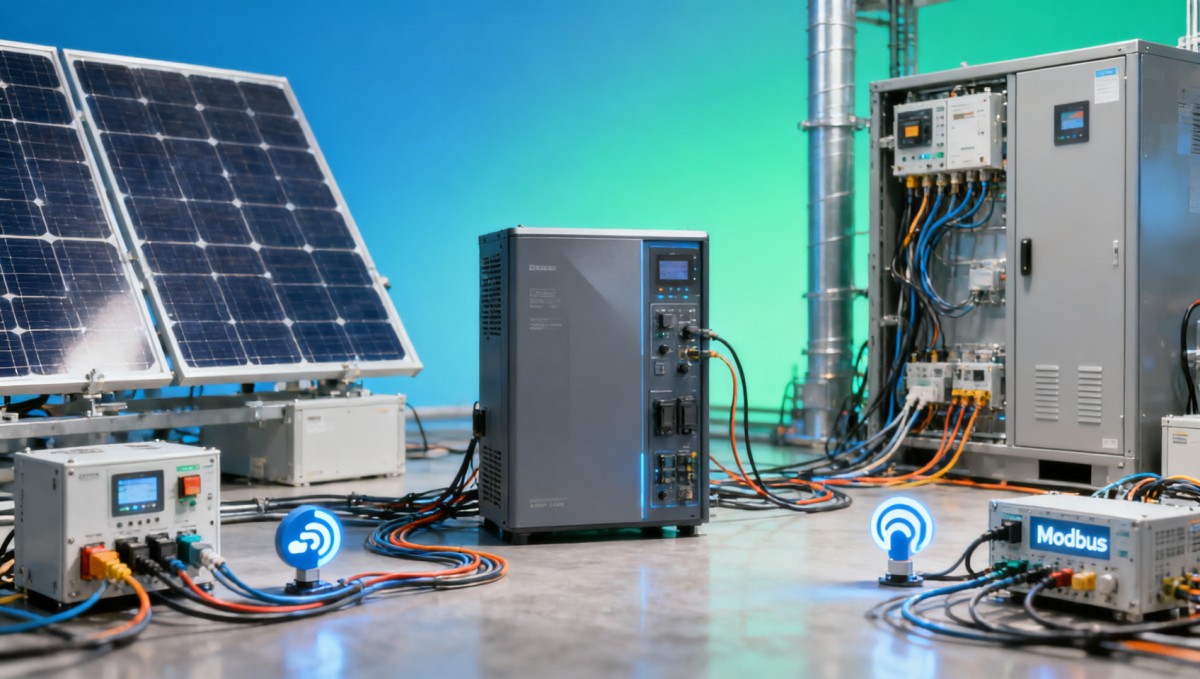
A multi protocol gateway is often expected to unify Zigbee, Thread, BLE, Wi-Fi, Modbus, and Matter into one control layer. In renewable energy sites, however, the gateway is not just a convenience device. It sits between HVAC automation, distributed energy assets, room-level sensors, battery systems, and local control logic. When that bridge is poorly designed, the result is not only device instability but also energy waste, delayed response, and weak demand-side control.
The first trap is assuming that protocol compatibility equals operational compatibility. A vendor may say a gateway “supports” 5 to 8 protocols, yet support can mean basic device onboarding only. It may not include scene synchronization, local fallback, time-sensitive control, or stable telemetry under interference. In smart buildings connected to solar, storage, and HVAC loads, those missing layers show up quickly during 24/7 operation.
The second trap is treating renewable energy environments like standard residential smart homes. Commercial rooftops, microgrids, and mixed-use buildings often have metal enclosures, inverter noise, dense RF conditions, and segmented networks. A gateway that performs well in a demo room may degrade when it has to manage 50 to 200 field endpoints across several floors or plant areas.
NexusHome Intelligence focuses on this gap between marketing claims and deployment reality. Instead of accepting “works with Matter” or “seamless integration” at face value, a serious evaluation must verify hop latency, packet loss behavior, local processing resilience, and battery impact under stress. In energy and climate control applications, engineering truth matters more than brochure language.
The most frequent mismatch between promise and field performance
For operators and procurement teams, the risk usually appears in four stages: pilot success, partial expansion, network congestion, and unstable scaling. During a small proof of concept with 10 to 15 devices, most gateways look acceptable. Problems become visible only when the deployment reaches larger volumes, more protocol bridges, and tighter automation schedules.
- Basic pairing succeeds, but automation rules execute with inconsistent delays once the node count increases.
- Dashboards show online status, yet actual command acknowledgments become unreliable during peak traffic windows.
- Battery devices respond normally at first, then degrade after 3 to 6 months because the gateway polling model is too aggressive.
- Local control seems available, but critical sequences still depend on cloud relays or remote token validation.
These traps are especially costly in energy-sensitive projects. When demand response logic misses a trigger by even a short interval, peak load shifting can underperform. When occupancy or air-quality sensors lag, HVAC optimization loses precision. The problem is rarely one protocol alone; it is usually the gateway’s translation behavior under mixed workloads.
Which protocol decisions create the biggest integration traps?
Teams comparing Thread vs Zigbee mesh range or planning HVAC integration with Matter often focus on the radio standard first. That matters, but the larger issue is whether the gateway handles routing, state mapping, command priority, and local orchestration properly. A weak mapping layer can make a technically sound protocol stack perform badly in practice.
Zigbee remains common for mature sensor and actuator ecosystems, especially where installers need broad device availability. Thread is increasingly attractive for IP-based architectures and Matter alignment. BLE is useful for provisioning and short-range interactions. Modbus and BACnet still dominate many building and energy devices. The trap appears when one gateway is asked to normalize all of them without clear priority rules.
For renewable energy sites, not all traffic has the same business value. Temperature adjustment within a few seconds is different from a load-shedding event that must happen immediately. Telemetry uploads can tolerate delay; safety alarms and equipment control cannot. If the gateway does not classify traffic into at least 3 levels of urgency, protocol coexistence becomes a hidden failure point.
The table below helps procurement and technical teams compare common protocol roles in smart building and energy environments. It does not rank protocols absolutely. Instead, it shows where integration traps usually emerge when a gateway is poorly specified.
The key lesson is simple: protocol choice should follow control objectives, not trend pressure. If the project needs local peak load shifting, fast room response, and robust fallback operation during WAN loss, then the gateway architecture must be validated against those tasks. A protocol badge alone is not enough for enterprise decision-making.
Thread vs Zigbee mesh range: the wrong question in many tenders
Many tenders ask which protocol has better range. In practice, the stronger question is this: how many stable nodes can the full gateway system support in your site geometry, with your wall materials, and with your command pattern? Mesh range without node density, hop count, and interference context is incomplete.
For example, a 2-floor office with 30 to 60 endpoints behaves very differently from a mixed-use building with 120 to 300 endpoints, metal risers, rooftop equipment, and segmented electrical rooms. The gateway, border router placement, firmware maturity, and local rule engine often matter more than a broad range claim printed on a datasheet.
What should operators and buyers verify before scaling deployment?
Before approving rollout, buyers should convert vague promises into testable checkpoints. This is where many projects save budget. Replacing a gateway family after deployment is far more expensive than extending a pilot by 2 to 4 weeks to expose weak protocol translation, battery stress, or cloud dependency.
NHI’s data-driven approach is especially useful here because procurement teams need evidence, not slogans. In renewable energy and climate control projects, five verification layers are practical: connectivity behavior, local control resilience, device compatibility depth, energy impact, and maintenance burden. If one layer is skipped, the gateway may look cheaper at purchase but cost more in operation.
The following checklist table can be used during RFQ review, pilot acceptance, or supplier comparison. It is designed for information researchers, operators, commercial evaluators, and enterprise decision-makers who need common language across technical and business teams.
A good procurement process turns these points into acceptance criteria. For example, set 4-step validation: lab review, small pilot, stress window, and on-site acceptance. This method helps business evaluators compare suppliers on operational readiness, not just unit price or interface screenshots.
A practical 4-step validation flow
- Define the real control objectives: local HVAC actions, energy meter synchronization, room occupancy rules, and peak load shifting logic.
- Create a mixed-device pilot with at least 3 protocol types and representative loads, not a single-brand demo set.
- Run interference and outage tests for 7 to 14 days, including router resets, WAN loss, and high command bursts.
- Approve deployment only after logs confirm stable automation, manageable battery behavior, and predictable maintenance paths.
This process is not excessive. It is far cheaper than discovering after commissioning that your smart home local control hub design cannot sustain real building operation or that your Matter bridge does not expose the functions your HVAC strategy depends on.
How do common traps affect HVAC control and smart home peak load shifting?
Renewable energy buildings need coordination between generation, storage, occupancy, and thermal loads. Multi protocol gateway integration is often central to that coordination because it connects sensors, thermostats, smart relays, submeters, and equipment controllers. When integration quality is weak, energy logic becomes shallow and reactive instead of precise and predictive.
One common trap is delayed state synchronization between device layers. A room sensor may report occupancy through Zigbee, while HVAC commands pass through Matter or Modbus. If the gateway introduces timing drift, the system may cool or heat spaces too late, too long, or in the wrong sequence. In a site with solar self-consumption goals, that mismatch can dilute load shifting effectiveness over daily cycles.
Another trap is over-centralizing automation. Some buyers want every rule to sit in one cloud dashboard. That simplifies procurement conversations but increases operational fragility. In energy applications, at least the first layer of control should remain at the edge. Gateway logic should preserve critical sequences for 15-minute demand windows, occupancy-triggered setbacks, and safety-related interlocks even if the internet path becomes unstable.
NHI’s focus on measurable protocol behavior is highly relevant in this context. Peak load shifting performance is not only about meter accuracy or relay rating. It also depends on timing, retry behavior, queue handling, and how the gateway arbitrates simultaneous events across protocols. Those hidden mechanics decide whether the energy strategy works during live operation.
Three scenarios where integration quality directly affects energy outcomes
1. Office HVAC optimization with rooftop solar
If room occupancy updates arrive late or thermostat states are partially mapped, pre-cooling and load balancing become inconsistent. The result is comfort complaints during high solar periods and lower self-consumption efficiency than the control strategy projected.
2. Commercial building peak demand management
A gateway may need to coordinate smart relays, lighting, fan speeds, and noncritical loads within a short response window. If the command queue is not prioritized, low-value telemetry can interfere with high-value shedding actions.
3. Hybrid retrofits combining legacy and new IoT assets
Many renewable energy retrofits keep existing BACnet or Modbus equipment while adding Zigbee, Thread, or Matter endpoints. The trap is assuming the gateway can translate all states equally. In reality, poor point mapping and incomplete metadata often create blind spots in alarms, reporting, or coordinated control.
What are the most expensive misconceptions in procurement and implementation?
The most expensive mistake is choosing by logo count instead of integration depth. A gateway that lists many ecosystems can still underperform if the supported functions stop at onboarding and simple on-off control. For business decision-makers, this can create hidden costs in field support, engineering rework, and vendor switching.
The second misconception is treating all local control claims as equivalent. Some devices continue simple scenes locally, while analytics, schedules, alarms, or fallback routines still depend on the cloud. In renewable energy buildings, that distinction matters. A short WAN issue during a demand event can erase the expected benefit of the automation strategy.
The third misconception is ignoring lifecycle maintenance. A gateway is not a one-time procurement item. Over a 3 to 5 year operating horizon, firmware management, diagnostics, replacement planning, and interoperability updates can cost more than the original hardware gap between a cheaper and a better-engineered option.
To avoid these mistakes, teams should align technical and commercial review around one principle: buy verified behavior, not interpreted claims. That is the supply-chain transparency gap NHI is built to address through benchmarking, protocol scrutiny, and deployment-focused analysis.
FAQ for buyers and project teams
How do I choose a multi protocol gateway for HVAC integration with Matter?
Start with the control sequence, not the Matter label. Confirm which HVAC points are actually exposed, how local rules behave during WAN loss, and whether the gateway can coordinate Matter devices with legacy building protocols. A pilot should include at least one stress period with mixed command bursts and sensor traffic.
Is Thread always better than Zigbee for smart building projects?
Not always. Thread may align better with IP-native architectures and Matter, while Zigbee still offers broad device choice and mature field experience. The right answer depends on device ecosystem, gateway quality, border router design, and the required scale, often from tens to hundreds of nodes.
What is the usual pilot period before full deployment?
For mixed protocol energy and building projects, a practical pilot often runs 2 to 4 weeks. Shorter tests may confirm installation success but miss battery behavior, interference patterns, and intermittent queue issues. If the site has legacy equipment integration, the review can take longer.
What should operators monitor after commissioning?
Track command success rates, offline frequency, battery replacement intervals, firmware history, and rule execution consistency during peak periods. Monthly review is common in the first quarter after launch, then quarterly once the environment is stable.
Why choose a data-driven partner for gateway evaluation and sourcing?
Renewable energy and smart building buyers do not need more generic claims about seamless integration. They need measurable guidance on protocol behavior, local control limits, energy impact, and sourcing risk. That is where NexusHome Intelligence brings practical value. NHI acts as an engineering filter between manufacturing capability and enterprise procurement, focusing on transparent verification rather than marketing volume.
For information researchers, NHI helps separate broad compatibility language from usable deployment evidence. For operators, it clarifies maintenance realities, battery implications, and local control boundaries. For commercial evaluators and decision-makers, it supports better comparison of protocol stacks, gateway architectures, and supplier readiness across 3 key dimensions: technical integrity, deployment fit, and lifecycle manageability.
If you are reviewing a multi protocol gateway for smart home local control hub design, HVAC integration with Matter, Thread vs Zigbee mesh range questions, or smart home peak load shifting performance, a structured consultation can reduce risk before rollout. The most useful discussion points usually include parameter confirmation, protocol mapping depth, expected node scale, delivery cycle, customization boundaries, and sample validation needs.
Contact us to discuss your gateway selection criteria, site architecture, required local control behavior, pilot planning, certification expectations, sample support, and quotation scope. A precise conversation at the start can prevent months of integration drift later and help turn fragmented ecosystems into a workable, data-driven deployment strategy.
Protocol_Architect
Dr. Thorne is a leading architect in IoT mesh protocols with 15+ years at NexusHome Intelligence. His research specializes in high-availability systems and sub-GHz propagation modeling.
Related Recommendations
- Dr. Aris ThorneHow to Build a Voice-Enabled Smart Home Ecosystem That Works Across Brands
- Dr. Aris ThorneHow to Choose a Jewelry Pliers Set for Precision Wirework and Small Repairs
- Dr. Aris ThorneSupplier Capability Criteria for Renewable Energy Projects: A Procurement Checklist
- Dr. Aris ThorneCustom Printed Lanyards for Renewable Energy Sites: What Buyers Should Specify
- Dr. Aris ThorneSmart Home Protocol Analysis: How to Compare Matter, Zigbee, and Wi-Fi for Device Interoperability
- Dr. Aris ThorneMatter 1.4 Released as EU CE Rules Add Mandatory Thread/Zigbee Interoperability Tests
- Dr. Aris ThorneNorth America Property Technology: Market Opportunities, Adoption Drivers, and Key Challenges
- Dr. Aris Thorne7075 vs 6061 Aluminum in Europe: Which Alloy Fits Renewable Energy Structures?
- Dr. Aris ThorneMatter Compatibility Certification: What Device Makers Need to Pass Testing
- Dr. Aris ThorneEU EN 303 647 v2.1.1 Makes New EMC Tests Mandatory
Analyst