
How to Read a Commercial Drone Payload Capacity Benchmark
author
For renewable energy teams comparing aerial tools for inspection, mapping, and asset monitoring, a commercial drone payload capacity benchmark offers more than a headline number. It reveals how lift performance, endurance, sensor compatibility, and operational stability translate into real field value. This guide helps information-driven buyers read benchmark data critically, so decisions are based on measurable performance rather than marketing claims.
Why payload benchmarks matter in renewable energy procurement
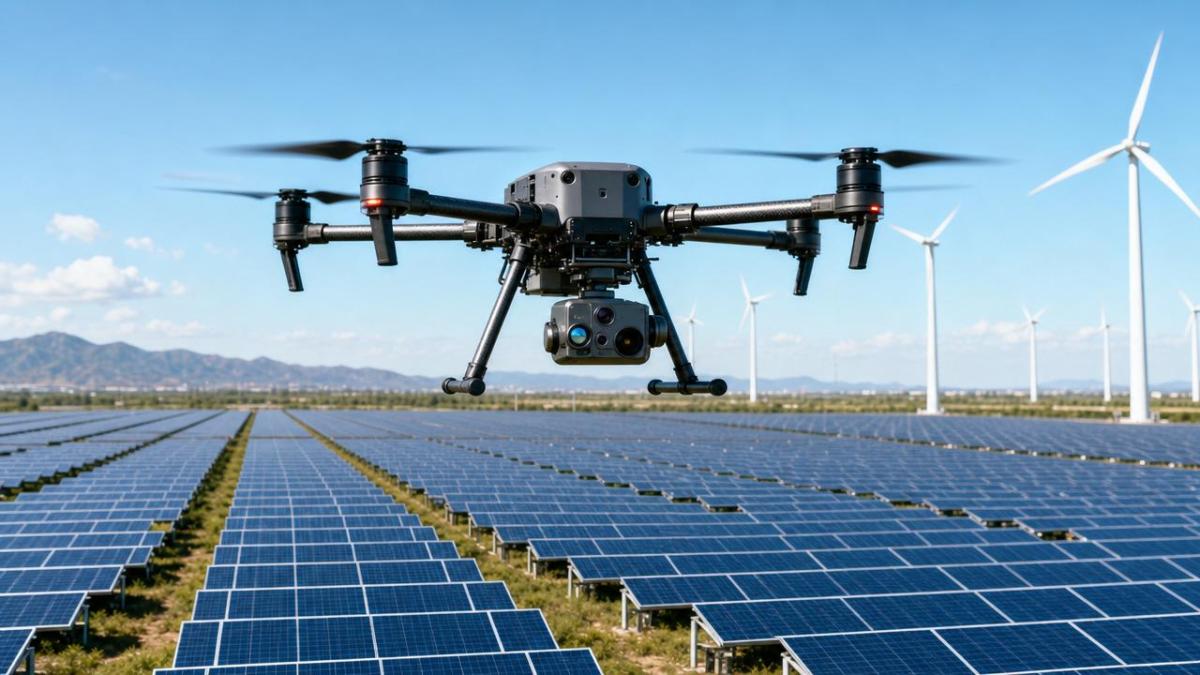
In renewable energy operations, drones are not bought for recreation or general imaging. They are selected for specific inspection outcomes: detecting thermal anomalies on solar farms, scanning transmission corridors near wind sites, creating terrain models for new installations, or monitoring hard-to-access assets after severe weather. In each case, payload capacity affects which sensor can fly, how long the aircraft can stay aloft, and whether the data collected will support maintenance or investment decisions.
That is why a commercial drone payload capacity benchmark should be read as an engineering document, not a marketing brochure. A benchmark can expose whether the aircraft keeps stable hover with a thermal camera attached, whether battery endurance collapses under realistic loads, and whether communication latency changes when the aircraft carries a heavier gimbal or LiDAR unit.
For information researchers, the real challenge is fragmentation. Drone vendors may publish payload numbers, sensor vendors may publish weight and power draw, and software vendors may emphasize compatibility. Yet field success depends on how these systems perform together. This is the same reason data-driven verification matters across connected hardware ecosystems: headline claims rarely describe real operating behavior under stress.
- A solar inspection team needs enough lift for a radiometric thermal sensor without cutting mission time below workable levels.
- A wind farm operator may need optical zoom, stable positioning, and resistance to crosswind when flying near towers.
- A developer planning a battery storage site may need mapping payloads that maintain geospatial accuracy over long corridors or uneven terrain.
How to read a commercial drone payload capacity benchmark beyond the headline number
Many buyers begin with a single question: how many kilograms can the drone carry? That question is necessary but incomplete. A commercial drone payload capacity benchmark should be read in layers. The nominal payload figure is only the first layer. The second layer is how performance degrades as payload rises. The third is whether degradation remains acceptable for the intended renewable energy task.
Key benchmark dimensions to examine
- Maximum payload: The advertised top load under controlled conditions. This may not reflect safe operational payload in wind, altitude, or heat.
- Useful payload: The load at which flight time, maneuverability, and data quality remain practical for inspection missions.
- Endurance under load: Battery duration should be reported at several payload bands, not only at zero load.
- Hover and vibration stability: Important for thermal imaging, zoom inspection, and repeatable data capture.
- Power and interface compatibility: The drone must support payload voltage, connectors, data links, and software integration.
- Environmental resilience: High temperature, dust, wind, and altitude all affect real payload performance on renewable energy sites.
A useful reading method is to ask whether the benchmark reflects your mission profile. If the aircraft was tested indoors at sea level with short hover cycles, that benchmark may be less relevant for utility-scale solar arrays in hot climates or wind assets in exposed terrain.
Which metrics matter most for solar, wind, and grid-side inspections?
The table below translates a commercial drone payload capacity benchmark into renewable energy use cases. It helps information researchers connect payload data with actual inspection priorities instead of evaluating aircraft in isolation.
The main lesson is simple: the best payload benchmark is task-specific. A drone that performs well for visual inspection may underperform when carrying heavier thermal or LiDAR equipment. Procurement teams should therefore score benchmarks by mission relevance, not by maximum lift alone.
What a strong benchmark should include, and what weak benchmark reports hide
Not all benchmark documents are equally useful. Strong reports describe test conditions clearly, show multiple payload steps, and explain how control, endurance, and data quality change under load. Weak reports often provide only peak payload, ideal flight time, and promotional language about reliability.
Signs of a strong benchmark
- It states ambient temperature, altitude, wind conditions, battery state, and sensor configuration.
- It measures performance across several payload bands rather than just unloaded versus maximum load.
- It includes mission-relevant metrics such as hover stability, route completion rate, and image or mapping consistency.
- It documents interface compatibility, mounting constraints, and power supply limits for third-party sensors.
Common red flags
- Payload figure is published without endurance data at that load.
- No explanation of whether the payload includes gimbal, mount, cabling, or onboard computer.
- No mention of wind performance, which is critical for wind and utility-scale solar sites.
- Compatibility claims are broad, but protocol, data, or software limitations are missing.
This is where a data-first approach adds value. Whether evaluating IoT modules or aerial hardware, credible selection depends on transparent testing, interoperability evidence, and measurable stress performance. That mindset is especially useful when multiple vendors claim similar specifications.
How to compare drones using a commercial drone payload capacity benchmark
When several aircraft appear suitable, a side-by-side matrix prevents teams from overvaluing a single number. The comparison table below can be adapted during vendor screening for renewable energy inspections, especially when balancing payload, mission duration, and sensor integration.
This framework also helps separate operational value from acquisition cost. A higher-priced drone may still be the better investment if it supports the required payload with fewer battery swaps, fewer repeat flights, and smoother integration into maintenance or digital twin workflows.
Procurement questions information researchers should ask before shortlisting
A commercial drone payload capacity benchmark is most useful when paired with disciplined vendor questioning. Information researchers often collect brochures first and technical clarifications later. Reversing that order reduces shortlisting errors.
Checklist for early-stage evaluation
- Does the quoted payload include only the sensor, or also the gimbal, mount, protective housing, and communication module?
- What is the actual mission time when flying the intended sensor package at the site’s typical temperature and elevation?
- Can the aircraft maintain required image or mapping quality when operating in gusty conditions common to wind and solar fields?
- Are there protocol or software constraints that limit sensor interoperability, data export, or remote monitoring integration?
- What consumables, spare parts, and battery logistics affect total operating cost?
These questions align with a wider procurement reality in connected systems: compatibility and measurable performance matter more than polished claims. A drone that cannot integrate cleanly into the inspection data chain may create hidden costs even if its payload benchmark looks attractive on paper.
Cost, alternatives, and trade-offs: when bigger payload is not the better choice
Higher payload capacity usually increases airframe size, battery demand, transport complexity, and operational cost. For renewable energy teams, this does not always improve project economics. If a mission only requires a lightweight thermal camera and repeatable route planning, a medium-payload platform may outperform a heavy-lift system on daily throughput and deployment ease.
Alternative strategies can also reduce the need for maximum payload. Some teams separate workflows: one aircraft for routine thermal scans, another for occasional LiDAR or advanced diagnostics. Others optimize payload through sensor miniaturization, edge data compression, or modular mounting so the aircraft carries only what the mission requires.
- Choose heavier payload platforms when sensor flexibility and future mission expansion are priorities.
- Choose lighter platforms when deployment speed, battery logistics, and routine inspection volume matter most.
- Consider mixed fleets when your renewable energy portfolio includes both repetitive surveys and specialized diagnostic tasks.
Standards, compliance, and data reliability considerations
A commercial drone payload capacity benchmark should not be separated from compliance and data governance. Renewable energy asset owners often operate across multiple regions, and aerial workflows may need to align with local aviation rules, site safety procedures, inspection documentation requirements, and cybersecurity expectations.
While specific requirements vary by jurisdiction, buyers should review whether the drone and payload combination supports traceable maintenance logs, secure data transfer, firmware update management, and stable integration with enterprise systems. This is particularly relevant when inspection outputs feed condition-based maintenance, insurance reporting, or grid-side planning.
What to verify in documentation
- Operational limits for wind, temperature, ingress exposure, and altitude.
- Sensor calibration procedures and repeatability expectations.
- Data interface details for telemetry, media export, and analytics ingestion.
- Cybersecurity and update procedures for connected payload modules.
FAQ: common questions about commercial drone payload capacity benchmark data
Is the maximum payload figure enough for supplier comparison?
No. Maximum payload is only a starting point. Renewable energy buyers should compare endurance, stability, sensor compatibility, and environmental performance at the intended payload. A drone that lifts more but loses too much flight time may reduce inspection efficiency and increase field labor.
Which renewable energy scenarios are most sensitive to payload benchmark quality?
Thermal inspection of large solar farms, wind turbine blade inspection, LiDAR mapping for site planning, and corridor monitoring are all sensitive. These tasks depend on steady sensor operation, reliable route completion, and consistent data quality under real environmental stress.
What is the most common mistake when reading a commercial drone payload capacity benchmark?
The most common mistake is treating payload as an isolated specification. In practice, payload changes flight endurance, vibration behavior, braking response, and even data workflow design. Buyers should evaluate the full mission system, not the aircraft alone.
How should information researchers validate vendor claims if they are still early in the buying process?
Request multi-condition test data, interface documentation, and benchmark curves rather than summary brochures. Ask for payload-specific flight time, recommended sensor combinations, software compatibility notes, and any limitations in wind, heat, or altitude. Early evidence review saves time during technical due diligence.
Why choose us for benchmark-driven sourcing and evaluation
NexusHome Intelligence approaches hardware evaluation through the same principle that defines resilient connected ecosystems: trust must be earned through verifiable data. For renewable energy teams reviewing aerial inspection tools, that means looking beyond promotional payload claims and focusing on real interoperability, stress behavior, and measurable operating limits.
We support information-driven buyers who need structured clarity before formal procurement. You can consult with us on payload parameter confirmation, sensor and interface matching, benchmark interpretation, protocol and data integration concerns, expected delivery coordination, customization feasibility, certification-related questions, sample evaluation logic, and quotation comparison criteria.
If your team is comparing drone platforms for solar, wind, grid, or storage-site inspection, contact us with your target payload, sensor stack, operating environment, and data workflow requirements. We can help translate fragmented supplier information into a more disciplined evaluation path grounded in technical evidence rather than generic claims.
Protocol_Architect
Dr. Thorne is a leading architect in IoT mesh protocols with 15+ years at NexusHome Intelligence. His research specializes in high-availability systems and sub-GHz propagation modeling.
Related Recommendations
- Dr. Sophia Carter (Medical IoT Specialist)How to Read a Commercial Drone Payload Capacity Benchmark
- Dr. Sophia Carter (Medical IoT Specialist)Commercial Drone Payload Capacity Benchmarks That Mislead Buyers
- Dr. Sophia Carter (Medical IoT Specialist)How to use a drone payload benchmark before fleet expansion
- Dr. Sophia Carter (Medical IoT Specialist)Commercial drone payload capacity benchmark by use case
- Dr. Sophia Carter (Medical IoT Specialist)AR Hardware Benchmarks That Expose Real Limits
- Dr. Sophia Carter (Medical IoT Specialist)Why smart glasses testing often misses comfort issues
- Dr. Sophia Carter (Medical IoT Specialist)AR hardware benchmarks that actually help decisions
- Dr. Sophia Carter (Medical IoT Specialist)What smart glasses buyers should ask about sensors
- Dr. Sophia Carter (Medical IoT Specialist)Radar sensor for traffic monitoring — how Doppler ambiguity skews vehicle count during rush hour
- Dr. Sophia Carter (Medical IoT Specialist)Smart Glasses & AR Devices: What IoT Hardware Benchmarking Reveals About Real-Time Matter Latency
Analyst