
What smart glasses buyers should ask about sensors
author
Before choosing smart glasses, buyers should go beyond specs and ask how sensors perform in real conditions, from SpO2 sensor accuracy to protocol latency benchmark and Matter standard compatibility. For procurement teams and evaluators in renewable-energy-linked smart ecosystems, NHI applies IoT hardware benchmarking and smart wearables benchmark methods to expose real risks in power use, data quality, and long-term reliability.
Why sensor questions matter more in renewable-energy operations
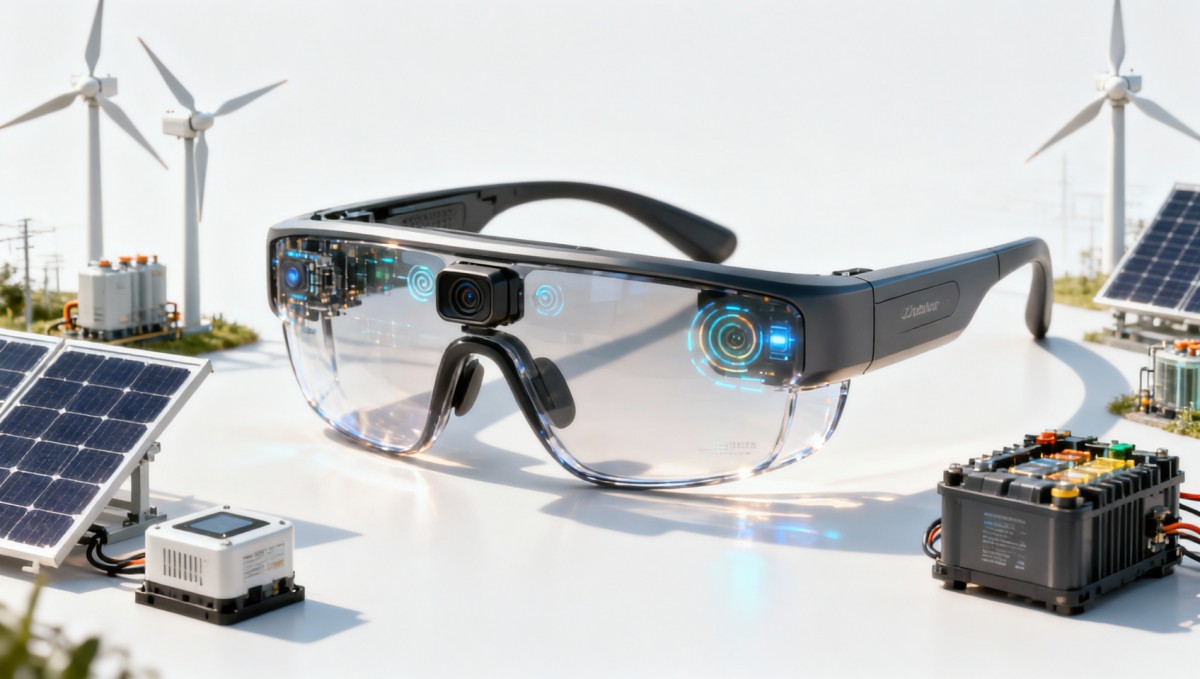
In renewable-energy environments, smart glasses are not simply wearable displays. They are edge data tools used by operators in solar plants, wind farms, battery storage sites, and hybrid microgrids. A procurement decision that focuses only on field of view or display brightness can miss the larger issue: the sensor stack determines whether the device can support safe inspection, remote assistance, and reliable data capture over 8–12 hour shifts.
For buyers, the right question is not “How many sensors are included?” but “How do those sensors behave under vibration, heat, dust, intermittent connectivity, and strict battery budgets?” In energy operations, a weak IMU can distort head-tracking during ladder work, a drifting optical sensor can reduce health-monitoring confidence, and unstable wireless behavior can delay command overlays when crews depend on fast instructions.
This is where NexusHome Intelligence (NHI) brings practical value. NHI’s approach is aligned with a fragmented IoT world in which Zigbee, BLE, Thread, Wi-Fi, and Matter claims often sound simpler than real deployment conditions. For renewable-energy procurement teams, the problem is not lack of marketing language. The problem is lack of verified performance under stress, measured through repeatable hardware and protocol benchmarking.
When smart glasses are introduced into energy-linked ecosystems, three risk layers appear at once: sensor reliability, protocol interoperability, and power efficiency. If just one layer fails, the result can be rework, operator frustration, extra truck rolls, or poor integration with building-energy dashboards and remote asset platforms. That is why buyers should ask precise sensor questions before approving pilot batches of 20–50 units or larger rollouts of 200+ units.
What changes in a renewable-energy use case?
A smart glasses deployment in a showroom and a deployment at a solar-plus-storage site are not comparable. Renewable-energy teams often work across temperature variation, outdoor glare, PPE requirements, and intermittent network zones. Sensor performance must therefore be judged against site realities, not office demos. Even a 2–4 second lag in sensor-linked overlays can interrupt maintenance flow when technicians move between panels, inverters, and switchgear.
Health and safety is another factor. If glasses include SpO2, motion, or environmental sensing, buyers should understand whether these functions are wellness-grade, workflow-grade, or intended for higher-risk monitoring contexts. The distinction affects compliance language, worker acceptance, and false alarm rates. NHI’s data-first mindset helps separate operationally useful sensing from brochure-level feature inflation.
- Operators need sensors that remain stable through repetitive movement, head tilt, and outdoor transitions, not just in controlled indoor tests.
- Procurement teams need measurable benchmarks for battery draw, wireless handoff, and long-term drift over quarterly or annual device use.
- Business evaluators need evidence that sensor data can integrate into wider smart-building, energy-management, and asset-monitoring workflows.
Taken together, these requirements make smart glasses a cross-functional purchase. The buying team is evaluating not only a wearable, but a node in a broader connected infrastructure where performance claims must survive real load, real distance, and real operating schedules.
Which sensors should buyers evaluate first?
Not every sensor has equal value for renewable-energy tasks. Buyers should prioritize the sensors that directly affect inspection accuracy, worker support, and integration into digital operations. In most projects, the first 5 categories to review are IMU, camera and vision sensors, optical biosensors such as SpO2, ambient and environmental sensors, and wireless-location or proximity-related sensing used for contextual prompts.
The next step is to ask how each sensor is calibrated, how often recalibration is required, and what happens after 6–12 months of field use. MEMS drift, optical contamination, lens fogging, and thermal effects are common real-world issues. A sensor that looks excellent during week 1 but degrades by quarter 2 creates hidden support costs and undermines confidence in the entire wearable program.
The table below organizes the most relevant sensor questions for buyers who need smart glasses for solar, wind, storage, and energy-management workflows. It is especially useful when comparing suppliers that use similar headline specs but provide very different levels of test transparency.
A useful rule for procurement is to ask for test evidence in at least 3 conditions: indoor baseline, outdoor high-glare operation, and high-motion field activity. If a vendor cannot describe sensor behavior across these conditions, the team is likely buying into uncertainty rather than measured capability.
How to separate useful sensors from feature overload
Many devices add sensors to look advanced, yet not every sensor contributes to operational value. Buyers should ask whether each sensing function supports one of four concrete outcomes: safer inspection, faster diagnosis, lower travel cost, or better system integration. If the answer is unclear, that sensor may add software complexity and battery drain without improving return on deployment.
NHI’s benchmarking perspective is especially relevant here. In fragmented ecosystems, every extra sensing feature can create another point of failure across firmware, gateway behavior, edge processing, and data export. A smaller, verified sensor set often performs better than a larger but poorly characterized package, especially during 3–6 month pilot projects where reliability matters more than novelty.
Five practical sensor-check questions for RFQ documents
- What are the test conditions for each sensor, including movement level, temperature range, and wireless environment?
- How is long-term drift tracked over 6 months, 12 months, or defined operating hours?
- Which sensors continue functioning when connectivity is weak or the device moves to edge-only operation?
- What is the battery impact of always-on sensing versus event-triggered sensing during an 8–12 hour shift?
- Can sensor outputs be exported cleanly into existing maintenance, safety, or energy analytics systems?
Including these questions early reduces the risk of shortlisting visually impressive devices that later fail integration reviews or cost-control assessments.
How should buyers judge protocol latency, Matter compatibility, and power draw?
A smart glasses sensor is only as useful as the communication path carrying its data. In renewable-energy facilities, smart glasses may need to exchange information with building controls, local gateways, remote support platforms, and IoT devices spread across indoor and outdoor zones. This makes protocol behavior a procurement issue, not just a software issue. Buyers should ask for latency benchmarks, handoff behavior, and practical interoperability notes rather than accepting broad statements such as “supports Matter” or “works with BLE and Wi-Fi.”
Matter standard compatibility deserves special attention. Matter can simplify device-to-device interoperability in some ecosystems, but it does not eliminate the need to test real response time, power consumption, and multi-device coexistence. For field teams, a delay of even a few hundred milliseconds can be acceptable for status synchronization, while interactive remote assistance and safety prompts may require much tighter response windows. Procurement should therefore define acceptable latency by workflow, not by marketing claim.
Power draw is equally important in renewable-energy operations because workers often spend long periods away from charging points. Sensor-rich wearables can suffer from cumulative battery drain caused by always-on vision processing, continuous IMU updates, active wireless scanning, and background data encryption. A buying decision should compare battery endurance in at least 3 modes: standby, active guidance, and high-streaming or high-sensing operation.
A practical comparison framework for connectivity and power
The table below helps procurement teams compare smart glasses options from the perspective of protocol latency benchmark, Matter standard compatibility, and operational battery impact. It is not a substitute for laboratory validation, but it gives business evaluators a structured way to challenge supplier claims during the first comparison round.
This comparison often changes buying decisions. A device with slightly fewer headline features may outperform a richer-looking alternative if its protocol latency benchmark is documented, its Matter standard compatibility is narrowly but honestly defined, and its power profile matches a full workday.
Common thresholds buyers should define internally
- A target operating window for a full shift, often 8–10 hours minimum for active field use, with clear assumptions about streaming and sensing intensity.
- An acceptable response range for interactive overlays versus background telemetry, since these do not require the same latency behavior.
- A fallback policy for low-connectivity sites, including cached workflows, delayed sync, and manual escalation steps.
By defining these thresholds before vendor negotiations, teams reduce the risk of comparing devices on vague, non-operational terms.
What should procurement teams include in evaluation and pilot selection?
A strong procurement process for smart glasses should include technical review, user validation, and business feasibility in parallel. In renewable-energy settings, that usually means a 3-stage path: paper screening, controlled pilot, and site deployment review. Skipping any stage creates blind spots. A low-cost unit may pass a document review yet fail PPE comfort checks, while a premium unit may perform well technically but create hidden support costs in charging, training, or software integration.
For operators, usability matters as much as sensor quality. The device should remain stable during repetitive inspection tasks, fit with helmets or eye protection where needed, and avoid creating visual fatigue during 1–2 hour continuous sessions. For procurement teams, the larger issue is total operational fit: support policy, firmware update process, spare-part availability, and realistic lead times for pilot and scale-up purchases.
The following checklist is useful during RFQ and pilot preparation because it links user pain points, technical performance, and business evaluation into one decision framework.
A 6-point procurement checklist
- Define the primary use case first: remote expert support, maintenance guidance, inspection capture, or worker wellness monitoring. One device rarely excels equally at all four.
- Request sensor test details for at least 3 operating conditions: low motion, active motion, and outdoor light variation.
- Map battery expectations to shift design, including standby periods, peak-use windows, and recharge logistics over daily or weekly cycles.
- Check interoperability with current energy-management and IoT infrastructure, including BLE, Wi-Fi, gateway dependencies, and realistic Matter pathways.
- Estimate total cost beyond device price: software setup, training time, replacements, accessories, and support burden over 12–24 months.
- Run a pilot with measurable acceptance criteria, such as task completion time, connectivity stability, user comfort, and data export quality.
This checklist helps separate a procurement exercise from a simple gadget purchase. It also creates a shared language between engineering, operations, and finance, which is often missing when wearable projects stall after initial enthusiasm.
Typical pilot structure for energy-linked deployments
A practical pilot often runs 2–4 weeks with 5–20 devices, depending on the number of sites and workflows involved. Week 1 usually focuses on fit, onboarding, and baseline network testing. Weeks 2–3 test live inspection and support tasks. The final period reviews sensor logs, battery behavior, protocol latency, and user adoption barriers. Shorter pilots can identify obvious issues, but they often miss drift, support load, and workflow fatigue.
NHI’s value in this stage is methodological. Because NHI operates as an independent benchmarking and technical verification lab, the focus remains on measurable performance rather than sales presentation language. That matters when a project depends on engineering integrity, protocol compliance, and the ability to compare multiple suppliers using the same evaluation lens.
What mistakes do buyers make, and what should they ask in advance?
The biggest buying mistake is assuming that smart glasses are mature, interchangeable hardware. In reality, sensor quality, firmware tuning, and ecosystem behavior vary widely. The second mistake is treating wearable sensing as isolated from the larger renewable-energy stack. Once smart glasses feed data into IoT dashboards, maintenance systems, or local gateways, every weakness in protocols, edge logic, and power management becomes visible.
Another common error is overtrusting broad claims such as “industrial grade,” “low power,” or “ready for enterprise deployment.” These terms are not useful unless backed by test conditions, time windows, and integration context. A buyer should ask: under what environment, over what operating duration, and connected to which protocol path? Those 3 questions often reveal whether a supplier understands field conditions or only product positioning.
FAQ-style questions are especially helpful for cross-functional teams because they turn technical concerns into procurement language that operators, evaluators, and managers can all use.
How should buyers interpret SpO2 sensor accuracy in smart glasses?
Buyers should first ask whether the SpO2 function is designed for wellness support, workflow alerts, or a more regulated health context. In many wearable implementations, optical readings are sensitive to motion, fit, skin contact, and ambient conditions. For renewable-energy field crews, readings taken during movement or heat stress may behave differently from seated indoor use. The correct procurement approach is to request use-condition notes, error limits if available, and clear statements about intended use, not to assume medical equivalence.
Does Matter compatibility guarantee easy integration?
No. Matter standard compatibility may simplify certain device relationships, but it does not automatically solve workflow latency, gateway translation, legacy platform constraints, or outdoor network instability. Buyers should ask what exact Matter functions are tested, what device roles are supported, and whether the smart glasses still depend on proprietary middleware for key tasks. In mixed infrastructure, limited but clearly documented compatibility is safer than a broad but ambiguous claim.
How much should battery life influence supplier selection?
Battery life should be treated as a core commercial factor, not an accessory detail. A device that needs recharging halfway through a 10-hour shift may trigger spare-unit purchases, extra charging points, and workflow interruption. Buyers should ask for battery behavior under continuous sensing, periodic streaming, and mixed standby-use patterns. Reviewing battery cycle expectations over 12–24 months is also important because degradation affects replacement planning and total ownership cost.
What is a realistic delivery and evaluation timeline?
For B2B projects, a realistic path often includes 1–2 weeks for technical clarification, 2–4 weeks for sample or pilot preparation, and another 2–4 weeks for structured site evaluation, depending on customization and software dependencies. Buyers should confirm not only device lead time but also firmware readiness, accessory availability, and the support process for issue tracking during pilot phases. Delivery speed alone is not enough if the test plan is weak.
Why choose a data-driven evaluation partner for smart glasses procurement?
In fragmented IoT and wearable markets, the safest buying path is not the loudest vendor pitch. It is a disciplined evaluation built around verifiable data, protocol transparency, and hardware stress understanding. That is the logic behind NHI. As an independent, data-driven benchmarking and technical verification platform, NHI helps procurement teams move from feature comparison to engineering judgment, especially where smart glasses intersect with renewable-energy operations and wider connected infrastructure.
NHI’s advantage lies in how it frames the decision. Instead of accepting vague terms such as “seamless integration” or “ultra-low power,” NHI focuses on measurable questions: protocol latency benchmark under load, Matter standard compatibility under actual deployment logic, MEMS and optical sensor stability over time, and practical power behavior in field-like conditions. This approach is valuable for users, purchasing teams, and business evaluators who need risk visibility before scale commitment.
If your team is comparing smart glasses for solar O&M, wind service workflows, battery storage supervision, or smart energy facility management, NHI can support a more defensible decision path. Consultation can focus on parameter confirmation, sensor evaluation priorities, protocol and integration review, pilot structure, expected delivery timeline, sample strategy, and quotation comparison criteria. This is especially useful when multiple suppliers appear similar on paper but differ significantly in real deployment readiness.
For the next step, prepare 4 items before discussion: your target use case, current network and IoT environment, expected shift duration, and pilot quantity range. With that baseline, it becomes much easier to assess whether a smart glasses platform fits your operational goals, your renewable-energy context, and your long-term procurement economics.
What you can contact NHI about
- Parameter confirmation for sensor stack, battery profile, and wireless behavior before RFQ finalization.
- Product selection support for pilot-stage comparison across multiple suppliers or ODM/OEM options.
- Delivery and sample planning, including realistic lead-time expectations and pilot quantity recommendations.
- Customization and integration discussion for renewable-energy sites, smart buildings, or mixed IoT ecosystems.
- Certification and compliance planning using common industry terminology and practical deployment constraints.
- Quote review based on technical substance rather than headline features or unsupported marketing claims.
For teams that need to bridge ecosystems through data, this kind of review is not optional. It is the foundation for buying smart glasses that remain useful after the demo stage and continue delivering value across real renewable-energy operations.
Protocol_Architect
Dr. Thorne is a leading architect in IoT mesh protocols with 15+ years at NexusHome Intelligence. His research specializes in high-availability systems and sub-GHz propagation modeling.
Related Recommendations
- Dr. Sophia Carter (Medical IoT Specialist)Why smart glasses testing often misses comfort issues
- Dr. Sophia Carter (Medical IoT Specialist)AR hardware benchmarks that actually help decisions
- Dr. Sophia Carter (Medical IoT Specialist)What smart glasses buyers should ask about sensors
- Dr. Sophia Carter (Medical IoT Specialist)Radar sensor for traffic monitoring — how Doppler ambiguity skews vehicle count during rush hour
- Dr. Sophia Carter (Medical IoT Specialist)Smart Glasses & AR Devices: What IoT Hardware Benchmarking Reveals About Real-Time Matter Latency
- Dr. Sophia Carter (Medical IoT Specialist)Industrial robots for automotive assembly: How payload variance affects end-of-line weld repeatability
- Dr. Sophia Carter (Medical IoT Specialist)AR glasses FOV comparison hides how distortion maps shift perception at periphery
Analyst