
What changes the welding robot arm price the most?
author
For finance approvers in renewable energy manufacturing, the welding robot arm price is shaped far more by lifecycle cost than by the quoted unit number alone. Payload, reach, accuracy, duty cycle, software integration, safety compliance, and after-sales reliability can quickly change total investment. Understanding which factors truly drive cost helps teams compare suppliers with data, reduce procurement risk, and justify smarter capital decisions.
Why the welding robot arm price is changing faster in renewable energy manufacturing
A clear shift is underway across renewable energy factories. Producers of battery packs, energy storage cabinets, inverter housings, steel structures, and related balance-of-system components are moving from labor-based welding cells to more automated and traceable production lines. This transition is not only increasing demand for robotic welding, but also changing what buyers are actually paying for. In many projects, the welding robot arm price now reflects data capability, uptime assurance, and integration complexity more than raw hardware alone.
For finance teams, this matters because historical price benchmarks are becoming less reliable. A robot arm that looked “expensive” two years ago may now be the lower-cost option over five to seven years if it reduces rework, energy use, or line stoppages. At the same time, some low-entry offers appear competitive until software licenses, torch packages, positioners, safety fencing, offline programming, and commissioning fees are added. The market signal is simple: the welding robot arm price is becoming a systems cost question, not a catalog question.
The biggest cost drivers are moving from metal to intelligence
In the past, many buyers focused first on payload and reach. Those remain important, especially for larger renewable energy parts such as wind tower sections, solar support structures, and heavy battery enclosure frames. But current procurement decisions increasingly turn on whether the robot can weld consistently across changing part tolerances, whether it can connect with MES or quality systems, and whether local service support can protect output during peak production windows.
This trend is especially visible in factories that are scaling quickly. When throughput targets rise, the cost of poor integration becomes far more severe than the cost difference between two robot brands. A lower initial welding robot arm price may be wiped out by delayed ramp-up, unstable weld quality, repeated fixture adjustments, or dependence on one difficult-to-find service technician. For finance approvers, the key change is that indirect costs are becoming more measurable and more material.
What is pushing these changes now
Several forces are pushing the welding robot arm price in new directions. First, renewable energy manufacturers face tighter delivery commitments. Whether building battery racks for grid storage or welded frames for solar infrastructure, late output can damage project economics. That makes uptime, standardization, and repeatability more valuable than before.
Second, quality expectations are rising. Many renewable energy products are linked to long service life, warranty exposure, and demanding field conditions. Welding defects that were once treated as local production issues are now seen as future reliability risks. This raises demand for seam tracking, vision support, stable arc performance, and digital traceability, all of which influence the welding robot arm price.
Third, labor conditions are changing. Skilled welders remain essential, but shortages, training time, and safety pressures are driving more semi-automated and fully automated cells. The result is not simply “replace labor with robots.” Instead, factories are buying a combination of robot arm, software, sensing, and process control. That bundled shift is one of the biggest reasons the welding robot arm price varies so widely across quotations that appear similar on the surface.
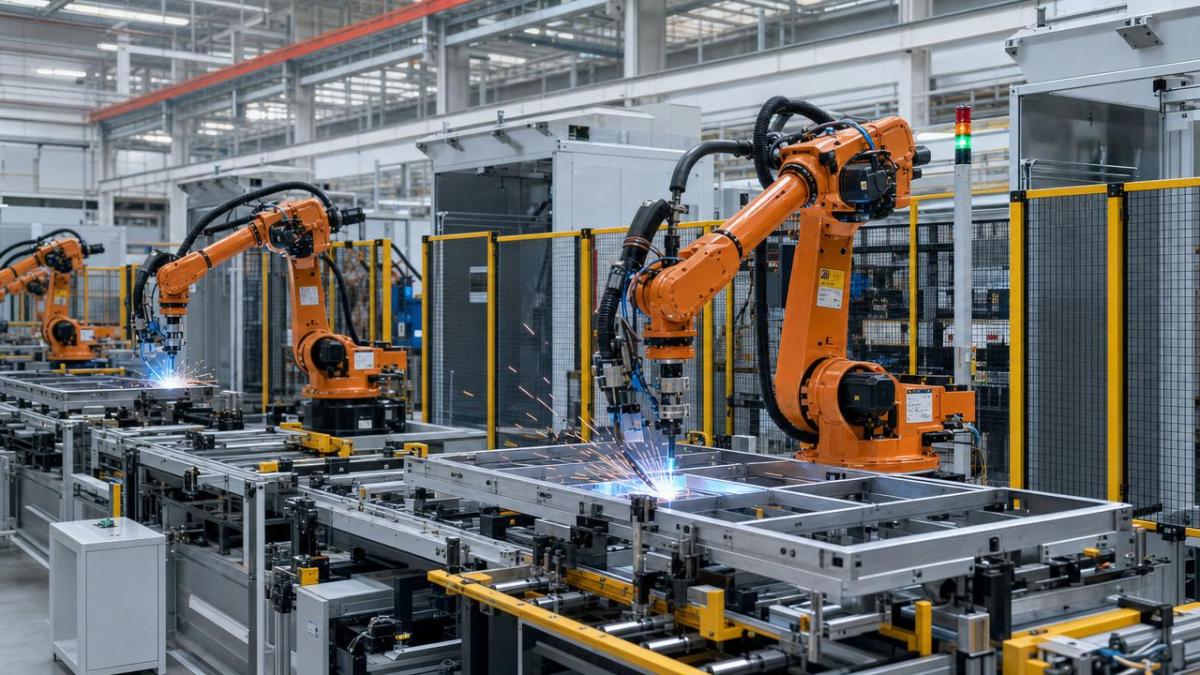
Which factors change the welding robot arm price the most in real projects
For finance approvers, not all specifications deserve equal weight. The largest price differences usually come from six areas.
1. Payload and working envelope
The jump from a moderate payload model to a high-payload, long-reach robot can change the welding robot arm price substantially. In renewable energy fabrication, buyers sometimes oversize for future flexibility. That can be sensible, but only if fixture layout, part family, and torch orientation really require it. Paying for unused reach is one of the most common hidden cost leaks.
2. Welding process complexity
Simple repetitive MIG welding on uniform parts costs less to automate than mixed-material work, variable thickness, or welds requiring adaptive path correction. When the process includes seam finding, touch sensing, arc tracking, or multi-pass logic, the welding robot arm price often rises because the true purchase is no longer just a robot arm; it is an application package.
3. Integration with digital manufacturing systems
Factories now want welding data, alarms, maintenance history, and quality records connected to broader plant systems. For organizations influenced by data-driven operating models like those promoted by NexusHome Intelligence, this is a crucial cost lens. Integration with MES, energy monitoring, or traceability software can change the welding robot arm price sharply, but it also creates the evidence needed for OEE improvement, warranty defense, and audit readiness.
4. Safety and compliance architecture
As factories modernize, safety moves from a basic requirement to a design variable. Fencing, sensors, collaborative zones, extraction interfaces, and functional safety controls can significantly alter overall project cost. The quoted welding robot arm price may exclude these items, which is why line-by-line commercial comparison is critical.
5. Service geography and response time
A lower robot price from a supplier with weak local support can become a high-cost decision in remote renewable energy manufacturing hubs. Spare part lead times, remote diagnostics, local engineer availability, and preventive maintenance plans often have greater financial impact than a small upfront discount.
6. Energy efficiency and lifecycle durability
In renewable energy manufacturing, power consumption and maintenance intervals are no longer side notes. They affect operating budget, sustainability reporting, and total equipment effectiveness. A robot system with lower idle loss, smarter power management, and stronger component life may justify a higher welding robot arm price through reduced lifecycle cost.
Who feels the impact most
The effect of these changes is uneven across the business. Procurement sees quote complexity. Engineering sees integration burden. Production sees uptime risk. Finance sees uncertainty in payback if assumptions are weak. That is why cross-functional evaluation is now more important than chasing the lowest offer.
How to judge the next quotation more accurately
A better approach is to separate the welding robot arm price into three layers: core hardware, process package, and operating support. Core hardware includes arm, controller, and teach pendant. Process package includes torch system, power source interface, sensors, software, and fixture interaction. Operating support includes installation, training, spares, service response, and upgrade path. When these layers are itemized, apparent price gaps often become explainable.
Finance teams should also ask for scenario-based economics rather than one average ROI figure. For example, what happens if defect reduction is only moderate? What if spare parts take four weeks instead of one? What if a future product revision requires offline reprogramming? The goal is not to make the business case look conservative for its own sake. The goal is to identify which assumptions most strongly influence the value of the welding robot arm price being proposed.
Signals worth tracking over the next buying cycle
Several signals deserve ongoing attention. First, suppliers that can prove digital traceability and open integration are likely to win more complex renewable energy projects. Second, modular automation cells may become more attractive than highly customized systems where product designs are still evolving. Third, service capability is likely to become a stronger differentiator than nominal hardware price. Fourth, energy performance and data transparency will matter more as manufacturers connect capital spending to broader operational efficiency targets.
These signals align with a broader industrial shift: buyers are rewarding verified performance over marketing claims. That logic mirrors the NHI perspective that trust should be built on measurable engineering outcomes, not vague promises. Applied to welding automation, that means the right question is not simply, “What is the welding robot arm price?” but “What evidence shows this price will hold its value through production reality?”
Practical decision guidance for finance approvers
Before approval, confirm five things. Is the robot sized to the actual part family, not a hypothetical future need? Does the quote clearly include software licenses and integration scope? Is local service capacity proven, not assumed? Are safety and extraction interfaces fully costed? And does the supplier provide enough operating data to support future performance review? If any of these are unclear, the quoted welding robot arm price is probably incomplete as a decision basis.
For renewable energy manufacturers under growth pressure, the smartest capital decisions will come from treating robotic welding as a reliability platform rather than a standalone machine purchase. If your team wants to judge how these trends affect your own business, focus next on process variability, uptime sensitivity, digital integration needs, and service exposure. Those four questions will usually explain more about the real welding robot arm price than the headline quote ever can.
Protocol_Architect
Dr. Thorne is a leading architect in IoT mesh protocols with 15+ years at NexusHome Intelligence. His research specializes in high-availability systems and sub-GHz propagation modeling.
Related Recommendations
- NHI Data Lab (Official Account)6 axis robot arm wholesale: when lower MOQ costs more later
- NHI Data Lab (Official Account)Collaborative robot payload 10kg limits in polishing and loading
- NHI Data Lab (Official Account)A 15kg payload cobot factory setup may still fail cycle time
- NHI Data Lab (Official Account)Welding robot arm price vs throughput: where the math breaks
- NHI Data Lab (Official Account)Industrial cobot manufacturer China trends worth watching in 2026
- NHI Data Lab (Official Account)Why custom 5-axis CNC machining aerospace costs vary so much
- NHI Data Lab (Official Account)What the AS9100 CNC machining tolerances chart does not tell you
- NHI Data Lab (Official Account)6 axis robot arm wholesale quotes that hide integration costs
- NHI Data Lab (Official Account)Is collaborative robot payload 10kg enough for mixed tasks?
- NHI Data Lab (Official Account)When a 15kg payload cobot factory is the wrong fit
Analyst