
Collaborative robot payload 10kg limits in polishing and loading
author
In renewable-energy production, understanding collaborative robot payload 10kg limits is essential for safe, stable polishing and loading tasks. For operators, the real challenge is not brochure claims but how payload, tool weight, reach, and cycle demands affect precision, surface quality, and uptime. This article explains where a 10kg cobot performs reliably, where risks begin, and how data-driven evaluation supports better deployment decisions.
Why scenario differences matter in renewable-energy manufacturing
A collaborative robot payload 10kg rating may look straightforward, but operators in renewable-energy plants quickly learn that the number alone does not define real performance. In factories producing battery housings, inverter covers, heat sinks, wind-energy subcomponents, or solar mounting parts, polishing and loading tasks create very different motion profiles. One job may involve a light abrasive tool with constant contact force. Another may require a heavy gripper, a long reach, and repeated pick-and-place cycles across multiple pallets. Both can sit under the same nominal payload class, yet one runs smoothly while the other suffers vibration, force instability, or reduced repeatability.
This matters because renewable-energy production is highly sensitive to process consistency. Surface finish affects coating adhesion, electrical isolation, and corrosion resistance. Loading stability affects cell module handling, part orientation, and downstream automation timing. If a 10kg cobot is applied outside its realistic operating envelope, the result is not only slower output. It can also mean rework, scrap, tool wear, operator intervention, and safety alarms. For users and operators, the practical question is never simply “Can the cobot lift 10kg?” The better question is “Can this collaborative robot payload 10kg system perform this exact task at this exact reach, speed, and duty cycle without losing quality?”
Where a collaborative robot payload 10kg system is commonly used
In renewable-energy manufacturing, a collaborative robot payload 10kg platform is often selected for semi-automated cells where flexibility is more valuable than maximum throughput. Typical applications include edge deburring of aluminum enclosures, polishing of brackets and sheet-metal covers, machine tending for CNC parts used in energy storage systems, loading trays of medium-weight components, and transferring finished parts to inspection or packaging stations.
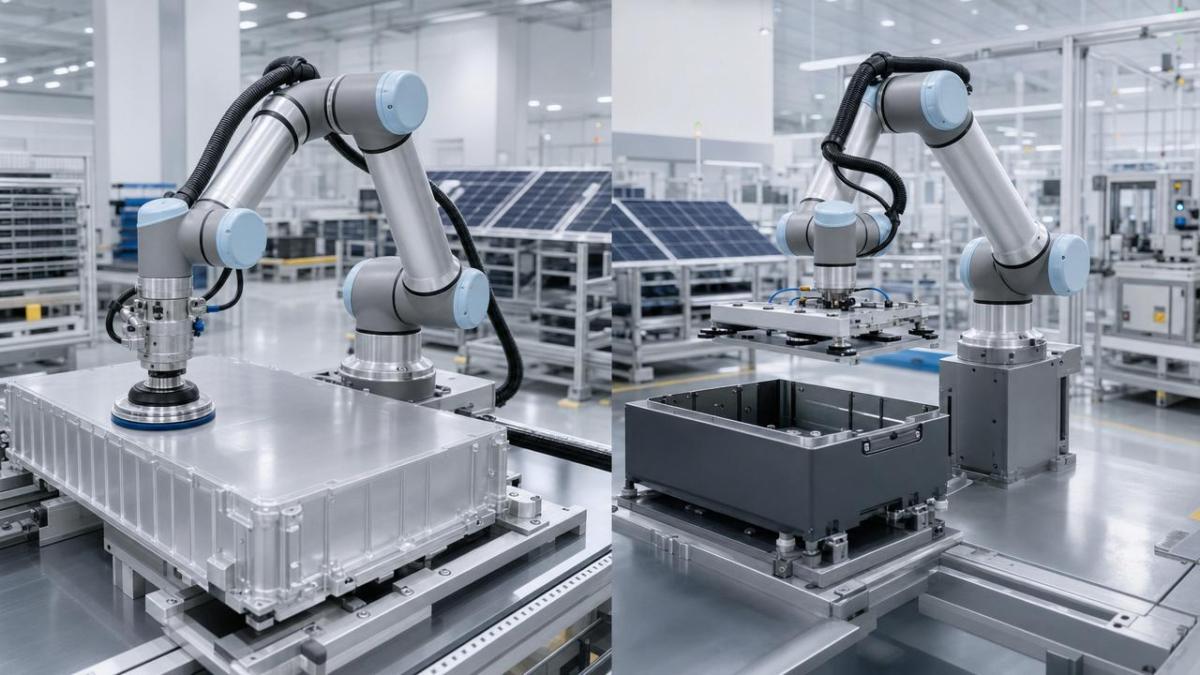
These tasks suit cobots because they often require mixed production, fast changeover, and close operator interaction. However, suitability depends on more than payload. The process engineer or operator must account for end-effector mass, cable routing, center of gravity, acceleration, polishing force, and the length of the robot arm. A collaborative robot payload 10kg unit may be ideal for compact loading of inverter shells, yet unsuitable for aggressive polishing of large battery tray panels if the tool generates strong torque at full extension.
Scenario comparison for operators
The table below shows why the same collaborative robot payload 10kg class can behave very differently across common shop-floor scenarios.
For operators, this comparison highlights a core principle: the collaborative robot payload 10kg label is most dependable in controlled loading or light finishing scenarios, while high-force polishing or long-reach handling requires deeper validation.
Polishing scenarios: where the 10kg limit becomes more restrictive
Polishing is often the first process where the advertised collaborative robot payload 10kg capacity becomes misleading. Unlike simple lifting, polishing creates dynamic forces. The robot carries the tool, the spindle or compliance device, hoses or cables, and sometimes a force-control assembly. Then it applies pressure against the workpiece. Even if the combined static mass stays under 10kg, the effective load during acceleration and contact can be far higher.
In renewable-energy plants, polishing may be used on battery pack frames, aluminum cooling plates, stainless housings for outdoor electronics, or turbine-related brackets. Operators should pay attention to five practical constraints. First, surface pressure must remain stable throughout the path. If joint torque rises near the outer reach, force can fluctuate and create visible finish inconsistency. Second, arm posture matters. A collaborative robot payload 10kg unit may hold a tool comfortably in a compact posture but lose stiffness when stretched forward or sideways. Third, tool offset increases moment load. A heavy polishing head mounted far from the flange is more demanding than a compact tool of the same weight. Fourth, duty cycle affects heat and component life. Continuous polishing over long shifts is more stressful than occasional finishing. Fifth, abrasive wear changes the process over time, so a setup that passes on day one may drift after many hours of use.
As a result, 10kg cobots are usually best for light to medium polishing, cosmetic finishing, edge smoothing, and controlled-force surface preparation. They are less ideal for aggressive material removal, thick weld blending, or large-area finishing that demands high lateral stiffness. In those cases, a higher payload and stiffer arm often produce better quality even if the part itself is not heavy.
Operator checklist for polishing cells
- Add tool mass, adapter mass, cable drag, and target contact force together during evaluation.
- Test at the farthest working reach, not only near the home position.
- Check whether surface quality changes after several hours of continuous production.
- Monitor vibration marks, path waviness, and spindle pressure variation.
- Verify that safety speed reductions do not ruin polishing consistency.
Loading scenarios: where a collaborative robot payload 10kg often performs well
Loading and unloading applications are usually a stronger fit for a collaborative robot payload 10kg platform, especially in renewable-energy component production where parts are medium-sized, production batches change frequently, and human access to the cell remains necessary. Examples include loading CNC machines with heat sink blanks, unloading stamped covers for battery control units, placing solar fastener kits into trays, or transferring finished housings to leak-test or inspection stations.
In these scenarios, the robot faces less continuous external force than in polishing. The main concerns become part stability, grip reliability, orientation accuracy, and takt time. If the gripper is light and the pick points are close, a collaborative robot payload 10kg system can deliver reliable repeatability with simpler integration and safer human interaction than a larger industrial robot. This is especially valuable in pilot lines, mixed-model production, and localized automation cells supporting renewable-energy equipment manufacturing.
Still, operators should not assume every loading task is easy. Long parts such as rails, frames, or elongated brackets can create significant moments even if mass is below 10kg. Vacuum grippers may add bulk and shift the center of gravity. Stacked trays may force the arm into awkward angles at the bottom layer. Fast indexing between machine doors and pallets can introduce acceleration peaks that challenge the payload margin. The best-performing 10kg cobot loading cells therefore use conservative acceleration, compact grippers, and carefully planned pick positions.
How different renewable-energy products change the payload decision
Not all renewable-energy products create the same burden on a collaborative robot payload 10kg system. Battery manufacturing often involves flat, wide parts that are not extremely heavy but can become difficult because of size and handling posture. Solar hardware production may involve repetitive feeding of brackets and clamps where flexibility matters more than force. Wind-related component finishing can involve rougher surfaces, heavier tooling, and stronger process forces, making a 10kg cobot a more cautious choice.
For operators, this means the part family should guide the decision. If the production line mainly handles compact aluminum or sheet-metal components with predictable geometry, a 10kg cobot can be highly efficient. If the line shifts toward larger fabricated assemblies, denser parts, or tasks combining high force and long reach, the useful operating window narrows. This scenario-based view aligns with the data-driven approach used by technical benchmarking organizations such as NHI: real deployment quality depends on measured conditions, not generic marketing language.
Common misjudgments operators should avoid
One common mistake is treating payload as equal to part weight. In reality, a collaborative robot payload 10kg calculation should include the gripper, brackets, sensors, cabling influence, and the distance from the flange to the load center. Another mistake is validating only at low speed. A setup may look stable during manual teaching but show overshoot or grip slip when production speed increases. A third error is overlooking polishing force variation. Operators may size the robot for the tool weight but forget that contact pressure creates extra mechanical demand.
A fourth misjudgment is ignoring uptime effects. A cobot working very close to its limit may still complete the task, but joint stress, thermal load, and protective stops can reduce availability over time. Finally, some teams choose a 10kg model for collaboration benefits without reviewing whether guarding, speed limits, and shared-space rules will already restrict output. In some renewable-energy cells, a slightly larger robot in a properly designed protected area can produce better overall economics than a fully collaborative setup operating at the edge of its capability.
A practical selection guide for users and operators
If you are deciding whether a collaborative robot payload 10kg unit fits your polishing or loading process, use a simple scenario-based screening method. First, define the true carried mass, including tooling. Second, identify the longest reach and least favorable posture. Third, estimate whether the process adds external force, especially in polishing. Fourth, map the cycle time target and expected production hours per shift. Fifth, check quality sensitivity: does small path deviation create visible or functional defects? If the answer is yes, leave more margin.
As a rule of thumb, loading tasks with compact parts and modest reach are usually favorable. Light to medium polishing tasks can be favorable when supported by force control, rigid fixturing, and realistic speed settings. Tasks that combine high tool weight, long reach, aggressive contact force, and nonstop operation deserve either extensive testing or a move to a higher robot class.
Quick decision table
FAQ: collaborative robot payload 10kg in polishing and loading
Is a collaborative robot payload 10kg enough for battery enclosure polishing?
It can be, but mainly for light to medium finishing. If the tooling is heavy or the process needs strong pressure at long reach, performance may become unstable.
Why does a 10kg cobot struggle even when the part is under 10kg?
Because payload is affected by gripper weight, tool offset, acceleration, posture, and external process force. The real working load is often much higher than the part mass alone.
Which scenario is safer for a 10kg cobot: polishing or loading?
Loading is usually safer and more predictable. Polishing introduces continuous force and stiffness demands that narrow the usable range.
Final takeaway for deployment decisions
For renewable-energy factories, the best use of a collaborative robot payload 10kg platform is not defined by the catalog number but by the scenario. It often fits loading, unloading, tray handling, and lighter finishing jobs where flexibility and safe interaction are priorities. It requires more caution in polishing cells where tool mass, contact force, reach, and duty cycle all push the robot toward its practical limits. Operators should evaluate the full process envelope, not only the nominal payload, and confirm performance with real parts, real tools, and real production timing. If your current task sits near the edge of what a collaborative robot payload 10kg system can sustain, the smartest next step is a measured trial that captures force stability, repeatability, cycle time, and uptime before full deployment.
Protocol_Architect
Dr. Thorne is a leading architect in IoT mesh protocols with 15+ years at NexusHome Intelligence. His research specializes in high-availability systems and sub-GHz propagation modeling.
Related Recommendations
- NHI Data Lab (Official Account)6 axis robot arm wholesale: when lower MOQ costs more later
- NHI Data Lab (Official Account)Collaborative robot payload 10kg limits in polishing and loading
- NHI Data Lab (Official Account)A 15kg payload cobot factory setup may still fail cycle time
- NHI Data Lab (Official Account)Welding robot arm price vs throughput: where the math breaks
- NHI Data Lab (Official Account)Industrial cobot manufacturer China trends worth watching in 2026
- NHI Data Lab (Official Account)Why custom 5-axis CNC machining aerospace costs vary so much
- NHI Data Lab (Official Account)What the AS9100 CNC machining tolerances chart does not tell you
- NHI Data Lab (Official Account)6 axis robot arm wholesale quotes that hide integration costs
- NHI Data Lab (Official Account)Is collaborative robot payload 10kg enough for mixed tasks?
- NHI Data Lab (Official Account)When a 15kg payload cobot factory is the wrong fit
Analyst