
Welding robot arm price vs throughput: where the math breaks
author
For renewable energy manufacturers, welding robot arm price is only one variable in a far larger equation. Throughput, weld consistency, downtime risk, and integration quality often determine whether an automation investment accelerates margins or quietly erodes them. This article examines where cost-per-unit logic starts to fail, helping enterprise decision-makers compare robotic welding systems with data, not vendor promises.
Why does welding robot arm price mislead so many renewable energy factories?
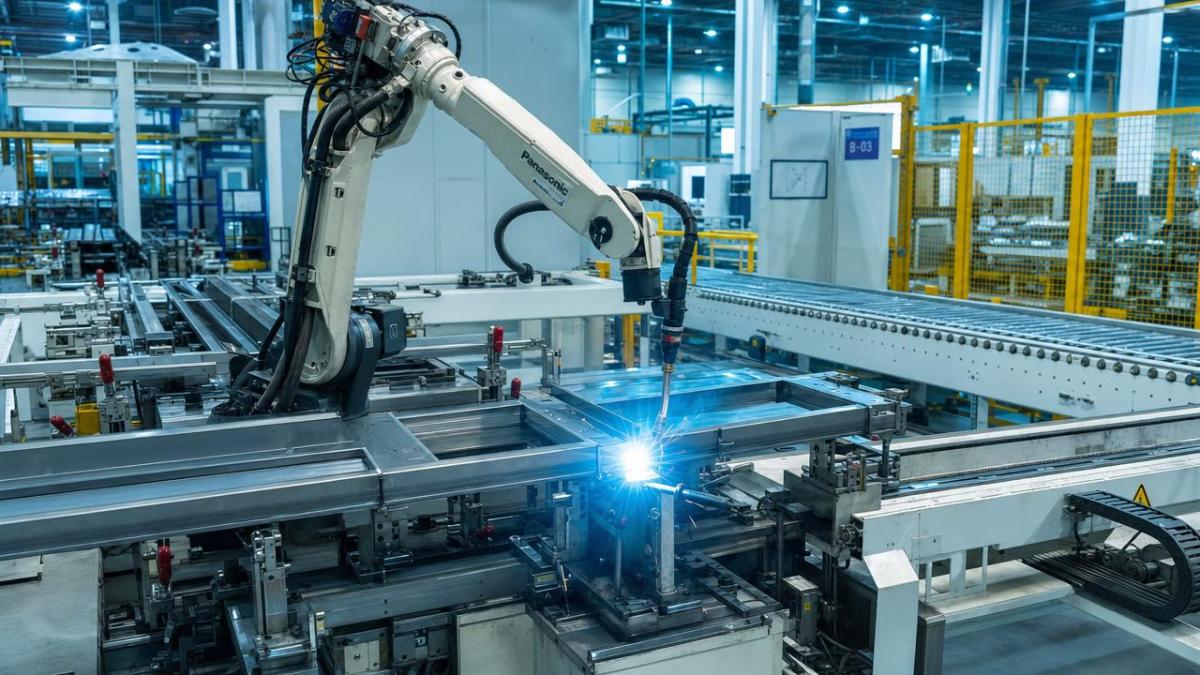
In solar mounting, battery enclosure, inverter cabinet, wind component, and energy storage hardware production, the visible purchase quote is often the least reliable decision anchor. A low welding robot arm price may look attractive in a capital budget review, yet the real business outcome depends on takt time, fixture compatibility, path repeatability, weld repair rates, safety cell design, programming workload, and production data integration.
This is where the math breaks. Many procurement teams compare one robot quote against another as if robotic welding were a standard commodity. It is not. In renewable energy manufacturing, the part mix is usually variable, sheet metal thickness can shift by product family, and traceability expectations are rising. A robot arm that is cheaper upfront but slower to commission, harder to maintain, or unstable under multi-shift production can produce a higher cost per acceptable weld than a system with a higher initial welding robot arm price.
NexusHome Intelligence (NHI) approaches such decisions from a data-first perspective. That means looking beyond brochure claims and examining how automation behaves under real factory conditions: communication latency between devices, PLC compatibility, sensor feedback reliability, edge data capture, energy use, and long-run stability. For enterprise buyers, that shift from marketing language to measurable engineering performance is essential.
- A lower welding robot arm price can be offset by longer cycle times that cap plant output during demand spikes.
- A cheaper platform may require frequent manual touch-up because weld consistency drops when parts vary slightly.
- Integration weakness with MES, energy monitoring, or industrial IoT gateways can limit traceability and predictive maintenance.
- Spare parts delays and weak local service can turn a minor fault into expensive line stoppage.
The renewable energy context changes the buying equation
Unlike generic metal fabrication, renewable energy production often combines high-volume runs with periodic design changes. Battery rack frames, PV support structures, and control cabinets can move from one geometry to another as projects evolve or regional standards change. That means flexibility matters. A robot selected purely on welding robot arm price may underperform if it cannot adapt quickly to new fixtures, new weld paths, or different communication protocols in a connected factory environment.
Which throughput variables matter more than the initial welding robot arm price?
Throughput is not just “parts per hour.” For decision-makers, it is the sum of arc-on time, positioning time, part loading and unloading, rework frequency, changeover time, and unplanned stoppage. A robot with strong catalog speed but poor integration into the cell may still fail to increase shipment capacity. In renewable energy, where project deadlines are often tied to EPC schedules, delayed throughput translates directly into cash flow pressure.
The table below shows why comparing welding robot arm price alone creates blind spots. It reframes procurement around production economics rather than sticker price.
For enterprise teams, this table highlights the central truth: throughput is a systems outcome. It depends on robot motion, power source behavior, fixtures, part presentation, sensing, software, and communications. A lower welding robot arm price cannot compensate for a cell that spends too much time waiting, correcting, or recovering.
Look at the bottleneck, not just the robot
In many renewable energy plants, the bottleneck is not the robot arm itself. It may be manual loading, inconsistent upstream cuts, poor clamping, or data handoff delays between controllers. NHI’s broader view of connected hardware is relevant here. Protocol reliability, I/O stability, and edge data visibility are not secondary details. They shape how quickly a welding cell can synchronize with conveyors, scanners, sensors, and plant software.
How should decision-makers compare welding robot arm price across different production scenarios?
The right benchmark changes with the application. A solar bracket line has different needs from a battery energy storage enclosure line. One may prioritize speed on repetitive thin-wall welds. The other may prioritize stable penetration, traceability, and low defect rates on larger assemblies. Comparing welding robot arm price without matching the production scenario leads to false savings.
The next table helps enterprise buyers frame the selection process by use case rather than by headline quote.
This scenario view shows why the same welding robot arm price can represent very different value. An arm that is economical for repetitive brackets may be a poor fit for variable enclosure work if programming time is high or part alignment tolerance is narrow. Decision-makers should therefore request application-specific cycle analysis instead of relying on generic cost comparisons.
Questions procurement should ask vendors
- What is the expected cycle time for our actual part families, not a demo coupon?
- How does the system handle fixture variation and part tolerance drift over multi-shift production?
- What interfaces are available for PLC, MES, historian, and energy monitoring integration?
- What spare parts are local, and what is the realistic recovery path for servo, torch, feeder, or controller faults?
Where does the real cost of ownership appear after the purchase order?
A sound business case must move from purchase cost to operational cost. The real burden often appears after installation: consumables, operator retraining, fixture redesign, software adjustments, welding parameter tuning, preventive maintenance, and production interruption during optimization. In renewable energy manufacturing, these costs become even more relevant because product revisions and certification-driven design changes are common.
A low welding robot arm price can mask high post-purchase friction if the system is closed, difficult to diagnose, or poorly documented. By contrast, a somewhat higher investment can reduce cost through cleaner integration, richer diagnostics, and more stable process control. For a decision-maker, that is not a technical nuance. It is the difference between planned automation ROI and hidden margin erosion.
A practical cost checklist for enterprise teams
- Calculate cost per accepted part, not just cost per programmed cycle.
- Include expected rework hours, scrap risk, and QA intervention for each product family.
- Model downtime exposure based on spare availability and support response path.
- Assess energy use, compressed air demand, and peripheral equipment load in the full cell.
- Estimate the engineering hours required for line integration, data mapping, and cybersecurity review.
Why integration quality often matters more than a lower welding robot arm price
Renewable energy factories are increasingly digital. Welding cells are expected to communicate with quality systems, barcode readers, machine vision, SCADA environments, and plant energy dashboards. If the robot cell cannot exchange reliable data or synchronize smoothly with upstream and downstream processes, its standalone speed loses value. This is especially important for manufacturers pursuing traceability in battery systems, cabinet assemblies, and export-oriented energy infrastructure components.
NHI’s perspective is valuable because automation risk often hides at the interface layer. Protocol fragmentation, controller mismatch, unstable wireless gateways, or poor edge data handling can create recurring production disturbances. A procurement team focused only on welding robot arm price may miss the cost of these digital weak points until after deployment.
What to verify before final approval
- Controller compatibility with your plant’s industrial communication architecture.
- Data access for weld status, alarms, maintenance events, and production counters.
- Sensor and safety device reliability under dust, vibration, and temperature fluctuation.
- Cybersecurity responsibilities when the welding cell connects to broader factory networks.
What standards and compliance points should renewable energy buyers review?
Although the exact certification path depends on region and application, enterprise buyers should review common industrial safety, electrical, and process quality requirements before committing to a solution. A competitive welding robot arm price is not enough if the system later requires redesign to meet local safety expectations or customer audit demands.
The following table summarizes common areas of review during procurement and technical due diligence.
For many buyers, compliance work appears late and creates avoidable delay. Bringing it into the evaluation stage makes welding robot arm price comparisons more realistic because it exposes engineering scope that quotes may leave implicit.
Common misconceptions: where purchasing teams often get the math wrong
“The cheapest robot gives the fastest payback”
Only if uptime, cycle time, quality yield, and integration effort are equal. They rarely are. Faster payback usually comes from stable production, lower defect rates, and predictable maintenance rather than from the lowest welding robot arm price alone.
“Any integrator can make different brands perform the same”
Integration quality varies widely. Controller openness, software tooling, local support depth, and communication reliability can materially affect commissioning speed and future line changes. In a renewable energy plant with digital traceability goals, those differences matter.
“If the demo worked, production will work”
Demo cells often run idealized parts under controlled conditions. Production introduces tolerance variation, operator shifts, dust, thermal changes, and scheduling stress. Buyers should ask for validation around their actual application envelope, not just a clean showroom result.
FAQ: how should enterprises evaluate welding robot arm price with confidence?
How should we compare welding robot arm price between two vendors?
Compare full-cell economics. Include robot, power source, positioner, safety, fixtures, software, integration, training, support, and expected uptime. Then normalize the comparison by accepted parts per shift and expected downtime recovery. That gives a more decision-useful picture than list price alone.
What production volume makes robotic welding financially reasonable in renewable energy?
There is no universal threshold because part complexity, weld length, labor rates, and quality demands vary. However, repetitive structures, multi-shift demand, or high rework pain usually strengthen the case. If manual welding limits delivery schedules or quality consistency, the economics may justify automation even before very high volumes are reached.
What should we ask about delivery cycle and ramp-up?
Ask for separate timelines for equipment supply, fixture completion, FAT, installation, commissioning, sample approval, and operator training. Also ask what assumptions the supplier made about part readiness, utilities, network access, and line layout. Many schedule overruns come from these hidden dependencies, not from the robot itself.
Can a higher welding robot arm price still lower business risk?
Yes. A higher-priced platform may reduce risk if it offers better diagnostics, stronger local support, easier integration, more stable communication interfaces, or lower defect exposure. Enterprise buyers should assess risk-adjusted return, not just acquisition cost.
Why choose a data-driven evaluation partner?
At NHI, we do not reduce industrial decisions to price tags or generic feature lists. Our broader methodology is built on measurable performance, protocol transparency, hardware verification, and real integration behavior. That is especially relevant when renewable energy manufacturers must connect welding automation to increasingly complex digital factories.
If your team is reviewing welding robot arm price for a new line or upgrade, the most valuable next step is not another sales brochure. It is a structured comparison of throughput assumptions, communication architecture, maintenance risk, traceability requirements, and commissioning scope.
- We can help clarify parameter priorities for your product type, including cycle time, repeatability, and integration checkpoints.
- We can support solution selection by mapping application scenarios to realistic technical requirements instead of vendor slogans.
- We can help your team review delivery timing, customization scope, sample validation logic, and certification-related concerns.
- We can support quotation discussions with a sharper framework for total cost, throughput, and operational risk.
If you are comparing systems now, contact us with your part categories, expected output, plant communication environment, and target delivery window. That makes it possible to evaluate welding robot arm price in the only way that matters: against measurable production reality.
Protocol_Architect
Dr. Thorne is a leading architect in IoT mesh protocols with 15+ years at NexusHome Intelligence. His research specializes in high-availability systems and sub-GHz propagation modeling.
Related Recommendations
- NHI Data Lab (Official Account)6 axis robot arm wholesale: when lower MOQ costs more later
- NHI Data Lab (Official Account)Collaborative robot payload 10kg limits in polishing and loading
- NHI Data Lab (Official Account)A 15kg payload cobot factory setup may still fail cycle time
- NHI Data Lab (Official Account)Welding robot arm price vs throughput: where the math breaks
- NHI Data Lab (Official Account)Industrial cobot manufacturer China trends worth watching in 2026
- NHI Data Lab (Official Account)Why custom 5-axis CNC machining aerospace costs vary so much
- NHI Data Lab (Official Account)What the AS9100 CNC machining tolerances chart does not tell you
- NHI Data Lab (Official Account)6 axis robot arm wholesale quotes that hide integration costs
- NHI Data Lab (Official Account)Is collaborative robot payload 10kg enough for mixed tasks?
- NHI Data Lab (Official Account)When a 15kg payload cobot factory is the wrong fit
Analyst