
PCBA Compliance Risks Buyers Often Miss
author
In renewable energy and connected infrastructure projects, buyers often underestimate how PCBA compliance gaps can disrupt reliability, certification, and long-term sourcing. This article explores the hidden risks behind smart home PCB assembly compliance, IoT PCBA manufacturer selection, and IoT ecosystem compliance, helping procurement teams, operators, and evaluators use IoT hardware benchmarking and IoT supply chain audit insights to separate verified IoT manufacturers from costly weak links.
For solar storage systems, smart meters, EV charging controllers, heat pump gateways, and building energy management nodes, the printed circuit board assembly is not just an internal component. It is where electrical safety, communication stability, firmware integrity, and certification readiness converge. A weak PCBA can delay grid-connection approval by 2 to 8 weeks, trigger field failures during temperature swings from -20°C to 60°C, or force redesigns when a supplier changes components without proper change control.
That is why data-led verification matters. In fragmented IoT and renewable energy ecosystems, buyers need more than marketing claims about low power, robust design, or protocol compatibility. They need evidence that a PCBA manufacturer can maintain traceability, follow compliance controls, and deliver repeatable quality across pilot runs of 100 units and scale orders of 10,000 units or more.
Why PCBA compliance matters more in renewable energy IoT deployments
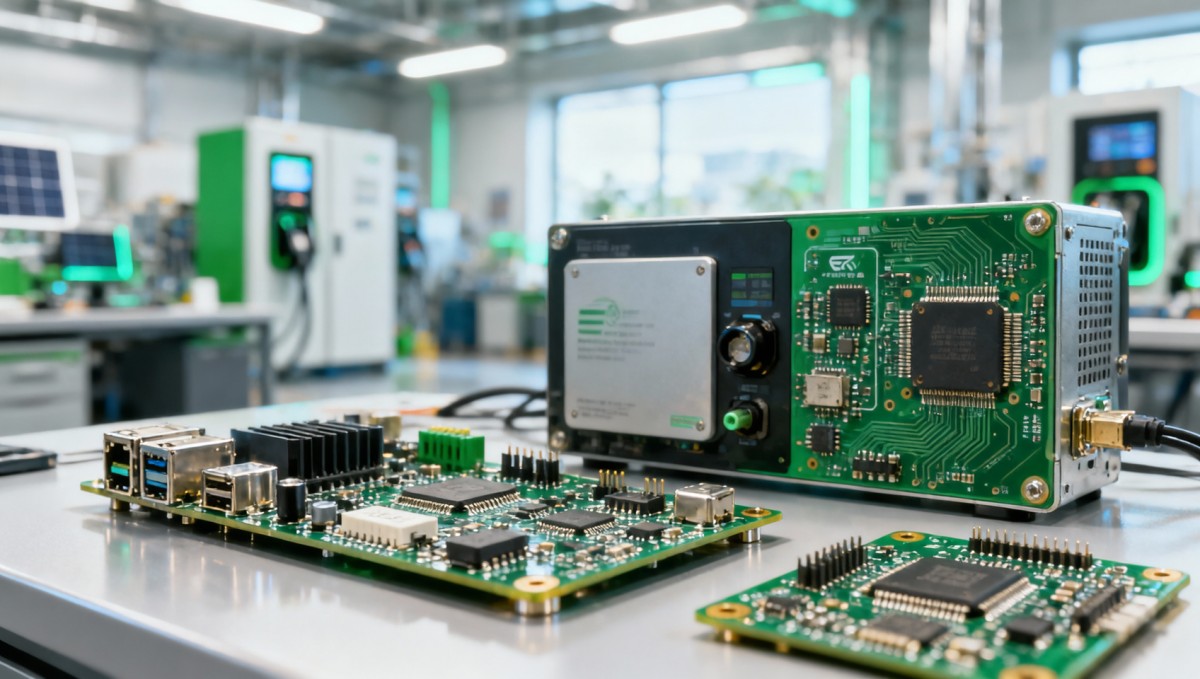
Renewable energy infrastructure operates in harsher and more regulated conditions than many consumer IoT products. A smart relay inside a home battery system, a communication board inside an inverter, or a sensor node in a commercial microgrid may need to endure high humidity, electrical noise, load cycling, and continuous uptime targets above 99%. If the PCBA is assembled without disciplined compliance controls, the result is often not immediate failure but unstable long-term behavior that is harder and more expensive to detect.
Buyers often focus on enclosure ratings, cloud dashboards, and radio protocol labels, yet overlook board-level details such as creepage and clearance discipline, solder joint consistency, component authenticity, and revision control. In renewable energy projects, these details affect whether a device can pass electrical safety review, maintain communication with Zigbee, Thread, BLE, or Wi-Fi networks, and survive 3 to 5 years of field operation without abnormal drift or intermittent reset behavior.
Compliance also affects commercial continuity. If a supplier cannot document RoHS, REACH, conflict minerals declarations, process traceability, and incoming material control, procurement teams may struggle during customer audits or regional market entry. A product that works in a lab sample run can still become a sourcing risk if the documentation package is incomplete or inconsistent across batches.
Hidden failure paths buyers underestimate
In energy and climate control applications, compliance gaps usually surface in five areas:
- Undocumented component substitutions that alter thermal performance, EMC behavior, or wireless stability.
- Incomplete lot traceability, making root-cause analysis difficult after failures appear 6 to 12 months after installation.
- Weak process discipline in solder paste control, reflow profile management, or AOI/X-ray inspection for dense boards.
- Insufficient verification for protocol interoperability in mixed ecosystems such as Matter over Thread plus Wi-Fi backhaul.
- Missing compliance files that delay customer qualification, utility approval, or building project acceptance.
Each of these issues can add cost beyond the board price itself. A single field recall on an energy monitoring gateway may affect truck rolls, installer labor, customer trust, and replacement logistics. In B2B renewable energy procurement, the total cost of non-compliance can exceed the initial PCB assembly savings by 3x to 10x.
Typical compliance checkpoints in energy-connected devices
The table below outlines practical checkpoints buyers should review before approving an IoT PCBA manufacturer for renewable energy projects.
The strongest signal is not whether a supplier claims compliance, but whether it can produce structured records within 24 to 48 hours during a buyer audit. In renewable energy sourcing, documentation speed is often a proxy for process maturity.
The compliance risks buyers most often miss during supplier selection
Most procurement teams evaluate price, lead time, and visible certifications first. Those are necessary, but they do not reveal whether the PCBA manufacturer can support real renewable energy deployment conditions. The more costly mistakes usually appear in the gap between factory capability and project-specific requirements such as low standby power, long battery life, edge processing stability, or coexistence in noisy electrical environments.
One frequent blind spot is assuming that a board approved for smart home use is automatically suitable for renewable energy infrastructure. In reality, a controller used in a solar-linked load management system may face higher surge exposure, wider thermal cycling, and stricter uptime demands than a typical residential accessory. Without validating this use-case difference, buyers risk selecting a vendor optimized for volume, not resilience.
Another overlooked issue is change management. Some suppliers maintain acceptable quality in prototype and NPI stages, then quietly alter MCU packages, passives, RF front-end components, or connector vendors during ramp-up. Even a minor BOM change can affect energy measurement accuracy, wireless range by 10% to 20%, or firmware timing behavior in edge gateways.
Four compliance gaps that hide behind acceptable samples
1. Sample-to-mass-production drift
A pilot batch of 50 boards may pass internal testing, while production lots of 2,000 units show rising defect rates because fixtures, operator training, or supplier-approved alternatives were not locked. Buyers should require golden sample control and revision freeze protocols before mass production.
2. Incomplete environmental validation
Many boards are only tested at room temperature. For renewable energy installations, screening should consider at least low and high temperature ranges, humidity exposure, and 24- to 72-hour burn-in where relevant. This matters especially for battery-backed gateways and outdoor-adjacent controllers.
3. Protocol claims without stress data
A board may pair successfully once, but that does not confirm stable operation in a dense building with dozens of nodes. Ask for packet loss, latency, reconnection behavior, and coexistence test results under interference, not only a claim that it “supports Matter” or “works with Zigbee 3.0.”
4. Compliance paperwork disconnected from production reality
Declarations and certificates are useful only when tied to the actual BOM and process route. If documents cover one material set but production uses another, the buyer remains exposed during downstream audit or regulatory review.
A practical supplier evaluation matrix
The following matrix helps procurement and commercial evaluators compare IoT PCBA manufacturers beyond unit price.
This kind of matrix is especially useful when comparing suppliers that appear similar on quotation sheets. A difference of 3% to 7% in board price may be justified if it reduces compliance uncertainty, accelerates qualification, and stabilizes long-term sourcing.
How to audit IoT PCB assembly for smart energy, storage, and building automation
An effective IoT supply chain audit should connect factory process review with field application reality. For renewable energy devices, the right question is not simply “Can the supplier build this board?” but “Can the supplier build it repeatedly, document it clearly, and support it through component shortages, firmware updates, and multi-region compliance needs?”
NHI’s data-driven perspective is useful here because protocol fragmentation and board-level execution are tightly linked. A board that is electrically stable but poorly verified for Matter-over-Thread latency or Zigbee mesh behavior can still underperform in smart buildings and distributed energy environments. Conversely, strong protocol performance cannot compensate for poor solder reliability or uncontrolled BOM substitutions.
A practical audit can be completed in 5 steps over 2 to 4 weeks, depending on supplier responsiveness and product complexity. What matters is not making the audit burdensome, but making it decision-relevant.
A 5-step audit model for renewable energy buyers
- Define the use environment: indoor, utility room, rooftop-adjacent, or commercial plant room; note temperature, humidity, and expected duty cycle.
- Review process capability: SMT line controls, inspection coverage, test fixture maturity, and defect escape handling.
- Check compliance documentation: material declarations, traceability maps, process change policy, and test record retention period.
- Validate interoperability: run protocol and power tests under realistic network loads and gateway conditions.
- Confirm lifecycle support: last-time-buy handling, alternate component approval flow, and failure analysis response time.
For mission-relevant boards, buyers should also request sample retention, serial-based defect mapping, and a target corrective action turnaround of less than 10 business days for major issues. These controls reduce ambiguity if failures appear after site commissioning.
What operators and technical users should ask for
Operators often inherit the cost of procurement shortcuts. To avoid that, they should ask for measurable test outputs rather than broad assurance statements. Useful items include standby power readings in microwatts or milliwatts where relevant, communication reconnect times after power cycling, error logs during 24-hour endurance testing, and sensor drift data over repeated thermal exposure.
For example, in smart energy gateways used for peak-load shifting or HVAC optimization, communication recovery after a brief outage should be measured in seconds, not just described as “fast.” In battery-based sensing devices, discharge curves and sleep current matter more than headline battery capacity alone.
Minimum evidence package worth requesting
- Latest controlled BOM and revision history for at least the last 2 revisions.
- Functional test summary with pass/fail criteria and sample size.
- Inspection coverage details such as AOI, ICT, X-ray, or boundary scan where applicable.
- Environmental or burn-in data aligned to the target installation scenario.
- Non-conformance and corrective action workflow with named response windows.
When suppliers can provide this evidence quickly and consistently, commercial evaluators gain a stronger basis for forecasting risk, negotiating terms, and approving scale-up.
Selecting verified IoT manufacturers for long-term renewable energy programs
Long-term renewable energy programs need suppliers that behave like engineering partners, not just assembly vendors. This is especially true when products combine wireless protocols, energy metering, cloud connectivity, edge controls, and low-power operation. The right manufacturer should be able to align production controls with certification planning, field reliability expectations, and future component availability.
Verified IoT manufacturers usually stand out in three ways. First, they discuss process data instead of only sales language. Second, they can explain why a board passed or failed, not merely report the result. Third, they are comfortable exposing constraints early, such as MOQ realities, alternate parts risks, or RF test limitations. That transparency helps buyers avoid late-stage surprises.
For renewable energy projects with expected service lives of 5 to 10 years, supply continuity is as important as launch readiness. A low-cost supplier that cannot support lifecycle planning may create recurring redesign costs each time a key MCU, radio module, or power management IC becomes constrained.
Decision criteria that support stronger sourcing outcomes
Buyers can improve outcomes by weighting evaluation criteria across technical, commercial, and operational dimensions rather than treating compliance as a binary checkbox.
This structured weighting helps business evaluators align sourcing decisions with product reality. It also reduces overreliance on unit price, which can be misleading in connected energy systems where reliability, audit readiness, and field service costs matter more over time.
Where NHI’s benchmarking mindset adds value
NexusHome Intelligence approaches supplier evaluation through measurable engineering behavior. In fragmented ecosystems, the difference between a credible manufacturer and a risky one is often visible in latency data, low-power curves, SMT consistency, and stress-test results. That approach is relevant to renewable energy because energy systems increasingly depend on interoperable connected devices, not isolated hardware.
For procurement teams, that means a better path to identifying hidden champions in the supply chain. Instead of choosing the loudest marketing voice, buyers can prioritize factories that demonstrate disciplined assembly, verifiable protocol performance, and transparent process evidence.
Frequently asked questions from procurement and technical evaluation teams
How long does a credible PCBA compliance review usually take?
For a moderately complex renewable energy IoT device, an initial desktop review may take 3 to 5 business days. A deeper audit covering documents, sample evaluation, and process verification often takes 2 to 4 weeks. If protocol interoperability or environmental screening is added, the timeline can extend further depending on fixture readiness and sample availability.
What should buyers prioritize if they cannot audit everything at once?
Start with four essentials: BOM control, traceability depth, functional test coverage, and change notification discipline. These factors usually expose major supply chain risks faster than a broad but shallow review. After that, add environmental validation and interoperability data based on the project’s deployment conditions.
Are standard smart home compliance practices enough for renewable energy devices?
Not always. Renewable energy applications often require greater attention to electrical noise, thermal cycling, uptime, and integration with building or grid-related systems. A board acceptable for basic smart home usage may still be weak for energy storage, demand response, or smart HVAC control unless verified under the intended operating profile.
What is the most common sourcing mistake?
The most common mistake is treating certification documents and sample functionality as proof of full manufacturing readiness. In reality, many risks emerge during scale-up, component substitution, or long-duration field exposure. Buyers should evaluate production discipline and lifecycle support as carefully as initial performance.
PCBA compliance in renewable energy is not a back-office paperwork issue. It directly affects reliability, interoperability, certification readiness, and sourcing stability across solar, storage, EV charging, HVAC automation, and smart building systems. Buyers who look beyond surface-level certifications and validate process control, traceability, and protocol behavior can reduce failure risk and make stronger long-term sourcing decisions.
For teams navigating fragmented IoT ecosystems, a data-led evaluation model is far more dependable than brochure claims. NexusHome Intelligence stands for measurable truth across connectivity, energy control, security, and PCB-level verification. If you need help assessing smart energy hardware, comparing IoT PCBA manufacturers, or building a practical supplier audit framework, contact us to discuss your application, request a tailored evaluation approach, or explore more connected infrastructure solutions.
Protocol_Architect
Dr. Thorne is a leading architect in IoT mesh protocols with 15+ years at NexusHome Intelligence. His research specializes in high-availability systems and sub-GHz propagation modeling.
Related Recommendations
- NHI Data Lab (Official Account)How to Vet an IoT PCBA Manufacturer Properly
- NHI Data Lab (Official Account)Smart Home PCB Assembly Compliance Checklist
- NHI Data Lab (Official Account)PCBA Compliance Risks Buyers Often Miss
- NHI Data Lab (Official Account)Canton Fair 2026 Day 1: Zigbee 3.0 + Matter Dual-Mode PCBA Orders Surge
- NHI Data Lab (Official Account)How to Reduce Quality Risk in IoT PCBA Sourcing
- NHI Data Lab (Official Account)PCBA Supplier Directory vs Audit: Which Should You Trust
- NHI Data Lab (Official Account)Smart Home PCB Assembly Compliance: What to Verify
- NHI Data Lab (Official Account)How to Find a Reliable IoT PCBA Manufacturer
- NHI Data Lab (Official Account)Canton Fair 2026 Day 1: Zigbee 3.0 + Matter Dual-Mode PCBA Orders Surge
- NHI Data Lab (Official Account)2026 Shanghai Fastener Show to Host Matter/Zigbee PCBA Sourcing Event
Analyst