
How to Find a Reliable IoT PCBA Manufacturer
author
Finding a reliable IoT PCBA manufacturer is no longer just about price—it is about proven performance, compliance, and long-term supply resilience. In today’s fragmented smart ecosystem, buyers need verified IoT manufacturers backed by IoT hardware benchmarking, Matter protocol data, and smart home PCB assembly compliance. This guide shows how to evaluate trusted smart home factories through real engineering metrics, helping procurement teams and decision-makers reduce risk across the IoT supply chain.
For renewable energy businesses, this issue is even more critical. Smart meters, solar inverters, battery management systems, EV charging controllers, HVAC automation nodes, and distributed energy gateways all rely on stable, low-power, protocol-aware PCB assemblies. A weak supplier can cause communication loss, metering drift, thermal failures, or expensive field replacements across projects designed to run for 5–10 years.
At NexusHome Intelligence, the focus is not on brochure language but on measurable engineering truth. When procurement teams compare IoT PCBA manufacturers for energy and climate applications, they should evaluate manufacturing precision, protocol validation, environmental durability, compliance readiness, and after-delivery support. The sections below outline a practical framework for doing exactly that.
Why IoT PCBA Reliability Matters in Renewable Energy Systems
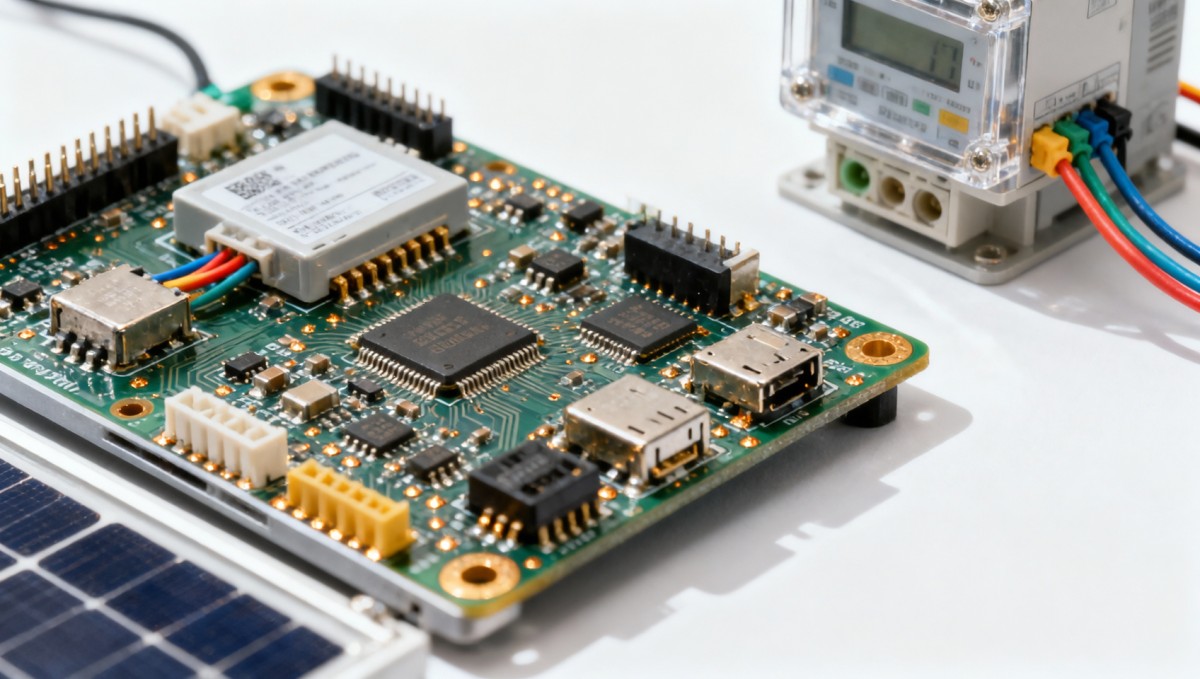
In renewable energy deployments, PCBA reliability is directly linked to operational continuity. A smart energy device often works in harsh conditions: rooftop solar controllers may face surface temperatures above 60°C, outdoor battery cabinets may operate between -20°C and 55°C, and grid-edge equipment may experience continuous voltage fluctuation and RF interference. Under these conditions, weak solder joints, poor component traceability, or unstable wireless design become costly failure points.
Unlike short-life consumer gadgets, many energy IoT devices are expected to remain serviceable for 7–12 years. That means the manufacturer must not only assemble boards correctly, but also maintain process consistency over multiple production runs. A vendor that performs well in a 500-piece pilot batch may not maintain the same yield when the program scales to 20,000 units per quarter.
Protocol stability also matters. Renewable energy systems increasingly combine Wi-Fi, BLE, Zigbee, Thread, RS485, CAN, and cloud gateways in one architecture. If a PCBA manufacturer has little experience with mixed-connectivity products, the result may be packet collisions, antenna inefficiency, or unstable commissioning. This is especially risky in smart buildings and microgrids where data delay above 100–300 ms can affect balancing logic or demand response timing.
A reliable IoT PCBA manufacturer should understand not only SMT assembly, but also the device’s end-use environment. In renewable energy, that means attention to thermal paths, standby power, enclosure sealing compatibility, connector durability, and calibration retention. Procurement decisions should therefore be made on lifecycle value rather than unit price alone.
Common failure risks in energy-focused IoT hardware
- Thermal stress causing solder fatigue in inverter monitoring modules after 2,000–3,000 operating hours.
- Wireless instability in metal-dense battery rooms reducing signal reliability by 15%–30%.
- Power leakage in low-power relay or sensor boards increasing standby consumption above design targets.
- Inadequate conformal coating or contamination control in humid environments, especially coastal solar projects.
- Component substitution without proper validation, affecting calibration accuracy in metering circuits.
How reliable manufacturing supports decarbonization goals
Renewable energy programs are built on efficiency, uptime, and measurable savings. If an energy monitoring node reports inaccurate data by even 1%–2%, portfolio-level analytics can become distorted. If a smart HVAC controller consumes an extra 200–500 mW in standby across thousands of installed units, the energy waste becomes material. Reliable PCBA manufacturing supports more accurate control, lower maintenance frequency, and stronger long-term ROI.
This is why data-driven verification matters. Manufacturers serving the renewable energy sector should be evaluated for SMT precision, low-power design execution, protocol performance, and burn-in discipline, not simply for quotation speed.
Core Technical Criteria for Evaluating an IoT PCBA Manufacturer
A reliable supplier should be judged against a clear checklist. For renewable energy IoT hardware, the most useful criteria usually fall into four groups: manufacturing capability, protocol competence, environmental robustness, and documentation discipline. These factors are far more predictive of field success than general claims such as “smart factory” or “high quality.”
Start with assembly capability. Ask about component package experience such as 0201 passives, fine-pitch QFN/BGA handling, AOI coverage, X-ray inspection, and rework controls. If your product includes power conversion monitoring, battery sensing, or multi-radio modules, process consistency becomes essential. A practical target for mature production is a first-pass yield that remains stable across at least 3 consecutive batches, not just one sample run.
Then evaluate engineering validation. A qualified IoT PCBA manufacturer should be able to support design for manufacturability review within 3–7 business days, identify antenna keep-out issues, flag thermal bottlenecks, and recommend test-point optimization for programming and final functional testing. For energy devices, they should also understand relay isolation spacing, current sensing layout, and long-term drift risks in analog front ends.
The table below shows a practical scoring model procurement teams can use when comparing multiple vendors for renewable energy IoT projects.
The key takeaway is that a trusted smart home factory for energy applications must behave like an engineering partner, not only a contract assembler. If the vendor cannot present structured test records, process controls, and protocol evidence, procurement risk remains high even when pricing looks competitive.
Questions that quickly reveal supplier maturity
- How do you validate mixed wireless performance in dense RF environments common in smart buildings and energy rooms?
- What is your standard burn-in duration for boards used in 24/7 monitoring applications?
- How do you manage approved component substitutions during shortages lasting 8–16 weeks?
- Can you provide failure analysis records for previous field-return issues without exposing customer identity?
- What process controls do you use for low-power boards targeting standby consumption below 1 W or even below 100 mW?
Compliance, Benchmarking, and Data Transparency in the IoT Supply Chain
In renewable energy projects, compliance is not a paperwork exercise. It affects deployment approval, insurance acceptance, serviceability, and long-term system safety. A reliable IoT PCBA manufacturer should be able to align assembly and sourcing practices with the target market’s requirements, whether the end product is destined for Europe, North America, the Middle East, or Southeast Asia.
This is where technical benchmarking becomes valuable. NHI’s viewpoint is straightforward: trust should be anchored in measured results. For example, when a supplier claims Matter readiness, buyers should ask for practical evidence such as commissioning stability, multi-node hop latency, packet retention under interference, and recovery behavior after power cycling. The same logic applies to energy meters, HVAC controllers, and battery sensors.
For renewable energy use cases, documentation should also cover calibration procedures, current and voltage sensing tolerances, firmware loading controls, and test coverage at final assembly. Even a 0.5% to 1% drift in measurement channels can impact load balancing decisions or billing-grade analytics, depending on the application.
The following table summarizes the most relevant verification points for buyers sourcing IoT PCB assemblies for energy and climate control devices.
For decision-makers, the lesson is simple: measurable transparency lowers sourcing risk. A verified IoT manufacturer that can provide structured performance evidence will generally be easier to scale with, audit, and defend internally during supplier approval.
Data points worth requesting before vendor nomination
Production and quality records
Ask for sample records covering 2–3 recent production batches, including defect categories, rework percentages, and final test pass rates. You do not need confidential customer names to assess whether the supplier runs a disciplined process.
Protocol and field simulation evidence
Request summaries of mesh performance, reconnect time after power interruption, and behavior under dense 2.4 GHz traffic. For energy applications, a reconnection time of a few seconds can be manageable, while repeated instability over 1–2 minutes can be problematic in control loops.
A Practical Supplier Selection Process for Procurement and Engineering Teams
The best sourcing decisions usually come from a staged process rather than a single RFQ comparison. In renewable energy IoT projects, procurement, hardware engineering, firmware teams, and operations should evaluate suppliers together. This reduces the common mismatch where the lowest-cost vendor passes commercial review but fails during pilot deployment.
A practical selection model can be divided into four phases over 4–10 weeks, depending on product complexity. Phase 1 is document screening. Phase 2 is engineering review. Phase 3 is pilot build and validation. Phase 4 is controlled ramp-up. Each stage should have clear pass-fail criteria tied to real use conditions, such as outdoor exposure, low-power standby, or multi-protocol interoperability.
During pilot builds, buyers should not focus only on whether the board powers on. They should review test fixture maturity, firmware flashing stability, calibration repeatability, and packaging protection for sensitive modules. For renewable energy hardware shipped globally, transport damage and ESD handling can become overlooked cost drivers.
The supplier selection workflow below can help teams structure evaluation without slowing down time to market.
Recommended 4-step evaluation workflow
- Pre-qualification: check process capability, sector experience, traceability discipline, and communication responsiveness within the first 5 business days.
- Technical review: complete DFM, protocol assessment, thermal review, and test strategy confirmation within 1–2 weeks.
- Pilot production: build a small batch such as 50–200 units, followed by functional testing, burn-in, and installation simulation.
- Ramp decision: approve controlled mass production only after defect trends, field feedback, and component supply stability are reviewed.
Common procurement mistakes to avoid
- Selecting a vendor based only on unit price without reviewing process records and engineering support depth.
- Accepting “equivalent” components during shortages without validating measurement accuracy, power behavior, or RF impact.
- Skipping environmental tests because the first indoor prototype appears stable.
- Failing to define acceptance criteria for firmware loading, calibration retention, and final inspection sampling.
- Overlooking after-sales response time for root-cause analysis when products are deployed across multiple sites.
What operators and end users should verify
Use teams and installers should confirm practical issues that engineers may miss: connector orientation, mounting tolerance, LED behavior during commissioning, reset accessibility, and replacement time per unit. In field energy projects, reducing swap time from 25 minutes to 10 minutes can materially lower maintenance cost across hundreds of devices.
A dependable IoT PCBA manufacturer will support this operational perspective by designing for testability and serviceability, not only for assembly speed.
Long-Term Supply Resilience, Support, and Frequently Asked Questions
Once a supplier passes technical evaluation, the next question is whether the relationship can survive real market volatility. Renewable energy supply chains often face lead-time swings, component allocation, and sudden project acceleration. A manufacturer may be technically strong, yet still expose the buyer to delivery risk if sourcing discipline and change control are weak.
To reduce this risk, buyers should review the supplier’s approved vendor management, buffer stock logic for critical parts, and escalation process for obsolescence. For products with 5-year or longer service expectations, it is wise to discuss lifecycle planning early, especially for wireless modules, MCUs, power ICs, and specialized sensors.
Support quality also matters after shipment. A practical benchmark is whether the supplier can provide preliminary failure analysis within 48–72 hours of receiving defective samples, followed by corrective action reporting in 1–2 weeks depending on complexity. Slow support can turn a small field issue into a project-wide reputational problem.
Below are common questions buyers ask when sourcing a trusted smart home factory for renewable energy IoT products.
How do I know if a manufacturer is suitable for renewable energy IoT devices?
Look for evidence of experience with low-power control boards, sensing circuits, outdoor or industrial operating ranges, and mixed connectivity. The supplier should understand issues such as thermal cycling, energy metering stability, and RF behavior near metal enclosures or power electronics.
What pilot order size is reasonable before mass production?
For many B2B projects, a pilot of 50–200 units is large enough to expose assembly, testing, and packaging issues without overcommitting inventory. Higher-risk applications, such as outdoor battery systems or smart grid nodes, may justify broader validation with multiple environmental conditions.
How long does qualification usually take?
If documents are complete and engineering communication is responsive, initial supplier qualification can often be completed in 4–8 weeks. Complex devices with calibration, multi-radio validation, or regulatory review may take longer, especially when component availability is unstable.
What should matter more: price, lead time, or quality data?
For renewable energy IoT hardware, quality data and traceability should come first, followed by lead time reliability, then price. A board that is 6% cheaper but causes a 2% field failure rate is rarely the better business decision once truck rolls, downtime, and warranty handling are included.
Finding the right IoT PCBA manufacturer means looking beyond quotations and into engineering discipline, measured performance, and supply resilience. For renewable energy systems, where devices may operate continuously for years, the right manufacturer helps protect uptime, data accuracy, compliance readiness, and lifecycle cost control.
NexusHome Intelligence advocates a data-first approach: benchmark the hardware, verify the protocols, review the process, and qualify the support model before scaling. If you are comparing suppliers for smart energy, climate control, or connected infrastructure products, now is the time to request a deeper technical evaluation. Contact us to discuss your sourcing criteria, get a tailored assessment framework, or explore more data-driven IoT manufacturing solutions.
Protocol_Architect
Dr. Thorne is a leading architect in IoT mesh protocols with 15+ years at NexusHome Intelligence. His research specializes in high-availability systems and sub-GHz propagation modeling.
Related Recommendations
- NHI Data Lab (Official Account)How to Reduce Quality Risk in IoT PCBA Sourcing
- NHI Data Lab (Official Account)PCBA Supplier Directory vs Audit: Which Should You Trust
- NHI Data Lab (Official Account)Smart Home PCB Assembly Compliance: What to Verify
- NHI Data Lab (Official Account)How to Find a Reliable IoT PCBA Manufacturer
- NHI Data Lab (Official Account)Canton Fair 2026 Day 1: Zigbee 3.0 + Matter Dual-Mode PCBA Orders Surge
- NHI Data Lab (Official Account)2026 Shanghai Fastener Show to Host Matter/Zigbee PCBA Sourcing Event
- NHI Data Lab (Official Account)IoT supply chain metrics that expose hidden risk
- NHI Data Lab (Official Account)How to use an IoT supply chain audit before switching
- NHI Data Lab (Official Account)IoT OEM compliance roster: useful list or false comfort?
- NHI Data Lab (Official Account)Verified IoT manufacturers: what proof should you ask for?
Analyst