
Micro-sensor sourcing: what affects yield most?
author
In renewable energy IoT deployments, micro-sensor yield is shaped less by price than by process control, PCBA precision, and protocol stability. For buyers comparing verified IoT manufacturers, smart home micro-sensors, and IoT hardware benchmarking data, this article explains where failures begin, how IoT supply chain audit findings reveal hidden risks, and why Matter protocol data and long-term sensor drift matter before scaling sourcing decisions.
Why micro-sensor yield breaks down first in renewable energy projects
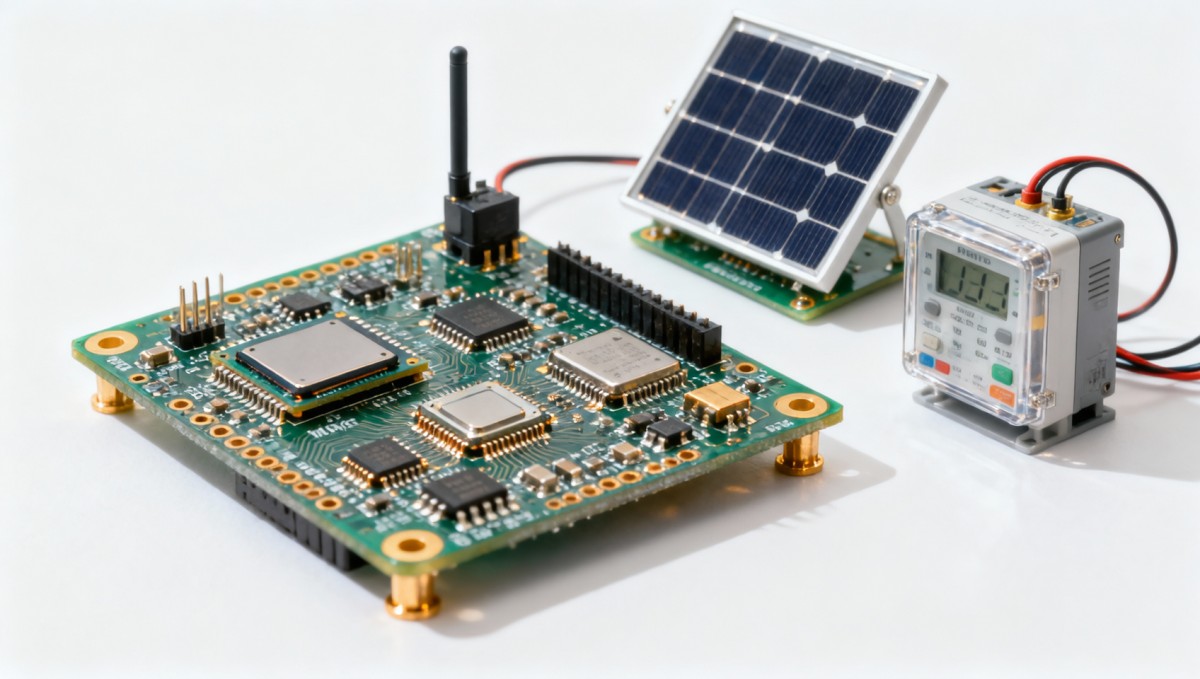
In solar storage systems, smart meters, distributed energy controllers, and building energy optimization nodes, micro-sensors sit at the front line of data capture. They measure temperature, current, vibration, humidity, pressure, occupancy, and airflow in environments that are rarely stable. Yield problems often begin long before field deployment. A sourcing team may approve a low-cost MEMS or mixed-signal sensor that passes a basic functional test, yet fails after 3–6 months under thermal cycling, dust exposure, or protocol interference.
For operators, the pain point is simple: unreliable sensor data causes bad decisions. A battery cabinet may appear cooler than it is. A relay may switch late because a threshold sensor drifted. A smart HVAC controller may overcompensate during peak-load shifting. In renewable energy assets, the cost of one unstable data point can be much higher than the unit price of the component itself, especially across 500, 5,000, or 50,000 deployed nodes.
For procurement and commercial evaluation teams, yield is not only the percentage of parts that work at incoming inspection. It is the combined result of wafer consistency, packaging integrity, SMT placement accuracy, solder profile control, firmware matching, and wireless stack stability. NHI approaches this through hard benchmarking rather than brochure claims. In fragmented ecosystems where Zigbee, BLE, Thread, and Matter may coexist, protocol instability can look like sensor failure even when the silicon is intact.
A practical sourcing review should separate three stages of yield loss: factory yield, assembly yield, and field yield. Factory yield relates to die and packaging quality. Assembly yield reflects PCBA and reflow discipline. Field yield depends on enclosure design, power budgeting, latency tolerance, and environmental drift. If a supplier can only discuss pass rate at shipment, but not stability over 2–4 quarters of operation, the buyer is missing the real risk profile.
Three yield definitions buyers should not confuse
Teams often compare quotes without aligning on what “yield” means. This creates expensive misunderstandings during pilot-to-volume transitions. The shortlist below helps standardize internal discussions between engineering, sourcing, and finance.
- Incoming yield: the share of components that meet basic electrical and dimensional checks upon receipt. This is useful, but limited.
- Assembly yield: the share of boards that remain functional after placement, reflow, calibration, and initial communication tests.
- Field yield: the share of deployed nodes that maintain acceptable accuracy, power behavior, and connectivity over a defined operating period, often 6–12 months.
When renewable energy buyers evaluate micro-sensor sourcing, field yield usually matters most. It has the strongest impact on truck rolls, maintenance windows, missed alarms, and customer confidence in IoT hardware performance.
What affects yield most: process control, PCBA precision, or protocol stability?
The short answer is that all three matter, but not equally in every deployment. In battery management accessories or compact energy monitors, process control usually dominates early defects. In multi-sensor control boards, PCBA precision often becomes the key constraint. In smart building energy systems using low-power wireless, protocol stability can become the hidden driver of apparent failure. This is why NHI’s benchmarking philosophy looks beyond a component datasheet and into the full chain from PCB to network behavior.
Process control includes die sourcing consistency, packaging cleanliness, moisture sensitivity handling, lot traceability, and calibration discipline. Even a strong sensor design can suffer if storage humidity, ESD handling, or reel management is weak. In production runs with 3–5 critical sensor inputs on one board, a small variation in one upstream process can multiply into a meaningful drop in assembly yield and a larger drop in field stability.
PCBA precision becomes decisive when the micro-sensor has a small footprint, tight tolerances, or sensitivity to reflow stress. Placement offset, solder voiding, uneven thermal load, and board warpage all influence final performance. In renewable energy edge devices exposed to daily heating and cooling cycles, marginal solder joints may not fail immediately. They fail later, which makes root-cause analysis harder and warranty attribution more contentious.
Protocol stability matters because users do not experience failure as a lab category. They experience missing data, delayed actuation, or false alerts. A sensor connected through Matter over Thread, Zigbee, or BLE may be electrically healthy, but if packet loss rises in a congested metal cabinet or utility room, the operator sees a bad device. That is why NHI emphasizes measured latency, multi-node hop performance, and interference behavior instead of accepting “works with Matter” as a sufficient sourcing claim.
A procurement-oriented comparison of the biggest yield drivers
The table below helps procurement personnel and commercial evaluators rank the most common yield risks in renewable energy IoT hardware sourcing. It is especially useful when comparing suppliers that offer similar pricing but very different process maturity.
For many renewable energy deployments, the biggest hidden issue is not a single bad component. It is an unstable interaction between sensor hardware, assembly quality, and network behavior. Buyers who audit only price, lead time, and basic functionality often discover the real yield driver too late—after field support costs begin to rise.
Which factor usually matters most by project stage?
In prototype runs of 20–100 units, process variation and calibration discipline are usually the main variables. In pilot lots of 200–2,000 units, PCBA precision and firmware consistency become more visible. In larger rollouts, protocol stability and power management often overtake the earlier issues because the network environment becomes more complex and battery replacement economics become less forgiving.
How to assess micro-sensor sourcing risk before volume orders
A disciplined sourcing process should reduce uncertainty before the first large purchase order. That means looking beyond a sample that works on a bench for a few hours. For renewable energy IoT devices, sourcing risk should be assessed across at least 4 checkpoints: sample integrity, assembly compatibility, environmental stability, and protocol behavior in realistic deployment conditions. This is where an independent engineering filter like NHI adds value, because vendor claims are translated into measurable review points.
For procurement teams, the goal is not to create a perfect lab study. The goal is to avoid expensive blind spots. A practical audit can be completed in 2–6 weeks depending on sample readiness and test scope. During that period, teams should compare not only unit cost but also lot consistency, test transparency, rework responsiveness, and whether the supplier can explain failure modes with evidence instead of generic reassurance.
For operators and technical evaluators, the most useful signals often come from stressful but realistic conditions. A sensor that behaves well at room temperature may drift under enclosure heat. A low-power node may look efficient in a quiet network but consume more energy when retransmissions increase. These are exactly the conditions that matter in smart grids, energy retrofits, and commercial renewable energy buildings where uptime and data confidence drive operational decisions.
NHI’s data-driven mindset is especially relevant when “protocol silos” distort sourcing conversations. Suppliers may claim cross-platform readiness, but buyers should ask for measured behavior across specific stacks, firmware versions, and topology assumptions. If a node’s performance changes sharply after 2–3 network hops or in congested RF environments, the sourcing decision should reflect that before scale-up.
A practical 6-point audit checklist
- Confirm sensor drift expectations over time, not only day-one accuracy. Ask what tolerance shift is considered acceptable after continuous use.
- Review PCBA handling evidence, including placement control, reflow management, and post-assembly inspection methods.
- Check whether the wireless module has been evaluated under interference, dense metal surroundings, or multi-node routing conditions.
- Verify power consumption in sleep, wake, and transmit states rather than relying on a single headline figure.
- Request lot-to-lot comparison samples where possible, especially for medium and large volume planning.
- Align on corrective action timing, such as 48–72 hour failure response for pilot issues and a defined root-cause path for repeat faults.
These checkpoints support both technical and commercial evaluation. They also help finance teams model the true cost of ownership, since a low quote can quickly lose its advantage if maintenance, field replacement, or network troubleshooting expands after deployment.
Which sourcing indicators deserve the most weight?
Different projects require different priorities, but renewable energy buyers commonly balance five dimensions: accuracy stability, communication reliability, low-power behavior, assembly consistency, and recovery support. The table below can serve as a vendor scorecard during RFQ comparison.
A scorecard like this makes supplier discussions more objective. It also creates a shared language between operators who care about uptime, purchasers who manage cost and lead time, and commercial teams that need defensible vendor selection criteria.
Common sourcing mistakes that reduce yield after installation
One common mistake is selecting a micro-sensor based on nominal specification alone. Datasheets are necessary, but they do not tell the full story about assembly sensitivity, drift behavior, or network interaction. In renewable energy projects, that gap matters because devices are often expected to run continuously, report reliably, and tolerate heat, vibration, or enclosure constraints without frequent service access.
Another mistake is treating pilot success as proof of production readiness. A 30-unit pilot may use careful manual handling, extra engineering attention, and clean RF conditions. Those advantages often disappear in a 3,000-unit rollout spread across multiple sites. Buyers should therefore ask whether performance has been checked under scaling conditions, including multiple lots, dense gateway environments, and realistic power cycles.
A third mistake is separating component sourcing from protocol review. In fragmented smart ecosystems, a good sensor can appear poor if the communication layer is unstable. This is especially relevant as Matter and Thread enter more energy and building automation workflows. NHI’s position is straightforward: protocol compliance claims must be backed by timing, routing, and stress data, not by marketing language.
The fourth mistake is underestimating service response and corrective action. Even strong suppliers can have a weak post-failure process. For procurement managers, it is wise to confirm who handles failure analysis, what evidence is provided, and whether corrective action cycles are measured in days or weeks. In a live renewable energy environment, each extra week of unresolved sensor instability can delay optimization and increase operating uncertainty.
FAQ: the questions buyers ask most often
How should we compare two micro-sensor suppliers with similar pricing?
Start with four areas: lot consistency, PCBA compatibility, protocol behavior, and support responsiveness. If two quotes differ by only a small percentage, the deciding factor should usually be which supplier can present clearer evidence across these areas. In renewable energy IoT sourcing, a slight upfront savings may be erased quickly by more field visits or unstable data streams.
What delivery window is realistic for samples and pilot quantities?
For standard parts and straightforward assembly, sample review often fits within 7–15 days, while pilot validation may require 2–6 weeks depending on firmware, enclosure fit, and communication testing. Custom calibration, protocol adaptation, or certification-aligned documentation can extend the schedule, so buyers should confirm the critical path early.
Which protocol issue is most often mistaken for sensor failure?
Intermittent packet loss is a frequent culprit. In a crowded building or utility enclosure, retransmissions and route changes can create delayed or missing data that looks like sensor instability. The fix may involve network design, antenna placement, firmware tuning, or gateway compatibility rather than replacing the sensing element itself.
Why does long-term drift matter so much in renewable energy applications?
Because many energy decisions rely on threshold-based automation. If drift pushes readings outside the intended tolerance band over 6–12 months, the system may overreact or fail to react. That affects efficiency, equipment protection, and maintenance planning. Drift should therefore be discussed during sourcing, not only after complaints appear.
Why work with a data-driven engineering filter before scaling sourcing?
NexusHome Intelligence was built for exactly the kind of sourcing problem that renewable energy buyers now face: too many claims, too little verified hardware truth. In a market crowded with phrases like low power, seamless integration, and Matter-ready, NHI focuses on measurable behavior. That includes PCBA precision, protocol performance, standby power patterns, and long-term hardware stability at the PCB and network levels.
For operators, this means fewer blind spots before installation. For procurement teams, it creates stronger vendor comparison logic. For business evaluators, it supports investment decisions with engineering evidence rather than presentation language. NHI’s role is not to promote generic catalogs. It is to function as an engineering filter between manufacturing capability and real deployment requirements across smart energy, smart buildings, and connected control systems.
If you are reviewing micro-sensor sourcing for solar energy controls, battery storage monitoring, HVAC optimization, or distributed energy IoT devices, the most useful next step is a structured technical-commercial review. This should cover at least 5 topics: parameter confirmation, protocol matching, sample planning, lead-time expectations, and corrective action workflow. A clear review early in the cycle reduces rework later.
Contact NHI to discuss your current sourcing stage, whether you need support with sensor parameter confirmation, product selection, Matter or low-power protocol evaluation, pilot sampling strategy, delivery schedule review, certification-related documentation, or quotation comparison. If your team is deciding between multiple verified IoT manufacturers, we can help turn scattered claims into practical benchmarking criteria before volume deployment.
Protocol_Architect
Dr. Thorne is a leading architect in IoT mesh protocols with 15+ years at NexusHome Intelligence. His research specializes in high-availability systems and sub-GHz propagation modeling.
Related Recommendations
- NHI Data Lab (Official Account)How to vet smart home micro-sensor suppliers
- NHI Data Lab (Official Account)Micro-sensor sourcing: what affects yield most?
- NHI Data Lab (Official Account)Smart home micro-sensors: how small is too small?
- NHI Data Lab (Official Account)How to Choose a MEMS Microphone SMD Factory
- NHI Data Lab (Official Account)PIR Sensor Detection Angle: How to Choose
- NHI Data Lab (Official Account)Micro machining tolerance limits at very small feature sizes
- NHI Data Lab (Official Account)Micro machining parts supplier selection for tiny critical features
- NHI Data Lab (Official Account)Radar sensor for traffic monitoring in rain and metal clutter
- NHI Data Lab (Official Account)Why industrial sensor IP69K rating does not cover every washdown risk
- NHI Data Lab (Official Account)CNC spindle runout measurement: What’s the real impact on micro-machining repeatability?
Analyst