
How to vet smart home micro-sensor suppliers
author
Vetting smart home micro-sensor suppliers now requires more than brochures or price sheets. In a fragmented ecosystem shaped by Matter compatibility, Zigbee mesh behavior, battery-life claims, and strict energy-performance expectations, buyers need evidence they can verify. For procurement teams, operators, and commercial evaluators, the core question is simple: can this supplier consistently deliver sensors that perform reliably in real deployments, meet protocol and compliance requirements, and reduce lifecycle risk rather than just unit cost? This guide explains how to assess smart home micro-sensor suppliers using practical audit criteria, benchmark data, and business-focused decision points.
What buyers really need to verify before choosing a smart home micro-sensor supplier
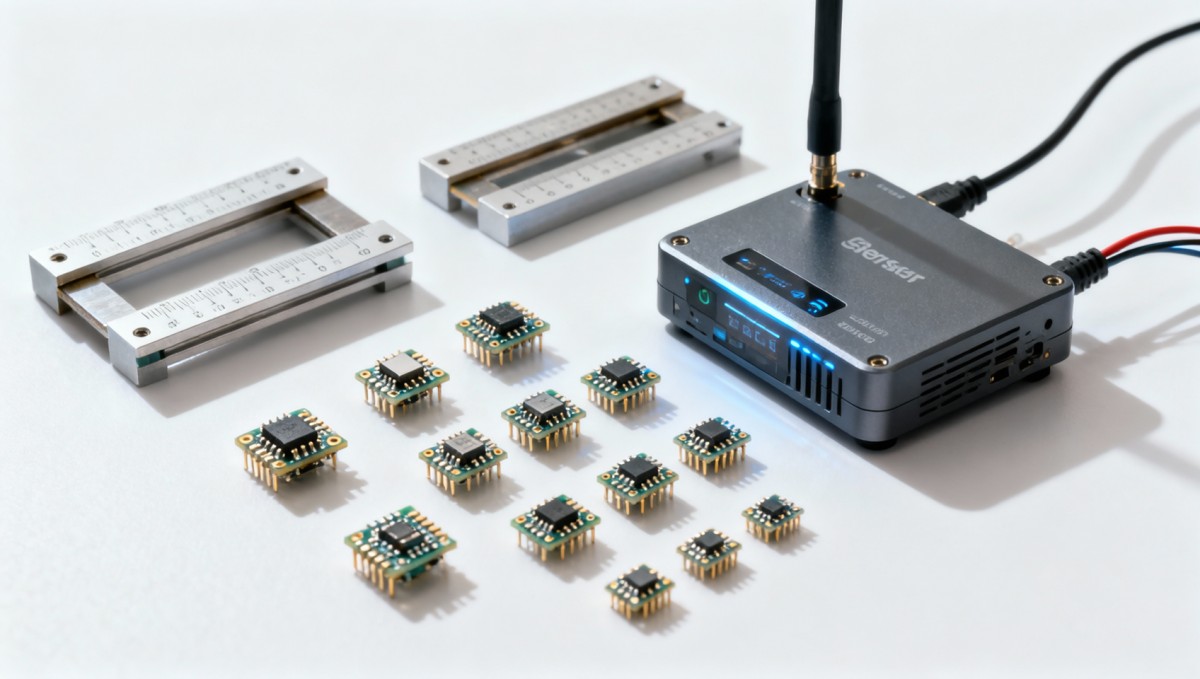
If you are sourcing micro-sensors for smart homes, energy automation, or connected building systems, the real search intent behind “how to vet smart home micro-sensor suppliers” is not just finding a vendor list. It is understanding how to identify a supplier that is technically credible, commercially stable, and operationally dependable.
For most buyers in renewable energy and smart building environments, five issues matter most:
- Protocol reality, not marketing claims: Does the sensor actually perform well with Matter, Zigbee, Thread, BLE, or hybrid gateway environments?
- Power and lifecycle performance: Will the sensor maintain battery life, measurement stability, and low standby consumption under real usage conditions?
- Manufacturing consistency: Can the factory hold quality from pilot run to mass production?
- Compliance and security: Does the supplier support the certifications, test records, and data practices your market requires?
- Supply chain resilience: Can the supplier deliver on time, manage component substitutions correctly, and support engineering changes without damaging reliability?
The strongest suppliers are rarely the ones with the broadest claims. They are the ones that can show quantified performance data, controlled production processes, and a clear understanding of application-specific risk.
Start with the application, because the “best supplier” depends on the deployment scenario
Before comparing factories, define what the micro-sensor must do in your actual system. A supplier that is acceptable for a low-cost indoor occupancy node may be unsuitable for an energy monitoring network in a multi-dwelling building or a climate-control system tied to decarbonization targets.
Ask these scoping questions first:
- Is the sensor used for temperature, humidity, motion, occupancy, light, vibration, current, gas, pressure, or multi-sensor fusion?
- Is it battery-powered, energy-harvesting, or externally powered?
- Will it operate indoors, outdoors, or in harsh conditions such as high humidity, dust, or temperature swings?
- Does the device need local processing, edge filtering, or only raw data transmission?
- What network environment will it join: Zigbee mesh, Thread border router, BLE gateway, Wi-Fi bridge, or mixed-protocol architecture?
- What failure is most costly: false negatives, latency, drift, battery depletion, communication loss, or calibration instability?
This step matters because supplier evaluation should match operational risk. In renewable energy and climate-control use cases, a seemingly minor sensor drift issue can reduce control accuracy, create energy waste, or distort demand-response logic.
Check technical proof in four layers: sensing accuracy, power profile, wireless performance, and long-term drift
Most supplier shortlists fail because buyers overemphasize price and undercheck engineering evidence. A credible smart home micro-sensor supplier should be able to provide data across four technical layers.
1. Sensing accuracy
Request test reports showing accuracy range, calibration method, repeatability, and environmental tolerance. For example, if you are buying temperature or humidity sensors for smart HVAC controls, ask for:
- Accuracy at multiple points, not just one ideal lab condition
- Performance under changing humidity and temperature cycles
- Cross-sensitivity data if the sensor may be affected by nearby heat sources, airflow, or enclosure design
- Factory calibration records and recalibration policy
2. Power profile
“Ultra-low power” is one of the most abused terms in IoT sourcing. Ask for actual consumption data in sleep, wake, transmit, and fault-recovery states. Then calculate battery life yourself based on your reporting interval, network traffic, and retransmission assumptions.
For low-power smart home sensors, evaluate:
- Sleep current in realistic firmware mode
- Peak current during transmission and pairing
- Battery discharge behavior under low-temperature or high-duty-cycle conditions
- Impact of OTA updates on power budget
3. Wireless and protocol performance
If a supplier says the device “supports Matter” or “works with Zigbee,” ask how that was validated. Protocol support without benchmark data is not enough.
Useful evidence includes:
- Packet success rate in dense mesh conditions
- Latency under interference from Wi-Fi, BLE, or neighboring devices
- Rejoin behavior after power outage or router reset
- Interoperability results across different hubs, controllers, or border routers
- Firmware maturity and bug-fix cadence for protocol stack issues
4. Long-term drift and reliability
Micro-sensors may look excellent in a short demo but degrade over months of operation. Ask for accelerated life test data, drift reports, burn-in procedures, and field return analysis. In climate and energy optimization systems, long-term stability is often more important than headline accuracy.
Audit the factory, not just the sample
A polished engineering sample does not guarantee stable production quality. Procurement and commercial evaluation teams should assess whether the supplier’s manufacturing system can reproduce the same result at scale.
Key factory review points include:
- PCBA process control: What are the SMT yield levels, AOI coverage, and rework rates?
- Traceability: Can the supplier trace each batch to component lot, firmware version, and test station?
- Incoming quality control: How are MEMS components, batteries, antennas, and RF modules inspected?
- End-of-line testing: Are sensors functionally tested, calibrated, and communication-verified before shipment?
- Change management: How are BOM substitutions approved and communicated?
- Failure analysis capability: Can the supplier diagnose root cause instead of simply replacing defective units?
For business evaluators, one practical signal is whether the supplier can clearly explain its quality escape prevention process. If the answer is vague, your post-launch risk is likely high.
Verify compliance, security, and documentation readiness early
Many sourcing delays come from leaving compliance and documentation checks too late. Smart home micro-sensor suppliers serving international markets should be prepared to support relevant regulatory and customer documentation requirements from the start.
Depending on product type and market, ask about:
- CE, FCC, RoHS, REACH, or other market-entry certifications
- Radio test reports and EMC validation
- Material declarations and battery transport documentation
- Cybersecurity practices for firmware updates, keys, and provisioning
- Data handling architecture if the sensor is part of a broader cloud-connected solution
- Protocol certification or third-party interoperability validation where applicable
In practice, documentation maturity often separates trusted smart home factories from opportunistic vendors. A supplier that cannot produce current, structured, and verifiable technical files usually creates downstream risk for import, integration, and customer support.
Evaluate supply chain strength and commercial reliability, not just technical fit
Even technically strong IoT manufacturers can become poor partners if they lack delivery discipline or transparent communication. Buyers should assess operational reliability with the same seriousness as sensor performance.
Focus on these commercial factors:
- Lead time stability: Are quoted lead times realistic and historically consistent?
- Component sourcing strategy: Does the supplier depend on single-source chips with high obsolescence risk?
- MOQ flexibility: Can they support EVT, DVT, pilot, and ramp-up stages without forcing unsuitable volumes?
- Engineering support: Will they assist with tuning, integration, and failure reproduction?
- Warranty and RMA structure: Is there a defined process with measurable response times?
- Financial and organizational stability: Are they likely to remain a viable partner over your product lifecycle?
For renewable energy and smart building projects, lifecycle continuity is critical. A sensor is not a one-time purchase; it is part of an installed system that may need support, firmware maintenance, and replacement continuity for years.
Use a practical supplier scorecard instead of relying on impressions
To reduce bias, build a supplier scorecard that combines engineering data and business risk. A simple weighted model often improves decision quality.
A useful structure may include:
- Technical performance: 30%
- Protocol and interoperability validation: 20%
- Manufacturing quality and traceability: 20%
- Compliance and documentation readiness: 10%
- Commercial terms and delivery reliability: 10%
- Support capability and responsiveness: 10%
Within each category, define evidence thresholds. For example, do not give full points for protocol support unless the supplier provides latency, packet-loss, and interoperability test results. Do not give full points for quality unless they show traceability, calibration control, and end-of-line test coverage.
This kind of framework is especially useful when comparing multiple smart home sensor manufacturers whose price levels are close but risk profiles are very different.
Red flags that should trigger deeper review or disqualification
Some warning signs appear repeatedly in weak suppliers. If you see several of these, slow down the sourcing process.
- Claims of broad compatibility with no third-party or internal benchmark data
- Battery-life estimates based only on ideal lab assumptions
- Unclear answers about MEMS drift, calibration, or return rates
- Refusal to discuss BOM substitutions or component sourcing risks
- Samples that perform well, but no evidence of mass-production test discipline
- Outdated certifications or missing technical files
- Slow or inconsistent communication during technical review
- Heavy reliance on generic buzzwords such as “military-grade,” “industrial-level,” or “seamless integration” without data
None of these automatically mean the supplier is unusable, but together they often indicate a gap between sales messaging and operational reality.
What a strong smart home micro-sensor supplier usually looks like
The best suppliers tend to share a recognizable profile. They do not simply sell components; they support engineering confidence.
Typically, they can:
- Explain design trade-offs clearly for your use case
- Provide benchmark-based evidence for protocol and power performance
- Show controlled manufacturing and calibration processes
- Offer transparent failure analysis and corrective action workflows
- Support both pilot projects and scaled deployment with consistent documentation
- Speak in measured technical terms instead of exaggerated claims
That is the real standard buyers should use when vetting IoT hardware suppliers in a fragmented smart home ecosystem.
Conclusion: the right supplier is the one that reduces deployment risk
When sourcing smart home micro-sensors, the lowest quoted price or the most polished catalog rarely predicts long-term success. The right supplier is the one that can prove sensor accuracy, low-power behavior, protocol reliability, production consistency, and documentation readiness with real evidence.
For procurement professionals, operators, and business evaluators, the most effective approach is to vet suppliers across application fit, benchmark data, factory discipline, compliance readiness, and supply chain resilience. In short, trust factories that can quantify performance, explain limitations honestly, and support the full lifecycle of the product.
In today’s IoT market, strong supplier vetting is no longer a sourcing formality. It is a direct safeguard for product reliability, project economics, and brand credibility.
Protocol_Architect
Dr. Thorne is a leading architect in IoT mesh protocols with 15+ years at NexusHome Intelligence. His research specializes in high-availability systems and sub-GHz propagation modeling.
Related Recommendations
- NHI Data Lab (Official Account)How to vet smart home micro-sensor suppliers
- NHI Data Lab (Official Account)Micro-sensor sourcing: what affects yield most?
- NHI Data Lab (Official Account)Smart home micro-sensors: how small is too small?
- NHI Data Lab (Official Account)How to Choose a MEMS Microphone SMD Factory
- NHI Data Lab (Official Account)PIR Sensor Detection Angle: How to Choose
- NHI Data Lab (Official Account)Micro machining tolerance limits at very small feature sizes
- NHI Data Lab (Official Account)Micro machining parts supplier selection for tiny critical features
- NHI Data Lab (Official Account)Radar sensor for traffic monitoring in rain and metal clutter
- NHI Data Lab (Official Account)Why industrial sensor IP69K rating does not cover every washdown risk
- NHI Data Lab (Official Account)CNC spindle runout measurement: What’s the real impact on micro-machining repeatability?
Analyst