
PIR Sensor Detection Angle: How to Choose
author
Choosing the right PIR sensor detection angle is critical for energy-efficient smart spaces, where missed motion events can waste power and reduce system reliability. In renewable energy and intelligent building projects, PIR sensor detection angle affects smart home peak load shifting, HVAC integration with Matter, and overall automation accuracy. This guide helps researchers, operators, buyers, and decision-makers evaluate coverage, placement, and performance with a practical, data-driven perspective.
How to Choose the Right PIR Sensor Detection Angle for Real-World Projects
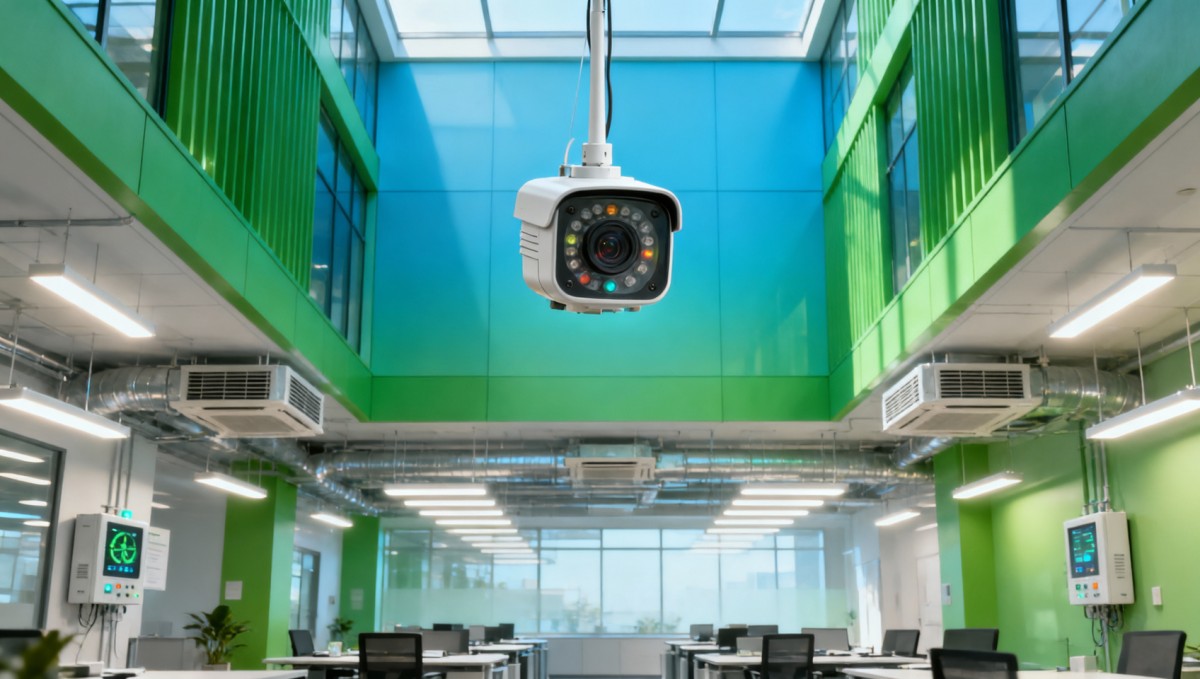
The core answer is simple: the best PIR sensor detection angle depends less on the widest possible coverage and more on how people move through the space, how high the sensor is mounted, and what action the automation system must trigger. For most smart building and renewable energy applications, a poorly matched angle creates two expensive problems: missed occupancy events and unnecessary energy consumption.
If the sensor is too narrow, people may pass outside the active field and lights, HVAC, or ventilation will not respond in time. If it is too wide, the system may detect irrelevant movement from adjacent zones, corridors, windows, or equipment areas, leading to false triggers and wasted power. That is why angle selection should be treated as a system design decision, not a basic component checkbox.
For operators and buyers, the practical question is not “What is the biggest angle available?” but “Which angle gives the most reliable detection in this specific room, workflow, or control zone?”
What Searchers Usually Want to Know Before Choosing a PIR Sensor
When people search for “PIR Sensor Detection Angle: How to Choose,” their intent is usually practical and decision-oriented. They want to know:
- What detection angle is suitable for a room, hallway, office, warehouse, or outdoor area
- How angle affects coverage distance and blind spots
- Whether a wider angle is always better
- How mounting height changes actual detection performance
- How to reduce false alarms and missed detections
- How to choose between ceiling-mounted and wall-mounted PIR sensors
- How the sensor choice impacts energy-saving automation and smart building reliability
For enterprise readers, there is also a second layer of concern: whether the chosen sensor supports reliable occupancy-based control for lighting, HVAC, security, and peak-load energy management. In other words, they are not only choosing a sensor; they are evaluating the quality of a control input that may influence energy cost, occupant comfort, and system reputation.
Why Detection Angle Matters in Renewable Energy and Smart Building Systems
In a conventional setup, PIR sensors are often treated as low-cost accessories. In high-performance buildings, that assumption is risky. The detection angle directly affects whether automation logic receives trustworthy occupancy data.
In renewable energy and intelligent energy management scenarios, PIR sensor behavior can influence:
- Lighting control efficiency: lights stay on only when needed
- HVAC zoning accuracy: heating and cooling respond to actual occupancy
- Peak load shifting: occupancy inputs help optimize non-essential loads
- Battery-powered IoT device life: poor placement may require higher sensitivity or more devices
- User comfort: missed detections reduce trust in automated systems
- Protocol-level smart home integration: accurate sensing improves Matter, Zigbee, Thread, or hybrid automation logic
For example, in an office using smart HVAC setbacks, an incorrectly chosen angle may fail to detect seated occupants at the room edge. The system may then reduce ventilation or temperature conditioning too early. The result is not only discomfort, but also poor confidence in the entire automation platform.
Wide vs Narrow PIR Sensor Detection Angle: Which Is Better?
Neither is universally better. The right choice depends on the geometry of the monitored area and the type of movement you need to detect.
Wide-angle PIR sensors are generally better for:
- Open rooms
- Meeting spaces
- Residential living areas
- Lobbies
- General occupancy detection
Narrow-angle PIR sensors are often better for:
- Hallways and corridors
- Aisles
- Entry points
- Perimeter monitoring
- Zone-specific automation where cross-area triggering is a problem
A wider angle increases lateral coverage, but it can also create overlap with adjacent spaces. That may be useful in some open environments, but harmful in zoned control systems. A narrow angle gives better directional discrimination, especially where you want motion detection to correspond closely to one physical path or zone.
The best rule is this: choose the angle that matches the movement pattern, not the room size alone.
How Mounting Height Changes the Effective Detection Area
One of the most common mistakes is choosing a PIR sensor based only on the advertised angle without considering mounting height. The specified angle tells only part of the story. In practice, the effective coverage pattern changes significantly when the sensor is installed higher or lower than its design target.
Here is what typically happens:
- Higher mounting increases floor coverage area but may reduce sensitivity to small movement
- Lower mounting can improve near-field responsiveness but shrink total coverage shape
- Incorrect height may create blind spots directly below or at the room perimeter
This matters especially in commercial energy projects. A ceiling-mounted PIR with a 360-degree field may look ideal on paper, but if installed too high in a warehouse or industrial bay, it may miss subtle human movement. Similarly, a wall-mounted sensor in a small office may have a wide angle but still fail to detect people seated near the edges if the lens pattern is optimized for walking motion rather than micro-movement.
For procurement and technical evaluation, always ask for:
- Recommended mounting height
- Coverage diagram at different heights
- Detection performance for walking versus minor movement
- Any sensitivity adjustment limitations
Ceiling-Mounted or Wall-Mounted: Which Layout Makes More Sense?
This is often more important than the nominal angle itself.
Ceiling-mounted PIR sensors are usually preferred when:
- You need broad area coverage
- The room is relatively open
- You want centralized occupancy sensing
- Zoning is based on room-level presence
Wall-mounted PIR sensors are usually preferred when:
- You need directional sensing
- You want to monitor entry or crossing motion
- The space is long and narrow
- You need to avoid detection from adjacent areas
In smart energy systems, ceiling-mounted devices often work well for room-based automation, while wall-mounted devices may be better for trigger-based workflows such as corridor lighting or doorway-linked ventilation logic.
If the project includes Matter-enabled devices, building management systems, or mixed protocol environments, sensor placement becomes even more important. Once false triggers enter the automation stack, they can propagate across multiple linked rules and scenes.
How to Avoid False Triggers and Missed Motion Events
Readers evaluating PIR sensor detection angle are usually trying to prevent two failures: over-detection and under-detection.
False triggers often come from:
- Sensor angles extending into adjacent rooms or corridors
- Direct sunlight or rapid thermal changes
- Nearby HVAC vents
- Glass surfaces with shifting heat patterns
- Outdoor heat sources in semi-exposed installations
Missed detections often come from:
- Wrong mounting height
- Poor angle selection for the movement path
- Furniture or shelving blocking line of detection zones
- Use of a corridor-style sensor in a wide room
- Expecting PIR to detect very small stationary motion reliably
To reduce these risks:
- Map real movement paths before choosing the angle
- Use zone-based coverage planning instead of relying on a single “maximum angle” number
- Review lens pattern diagrams, not just marketing summaries
- Test the sensor in the actual thermal environment
- Consider combining PIR with other sensing methods where occupancy is mission-critical
In high-value projects, a short real-world test often saves more money than selecting a lower-cost sensor with unclear field performance.
How Buyers and Decision-Makers Should Evaluate PIR Sensors Beyond the Datasheet
For business evaluation, the main issue is not just whether the PIR sensor works, but whether it works consistently enough to support energy savings, user satisfaction, and scalable deployment.
Decision-makers should look beyond headline specifications and ask:
- Is the detection angle tested under real installation conditions?
- What is the actual coverage shape, not just the angle number?
- How stable is performance across temperature changes?
- Does the sensor integrate cleanly with the target protocol or automation platform?
- Can the supplier provide repeatable benchmarking or field validation data?
- Will false triggers increase operational costs or user complaints?
For renewable energy and smart building use, a PIR sensor should be judged as part of a larger control loop. A cheap sensor that causes unnecessary lighting runtime, unstable HVAC behavior, or occupancy errors may cost far more over time than a better-engineered component.
This is especially true in portfolios such as apartments, offices, campuses, and mixed-use developments, where detection quality affects both energy performance and tenant experience.
A Practical Selection Framework for PIR Sensor Detection Angle
If you need a fast and useful way to choose, use this framework:
- Step 1: Define the monitored objective
Do you need room occupancy, entry detection, corridor movement, desk-area activity, or security triggering? - Step 2: Identify movement type
Will people cross the sensor field, approach it directly, or remain seated with minimal movement? - Step 3: Measure space geometry
Check width, length, ceiling height, partitions, shelving, and thermal disturbances. - Step 4: Match sensor format
Choose ceiling-mounted for broad room coverage, wall-mounted for directional paths, and narrow or wide angles accordingly. - Step 5: Validate with system logic
Make sure the detection behavior supports your lighting, HVAC, or energy automation timing. - Step 6: Pilot before scaling
Test in one representative space before large procurement.
For many projects, this process is more valuable than comparing angle numbers alone. It helps turn a component choice into a reliable operational decision.
Final Takeaway
The right PIR sensor detection angle is the one that gives reliable occupancy data for your actual space, installation height, and automation goal. Wider is not automatically better, and datasheet angles do not tell the full story. For smart homes, commercial buildings, and renewable energy applications, angle selection affects energy savings, comfort, and automation trustworthiness.
If you are researching, operating, buying, or approving PIR-based systems, focus on real coverage behavior, placement logic, false-trigger risk, and integration value. A well-chosen PIR sensor improves not only motion detection, but the quality of the entire smart control system built around it.
Protocol_Architect
Dr. Thorne is a leading architect in IoT mesh protocols with 15+ years at NexusHome Intelligence. His research specializes in high-availability systems and sub-GHz propagation modeling.
Related Recommendations
- NHI Data Lab (Official Account)How to Choose a MEMS Microphone SMD Factory
- NHI Data Lab (Official Account)PIR Sensor Detection Angle: How to Choose
- NHI Data Lab (Official Account)Micro machining tolerance limits at very small feature sizes
- NHI Data Lab (Official Account)Micro machining parts supplier selection for tiny critical features
- NHI Data Lab (Official Account)CNC spindle runout measurement: What’s the real impact on micro-machining repeatability?
- NHI Data Lab (Official Account)CNC milling chatter frequency analysis — when vibration patterns reveal fixture weakness
- NHI Data Lab (Official Account)Micro machining parts supplier — do they calibrate CMMs daily or only weekly?
- NHI Data Lab (Official Account)Swiss turning concentricity tolerance mistakes that cause rejects
- NHI Data Lab (Official Account)Micro machining tolerance limits and the point where yield drops
- NHI Data Lab (Official Account)What makes a micro machining parts supplier reliable at tiny tolerances
Analyst