
Heavy Duty AGV Manufacturer Questions to Ask Before Approval
author
Before signing off on a major automation investment, finance approvers need more than sales claims from a heavy duty AGV manufacturer. In renewable energy operations, uptime, safety, integration costs, and long-term ROI matter far more than brochure promises. This guide outlines the critical questions that help decision-makers verify technical credibility, control procurement risk, and approve vendors with confidence.
Why does a heavy duty AGV manufacturer deserve deeper scrutiny in renewable energy projects?
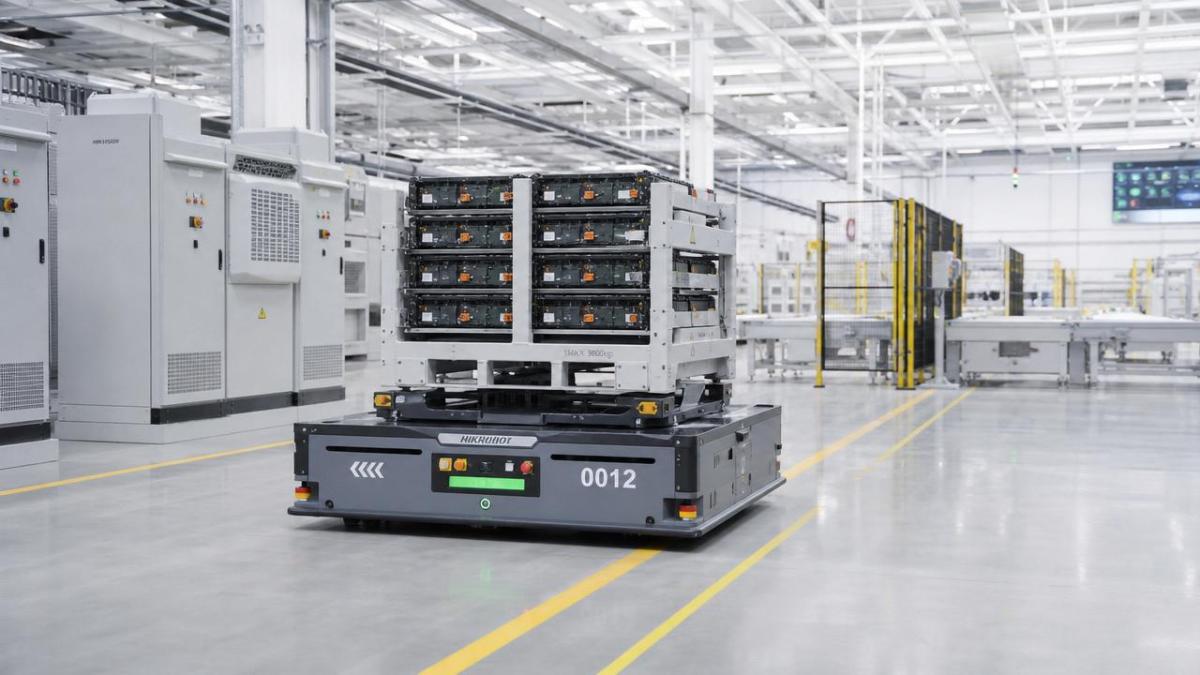
For finance teams in renewable energy, automated guided vehicles are not just warehouse tools. They often become part of critical material flow for battery modules, wind turbine components, inverters, transformer housings, solar panel pallets, and other high-value assets. A weak vendor choice can create hidden costs that never appear in the initial quotation. That is why evaluating a heavy duty AGV manufacturer requires looking beyond unit price and into lifecycle performance.
In solar, energy storage, and smart-grid manufacturing environments, payloads are heavy, routes may be long, and the cost of interruption is high. One hour of AGV downtime can delay loading, assembly, or dispatch, which then affects contractual delivery schedules and working capital turnover. For this reason, approvers should ask whether the supplier can prove system stability under real operating loads, not just under showroom conditions.
This is especially relevant for organizations that value data transparency, interoperability, and engineering verification. In complex industrial ecosystems, marketing terms such as “smart navigation” or “easy integration” are meaningless unless backed by measurable evidence. A credible heavy duty AGV manufacturer should be ready to provide test records, safety certifications, integration architecture, and long-term maintenance assumptions in a format finance and operations teams can both evaluate.
What should finance approvers ask first before approving a heavy duty AGV manufacturer?
The first question is simple: what business problem is this system solving, and how measurable is the return? A heavy duty AGV manufacturer may present labor savings, but approvers should go further and ask for a detailed ROI model. That model should include throughput gains, reduction in product damage, lower forklift traffic risk, decreased rework, improved traceability, and energy savings where applicable.
The second question is whether the quoted configuration matches the real payload and duty cycle. Many procurement issues start when a vehicle is technically capable of lifting a load once, but not of moving that same load repeatedly over long shifts, ramps, uneven surfaces, or congested intersections. Ask the vendor to state rated payload, peak payload, towing capacity, charging intervals, and operational speed under full load. These details directly affect asset utilization and replacement planning.
The third question concerns total cost of ownership. A low purchase price can hide software licensing fees, site preparation costs, spare parts dependency, battery replacement cycles, integration charges, and after-sales service premiums. A reliable heavy duty AGV manufacturer should disclose expected annual maintenance cost, battery life assumptions, software update policy, and the probable cost of scaling from a pilot to a full fleet.
How can you verify technical credibility instead of trusting sales language?
A finance approver does not need to become a robotics engineer, but should insist on evidence that can be audited. Start with performance data. Ask the heavy duty AGV manufacturer for documented case studies showing payload class, route complexity, daily operating hours, obstacle environment, and uptime achieved over time. The key is specificity. A generic claim such as “installed in many factories” says little. A useful claim states fleet size, average availability, maintenance intervals, and measurable production outcomes.
Then review integration capability. Renewable energy facilities increasingly rely on MES, WMS, ERP, SCADA, and IoT-based monitoring platforms. If AGVs cannot exchange reliable data with these systems, process automation remains fragmented. Ask what APIs, industrial protocols, or middleware options are available. Confirm whether the vendor has experience with cross-system scheduling, battery telemetry, task traceability, and remote diagnostics. A serious heavy duty AGV manufacturer will discuss interfaces, data architecture, cybersecurity, and exception handling in practical terms.
You should also request evidence of stress testing. In renewable energy production, environmental conditions may include dust, temperature variation, reflective surfaces, and oversized components. Navigation accuracy and sensor reliability can degrade in these environments. Ask for test results related to braking distance, obstacle recognition, positioning precision, and battery performance during extended shifts. These are the kinds of facts that separate engineered truth from polished marketing.
Which safety and compliance questions should be non-negotiable before approval?
Safety is where financial and operational interests fully align. An incident involving a heavy-load AGV can stop production, damage inventory, injure personnel, and expose the company to legal costs. Therefore, every heavy duty AGV manufacturer under review should be asked which standards the equipment follows, how risk assessments are performed, and what safety architecture is built into the system.
At minimum, ask about emergency stop logic, speed zoning, collision avoidance, load stability control, sensor redundancy, and fail-safe behavior during communication loss. In facilities handling batteries or electrical equipment, also ask whether the AGV design addresses electromagnetic interference concerns, fire risk management, and safe charging strategy. These details matter because renewable energy environments often combine high-value goods with strict safety expectations.
Another critical point is site acceptance testing. A trustworthy heavy duty AGV manufacturer should define what happens before go-live: route validation, obstacle simulation, payload verification, operator training, and handover documentation. Finance approvers should ensure payment milestones are linked to successful testing outcomes rather than shipment alone. This creates accountability and reduces the risk of paying in full before the system proves operational value.
How do you compare cost, ROI, and hidden risk across suppliers?
Comparing two vendors by purchase price alone is one of the most common procurement mistakes. A better method is to compare the full economic profile of each heavy duty AGV manufacturer across acquisition, deployment, operation, and expansion. For example, a vendor with higher upfront pricing may still be the better choice if its system reduces integration time, avoids custom redevelopment, and maintains stronger uptime over five years.
Ask each supplier to break down costs into hardware, fleet management software, commissioning, site mapping, operator training, spare parts, preventive maintenance, battery replacement, and remote support. Then compare assumptions side by side. It is also wise to ask who owns the data, whether software licenses are perpetual or recurring, and how expensive future route changes or fleet expansion will be. These variables often reshape the payback period.
For renewable energy businesses, downtime cost should be built into the approval model. If a delayed material movement stops battery pack assembly or wind component staging, the economic effect may far exceed the visible repair cost. That is why the best heavy duty AGV manufacturer is often the one with the lowest risk-adjusted cost, not the lowest quote. Approvers should request scenario analysis: best case, expected case, and disruption case.
Practical supplier comparison checklist
- What uptime percentage is contractually supported?
- How many local or regional service engineers are available?
- What is the expected mean time to repair for core failure modes?
- Can the system scale without replacing the software platform?
- What references exist in heavy manufacturing or renewable energy applications?
- How transparent is the vendor about exclusions, assumptions, and change-order costs?
What common red flags suggest a heavy duty AGV manufacturer may not be approval-ready?
One red flag is vague performance language with no underlying data. If the vendor cannot provide application-specific references, measured uptime, or full-load endurance records, the proposal may be too immature for capital approval. Another warning sign is excessive customization without a clear change-control process. Custom work may be necessary, but uncontrolled customization often increases deployment delays, future service complexity, and budget overruns.
A second red flag is weak support structure. Some suppliers can build capable vehicles but lack field service depth, spare parts planning, or software troubleshooting capacity. For finance approvers, this translates into operational exposure after the initial purchase. Ask whether support is direct or outsourced, whether critical components are stocked regionally, and how quickly on-site intervention can be arranged.
A third red flag is poor transparency on integration. If a heavy duty AGV manufacturer cannot clearly explain communication methods, cybersecurity approach, and responsibility boundaries between its team and the client’s IT or automation partners, implementation risk rises quickly. In modern renewable energy facilities, isolated automation is rarely enough. Approval should favor vendors that fit into a broader connected infrastructure with measurable reliability.
How should finance teams structure final approval questions before signing?
Before approving a contract, finance teams should convert technical evaluation into business safeguards. Ask what acceptance criteria trigger final payment, what warranty terms apply under real load conditions, and what remedies exist if throughput or uptime falls short. It is also wise to confirm whether software updates, cybersecurity patches, and operator retraining are included or billed separately.
Next, clarify implementation timeline and internal resource demand. Even the best heavy duty AGV manufacturer can become a difficult investment if the project requires more client-side engineering time, facility modifications, or process redesign than expected. Approvers should ask for a realistic deployment schedule with dependencies, decision gates, and contingency assumptions. This helps finance leaders judge not only the vendor, but also the organization’s readiness to capture value from the investment.
Finally, ask for post-launch accountability. What reporting cadence will be used? Which KPIs will be tracked? How will productivity, fault frequency, and energy use be monitored over the first six to twelve months? A disciplined heavy duty AGV manufacturer should welcome measurable governance because it demonstrates confidence in the system and makes ROI easier to verify after go-live.
What are the most important takeaways for approvers evaluating a heavy duty AGV manufacturer?
The right approval decision comes from disciplined questioning, not from the most polished presentation. In renewable energy operations, the best heavy duty AGV manufacturer is the one that can prove safe performance, stable integration, lifecycle cost clarity, and long-term service reliability. Finance approvers should focus on data, testing, contractual accountability, and site-specific fit rather than abstract automation promises.
If you need to confirm a specific solution, parameter set, rollout schedule, quotation basis, or cooperation model, start by asking for five things: a full-load duty-cycle report, a detailed total cost of ownership model, integration architecture documentation, safety and acceptance test criteria, and a defined post-launch support SLA. Those questions will quickly reveal whether a heavy duty AGV manufacturer is ready for serious approval or only ready for a sales meeting.
Protocol_Architect
Dr. Thorne is a leading architect in IoT mesh protocols with 15+ years at NexusHome Intelligence. His research specializes in high-availability systems and sub-GHz propagation modeling.
Related Recommendations
- NHI Data Lab (Official Account)What Separates a Reliable Heavy Duty AGV Manufacturer
- NHI Data Lab (Official Account)Heavy Duty AGV Manufacturer Questions to Ask Before Approval
- NHI Data Lab (Official Account)Commercial drone payload capacity benchmark for mapping accuracy tradeoffs
- NHI Data Lab (Official Account)Heavy duty AGV manufacturer comparisons often ignore floor conditions
- NHI Data Lab (Official Account)Commercial drone payload capacity benchmark by mission type
- NHI Data Lab (Official Account)Where heavy duty AGV manufacturers differ on battery runtime
- NHI Data Lab (Official Account)Battery Tech Choices That Change Wind Storage Costs
- NHI Data Lab (Official Account)What Battery Tech Means for Stable Solar Power Output
- NHI Data Lab (Official Account)How to Compare Battery Tech for Renewable Energy Storage
- NHI Data Lab (Official Account)Lithium Battery for IoT: Runtime vs Safety Tradeoffs
Analyst