
Why some Matter devices fail real home setup tests
author
Why do some Matter devices pass lab checks yet fail in real homes? For buyers, operators, and evaluators in renewable energy-linked smart buildings, the answer starts with Matter protocol data, protocol latency benchmark results, and smart home hardware testing under interference, load, and power constraints. NexusHome Intelligence brings IoT engineering truth through independent IoT hardware benchmarking, exposing where Matter standard compatibility claims break down in real deployment.
In renewable energy projects, this problem is not a minor convenience issue. A Matter thermostat, relay, sensor, or gateway that behaves well in a controlled demo can become unstable when deployed inside a solar-powered residence, a battery-backed apartment block, or a mixed-protocol commercial building. For operators, that means service calls and energy waste. For procurement teams, it means hidden lifecycle cost. For business evaluators, it means the gap between brochure claims and operational reality must be measured before scale-up.
NexusHome Intelligence (NHI) approaches this gap as a data problem, not a marketing problem. In buildings where HVAC loads, smart relays, battery storage systems, EV charging schedules, and distributed sensors must work together, protocol reliability directly affects carbon reduction, peak-load shifting, and occupant comfort. The core question is simple: when a vendor says “Works with Matter,” under what electrical, wireless, and environmental conditions does it still work after 30, 90, or 180 days?
Matter in renewable energy smart buildings is tested by the field, not the brochure
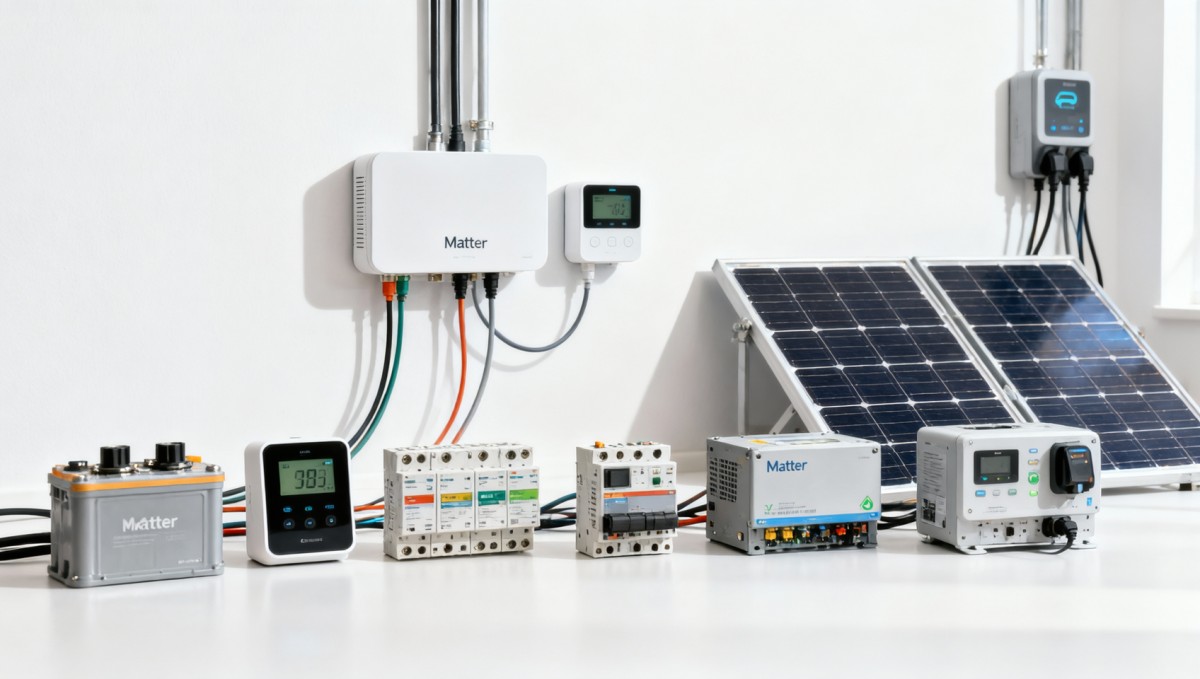
Matter was designed to improve interoperability across smart home ecosystems, but renewable energy-linked buildings place heavier demands on devices than a standard consumer setup. A home running rooftop solar, a 10kWh–40kWh battery system, smart HVAC zoning, and dynamic tariff automation may generate frequent command bursts, local network congestion, and time-sensitive control events. In that environment, passing a basic certification check is only the first step.
Real deployment adds interference from metal cabinets, inverters, switchboards, dense Wi-Fi traffic, and power quality variations. A Matter-over-Thread device that responds in under 300 milliseconds in a clean lab may drift to 800 milliseconds or more when multi-hop routing, edge gateway load, and crowded 2.4GHz channels are introduced. For energy orchestration tasks such as load shedding or smart pre-cooling, those delays matter.
The risk becomes larger in buildings that combine legacy Zigbee assets, newer Thread nodes, Wi-Fi appliances, and cloud-linked dashboards. Fragmentation is not solved simply because Matter is present. In many renewable energy projects, operators are dealing with at least 3 protocol layers at once: device radio behavior, local network routing, and application-level command logic tied to energy schedules.
This is why NHI focuses on engineering verification. Instead of repeating generic claims such as “seamless integration,” a proper evaluation should test latency bands, packet loss under load, standby power draw in low-energy periods, battery discharge consistency, and recovery behavior after power interruptions lasting 5 seconds, 30 seconds, or 5 minutes.
Why renewable energy environments reveal hidden protocol weakness
Devices connected to energy management workflows are exposed to more edge cases than ordinary smart plugs or bulbs. A thermostat may receive occupancy signals, tariff data, solar generation forecasts, and battery reserve rules within the same 15-minute cycle. If command acknowledgement is delayed or state synchronization fails, the result may be unnecessary grid import or reduced self-consumption efficiency.
The table below shows where lab success often diverges from field reliability in renewable energy-linked smart building use cases.
The key conclusion is straightforward: Matter compatibility is not the same as operational resilience. Procurement teams in solar-ready residential developments or energy-efficient commercial retrofits should ask not only whether a device joins the ecosystem, but whether it stays stable under mixed load, mixed protocol, and mixed power conditions.
The four failure patterns behind Matter device breakdown in real homes
Most field failures can be grouped into a small number of repeatable patterns. Identifying these patterns early helps users, operators, and commercial evaluators avoid procurement mistakes that only become visible after installation. In renewable energy environments, these issues often show up faster because devices are tied to energy-saving schedules and building automation rules rather than casual manual use.
1. Radio interference and weak mesh planning
Thread and Wi-Fi often share crowded spectrum. Add solar inverters, dense apartment Wi-Fi, smart meters, and metallic utility rooms, and a device can experience unstable routing even when individual RSSI values appear acceptable. A network that works with 12 nodes may start dropping commands at 45 nodes, especially if route redundancy was never validated.
2. Standby power and battery assumptions are unrealistic
Many battery-powered sensors are tested under ideal duty cycles. In a real energy management scenario, reporting frequency can rise from once every 30 minutes to once every 2–5 minutes during occupancy shifts, tariff events, or indoor climate changes. That can compress a projected 24-month battery life to 8–12 months, raising maintenance cost across multi-unit properties.
3. Commissioning succeeds, long-term state sync fails
Some devices pair correctly on day one but lose synchronization after firmware updates, gateway reboots, or brief power transfers between grid and battery backup. In a renewable energy building, even a short switching event can expose weak session recovery logic. Operators then see “online” devices that do not reliably execute automation scenes.
4. Matter support is partial, not operationally complete
A product may support onboarding and basic commands but fail to expose the attributes needed for advanced energy workflows. For example, a smart relay may switch loads, yet provide limited telemetry or inconsistent state reporting to a building energy dashboard. That makes it difficult to coordinate EV charging, HVAC staging, and battery discharge windows within a 5-minute optimization cycle.
What buyers should verify before committing volume
- Test response stability across at least 3 load states: idle, normal occupancy, and peak automation periods.
- Check whether command success remains consistent above 95% when 30–50 nodes are active simultaneously.
- Measure standby draw for always-on relays and gateways, especially where energy efficiency targets are strict.
- Confirm recovery behavior after 5-second, 30-second, and 300-second power interruptions.
- Ask whether firmware maintenance can be staged without disrupting critical climate or energy schedules.
For procurement teams, the lesson is practical: do not confuse certification presence with deployment readiness. Real value comes from protocol benchmarking, power behavior analysis, and sustained soak testing over multiple weeks, not from a one-time demonstration.
How NHI benchmarks Matter devices for energy and climate control use cases
NexusHome Intelligence evaluates devices through an engineering lens aligned with smart building and renewable energy realities. The goal is not to reject Matter, but to separate genuine interoperability from shallow claims. For operators managing HVAC efficiency, battery reserve logic, or peak-load shifting, benchmark design must reflect real stress conditions.
A credible test program should run longer than a same-day compatibility session. In practical terms, a 2–4 week benchmark window is more meaningful because it captures duty-cycle variation, network re-routing, firmware persistence, and environmental change. For battery-based sensors and controls, longer discharge observation may be required depending on reporting frequency and sleep intervals.
Core benchmark dimensions
NHI’s verification philosophy fits five pillars, but for renewable energy deployments three dimensions are especially important: connectivity and protocol behavior, energy and climate control performance, and hardware component integrity. Together they show whether a device can support real decarbonization workflows rather than simply connect to an app.
The following table outlines a practical benchmark framework for Matter devices used in solar-enabled homes, battery-backed apartments, and efficiency-oriented commercial spaces.
The strategic point is that benchmark data turns vendor selection into a measurable process. Instead of comparing abstract feature lists, procurement teams can compare latency ceilings, recovery thresholds, and power profiles that directly affect operating cost and service reliability.
Recommended validation workflow
- Define the target building profile, including number of units, expected device density, and renewable energy assets such as solar PV, storage, or EV charging.
- Run mixed-protocol testing with at least one realistic interference source and one power event scenario.
- Track latency, packet success, and standby consumption for 14–28 days instead of relying on day-one commissioning results.
- Validate integration with HVAC, relay control, and energy monitoring dashboards before approving larger purchase quantities.
This approach supports NHI’s broader mission: bridging ecosystems through data and helping global buyers identify technically credible suppliers rather than the loudest marketers in the OEM and ODM pipeline.
Procurement criteria for buyers, operators, and business evaluators
For B2B decision-makers, the question is not merely whether a Matter device works, but whether it protects project economics. In renewable energy-linked buildings, a weak device can trigger truck rolls, tenant complaints, HVAC inefficiency, and data gaps in energy reporting. Those costs often exceed the initial purchase price difference within 6–12 months.
Procurement teams should therefore use a multi-factor scorecard. The best choice is not always the lowest unit price, and the most feature-rich device may still perform poorly if its routing stability, telemetry consistency, or standby draw is weak. Evaluation should combine technical verification, deployment fit, and lifecycle support.
Decision factors that matter most
In real projects, four criteria usually determine long-term suitability: protocol resilience, energy efficiency, maintenance burden, and supply chain transparency. NHI’s data-driven approach is especially valuable here because it helps buyers compare hidden champions in manufacturing against over-marketed alternatives with incomplete field evidence.
The table below can be used as a practical procurement reference for renewable energy smart building projects.
A useful rule for commercial evaluators is to model total cost over at least 24 months. If a lower-cost device increases support labor, battery replacement frequency, or energy control errors, it can quickly become the more expensive option. That is particularly true in portfolios with 100 or more occupied units.
Common procurement mistakes
- Selecting products based on certification logos without reviewing benchmark context.
- Ignoring standby consumption because the value seems small on a per-device basis.
- Testing only onboarding, not long-term recovery after firmware or power events.
- Underestimating the effect of mixed ecosystems in retrofits and phased building upgrades.
For renewable energy projects, the better procurement question is: which device contributes to stable automation, lower maintenance overhead, and measurable energy performance over time? That question aligns technology buying with operational decarbonization goals.
Implementation guidance and FAQ for real-world deployment
Deployment success depends on more than product selection. Even a strong Matter device can underperform if the commissioning plan ignores building topology, electrical transition behavior, or reporting cadence. For operators and integrators, implementation should be staged, measured, and corrected early rather than after tenant occupancy or system handover.
A practical rollout often uses 3 phases: pilot, controlled expansion, and full deployment. In the pilot stage, test 10–20 representative nodes across utility rooms, apartments, and high-interference zones. In the second stage, expand to 30–50 nodes and introduce real energy schedules. Only then should large-volume procurement or portfolio-wide rollout begin.
How should operators set acceptance criteria?
Acceptance criteria should combine functional and operational metrics. A reasonable baseline includes reliable commissioning, low command failure rates, acceptable latency bands under building load, and successful state recovery after at least 2 different power event simulations. For energy-linked devices, telemetry continuity should also be verified during tariff transitions and HVAC automation windows.
Which renewable energy scenarios are most demanding for Matter devices?
The most demanding scenarios typically include battery-backed homes with transfer switching, apartment blocks with shared solar and sub-metering, and commercial spaces coordinating HVAC with occupancy and demand-response signals. These environments combine timing sensitivity, wireless density, and power-state variation. They are far more revealing than showroom demos.
How long should a serious validation program last?
For B2B procurement, 14 days is a useful minimum, while 21–28 days gives a better view of stability under changing occupancy, environmental variation, and maintenance events. If battery-powered devices are central to the project, additional observation may be needed to estimate replacement cycles under real reporting frequency rather than vendor-stated ideal conditions.
What is the safest way to reduce deployment risk?
Use independent benchmarking, mixed-protocol testing, and staged procurement. Do not approve final volume based on a single-room trial. Validate performance in edge locations, under interference, and during power transfer events. Also confirm supplier responsiveness on firmware maintenance, because long-term support quality often matters as much as first-month device behavior.
Matter can help reduce ecosystem friction, but only if stakeholders treat interoperability as a measurable engineering outcome. In renewable energy smart buildings, the best devices are the ones that maintain low-friction control, accurate telemetry, and stable recovery under real operational pressure. That is where independent data creates procurement confidence.
NexusHome Intelligence exists to bridge ecosystems through data, giving buyers, operators, and evaluators a clearer view of protocol truth, hardware integrity, and deployment risk. If you are assessing Matter devices for solar-enabled homes, battery-backed buildings, or energy-efficient portfolios, contact us to discuss benchmarking priorities, request a tailored evaluation framework, or explore smarter sourcing decisions backed by evidence.
Protocol_Architect
Dr. Thorne is a leading architect in IoT mesh protocols with 15+ years at NexusHome Intelligence. His research specializes in high-availability systems and sub-GHz propagation modeling.
Related Recommendations
- Dr. Aris ThorneMatter 1.4 Released: Chinese MCU Vendors Launch SDKs
- Dr. Aris ThorneWhy some Matter devices fail real home setup tests
- Dr. Aris ThorneMatter protocol data: what actually matters in 2026?
- Dr. Aris ThorneHow to check Matter standard compatibility before you buy
- Dr. Aris ThorneHVAC Integration With Matter: What to Check
- Dr. Aris ThorneHow to Vet a Tuya Curtain Motor Wholesaler
- Dr. Aris ThorneOffline Voice Control Modules: When They Fit Best
- Dr. Aris ThorneMulti Protocol Gateway Integration: Common Traps
- Dr. Aris ThorneDo You Really Need a Local Control Hub
- Dr. Aris ThorneHow to Read a Matter Compatibility Chart
Analyst