
Matter protocol data: what actually matters in 2026?
author
In 2026, Matter protocol data matters only when it is measured against real-world performance, compliance, and energy impact. For buyers, operators, and evaluators in renewable energy and smart infrastructure, NexusHome Intelligence cuts through claims with IoT hardware benchmarking, protocol latency benchmark insights, and smart home hardware testing—turning Matter standard compatibility from a marketing promise into engineering truth.
What decision-makers really need to know about Matter protocol data in 2026
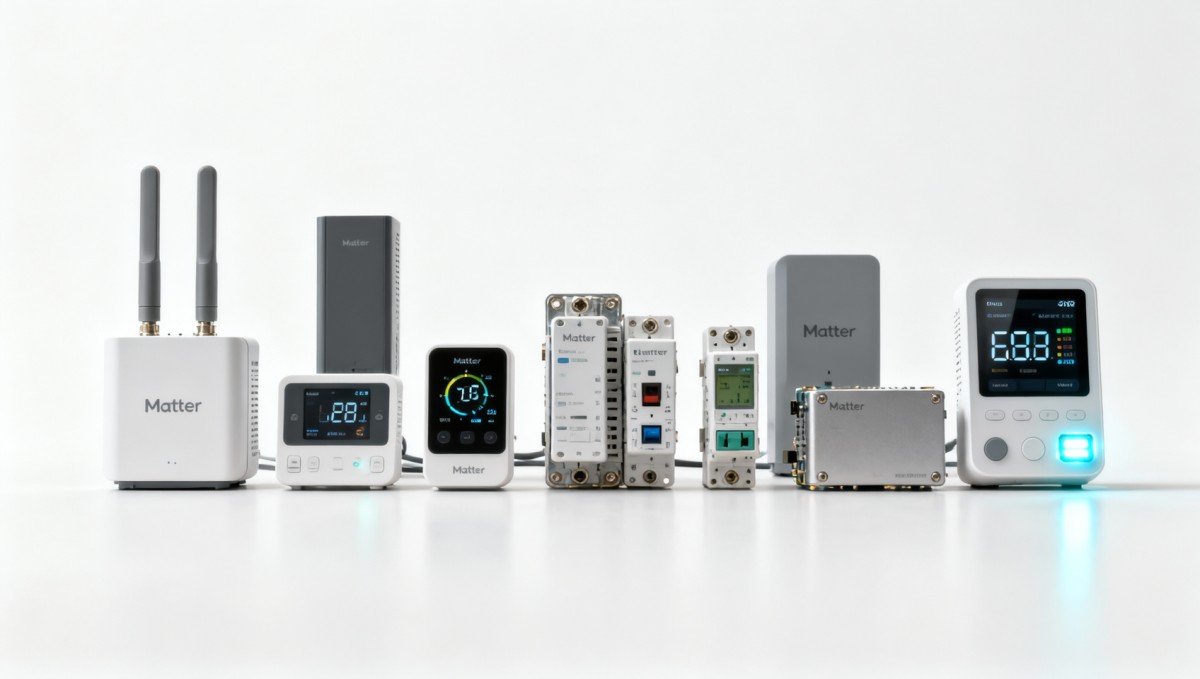
If you are evaluating connected devices for renewable energy projects, smart buildings, or energy-aware infrastructure, the key question is no longer “Does it support Matter?” The real question is: what Matter protocol data actually helps you predict deployment success, operational stability, energy efficiency, and procurement risk?
In 2026, the most useful Matter data is not logo-level certification language. It is measurable evidence: latency under load, Thread border router behavior, device interoperability across ecosystems, standby power draw, firmware reliability, security posture, and failure rates in mixed-protocol environments.
For operators, procurement teams, and commercial evaluators, this changes how products should be compared. A Matter-enabled relay, thermostat, sensor, or gateway may look compliant on paper, yet still create hidden costs through poor routing, excessive standby consumption, unstable commissioning, or weak multi-vendor behavior.
The practical takeaway is simple: Matter protocol data matters when it helps you answer risk, cost, and performance questions before rollout.
Why Matter data is now a procurement and operations issue, not just a technical issue
In renewable energy and smart infrastructure, connected hardware increasingly affects energy reporting, climate control, occupancy-based automation, distributed asset monitoring, and load optimization. That means protocol quality has direct business consequences.
For example, if a Matter-over-Thread sensor network introduces unstable communication in a commercial building, the impact is not limited to user inconvenience. It can affect HVAC responsiveness, lighting automation accuracy, battery maintenance cycles, and the credibility of energy-saving claims.
This is why buyers and evaluators now care about Matter protocol data as part of commercial due diligence. They need to know:
- Whether device communication remains stable in dense deployments
- Whether vendor claims match measurable field performance
- Whether energy consumption undermines sustainability targets
- Whether interoperability holds up across mixed ecosystems
- Whether firmware and commissioning issues will increase support costs
For procurement teams, this means Matter is no longer a feature checkbox. It is part of lifecycle cost analysis.
Which Matter protocol metrics actually matter most in 2026
Not all protocol data is equally useful. The most valuable metrics are the ones that reveal whether a device will perform reliably in real operating conditions.
1. Latency and response consistency
Average response time is helpful, but not enough. Buyers should also ask for jitter, peak latency, and behavior during multi-node communication. In energy and building automation, delayed command execution can reduce comfort, control precision, and trust in automation logic.
2. Commissioning success rate
A product that supports Matter but fails too often during onboarding creates installation delays and support overhead. Commissioning success across repeated tests, different controllers, and noisy RF environments is a strong indicator of field readiness.
3. Interoperability across ecosystems
Matter promises cross-platform compatibility, but real-world results vary. It is important to test how devices behave when connected to different ecosystems, hubs, controllers, and border routers. Consistent basic operation is not enough; advanced features must also be verified.
4. Thread network stability
For Matter-over-Thread devices, routing quality, rejoin behavior, packet loss, and border router recovery are critical. A stable Thread mesh is especially important in commercial environments with concrete walls, electrical interference, and high node density.
5. Standby power and active power draw
In renewable energy and carbon-conscious projects, microwatts and milliwatts matter at scale. A device with poor standby efficiency can significantly weaken ROI when deployed across hundreds or thousands of endpoints.
6. Firmware maturity and update resilience
Matter devices depend heavily on software quality. Teams should assess update success rates, rollback handling, bug frequency, and whether protocol updates introduce regressions in field devices.
7. Security and compliance evidence
Security claims should be backed by measurable practices: secure commissioning, certificate handling, patch response times, and compliance with regional data and cybersecurity expectations.
What buyers, operators, and evaluators care about most
The target audience for this topic usually does not want a theoretical explanation of the Matter standard. They want a clear path to safer decisions.
Operators usually care most about reliability, maintenance burden, integration smoothness, and troubleshooting complexity. They want to know whether Matter devices will reduce operational friction or create a new layer of instability.
Procurement teams usually focus on vendor credibility, total cost of ownership, support risk, product consistency, and whether performance claims can be verified with data rather than sales language.
Business evaluators want to understand whether Matter improves scalability, lowers lock-in risk, and supports long-term infrastructure strategy, especially in projects linked to energy optimization, ESG targets, or smart building investment.
Across all three groups, the shared concern is this: how do we separate meaningful Matter standard compatibility from superficial certification claims?
How to evaluate Matter-enabled hardware for renewable energy and smart infrastructure projects
A useful evaluation framework should connect protocol data directly to project outcomes. Instead of asking only whether a product supports Matter, ask the following:
- What is the measured command latency in single-node and mesh scenarios?
- How does the device behave under interference or network congestion?
- What is the standby power draw at real deployment settings?
- How often does commissioning fail across repeated trials?
- Which functions work consistently across different Matter controllers?
- How mature is the firmware lifecycle and patch process?
- What happens after topology changes, power interruption, or border router failure?
For renewable energy use cases, it is especially important to connect protocol testing with energy impact. A smart relay or environmental sensor is not valuable just because it is modern and interoperable. It must also support measurable improvements in load control, equipment scheduling, monitoring accuracy, or climate efficiency.
This is where independent IoT hardware benchmarking becomes more valuable than vendor collateral. Data-led testing reveals whether a product supports engineering outcomes, not just marketing narratives.
The hidden risks behind “Works with Matter” claims
In 2026, one of the biggest market problems is that many products use Matter as a trust signal without providing the performance evidence enterprise buyers actually need.
Common hidden risks include:
- Partial interoperability: the device pairs successfully but key automation functions are inconsistent across ecosystems
- Weak mesh resilience: the product works in demos but degrades in large or obstructed sites
- Energy inefficiency: standby draw is too high for large-scale sustainable deployments
- Immature firmware: software updates fix one issue while creating another
- Support dependency: troubleshooting requires vendor-specific workarounds despite “open” standard positioning
These issues are costly because they often appear after procurement, during rollout or operation. By then, the cost is no longer just technical. It includes project delay, installer frustration, increased maintenance tickets, and reputational damage.
Why hard benchmarking data will matter more than certification in the next phase of Matter adoption
Matter certification still has value. It creates a baseline and improves the industry compared with the fragmented past. But in real deployments, certification is only the starting point.
As the market matures, the winners will be manufacturers and suppliers that can prove performance with repeatable, scenario-based test data. That includes protocol latency benchmark results, interoperability testing in mixed environments, and smart home hardware testing tied to energy and reliability outcomes.
This is especially relevant for organizations sourcing hardware across global supply chains. Marketing descriptions rarely capture the difference between nominal compatibility and dependable field performance. Independent benchmarking helps identify the suppliers with real engineering discipline.
For a company like NexusHome Intelligence, this is the central mission: replacing protocol buzzwords with verifiable truth. In a market shaped by renewable energy goals, smart infrastructure expansion, and tighter procurement scrutiny, data quality becomes trust quality.
What actually matters in 2026: a practical conclusion
Matter protocol data matters in 2026 when it helps you make better deployment, sourcing, and operational decisions. For most professional buyers and evaluators, the most important data points are not abstract standard descriptions. They are measurable indicators of latency, stability, interoperability, energy efficiency, firmware maturity, and lifecycle risk.
If a Matter-enabled product cannot show strong real-world performance, low energy overhead, and reliable cross-ecosystem behavior, its compliance label has limited value. In renewable energy and smart building environments, where every device can affect efficiency, maintenance, and ROI, this distinction is critical.
The smartest approach is to treat Matter standard compatibility as the entry requirement—not the final proof. What truly matters is tested evidence.
Protocol_Architect
Dr. Thorne is a leading architect in IoT mesh protocols with 15+ years at NexusHome Intelligence. His research specializes in high-availability systems and sub-GHz propagation modeling.
Related Recommendations
- Dr. Aris ThorneMatter 1.4 Released: Chinese MCU Vendors Launch SDKs
- Dr. Aris ThorneWhy some Matter devices fail real home setup tests
- Dr. Aris ThorneMatter protocol data: what actually matters in 2026?
- Dr. Aris ThorneHow to check Matter standard compatibility before you buy
- Dr. Aris ThorneHVAC Integration With Matter: What to Check
- Dr. Aris ThorneHow to Vet a Tuya Curtain Motor Wholesaler
- Dr. Aris ThorneOffline Voice Control Modules: When They Fit Best
- Dr. Aris ThorneMulti Protocol Gateway Integration: Common Traps
- Dr. Aris ThorneDo You Really Need a Local Control Hub
- Dr. Aris ThorneHow to Read a Matter Compatibility Chart
Analyst