
How to check Matter standard compatibility before you buy
author
Before investing in a smart device, verify Matter standard compatibility with real Matter protocol data—not marketing claims. For buyers, operators, and commercial evaluators in renewable energy and smart building projects, NexusHome Intelligence provides IoT hardware benchmarking, protocol latency benchmark insights, and smart home hardware testing to reduce sourcing risk and support confident, data-driven procurement.
Why Matter compatibility matters in renewable energy projects
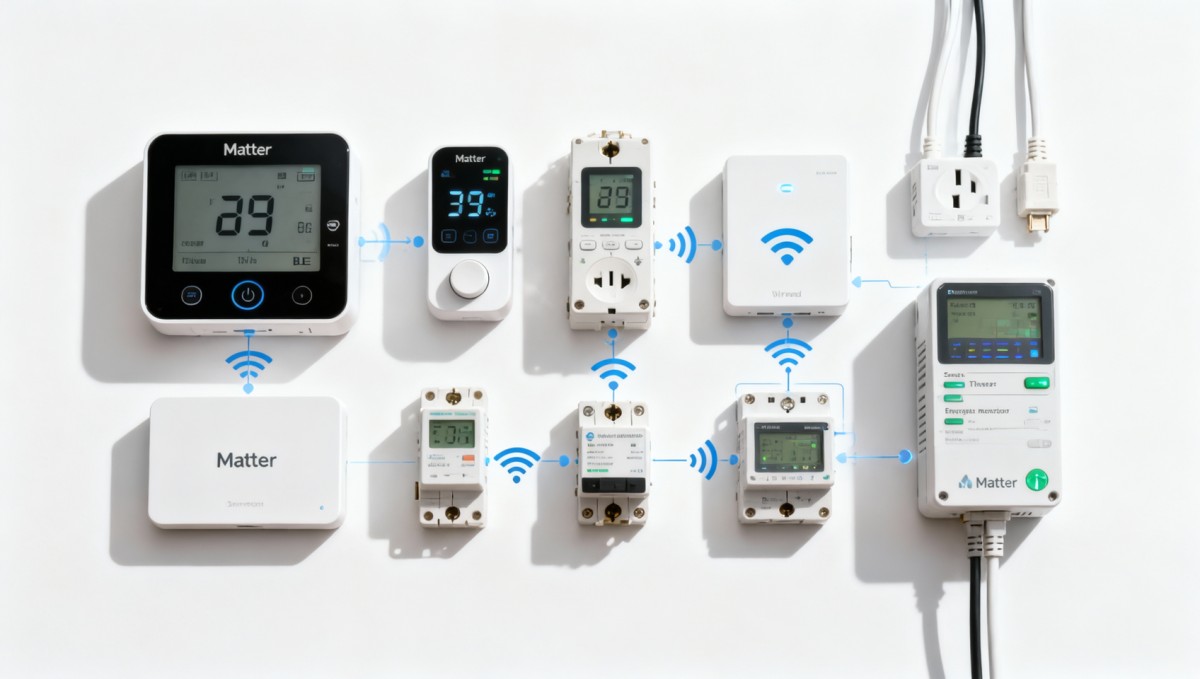
In renewable energy environments, a connected device is rarely isolated. A smart thermostat may affect HVAC demand response, a relay may influence battery storage schedules, and a sensor may feed data into broader building energy management logic. That is why checking Matter standard compatibility before you buy is not a consumer convenience issue alone. It is a procurement, interoperability, and operational continuity issue for solar-equipped buildings, smart campuses, distributed energy assets, and low-carbon retrofit projects.
Many vendors now label devices as “Matter compatible,” yet buyers often receive little detail on transport layer behavior, firmware maturity, controller support, or real-world network stability. In mixed environments using Thread, Wi-Fi, BLE, or bridged legacy protocols, vague claims can create expensive integration gaps. For operators, this may mean delayed commissioning within 2–4 weeks. For procurement teams, it may mean unexpected gateway costs. For business evaluators, it can undermine ROI assumptions tied to energy automation.
NexusHome Intelligence approaches this problem differently. NHI does not treat compatibility as a packaging label. It treats it as a measurable engineering condition. That includes checking whether a device supports the relevant Matter device type, whether it performs reliably in multi-node environments, whether latency remains acceptable under interference, and whether firmware updates preserve protocol compliance over time. In renewable energy and smart building settings, these details directly affect resilience and energy optimization.
For most B2B buyers, 3 questions matter most before placing volume orders: does it join the intended ecosystem, does it remain stable after deployment, and does it reduce operational complexity instead of adding it. Matter can help answer these questions, but only when compatibility is verified through testing, not assumed through brochures.
Where compatibility risk appears first
- During pilot rollout, when 5–20 devices behave well in a lab but fail under real building interference, metal enclosures, or dense wireless traffic.
- During integration, when the device exposes only part of the expected Matter cluster behavior, limiting automation logic or telemetry visibility.
- During maintenance, when firmware updates, controller changes, or border router changes affect pairing stability or command response time.
- During scale-up, when procurement shifts from small-batch validation to medium or large-volume deployment and hidden interoperability gaps become cost multipliers.
How to check Matter standard compatibility before purchase
A practical Matter compatibility review should combine standards awareness, technical validation, and procurement discipline. The first step is confirming what “compatible” actually means for the device category you plan to use. A smart plug, thermostat, occupancy sensor, smart lock, or energy-monitoring accessory may each expose different functional expectations. In a renewable energy workflow, the question is not only whether the device connects, but whether it supports the data or control points needed for load management, scheduling, and cross-platform automation.
The second step is checking the network path. Matter can operate over different transports, and transport choice affects deployment outcomes. Matter over Thread may suit low-power sensors in distributed control zones. Matter over Wi-Fi may fit mains-powered devices with higher bandwidth needs. Commissioning may also rely on BLE. Buyers should ask for a clear stack description, firmware version range, and controller environment used during validation. Without that, “Matter support” remains incomplete.
The third step is reviewing test evidence relevant to your site conditions. In energy-conscious facilities, a device that responds in a quiet lab may underperform in electrical rooms, utility corridors, inverter zones, or retrofit buildings with RF congestion. Useful checks include multi-hop latency range, reconnection behavior after power events, standby power draw, and command reliability over repeated cycles such as 500–1,000 switching events.
The fourth step is aligning protocol checks with procurement constraints. Commercial teams should confirm lead time, sample policy, firmware update process, version control, and whether the supplier can document compatibility changes over a 12–24 month product lifecycle. Matter readiness is not only a technical attribute. It is also a supply chain transparency issue.
A 5-point pre-purchase checklist
- Confirm the exact Matter device type and supported feature scope, not just a general compatibility statement.
- Ask whether the device has been tested with your target ecosystem, controller, hub, or border router combination.
- Review protocol latency benchmark data, reconnection time, and behavior during power interruptions or network congestion.
- Check energy-related metrics such as standby consumption, polling behavior, and any effect on battery life for low-power nodes.
- Verify supplier support for firmware maintenance, version traceability, and sample validation before volume commitment.
Why NHI’s method is useful here
NHI’s value lies in turning broad compatibility claims into measurable procurement criteria. Through connectivity and protocol benchmarking, hardware-level analysis, and energy-focused testing, NHI helps teams compare what matters operationally: response consistency, interference tolerance, mesh behavior, standby draw, and deployment risk. For renewable energy projects where automation supports carbon reduction goals, this evidence is often more useful than generic spec sheets.
What procurement teams should compare: marketing claims vs measurable indicators
The table below shows how procurement teams, operators, and business evaluators can translate Matter standard compatibility into tangible decision points. This is especially important in renewable energy projects, where connected devices may become part of peak-load control, HVAC optimization, occupancy-driven lighting, or distributed asset monitoring. A strong buying process compares verifiable indicators instead of relying on packaging language.
This comparison highlights a recurring problem in smart home hardware testing and commercial sourcing: a device may appear suitable at the catalog stage but fail on the indicators that actually drive project success. For renewable energy operators, the difference between a claim and a measured indicator can determine whether automation logic works during seasonal load shifts, tariff response periods, or occupancy-based optimization windows.
A second comparison is useful when choosing between device categories and deployment priorities. Some teams overfocus on upfront unit cost and under-evaluate integration and maintenance costs. In practice, hidden costs often appear in extra gateways, technician revisits, failed interoperability tests, and delayed acceptance.
Comparison table for common buying scenarios
Use the following matrix when reviewing smart devices for solar-enabled homes, energy retrofit projects, or commercial facilities that require cross-ecosystem interoperability and reliable protocol behavior.
For procurement teams, these scenario differences matter because the same device may be acceptable in a 10-unit pilot yet unsuitable in a 300-unit roll-out. NHI’s benchmarking mindset helps teams identify where that threshold changes, so buying decisions can be based on deployment reality rather than optimistic assumptions.
Which technical checks reduce sourcing risk the most?
When checking Matter standard compatibility before purchase, technical verification should focus on the failure points most likely to affect renewable energy operations. These are not only protocol-level concerns. They also include power stability, environmental conditions, and control reliability. For example, a smart relay in an energy management workflow should be evaluated for repeated switching endurance, standby consumption, and command response during network congestion. A sensor used in occupancy-based efficiency controls should be checked for battery life under realistic reporting intervals such as every 1 minute, 5 minutes, or event-driven mode.
A useful review framework contains at least 4 layers: protocol behavior, hardware robustness, energy impact, and lifecycle maintainability. Protocol behavior covers pairing, cluster support, response time, and recovery after interruption. Hardware robustness covers component quality, PCB consistency, and environmental suitability. Energy impact covers standby draw and reporting overhead. Lifecycle maintainability covers firmware updates, replacement handling, and version traceability across production lots.
For operators, the practical question is simple: will the device keep working when the building is busy, the wireless environment is noisy, and the energy strategy changes by season? For evaluators, a device must support predictable operational value over 12 months, 24 months, or longer. This is where independent smart home hardware testing and protocol latency benchmark data become decision tools, not just technical documents.
Because renewable energy systems often depend on coordinated control, weak devices can create hidden inefficiencies. A lagging occupancy sensor may leave lighting active longer than intended. An unstable thermostat may disrupt HVAC optimization. A poorly validated lock or access node may increase service calls in shared energy-efficient buildings. Each issue may seem small in isolation, but across dozens of zones or hundreds of devices, the operating cost accumulates.
Technical checks that deserve written confirmation
- Firmware revision control across sample and production batches, especially if purchase decisions are made after a pilot stage.
- Typical commissioning sequence and recovery path after reset, power loss, or border router replacement.
- Standby power range for mains-powered devices and expected maintenance interval for battery-powered devices.
- Environmental usage range appropriate for plant rooms, façades, retrofit spaces, or semi-conditioned technical areas.
- Evidence of interoperability testing in mixed-protocol environments where Thread, BLE, Wi-Fi, or existing gateways coexist.
Common warning signs
Be cautious when a supplier cannot explain the difference between claimed Matter support and demonstrated controller compatibility, cannot identify the tested firmware branch, or avoids discussing latency and recovery behavior. In B2B renewable energy projects, unclear technical answers often become field problems later. Early verification is usually cheaper than post-installation remediation.
FAQ: buying, testing, and deploying Matter-ready devices
The questions below reflect common search intent from buyers, operators, and business evaluators who need clearer procurement decisions for renewable energy and smart building applications. They are also useful as internal review prompts before sample approval or tender comparison.
How do I know if a Matter device is really suitable for an energy management project?
Start by mapping the device role to the control logic you actually need. If the device will influence HVAC, lighting, access schedules, or load shifting, confirm not only that it joins a Matter ecosystem, but that it exposes the required control and status behavior. Ask for protocol test context, supported functions, firmware details, and any available smart home hardware testing results related to response time, reconnection, and stable reporting under building-scale use.
What should procurement teams request during the sample stage?
At minimum, request a bill of supported functions, commissioning steps, firmware version reference, target controller compatibility notes, and expected sample lead time, often around 7–15 days depending on stock and configuration. If the project may scale, request information on batch consistency, update process, and any change-control mechanism that protects you from silent compatibility differences between pilot and volume orders.
Are Matter-compatible devices always the best replacement for legacy Zigbee or Z-Wave devices?
Not always. Matter can improve interoperability, but replacement decisions should consider current infrastructure, migration cost, border router availability, and device role. In some retrofit projects, a phased approach works better: keep proven legacy nodes where replacement adds little value, and prioritize Matter-ready devices for new control points, user-facing products, or zones where cross-platform integration matters most. Cost, disruption, and lifecycle support should be evaluated together.
What are the most common buying mistakes?
The most common mistakes are accepting generic compatibility claims, ignoring firmware traceability, testing only in quiet lab conditions, and comparing unit price without including integration and maintenance cost. Another frequent issue is underestimating standby energy use in always-on devices. In renewable energy programs, a small inefficiency multiplied across dozens or hundreds of endpoints can reduce the value of the automation strategy over time.
Why choose NHI for Matter compatibility evaluation and sourcing decisions
NexusHome Intelligence is built for teams that need more than vendor language. NHI acts as a data-driven engineering filter between hardware suppliers and global buyers, with particular relevance for connected environments where protocol integrity, energy behavior, and supply chain transparency all affect project success. In renewable energy and smart building contexts, that means procurement teams can move from assumption-based buying to benchmark-based evaluation.
NHI’s five-pillar approach is especially useful when a buying decision crosses several technical domains at once. Matter compatibility may need to be assessed alongside mesh performance, low-power behavior, standby consumption, access control reliability, or hardware-level component quality. Instead of treating these as separate risks, NHI helps structure them into one sourcing view that procurement, operations, and commercial evaluation teams can use together.
If you are comparing suppliers or preparing a pilot, you can consult NHI on parameter confirmation, product selection logic, protocol latency benchmark priorities, sample validation scope, expected delivery windows, compatibility risk points, and certification-related documentation questions. This is useful whether you are reviewing 1 product family or building a shortlist across 3–5 categories.
Contact NHI when you need practical support on Matter standard compatibility before purchase: clarify protocol claims, compare device options for smart energy scenarios, review delivery and firmware consistency risks, define sample testing criteria, or discuss custom evaluation priorities for smart building and renewable energy deployments. The goal is straightforward: reduce sourcing uncertainty, improve deployment readiness, and make procurement decisions based on evidence that holds up in the field.
Protocol_Architect
Dr. Thorne is a leading architect in IoT mesh protocols with 15+ years at NexusHome Intelligence. His research specializes in high-availability systems and sub-GHz propagation modeling.
Related Recommendations
- Dr. Aris ThorneMatter 1.4 Released: Chinese MCU Vendors Launch SDKs
- Dr. Aris ThorneWhy some Matter devices fail real home setup tests
- Dr. Aris ThorneMatter protocol data: what actually matters in 2026?
- Dr. Aris ThorneHow to check Matter standard compatibility before you buy
- Dr. Aris ThorneHVAC Integration With Matter: What to Check
- Dr. Aris ThorneHow to Vet a Tuya Curtain Motor Wholesaler
- Dr. Aris ThorneOffline Voice Control Modules: When They Fit Best
- Dr. Aris ThorneMulti Protocol Gateway Integration: Common Traps
- Dr. Aris ThorneDo You Really Need a Local Control Hub
- Dr. Aris ThorneHow to Read a Matter Compatibility Chart
Analyst