
Why Hardware Compliance Inquiries Stall So Often
author
Why do hardware compliance inquiries stall so often? In most renewable-energy and smart-home projects, the problem is not a lack of supplier claims—it is a lack of verifiable evidence. Teams ask for compliance documents, protocol proof, energy-performance data, test reports, and manufacturing traceability, but the answers arrive slowly, incompletely, or in formats that do not support procurement decisions. The result is familiar: sourcing delays, rising project risk, repeated engineering reviews, and uncertainty just when buyers need clarity most.
For information researchers, operators, procurement teams, and business decision-makers, the core issue is simple: a hardware compliance inquiry stalls when commercial promises move faster than technical validation. In renewable energy, where smart controllers, relays, sensors, gateways, batteries, and connected building devices must work reliably across fragmented IoT ecosystems, incomplete compliance data can block deployment, delay approvals, and increase total cost. That is why a data-driven approach to IoT hardware benchmarking, protocol verification, and supplier transparency matters before the purchase order—not after field failures appear.
What usually causes a hardware compliance inquiry to slow down?
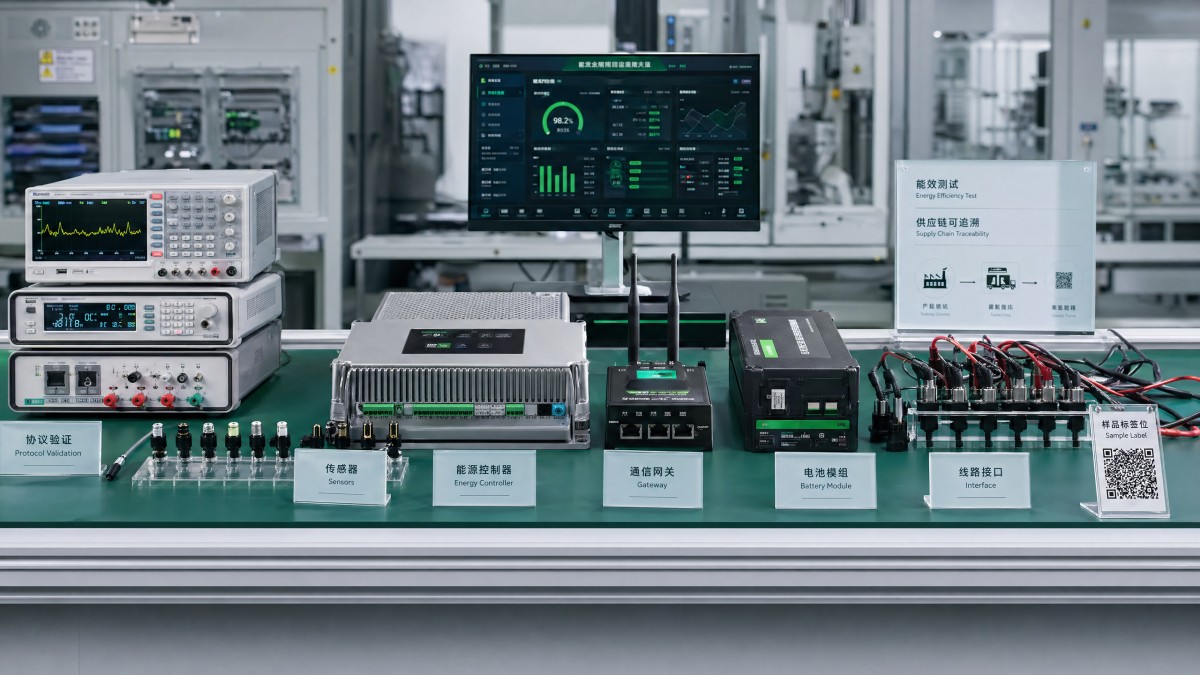
A stalled compliance inquiry rarely comes from one single mistake. More often, it is the result of several gaps appearing at the same time:
- Unclear documentation scope: Buyers ask for “compliance,” but suppliers do not know whether the request refers to RF certification, environmental testing, safety standards, protocol interoperability, energy efficiency, cybersecurity, or factory quality controls.
- Marketing language replacing engineering evidence: Phrases such as “Matter compatible,” “low power,” or “industrial grade” often arrive without latency data, standby power figures, or real-world interoperability results.
- Fragmented accountability: The sales team responds first, engineering answers later, and the factory QA team may not be aligned with either one.
- Protocol complexity: Devices in renewable-energy and smart-home environments often depend on Zigbee, Thread, BLE, Wi-Fi, Modbus, or emerging Matter ecosystems. A compliance answer that ignores cross-protocol behavior is incomplete.
- Missing test context: A supplier may provide a pass report, but not explain under what conditions the device was tested, how recent the test is, or whether it reflects the production version.
- Poor traceability: When component revisions, firmware versions, or PCBA changes are not tracked clearly, even valid documents can lose decision value.
In practice, this means the inquiry does not truly “stall” because no one replied. It stalls because the replies fail to reduce risk enough for procurement, engineering, or management to move forward.
Why this problem is especially serious in renewable-energy and connected-building projects
Renewable-energy deployments are less forgiving than many standard consumer-electronics projects. Smart relays, controllers, gateways, monitoring units, and climate systems often operate in environments where uptime, energy accuracy, protocol reliability, and long device life directly affect project economics.
For example, if a smart energy controller claims compatibility but does not provide dependable protocol compliance evidence, the consequences can include:
- Delayed integration with energy management systems
- Unexpected field service costs
- Higher standby power than planned, undermining efficiency goals
- Communication failures in dense building environments
- Battery performance below expected service intervals
- Procurement disputes over whether the supplied product matches the approved sample
For enterprise buyers and project leaders, this is not only a technical inconvenience. It becomes a business risk. Stalled inquiries extend sourcing cycles, weaken confidence in suppliers, and make it harder to compare vendors fairly. In fast-moving renewable-energy programs, delays in verification can delay revenue, deployment milestones, and regulatory readiness.
What target readers really want to know before they trust a supplier
Although different stakeholders ask different questions, their priorities are closely connected.
Information researchers want to know whether claims are supported by measurable evidence. They need a way to separate polished brochures from technically credible manufacturers.
Operators and technical users care about real-world reliability. They want to know whether the hardware will actually work in daily conditions, under interference, load variation, temperature change, and long service periods.
Procurement professionals need comparable data. Their concern is not just whether a document exists, but whether it is complete enough to support supplier qualification, reduce rework, and avoid post-purchase disputes.
Business decision-makers focus on risk, ROI, and scalability. They want to know whether a vendor can support growth, maintain consistent quality, and deliver hardware that will not create costly integration or maintenance problems later.
Across all these groups, the same underlying concern appears: Can this supplier prove performance, compliance, and consistency in a way that supports a confident buying decision?
How to tell whether a compliance inquiry is stuck for the wrong reasons
Not every slow inquiry indicates a bad supplier. Some products genuinely require deeper verification. But certain warning signs suggest the process is failing structurally rather than simply taking time:
- The supplier sends certificates but cannot map them to the exact SKU, firmware version, or manufacturing batch.
- The answers come from sales only, with no engineering ownership.
- Interoperability claims are broad, but no benchmark data is available for latency, packet stability, or multi-node performance.
- Power-consumption claims are presented without test methodology.
- Factory quality claims are strong, but there is no traceable PCBA, SMT, or component-level consistency information.
- Security or privacy claims are highlighted, but no meaningful audit or edge-processing validation is provided.
- Every follow-up question triggers a fresh delay because the documentation was never structured for serious technical review.
When these patterns appear, the issue is usually not that the buyer is asking too much. The issue is that the supplier’s evidence chain is weak.
What data actually helps buyers move from inquiry to decision
If the goal is to prevent compliance inquiries from stalling, the most useful content is not generic certification language. Buyers need structured, decision-ready evidence. In this sector, the most valuable proof typically includes:
- Protocol verification data: not just “supports Matter” or “works with Zigbee,” but measured behavior in realistic network conditions.
- Energy performance metrics: standby power, discharge behavior, energy monitoring accuracy, and thermal stability.
- Interoperability benchmarks: especially important where renewable-energy devices connect with smart building, HVAC, access, or monitoring systems.
- Component and manufacturing consistency: evidence at the PCB, sensor, battery, and assembly level.
- Traceable documentation: each report tied to model number, firmware revision, test date, and production relevance.
- Stress-test results: proof that the hardware performs under interference, heavy traffic, environmental shifts, or long-duration use.
This is where smart home hardware testing and independent benchmarking become especially useful. When buyers can compare suppliers through hard data instead of claim language, qualification moves faster and with fewer internal disagreements.
Why independent benchmarking matters more than supplier self-description
Many stalled inquiries are caused by a credibility gap. Suppliers may not be intentionally misleading, but self-reported information often lacks the consistency or depth required by cross-functional buying teams.
Independent verification helps close that gap by translating technical performance into standardized evidence. For example:
- A claimed low-power module becomes more credible when standby consumption is benchmarked down to actual measurable levels.
- A claimed Matter device becomes more useful to buyers when latency and network behavior are tested across realistic smart-building conditions.
- A claimed “trusted factory” becomes more believable when manufacturing quality is linked to repeatable technical outcomes rather than presentation materials.
For buyers looking for verified IoT manufacturers or trusted smart home factories, independent benchmarking acts as an engineering filter. It helps enterprises distinguish between suppliers that are merely visible in the market and suppliers that are genuinely capable of meeting technical and operational requirements.
How NexusHome Intelligence helps reduce procurement risk before it grows
NexusHome Intelligence is positioned around a problem that many global buyers already feel: too much supplier messaging, too little usable technical truth. In fragmented IoT and renewable-energy ecosystems, NHI’s value is not in repeating industry buzzwords but in organizing evidence that helps teams qualify hardware more confidently.
Its model is especially relevant when compliance inquiries stall because NHI focuses on the areas where uncertainty is usually highest:
- Connectivity and protocol benchmarking: measuring actual behavior rather than accepting compatibility claims at face value
- Security and access verification: evaluating performance, processing, and compliance beyond headline statements
- Energy and climate control metrics: supporting carbon-conscious procurement with data that matters operationally
- Component-level hardware analysis: helping teams understand whether product quality is sustainable beyond the sample unit
- Supply-chain transparency: turning hidden manufacturing capability into usable procurement intelligence
For decision-makers, this means fewer blind spots before supplier selection. For procurement teams, it means stronger comparison criteria. For engineers and operators, it means a better chance that the chosen device will perform as expected in the field.
A practical checklist for preventing compliance inquiries from stalling
If your team is evaluating hardware for renewable-energy or smart-home deployment, these steps can improve response quality and shorten review cycles:
- Define compliance precisely. Separate certification, protocol compatibility, power performance, security, and manufacturing quality into distinct requests.
- Ask for data tied to exact versions. Require model numbers, firmware revisions, and test dates.
- Request real performance metrics. Do not stop at “supported” or “certified.” Ask how the device behaves under actual conditions.
- Check whether documentation is decision-ready. Can procurement, engineering, and management all use it, or only one department?
- Verify supply-chain consistency. A good sample is not enough if production quality cannot be demonstrated.
- Use third-party benchmarks where possible. Independent evaluation reduces internal debate and speeds alignment.
- Watch for repeated answer delays. Slow responses to simple traceability questions often indicate deeper process weakness.
This checklist does more than improve communication. It raises the quality threshold of the entire sourcing process.
Conclusion: stalled compliance inquiries are usually a data problem, not just a communication problem
Hardware compliance inquiries stall so often because too many sourcing decisions still depend on incomplete proof. In renewable-energy and connected-building projects, that creates avoidable delays, uncertain integration outcomes, and procurement risk that grows quietly until it becomes expensive.
The solution is not more marketing language or more generic documentation. It is better evidence: measurable protocol behavior, verified energy metrics, component-level quality signals, and transparent supply-chain validation. For teams trying to identify reliable suppliers in a fragmented IoT market, that is the difference between a slow inquiry and a confident decision.
When buyers use structured IoT supply chain metrics, independent IoT hardware benchmarking, and credible test-based evaluation, they are far more likely to identify manufacturers that can support long-term performance—not just pass the first sales conversation. In that sense, the best way to prevent a compliance inquiry from stalling is to replace assumptions with engineering truth.
Protocol_Architect
Dr. Thorne is a leading architect in IoT mesh protocols with 15+ years at NexusHome Intelligence. His research specializes in high-availability systems and sub-GHz propagation modeling.
Related Recommendations
- Dr. Aris ThorneWhat an IoT Supply Chain Index Actually Tells You
- Dr. Aris ThorneWhen an IoT OEM Compliance Roster Leaves Gaps
- Dr. Aris ThorneWhy Hardware Compliance Inquiries Stall So Often
- Dr. Aris ThorneWhen It Makes Sense to Contact NHI Analysts
- Dr. Aris ThorneSmart Home Hardware Testing Failures That Repeat
- Dr. Aris ThorneShould You Submit IoT Benchmark Data Early?
- Dr. Aris ThorneWhat Counts as a Real Hardware Testing Authority?
- Dr. Aris ThorneWhy IoT Engineering Truth Is Hard to Find
- Dr. Aris ThorneWhat a Smart Home Compliance Laboratory Checks First
- Dr. Aris ThorneCan an IoT Independent Think Tank Stay Neutral?
Analyst