
Smart Home Hardware Testing Failures That Repeat
author
Why do the same smart home hardware testing failures keep resurfacing? In most cases, the answer is not that engineers do not know how to test. It is that testing is often too narrow, too vendor-led, too short-term, or disconnected from real deployment conditions. As a result, the same issues return across product cycles: Matter devices that pass basic certification but fail in mixed ecosystems, Zigbee networks that degrade under interference, Wi-Fi modules that look stable in the lab but collapse in dense buildings, and HVAC controllers that miss energy-saving targets once installed. For procurement teams, operators, and enterprise decision-makers, the practical takeaway is clear: recurring failures are usually a sign of weak verification logic, not isolated bad luck.
For organizations sourcing smart home and IoT hardware in the renewable energy and smart building space, these repeated defects create direct commercial risk. They delay rollouts, raise maintenance costs, reduce user trust, and undermine energy optimization goals. The most useful way to approach the problem is not to ask whether a product claims compatibility, efficiency, or security. It is to ask what was measured, under which conditions, against which benchmarks, and with what repeatability. That is where independent IoT hardware benchmarking becomes far more valuable than brochures.
Why the same smart home hardware testing failures keep repeating
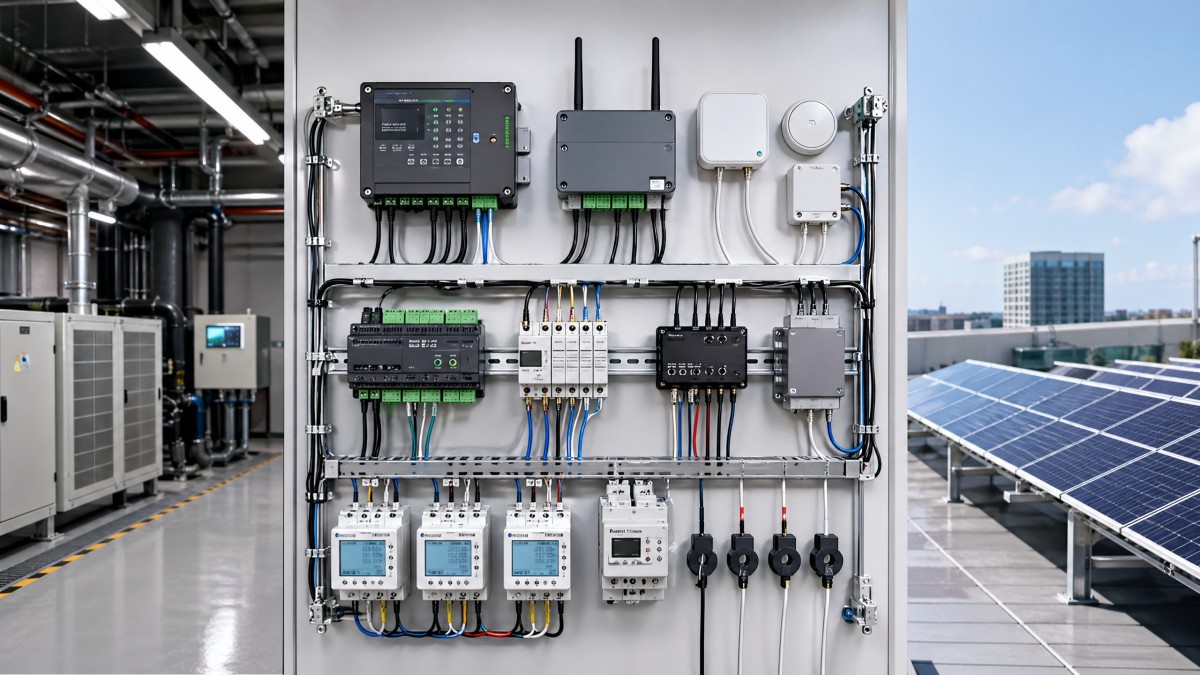
The core reason repeated failures persist across the IoT supply chain is that many test programs are designed to confirm claims rather than challenge them. In other words, they validate a best-case scenario instead of exposing failure boundaries. This creates a dangerous gap between lab success and field performance.
Several patterns appear again and again:
- Protocol testing is too shallow. A device may show that it “works with Matter” or supports Zigbee 3.0, but that does not mean it performs reliably in a large, noisy, multi-vendor environment.
- Power testing is too short-term. Battery and standby consumption are often measured under ideal conditions, not through long discharge curves, temperature swings, or repeated wake cycles.
- Interoperability testing is incomplete. Devices may be tested within one vendor stack, not across real combinations of hubs, border routers, controllers, relays, sensors, and gateways.
- Stress conditions are unrealistic. Congested apartment blocks, commercial buildings, reflective materials, RF interference, and unstable power conditions are often missing from standard test setups.
- Pass/fail reporting hides performance spread. Buyers rarely see latency variance, packet loss rates, drift over time, false rejection rates, or error thresholds under edge conditions.
When these gaps are left unaddressed, the same failure types reappear across OEM and ODM programs, even when the branding changes.
What procurement teams, operators, and decision-makers care about most
Although different readers have different responsibilities, their concerns overlap more than they seem.
Information researchers want to know which failure patterns are common, which metrics matter, and how to separate technical facts from marketing language.
Users and operators care about day-to-day stability: dropped connections, delayed commands, battery replacement frequency, lock or sensor reliability, and how much troubleshooting the system requires.
Procurement teams focus on sourcing risk. They need to know whether a supplier can deliver consistent hardware quality, whether the performance data is independently verified, and whether hidden integration costs will erase any upfront price advantage.
Enterprise decision-makers care about business impact: deployment risk, maintenance burden, customer complaints, failed SLAs, energy performance gaps, compliance exposure, and return on investment.
For all four groups, the most important question is not “Is this product advanced?” It is “Will it keep performing under real conditions, across time, at scale?”
Which hardware testing failures repeat most often in smart home and IoT deployments
Some failure categories recur so consistently that they should be treated as predictable procurement risks.
1. Matter compatibility that breaks in mixed ecosystems
Matter has improved interoperability expectations, but many failures still emerge in commissioning, multi-admin behavior, device state synchronization, and Thread border router interactions. A device can pass a narrow compatibility check and still behave poorly when multiple platforms and firmware versions are present.
What to verify: onboarding success rates, command latency, state consistency after network disruption, firmware rollback behavior, and multi-vendor interaction logs.
2. Zigbee mesh capacity collapse under interference
Zigbee networks often perform well in small demos but weaken in dense RF environments. Repeated failures include routing instability, packet retries, device drop-off, and unpredictable latency as node count grows.
What to verify: mesh performance at different node densities, packet delivery rates under interference, route recovery time, and performance near Wi-Fi-heavy channels or metal-rich structures.
3. Wi-Fi IoT modules that fail in high-density buildings
Wi-Fi 6 and Wi-Fi 7 messaging sounds impressive, but IoT modules deployed in apartments, hotels, campuses, or commercial buildings often encounter congestion, roaming issues, and power draw that is higher than expected.
What to verify: throughput stability is less important than latency consistency, reconnection time, coexistence behavior, and energy consumption during active and idle periods.
4. HVAC automation controllers that underperform after installation
In the renewable energy and energy management context, HVAC automation is often sold on efficiency gains. Yet repeated failures appear when PID tuning is not robust, sensors drift, relays consume more standby power than expected, or control logic cannot handle occupancy and weather variability.
What to verify: control accuracy over time, sensor drift, standby power, load response, and actual peak-load shifting performance in realistic operating cycles.
5. Security hardware that passes demos but fails edge cases
Smart locks, biometric access systems, and vision-enabled security devices frequently show polished demo performance while struggling in weather variation, low light, network disruption, or user variability.
What to verify: false rejection rates, false acceptance rates, offline behavior, local processing speed, and recovery performance after failed authentication or power interruption.
6. Battery claims that do not survive real usage patterns
One of the most common repeated defects in smart home hardware is battery performance that falls far below the brochure claim. Temperature, reporting frequency, poor sleep-state optimization, and radio retries can dramatically shorten lifetime.
What to verify: discharge curves, current draw across modes, battery degradation over time, and performance under realistic wake, transmit, and retry cycles.
How to identify whether a test result is actually useful
Not all test data helps buyers make good decisions. Useful testing has a few defining characteristics.
- It measures under realistic conditions. Results should reflect interference, scale, physical barriers, climate variation, and mixed-device environments.
- It reports numeric performance, not only pass/fail status. Buyers need latency, error rates, drift, standby consumption, and recovery times.
- It shows repeatability. One successful run proves very little. Reliable benchmarking requires repeated cycles and documented variance.
- It includes failure thresholds. Knowing where a device stops performing is often more important than knowing that it worked once.
- It is vendor-independent or transparently structured. If the methodology is hidden, the conclusions are less trustworthy.
This is why independent IoT hardware benchmarking matters. It helps global buyers compare products on engineering evidence rather than broad marketing categories.
How recurring failures translate into business risk
Repeated testing failures are not only technical annoyances. They carry measurable business consequences.
- Higher total cost of ownership: more truck rolls, support calls, replacements, and firmware patching.
- Deployment delays: integration bottlenecks and site-level troubleshooting slow down rollouts.
- Energy performance loss: in smart climate and renewable energy systems, weak controllers and inaccurate sensing reduce optimization gains.
- Supplier switching costs: once a weak component is embedded in a project, replacing it later becomes expensive.
- Brand and trust damage: repeated user-facing failures reduce confidence among clients, residents, operators, and channel partners.
For enterprise decision-makers, this means low purchase price should never be treated as a standalone success metric. If the device creates hidden operational drag, the sourcing decision may be economically wrong even if the initial quote looks attractive.
What a better smart home hardware evaluation process looks like
If your team wants to reduce sourcing risk, a stronger evaluation process should include both engineering and commercial checkpoints.
Start with scenario-based testing
Define the actual deployment context first: residential towers, commercial facilities, mixed retrofits, low-power sensor networks, or energy management systems. Test methods should mirror real usage, not generic vendor examples.
Compare protocol claims against measured behavior
Do not stop at compatibility labels. Measure commissioning reliability, latency, network stability, multi-node behavior, and recovery after faults.
Stress-test power and thermal performance
For battery devices and energy-sensitive controllers, evaluate long-term current draw, standby losses, thermal behavior, and degradation across climate conditions.
Inspect supply chain consistency
One strong engineering sample does not guarantee stable production. Buyers should look for manufacturing consistency, SMT quality, component traceability, firmware control discipline, and change management transparency.
Use benchmark data in supplier selection
Verified IoT manufacturers should be assessed not only by features and price, but by measurable performance spread, documented failure modes, and responsiveness when benchmark gaps are identified.
Why data-led benchmarking matters more as ecosystems become more complex
As the smart home and IoT sectors expand, hardware no longer operates in isolation. Devices now sit inside larger ecosystems that include renewable energy controls, building automation, edge security, and data-driven facility management. In that environment, small hardware weaknesses can trigger wider operational problems.
That is why organizations increasingly need an engineering filter between product claims and procurement decisions. Independent benchmarking can reveal which OEMs and ODMs are delivering real protocol stability, low-power discipline, security integrity, and manufacturing consistency. It also helps uncover “hidden champions” in the supply chain that may be overlooked by brand-driven sourcing habits.
For teams evaluating smart home OEM data, this approach creates a practical advantage: faster technical due diligence, lower sourcing uncertainty, and stronger confidence that deployed systems will perform as expected.
Conclusion
Smart home hardware testing failures repeat because too many products are evaluated for marketability instead of field reliability. The same defects keep returning in Matter compatibility, Zigbee mesh scaling, Wi-Fi stability, battery life, security accuracy, and HVAC control because testing often ignores real-world stress, long-term behavior, and mixed-ecosystem complexity.
For researchers, operators, procurement teams, and enterprise leaders, the right response is to shift from claims-based evaluation to evidence-based verification. Ask what was measured, how it was measured, under what conditions, and whether the results are repeatable. In a fragmented IoT landscape, hard data is no longer a technical luxury. It is the foundation for safer sourcing, better system performance, and more reliable smart energy outcomes.
Protocol_Architect
Dr. Thorne is a leading architect in IoT mesh protocols with 15+ years at NexusHome Intelligence. His research specializes in high-availability systems and sub-GHz propagation modeling.
Related Recommendations
- Dr. Aris ThorneWhat an IoT Supply Chain Index Actually Tells You
- Dr. Aris ThorneWhen an IoT OEM Compliance Roster Leaves Gaps
- Dr. Aris ThorneWhy Hardware Compliance Inquiries Stall So Often
- Dr. Aris ThorneWhen It Makes Sense to Contact NHI Analysts
- Dr. Aris ThorneSmart Home Hardware Testing Failures That Repeat
- Dr. Aris ThorneShould You Submit IoT Benchmark Data Early?
- Dr. Aris ThorneWhat Counts as a Real Hardware Testing Authority?
- Dr. Aris ThorneWhy IoT Engineering Truth Is Hard to Find
- Dr. Aris ThorneWhat a Smart Home Compliance Laboratory Checks First
- Dr. Aris ThorneCan an IoT Independent Think Tank Stay Neutral?
Analyst