
When It Makes Sense to Contact NHI Analysts
author
When sourcing connected hardware for renewable energy buildings, it makes sense to contact NHI analysts when marketing claims are not enough. As an IoT independent think tank and smart home compliance laboratory, NHI helps buyers and decision-makers verify Matter protocol data, IoT hardware benchmarking results, and trusted smart home factories through hard evidence. From an IoT supply chain audit to a hardware compliance inquiry, NHI brings engineering truth to complex procurement decisions.
When should you contact NHI analysts?
The short answer is this: contact NHI analysts when a purchasing, engineering, or deployment decision depends on technical truth rather than supplier promises. In renewable energy projects, that moment often comes earlier than expected.
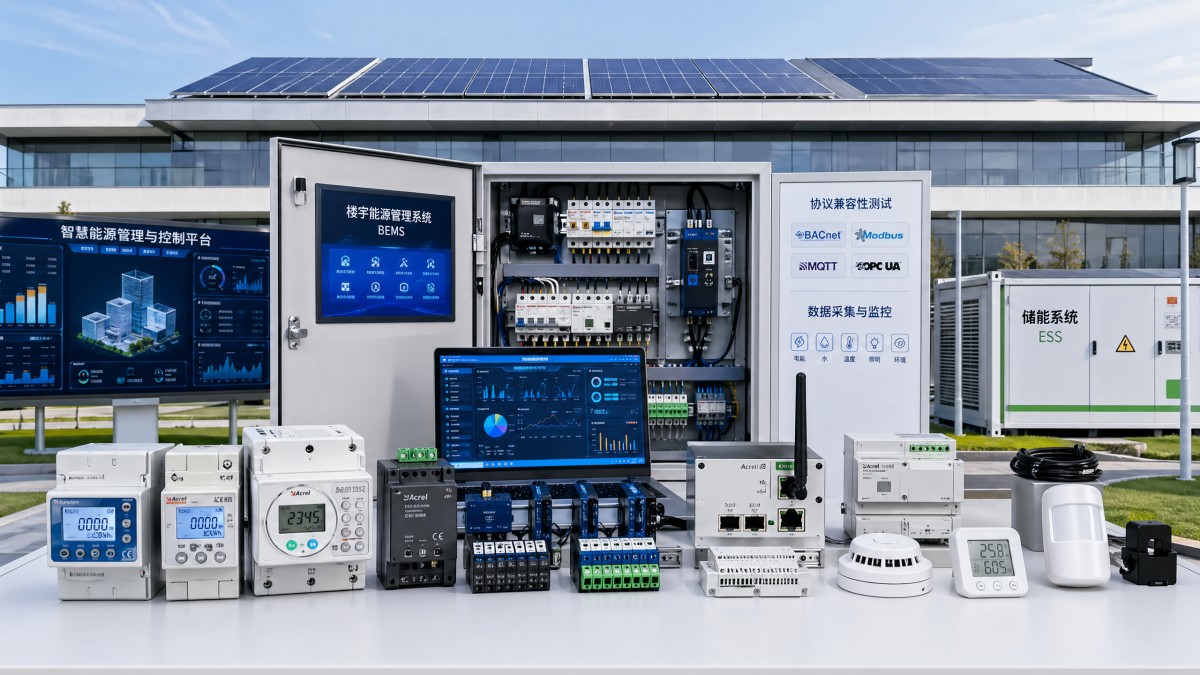
If you are evaluating smart meters, relays, HVAC controllers, gateways, batteries, sensors, or protocol-based building devices for energy-efficient homes, commercial sites, or distributed energy systems, a wrong hardware decision can create long-term cost, reliability, and compliance problems. That is where an independent analyst team adds value.
It usually makes sense to involve NHI when:
- different vendors make similar claims, but their real performance is unclear;
- you need verification of Matter, Thread, Zigbee, BLE, Wi-Fi, or mixed-protocol compatibility;
- your team is sourcing from unfamiliar OEM or ODM factories and needs a trusted technical filter;
- energy performance, standby power, latency, battery life, or long-term drift will affect ROI;
- an internal team needs evidence to support procurement approval or executive sign-off;
- you want to reduce supply chain risk before scaling a renewable energy or smart building rollout.
For most readers, the core question is not whether analysis is useful. It is whether independent analysis can prevent expensive mistakes. In many cases, the answer is yes.
What problems are renewable energy buyers and decision-makers really trying to solve?
Target readers in this space are rarely looking for general smart home commentary. They are usually trying to solve a concrete decision problem.
Information researchers want to know which data can be trusted. Operators want to know whether devices will actually work in real environments. Procurement teams want to avoid weak suppliers, hidden failure rates, and unclear specifications. Enterprise decision-makers want to understand business risk, deployment confidence, and whether a product or supplier is worth backing at scale.
In renewable energy and energy-smart buildings, these concerns become more serious because hardware is tied to operational efficiency. A small issue in communication stability, relay standby power, sensing accuracy, or protocol compliance can affect load shifting, HVAC optimization, occupancy automation, battery management, or power monitoring quality.
The most common concerns include:
- Will the device integrate reliably into an existing building or energy ecosystem?
- Is the claimed protocol support real, partial, or unstable under load?
- Do benchmark results reflect lab conditions only, or actual use in dense environments?
- Can this supplier deliver consistent quality beyond a sample batch?
- What hidden engineering risks could create field failures after deployment?
- Is the lower upfront price worth the lifecycle risk?
These are exactly the areas where independent benchmarking, compliance review, and factory-level technical validation matter.
Situations where contacting NHI makes practical business sense
Not every purchase needs outside analysis. But several scenarios strongly justify it.
1. Before selecting hardware for a large rollout
If your organization is preparing to deploy connected controls across multiple renewable energy buildings, pilot data is not enough. You need to know whether devices will remain stable across varying signal conditions, firmware versions, and mixed ecosystems. NHI can help validate whether shortlisted hardware is ready for scale.
2. When protocol claims affect procurement decisions
Many vendors say a product “supports Matter” or “works with Zigbee,” but support quality can vary widely. For energy automation systems, partial compliance can lead to commissioning delays, integration failure, or poor user experience. Contacting NHI is sensible when protocol performance is central to your buying decision.
3. When comparing OEM/ODM suppliers
Factories may look similar on paper, especially in catalog-driven sourcing. NHI helps reveal which manufacturers have real engineering discipline, repeatable SMT quality, stronger component selection, and better technical integrity. That can be especially valuable when entering new supply markets.
4. When energy efficiency claims need proof
In renewable energy applications, power consumption is not a side issue. Standby load, discharge curves, control precision, and sensor drift all affect long-term efficiency. If your project economics depend on measurable energy performance, independent verification is worth considering.
5. When internal stakeholders need evidence
Sometimes the challenge is not choosing a device but justifying that choice. Procurement, engineering, compliance, and executive teams often need a shared evidence base. An NHI report or technical review can help align internal decisions around verifiable data instead of assumptions.
What kind of value do NHI analysts provide beyond supplier datasheets?
The main value is not “more information.” It is better decision information.
Supplier brochures are designed to sell. NHI analysis is designed to verify. That difference matters when a product will be embedded into critical building, climate, or energy-control environments.
NHI’s role is especially relevant in areas such as:
- Protocol verification: measuring actual behavior of Matter, Thread, Zigbee, Z-Wave, BLE, and Wi-Fi devices under real conditions;
- Hardware benchmarking: testing latency, throughput, battery behavior, standby power, and long-term reliability indicators;
- Factory assessment: identifying hidden champions and distinguishing technically capable manufacturers from marketing-heavy suppliers;
- Compliance-oriented review: helping buyers assess whether products are suitable for operational, interoperability, and regional requirements;
- Risk reduction: exposing problems before contracts, integration work, or mass deployment lock them in.
For a renewable energy buyer, this can translate into fewer field failures, more accurate forecasting, faster vendor shortlisting, and better confidence in procurement strategy.
How NHI supports renewable energy and smart building use cases
Although NHI’s expertise spans the broader IoT and smart home ecosystem, its analytical value is highly relevant to renewable energy environments where connected hardware directly influences performance and sustainability outcomes.
Examples include:
- verifying smart relays and controllers used in energy load management;
- benchmarking HVAC automation components used to reduce building energy waste;
- evaluating metering and monitoring hardware for demand response or peak-load shifting;
- checking sensor reliability in climate control, occupancy response, or distributed system monitoring;
- reviewing gateway and edge device stability in multi-protocol energy ecosystems;
- assessing battery-powered devices where maintenance cycles and degradation risks matter.
In these use cases, technical underperformance can quietly destroy the expected savings of an otherwise well-designed project. That is why independent benchmarking matters more in energy-sensitive deployments than in simple consumer device buying.
How to know if your team should reach out now or later
A good rule is to contact NHI analysts before uncertainty becomes a deployment problem.
You should probably reach out now if:
- you are narrowing suppliers and need a technical tie-breaker;
- your team has concerns about interoperability or protocol credibility;
- the project is large enough that a wrong choice would be expensive;
- you need external validation for an investment, sourcing, or compliance decision;
- there is pressure to move fast, but internal confidence in the data is low.
You may choose to wait if the purchase is low-risk, the hardware is non-critical, or you already have high-confidence field data from a trusted supplier. But in strategic sourcing, especially across unfamiliar smart home or IoT manufacturing channels, delay often means learning too late.
What to prepare before contacting NHI analysts
To get useful guidance faster, it helps to organize a few things internally first.
- Your application context: residential energy system, commercial smart building, HVAC automation, demand response, access control, or another use case;
- Your shortlisted products or suppliers: including claimed protocols, functions, and deployment scale;
- Your decision criteria: interoperability, standby power, security, latency, battery life, manufacturing quality, or compliance risk;
- Your constraints: timeline, budget, region, certification requirements, or installation environment;
- Your main uncertainty: whether the concern is product performance, factory capability, ecosystem fit, or long-term reliability.
The clearer the question, the more actionable the analysis becomes.
Final takeaway
It makes sense to contact NHI analysts when your decision carries technical, financial, or operational consequences that marketing language cannot resolve. In renewable energy and connected building projects, this often means verifying whether hardware will truly deliver on interoperability, efficiency, reliability, and supplier credibility.
NHI is valuable because it sits between global manufacturers and buyers as an independent engineering filter. When protocol claims, energy performance, hardware quality, or factory trustworthiness are central to a decision, independent evidence can prevent costly mistakes and improve procurement confidence.
If your team is choosing connected hardware for serious deployment—not just browsing options—this is usually the point where analyst support becomes a practical advantage rather than an optional extra.
Protocol_Architect
Dr. Thorne is a leading architect in IoT mesh protocols with 15+ years at NexusHome Intelligence. His research specializes in high-availability systems and sub-GHz propagation modeling.
Related Recommendations
- Dr. Aris ThorneWhat an IoT Supply Chain Index Actually Tells You
- Dr. Aris ThorneWhen an IoT OEM Compliance Roster Leaves Gaps
- Dr. Aris ThorneWhy Hardware Compliance Inquiries Stall So Often
- Dr. Aris ThorneWhen It Makes Sense to Contact NHI Analysts
- Dr. Aris ThorneSmart Home Hardware Testing Failures That Repeat
- Dr. Aris ThorneShould You Submit IoT Benchmark Data Early?
- Dr. Aris ThorneWhat Counts as a Real Hardware Testing Authority?
- Dr. Aris ThorneWhy IoT Engineering Truth Is Hard to Find
- Dr. Aris ThorneWhat a Smart Home Compliance Laboratory Checks First
- Dr. Aris ThorneCan an IoT Independent Think Tank Stay Neutral?
Analyst