
Matter Certification Test: What Fails Most
author
Passing a matter protocol certification test is harder than most product teams expect. The most common failures rarely come from brochures claiming compatibility, but from weak hvac integration with matter, unstable multi protocol gateway integration, and poor matter ecosystem compatibility chart validation under real deployment conditions. This article explains where devices break, why certification stalls, and how data-driven testing helps engineers, buyers, and decision-makers avoid costly redesigns.
Why do Matter certification failures happen so often in renewable energy deployments?
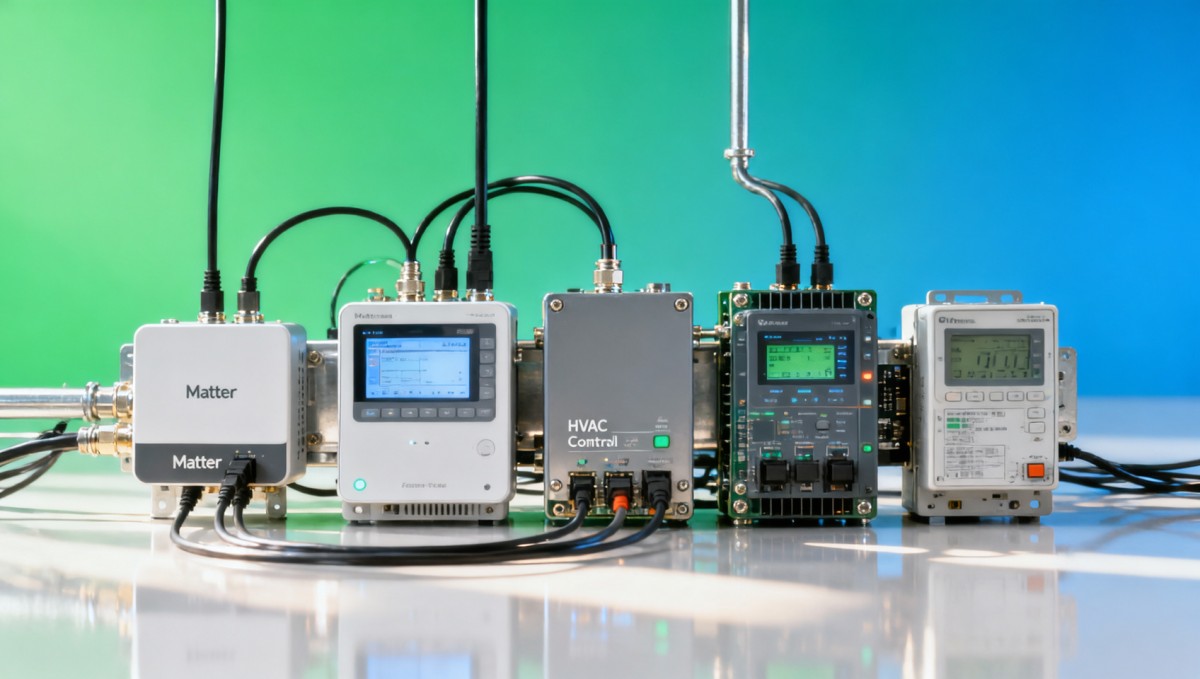
In renewable energy projects, Matter is rarely tested in isolation. Devices are expected to work inside distributed control environments that include smart relays, HVAC controllers, inverters, metering nodes, battery rooms, and building energy management platforms. A device may pass a lab demo, yet fail a matter protocol certification test once it faces noisy RF conditions, mixed protocol routing, or intermittent backhaul common in commercial energy sites.
This is why failures often cluster around integration rather than headline features. Teams focus on commissioning, app pairing, and user-facing dashboards, but certification labs examine protocol behavior, state consistency, cluster support, error recovery, and timing under repeatable conditions. In many projects, the first issues emerge within 2–4 weeks of validation, especially when HVAC, lighting, and energy optimization rules begin interacting at scale.
For renewable energy operators, the stakes are practical. If a thermostat, smart relay, or occupancy sensor fails certification or behaves unpredictably after deployment, the result is not merely a smart home inconvenience. It can distort demand response logic, weaken peak-load shifting, and disrupt comfort-control strategies designed to reduce building energy consumption during high-tariff periods.
NexusHome Intelligence approaches this problem from a benchmarking perspective. Instead of accepting “Works with Matter” at face value, NHI focuses on measured latency, network stability, protocol compliance, and hardware behavior under stress. That engineering filter matters for procurement teams comparing multiple suppliers across Asia, Europe, and North America, especially when delivery windows are tight and redesign cycles can add 6–12 weeks.
The most frequent failure zones
- Incomplete cluster implementation, where a device supports basic pairing but fails advanced command handling or reporting expected during certification.
- Weak hvac integration with matter, particularly when thermostat logic, fan modes, setpoint persistence, or scheduling behavior diverge from actual field operation.
- Unstable multi protocol gateway integration between Matter, Zigbee, Thread, BLE, or Modbus-linked energy systems, causing dropped state updates or commissioning conflicts.
- Power instability and sleep-cycle errors in battery-backed sensors, where low-power behavior introduces delayed responses or reconnection failures after several duty cycles.
A recurring procurement mistake is to treat certification as a final paperwork stage. In practice, certification readiness should begin at architecture review, continue through prototype validation, and intensify before pilot rollout. For devices intended for solar-powered sites, microgrid buildings, or energy-aware commercial HVAC zones, that means testing not only feature support but also sustained behavior across temperature swings, RF interference, and controller failover events.
Which technical issues fail a matter protocol certification test most?
Most failed submissions are not caused by a single dramatic defect. They come from small inconsistencies that become visible under structured certification sequences. Matter requires reliable device description, command processing, secure commissioning, attribute reporting, and predictable network interaction. If one layer is unstable, the whole submission may stall even when the product appears functional in a showroom or pilot apartment.
The renewable energy angle makes these issues sharper. A smart thermostat in an office tower tied to rooftop solar, time-of-use tariffs, and ventilation optimization cannot behave like a simple consumer gadget. Commands need to map correctly into energy control logic. Reporting intervals, offline handling, and recovery states must support practical operating windows such as every 5–15 minutes for control updates or every quarter for maintenance verification.
The table below summarizes where engineering teams most often lose time during a matter protocol certification test, and why these faults create downstream procurement and deployment risk.
The practical lesson is simple: if your device roadmap includes energy management, HVAC orchestration, or grid-responsive automation, certification is inseparable from systems engineering. Teams should verify behavior across at least 3 layers: protocol conformance, hardware stability, and site-level workflow compatibility. Missing any one of these layers increases the risk of failed retests, delayed launches, and buyer hesitation.
Why weak HVAC integration with Matter causes repeat failures
Weak hvac integration with matter is a major reason products stumble. Many devices can toggle heating or cooling modes, yet fail under realistic sequences such as setpoint adjustment during occupancy transitions, fan mode shifts during ventilation balancing, or recovery after controller reboot. In commercial renewable energy settings, these events are routine, not edge cases.
Buildings that combine solar generation, thermal storage, and demand response often run automation cycles around 15-minute tariff intervals or pre-cooling windows. If thermostat attributes lag, report incorrectly, or revert after power fluctuation, the certification issue quickly becomes a business issue. Buyers then question whether the device can support carbon reduction targets, tenant comfort, and utility-side optimization at the same time.
NHI’s energy and climate control focus is especially relevant here. The right evaluation is not a brochure-level compatibility claim, but a measured view of latency, state persistence, standby power, and control stability. For example, a relay or HVAC node with acceptable lab behavior may still prove unsuitable if standby consumption is too high for low-power zones or if scheduling logic drifts after repeated resets.
How should buyers evaluate multi protocol gateway integration and compatibility risk?
Buyers in renewable energy projects rarely purchase a standalone Matter device. They buy into an interoperability chain. That chain may include building management systems, metering gateways, inverter data paths, Zigbee sensors, Thread border routers, and cloud dashboards for sustainability reporting. If multi protocol gateway integration is weak, certification may pass late or incompletely, but field performance will still suffer.
This matters to several stakeholders at once. Researchers want reliable technical evidence. Operators need stable daily control. Commercial evaluators want lower service risk. Decision-makers want confidence that a product family can scale from a pilot of 20 units to a staged rollout of 500 or more endpoints without repeated firmware surprises. That requires a structured evaluation method rather than price-first selection.
A practical review should test gateway behavior under mixed traffic, command collisions, and translation between data models. The key question is not whether two protocols can connect once, but whether the full chain remains dependable after resets, firmware updates, and network congestion during normal building operation.
A procurement checklist for compatibility-first sourcing
- Confirm which Matter device types and clusters are actually implemented, not just planned on the roadmap within 1–2 future releases.
- Request evidence of multi protocol gateway integration with the protocols already present on site, such as Zigbee, Thread, BLE, or Modbus-connected energy assets.
- Review the matter ecosystem compatibility chart against real controller combinations, mobile commissioning methods, and border router conditions.
- Check whether firmware update paths preserve provisioning, schedules, and attribute consistency after at least several reboot and power-cycle tests.
- Align supplier claims with deployment conditions, including electrical rooms, plant areas, metal enclosures, and HVAC spaces where RF performance can degrade.
The next table helps procurement teams compare vendors or design options using criteria that reflect both certification readiness and renewable energy deployment practicality.
A buyer does not need perfect certainty, but does need visible evidence. NHI’s value in this stage is translating fragmented supplier claims into comparable engineering signals. That includes latency behavior, protocol compliance depth, energy-control relevance, and hardware consistency. In B2B procurement, those details are often the difference between a smooth rollout and six months of avoidable rework.
When a lower-cost option becomes more expensive
The lowest unit price can become the highest project cost if certification slips or gateway integration fails. A cheaper module may look attractive during RFQ comparison, yet additional firmware work, extra site visits, and re-commissioning can erase the initial savings. In projects with phased delivery, even a 2–3 week delay can affect contractor coordination, occupancy schedules, and energy performance commitments.
For decision-makers, the better metric is total deployment friction. That includes engineering hours, retest cycles, support responsiveness, and the ability to validate a matter ecosystem compatibility chart with the real combination of hubs, controllers, and end devices used on site. This is particularly important in commercial buildings pursuing electrification and decarbonization targets.
What does a stronger certification and implementation workflow look like?
A stronger workflow starts before formal certification. Teams should define use cases, map protocol dependencies, and isolate failure risk early. In renewable energy projects, that means clarifying whether the device supports simple comfort control, tariff-driven HVAC response, occupancy-linked ventilation, or participation in broader load management. Each use case changes what must be tested and what can safely be deferred.
A practical implementation path usually includes 4 steps: architecture review, bench validation, pilot deployment, and pre-certification hardening. Architecture review identifies protocol and power assumptions. Bench validation checks command flow and error recovery. Pilot deployment exposes field conditions. Hardening then resolves the failures that only appear under repeated use, mixed traffic, or site-specific environmental stress.
This workflow is especially useful when devices will operate in mixed ecosystems. A thermostat or relay may be technically Matter-capable, but if it must also coordinate with legacy building controls or third-party energy dashboards, the implementation scope becomes broader than certification scope. Ignoring that distinction is one of the main reasons projects pass a lab milestone yet disappoint after installation.
Recommended validation sequence before supplier commitment
- Test commissioning and re-commissioning across at least 3 repeated cycles to identify reset-related failures early.
- Run HVAC and schedule logic over 24–72 hours to observe state persistence, temperature response, and reporting intervals.
- Verify gateway translation under simultaneous commands from app, automation engine, and site management platform.
- Check firmware update behavior, including rollback risk, retained settings, and compatibility with current border router conditions.
For operators and facility teams, this structure also improves handover quality. Instead of receiving a device that merely “connects,” they receive one evaluated for service behavior, recovery patterns, and integration limits. That reduces confusion during commissioning and gives business evaluators more reliable inputs for long-term support budgeting.
FAQ: what should engineers, buyers, and decision-makers ask before moving forward?
How should we read a matter ecosystem compatibility chart?
Treat the matter ecosystem compatibility chart as a starting point, not final proof. It should show tested combinations of controllers, mobile onboarding paths, and device types, but you still need to compare that chart with your site architecture. If the building uses existing Zigbee sensors, a Thread border router, and a gateway into an energy platform, ask whether that exact chain has been validated over repeated cycles rather than single-session demos.
How long does certification-related validation usually take?
For a product that already has stable firmware and clear scope, bench validation may take 2–4 weeks. If gateway work, HVAC logic, or hardware revisions are still moving, the effective timeline can extend by another 4–8 weeks. Procurement teams should build buffer time into launch plans, especially when sample approval, enclosure changes, or border router selection are not yet frozen.
What is the biggest misconception about multi protocol gateway integration?
The biggest misconception is that data translation equals operational interoperability. A gateway may move values from one protocol to another, yet still fail when commands arrive simultaneously, when devices reboot, or when polling and event reporting collide. In renewable energy use cases, those problems become visible during tariff changes, demand response events, or occupancy-linked HVAC adjustments.
What should business evaluators ask suppliers before issuing an order?
Ask for three things: current certification status, known integration limits, and evidence from representative test conditions. Also ask whether the sample firmware is the same branch planned for mass production, what the usual lead time is for pilot and volume orders, and how firmware maintenance is handled after deployment. These questions often reveal more project risk than a price sheet does.
Why choose a data-driven evaluation partner before certification delays become project delays?
NexusHome Intelligence is built for organizations that need more than vendor claims. In fragmented ecosystems where Matter, Zigbee, Thread, BLE, and building controls intersect, the real challenge is translating engineering complexity into confident sourcing decisions. NHI’s data-driven approach helps teams examine connectivity, energy control behavior, hardware integrity, and compliance risk before those issues become procurement disputes or field failures.
For renewable energy stakeholders, this is especially relevant when evaluating smart HVAC controls, relays, gateways, sensors, and edge-connected devices used in low-carbon buildings and energy-aware facilities. If your team is comparing suppliers, validating hvac integration with matter, checking multi protocol gateway integration, or reviewing a matter ecosystem compatibility chart against real deployment conditions, a structured technical benchmark can shorten decision cycles and reduce redesign risk.
You can contact NHI to discuss practical issues such as parameter confirmation, device category fit, certification requirements, sample evaluation scope, pilot deployment readiness, delivery timing, and customization boundaries. That conversation is useful whether you are still researching options, narrowing a vendor list, or preparing for a commercial rollout tied to energy efficiency targets.
If your current challenge is a failed matter protocol certification test or uncertainty about what will fail next, the best next step is not broader marketing language. It is clearer evidence. Define the use case, verify the protocol path, test the real integration chain, and use measurable results to guide selection. That is how teams move from compatibility claims to dependable deployment.
Protocol_Architect
Dr. Thorne is a leading architect in IoT mesh protocols with 15+ years at NexusHome Intelligence. His research specializes in high-availability systems and sub-GHz propagation modeling.
Related Recommendations
- Dr. Aris ThorneHVAC Integration With Matter: What to Check
- Dr. Aris ThorneHow to Vet a Tuya Curtain Motor Wholesaler
- Dr. Aris ThorneOffline Voice Control Modules: When They Fit Best
- Dr. Aris ThorneMulti Protocol Gateway Integration: Common Traps
- Dr. Aris ThorneDo You Really Need a Local Control Hub
- Dr. Aris ThorneHow to Read a Matter Compatibility Chart
- Dr. Aris ThorneMatter Certification Test: What Fails Most
- Dr. Aris ThorneZ-Wave Plus Controller China: Sourcing Tips
- Dr. Aris ThorneWhat surface roughness is realistic in precision grinding?
- Dr. Aris ThorneWhy concentricity tolerance fails in Swiss turning small parts
Analyst