
How to Choose HVAC Automation Controllers That Last
author
Choosing HVAC automation controllers that last requires more than spec-sheet claims—it demands data-backed verification across climate control hardware benchmarking, protocol latency benchmark results, and Matter standard compatibility. For procurement teams, operators, and decision-makers in renewable energy, NexusHome Intelligence brings IoT engineering truth through smart home hardware testing, IoT hardware benchmarking, and trusted insight into verified IoT manufacturers.
Why durability matters more in renewable energy HVAC automation
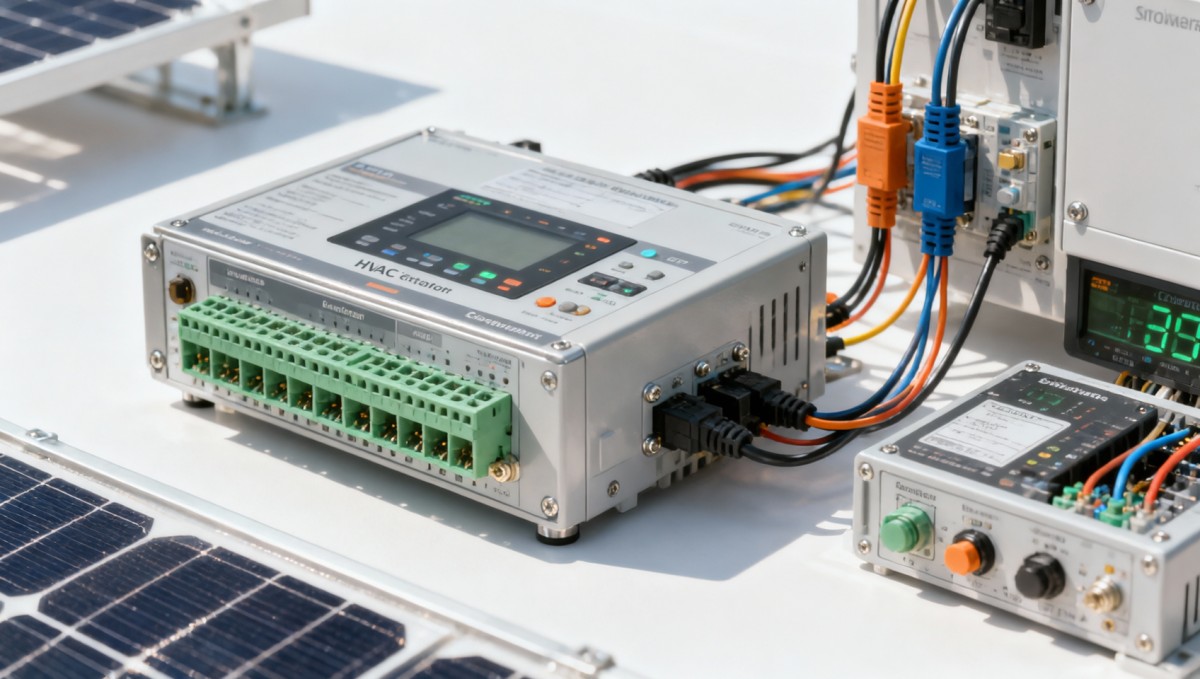
In renewable energy projects, an HVAC automation controller is not just a thermostat brain. It often becomes the logic layer that balances comfort, equipment protection, energy shifting, and building performance. In solar-integrated commercial buildings, battery-supported facilities, and smart campuses, controllers may run 24/7 while coordinating heat pumps, air handlers, dampers, relays, sensors, and energy monitoring points. A controller that fails early does more than stop automation; it disrupts energy strategy.
This is why long-life selection should start with operating context. Many buyers still compare products by interface design, sticker price, or a short list of claimed protocols. In practice, durability depends on whether the controller can maintain stable control logic across temperature fluctuations, power quality variation, network interference, and long duty cycles. In renewable energy environments, these factors often become more severe during seasonal peak loads and distributed generation switching windows.
For operators, the pain point is simple: unstable controllers create nuisance alarms, erratic setpoint behavior, and maintenance calls. For procurement teams, the risk is hidden total cost. A lower-cost device can become expensive within 12–24 months if replacements, site visits, reprogramming, and protocol troubleshooting accumulate. For enterprise decision-makers, poor controller durability also weakens ESG goals because inefficient climate control undermines load management and energy optimization.
NexusHome Intelligence approaches this problem differently. Rather than accepting vendor language such as “industrial grade” or “works with Matter,” NHI evaluates controllers through measurable engineering criteria: protocol responsiveness, standby consumption, control stability, hardware quality, and stress resilience. In a fragmented smart ecosystem, that engineering filter matters because renewable energy deployments often connect devices from 3–5 protocol families across one building portfolio.
- Long runtime stability matters when controllers must execute PID logic continuously across daily occupancy cycles.
- Protocol reliability matters when HVAC equipment must interact with gateways, sensors, and energy systems without excessive latency.
- Low standby power matters when large building portfolios deploy controllers at scale and seek measurable energy savings.
- Maintainability matters when regional service teams must diagnose faults quickly across mixed hardware environments.
What should buyers check first when choosing HVAC automation controllers?
The fastest way to make a bad decision is to start with protocol logos and end with price. A better method is to screen HVAC automation controllers through five practical layers: control capability, hardware endurance, connectivity behavior, integration openness, and supportability. These five layers align with how renewable energy projects actually perform in the field, especially when energy data, occupancy schedules, and climate control logic must work together without constant intervention.
Control capability should be reviewed first. If a controller cannot execute stable PID control, schedule-based optimization, alarm logic, and sensor compensation under real conditions, protocol support will not save the project. Buyers should confirm the number of supported input and output points, logic flexibility, local fail-safe behavior, and whether the controller keeps operating during temporary network loss. For many commercial projects, a practical review window is 3 core scenarios: occupied mode, setback mode, and peak-load response mode.
Hardware endurance comes next. PCB quality, terminal durability, relay life, enclosure robustness, and heat tolerance all influence service life. Controllers installed near rooftops, plant rooms, or inverter-adjacent spaces may face higher thermal stress than office-wall devices. Procurement teams should ask for environmental operating ranges, installation recommendations, and long-cycle component data where available. If a vendor cannot explain how the hardware behaves in continuous operation, the buyer is already absorbing risk.
Connectivity behavior is the third screen, and it is where many “smart” products fail in mixed ecosystems. NHI’s benchmarking mindset is useful here because compatibility should be tested through latency, network stability, and interference tolerance, not claimed in brochures. If a controller participates in Matter, Thread, Zigbee, BLE, or Wi-Fi workflows, buyers should understand the practical limit: how fast commands propagate, how device pairing behaves, and what happens when the building network is congested for 2–4 hours during operational peaks.
A practical first-pass selection checklist
Before issuing RFQs, many teams benefit from a shorter technical screen. This avoids comparing ten products that should have been eliminated earlier. The checklist below helps information researchers, operators, and buyers align on the same selection baseline.
The key insight is that long-lasting HVAC automation controllers are selected through layered verification. Teams that document these 4 evaluation areas early usually reduce rework during pilot deployment, especially in sites where building automation and energy management must share data rather than operate in isolation.
How protocol testing and hardware benchmarking reveal real controller quality
In a fragmented IoT landscape, protocol labels often create false confidence. A controller may technically support a protocol and still perform poorly in a live building. That is why climate control hardware benchmarking and protocol latency benchmark results matter. In renewable energy buildings, command timing and data integrity influence load shifting, occupancy comfort, and equipment coordination. A controller that responds inconsistently across a 50–200 point system can degrade both energy performance and user trust.
Matter standard compatibility should be treated as a verification topic, not a marketing claim. Buyers need to know whether the controller supports the required device models, how commissioning works, what bridge dependencies exist, and how multi-node communication behaves under interference. The same applies to Zigbee, Thread, BLE, and Wi-Fi integrations. For procurement, the real question is not “Does it connect?” but “Does it stay reliable during normal and stressed operating conditions?”
NHI’s value in this process comes from translating engineering truth into procurement clarity. Instead of forcing non-engineering teams to decode every chipset or firmware issue, benchmarking highlights what affects buying decisions: latency stability, mesh behavior, standby power trends, and long-term component drift. In many projects, these metrics are far more predictive of lifecycle cost than launch-price differences of 10%–20% between suppliers.
Hardware benchmarking should also reach below the surface. PCB assembly quality, component thermal management, sensor accuracy retention, and connector integrity can determine whether a controller lasts 3 years or supports a much longer deployment cycle. Operators usually notice symptoms first: slow response, false readings, random resets, or communication loss. Good benchmarking catches these risks before site rollout.
What benchmark-minded buyers should compare
When teams compare HVAC automation controllers for renewable energy sites, the matrix below helps separate real engineering value from brochure language. It does not replace lab testing, but it creates a disciplined shortlist for vendor discussions and pilot planning.
This comparison shows why verified IoT manufacturers matter. A supplier that can discuss hardware construction, protocol behavior, and deployment support in concrete terms is easier to trust than one relying on generic smart-building claims. For large portfolios, that difference can affect procurement outcomes across 6–18 month rollout cycles.
Which controller features are most important for procurement and operations?
Procurement teams often ask for a “future-proof” controller, while operators ask for one that simply works every day. The right answer combines both views. Durable HVAC automation controllers should support reliable local control, practical interoperability, manageable commissioning, and service-friendly diagnostics. In renewable energy settings, it is also important that the controller can coordinate with energy monitoring and flexible load strategies without becoming overly complex to maintain.
One of the most overlooked features is local autonomy. If cloud services, gateways, or upstream systems become temporarily unavailable, the controller should continue executing core climate control logic. That matters in facilities using solar generation, battery buffering, or time-based load control, where communication interruptions may coincide with critical switching periods. Buyers should ask whether the unit supports local schedules, fallback setpoints, and on-device alarm memory for at least the immediate operating window.
Another essential feature is commissioning transparency. A controller may look advanced but become expensive if setup requires proprietary tools, hidden licenses, or specialist engineering every time a sensor changes. A practical procurement decision considers the first 30 days after installation and the next 3 years of maintenance. Can site technicians validate points quickly? Can the operations team review logs? Can replacement units be deployed without rebuilding every workflow from zero?
Cybersecurity and compliance should not be separated from longevity. A controller with weak update pathways or poor credential management may remain functional but become risky over time. For commercial renewable energy projects, buyers should align with common building, electrical, and data handling requirements relevant to the deployment geography. Even when a project does not demand advanced edge security, secure update handling and segmented access control are basic lifecycle necessities.
Five procurement questions that prevent costly mistakes
- What functions remain active during network disruption, and for how long can local control continue safely?
- How does the controller behave when multiple devices communicate at the same time across a mixed protocol environment?
- What are the normal lead times for samples, pilot units, and scaled orders, such as 2–4 weeks for samples or longer for customized builds?
- What tools, documentation, and firmware support are available to internal maintenance teams after commissioning?
- Which components or interfaces are most likely to require replacement or update during the deployment lifecycle?
These questions are not just technical. They directly shape budget predictability, operator workload, and the probability of successful scale-up. When suppliers answer them with measurable detail rather than slogans, buyers gain a far clearer picture of whether a controller is built to last.
Common warning signs during vendor evaluation
If a vendor cannot explain test methods for protocol stability, avoids discussing standby power, or treats integration as an afterthought, caution is warranted. Similar concern applies when documentation is thin, firmware support is unclear, or critical claims depend on future updates rather than current capability. In renewable energy projects, these gaps usually appear later as commissioning delays, site incompatibility, or recurring service visits.
How to implement a lower-risk selection process from sample to scale
A strong buying decision rarely happens in one meeting. For HVAC automation controllers, a lower-risk process usually involves 4 stages: requirement definition, technical shortlist, pilot verification, and rollout review. This structure helps information researchers gather realistic inputs, gives operators a voice in maintainability, allows procurement to control risk, and gives decision-makers a clearer basis for approval.
In the first stage, define the site conditions. Document equipment types, protocol environment, power conditions, expected control sequences, and target energy outcomes. Include renewable energy interactions such as peak-load reduction, solar self-consumption support, or demand-responsive scheduling. A good requirement sheet usually covers 6 core items: control functions, network environment, environmental conditions, maintenance model, compliance needs, and rollout volume.
In the second stage, build a shortlist using benchmark-oriented criteria rather than generic marketing filters. Eliminate products that lack clear documentation, uncertain interoperability, or weak support paths. Then request samples or pilot units. For many B2B projects, a pilot window of 2–6 weeks is more useful than a quick bench demo because it exposes commissioning friction, operating stability, and sensor behavior under real occupancy and weather changes.
In the third and fourth stages, treat pilot verification as a decision gate, not a formality. Review response consistency, alarm quality, installation complexity, and operator feedback. Then confirm whether the supplier can support scaled delivery, configuration control, and post-deployment updates. This prevents the common mistake of selecting a controller that performs well in one room but struggles across a regional portfolio.
A simple implementation flow for B2B buyers
The flow below is especially useful when renewable energy facilities need reliable HVAC automation without overextending engineering resources. It keeps technical evaluation connected to commercial execution.
This process also improves internal communication. Procurement gets clearer supplier comparisons, operators gain confidence in usability, and executives receive a decision framework tied to lifecycle value rather than short-term acquisition cost alone.
FAQ: common concerns about long-life HVAC automation controllers
How do I know if an HVAC automation controller is suitable for renewable energy buildings?
Look beyond basic HVAC control. The controller should support integration with energy monitoring, flexible scheduling, and stable communication in mixed protocol environments. It should also maintain local control during temporary network interruptions and fit the site’s thermal and electrical conditions. If the building uses solar, storage, or demand response logic, the controller must support those operating patterns without manual workarounds.
What is the most common mistake during procurement?
The most common mistake is buying on feature count or price without verifying behavior under real operating conditions. A controller can appear advanced but still create long-term cost through poor commissioning tools, unstable connectivity, or weak hardware endurance. Teams should always evaluate at least 3 areas together: control quality, integration reliability, and lifecycle support.
Is Matter compatibility enough to guarantee interoperability?
No. Matter standard compatibility is useful, but it is not a complete guarantee of smooth deployment. Buyers still need to check device model support, bridge dependence, commissioning workflow, and protocol latency benchmark results under realistic conditions. Interoperability is proven through testing, not logos.
How long should a pilot evaluation last?
For commercial and renewable energy projects, 2–6 weeks is a practical range. That period is usually long enough to observe installation effort, day-to-day control behavior, occupancy transitions, and at least some environmental variation. Shorter tests may miss intermittent faults or integration issues that only appear after several operating cycles.
Why work with NHI when selecting HVAC automation controllers?
NexusHome Intelligence was built for a market where protocol silos, inflated claims, and fragmented supply chains make technical buying harder than it should be. For renewable energy stakeholders, that problem is especially costly because HVAC automation controllers influence both operational resilience and energy performance. NHI acts as an engineering filter, helping teams evaluate products through measurable evidence instead of unverified marketing language.
Our perspective is practical: connectivity and protocols, smart security and access, energy and climate control, IoT hardware components, and wider ecosystem verification. That means your team can assess not only whether a controller appears compatible, but whether it aligns with real deployment needs such as protocol latency, standby power behavior, commissioning effort, and supply-chain transparency. This is particularly valuable when sourcing from multiple manufacturers across Asia and global markets.
If you are comparing HVAC automation controllers for a smart building, renewable energy retrofit, or multi-site commercial rollout, you can consult NHI on concrete topics rather than generic sales language. We can help you clarify parameter confirmation, product selection logic, protocol compatibility questions, typical delivery cycle expectations, customization boundaries, certification considerations, sample evaluation priorities, and quotation discussion inputs for cross-functional teams.
Contact NHI when you need a more disciplined path from shortlist to decision. Whether your immediate need is climate control hardware benchmarking, IoT hardware benchmarking, Matter standard compatibility review, or identifying verified IoT manufacturers with stronger technical integrity, we help bridge ecosystems through data so your procurement decision is grounded in engineering truth.
Protocol_Architect
Dr. Thorne is a leading architect in IoT mesh protocols with 15+ years at NexusHome Intelligence. His research specializes in high-availability systems and sub-GHz propagation modeling.
Related Recommendations
- Kenji Sato (Infrastructure Arch)How to Avoid Costly Mistakes in HVAC Controller Sourcing
- Kenji Sato (Infrastructure Arch)Climate Control Hardware Benchmarking: Which Data Matters
- Kenji Sato (Infrastructure Arch)Smart Thermostat OEM: What to Ask Before Signing
- Kenji Sato (Infrastructure Arch)How to Choose HVAC Automation Controllers That Last
- Kenji Sato (Infrastructure Arch)VDE Releases Matter-over-Thread HVAC Gateway Efficiency Standard VDE-AR-E 2053-10:2026
- Kenji Sato (Infrastructure Arch)VDE Launches Matter-over-Thread Gateway Energy Efficiency Standard
- Kenji Sato (Infrastructure Arch)Climate control hardware benchmarking made practical
- Kenji Sato (Infrastructure Arch)Smart thermostat OEM vs ODM: what changes?
- Kenji Sato (Infrastructure Arch)How to choose HVAC automation controllers that last
- Kenji Sato (Infrastructure Arch)How HVAC PID Control Improves Comfort
Analyst