
Climate Control Hardware Benchmarking: Which Data Matters
author
In renewable energy and smart building projects, climate control hardware benchmarking is no longer optional—it is the basis of reliable procurement and system performance. This article explains which data truly matters, from HVAC automation controllers and IoT power monitoring to Matter protocol data and protocol latency benchmark results, helping engineers, buyers, and decision-makers separate marketing claims from IoT engineering truth.
For solar-powered commercial buildings, microgrids, energy storage sites, and net-zero developments, climate control is not only a comfort function. It directly affects load balancing, battery cycling, peak demand control, indoor air quality, and operating cost. When the hardware layer is selected using incomplete metrics, the result is often visible within 3 to 12 months: unstable temperature control, excessive standby power, integration failures, and service calls that erode project ROI.
That is why NexusHome Intelligence approaches climate control hardware as a measurable engineering domain, not a brochure category. In a fragmented ecosystem shaped by Zigbee, Thread, BLE, Wi-Fi, and Matter, benchmarking must connect protocol behavior, power efficiency, control precision, and deployment risk into one decision framework that supports researchers, operators, procurement teams, and enterprise leadership.
Why Benchmarking Matters in Renewable Energy Climate Control
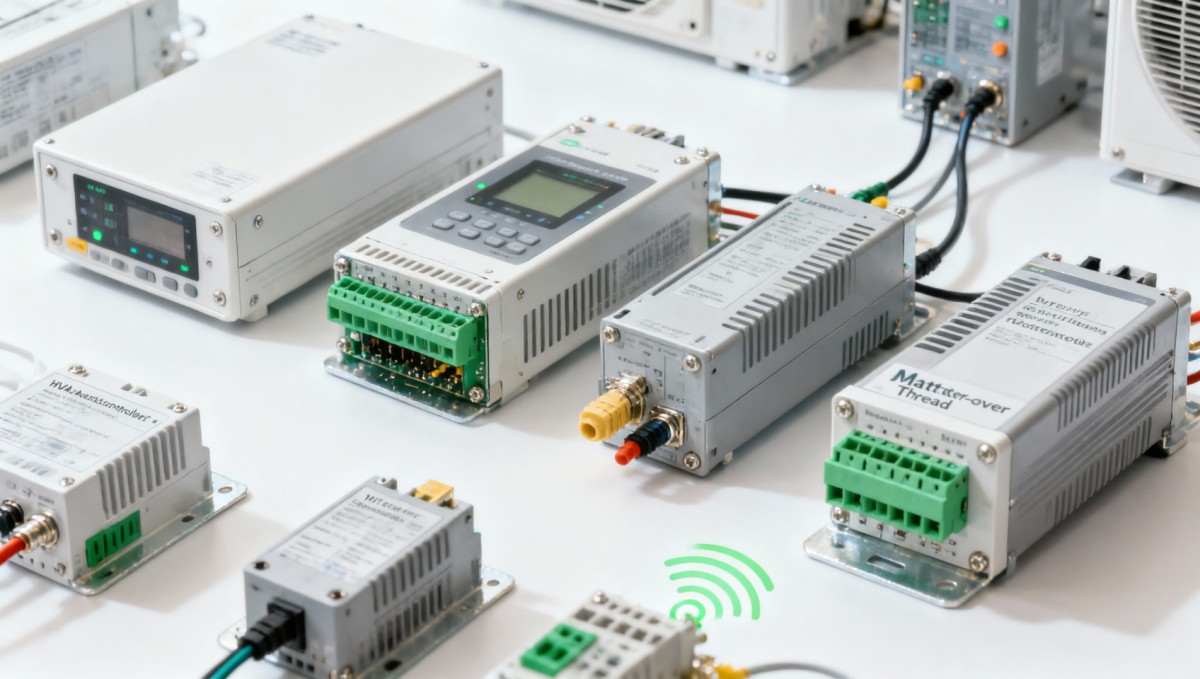
In renewable energy environments, HVAC and climate control hardware are tightly coupled with energy generation and energy management. A heat pump controller that responds 800 milliseconds too slowly may seem acceptable in isolation, yet across a building with 150 zones, that delay can create load spikes, unstable room conditions, and unnecessary battery discharge during peak tariff windows.
Benchmarking matters because nominal specifications rarely reflect field conditions. A device advertised as “low power” may draw only 0.3 W in a lab idle state but consume 0.9 W to 1.4 W once radios, sensors, and relays operate continuously in a real automation network. In solar-integrated buildings and off-grid cabins, that difference becomes financially meaningful over a 24-month operating cycle.
Another reason is protocol fragmentation. Many climate controllers claim compatibility with gateway ecosystems, but true interoperability depends on measurable behavior: network joining time, command delivery success rate, firmware recovery after interruption, and multi-node latency under interference. These metrics determine whether a controller can support demand response, room zoning, and remote diagnostics at scale.
For procurement teams, benchmarking reduces hidden lifecycle risk. A controller priced 8% lower at purchase may trigger 20% higher service effort if sensor drift, relay wear, or integration instability appears within the first 18 months. For operators, good benchmark data means fewer emergency overrides. For decision-makers, it improves confidence that decarbonization targets will not be undermined by weak hardware foundations.
What changes in renewable-energy-driven buildings
Unlike conventional buildings, renewable-energy-driven sites often run more dynamic energy logic. HVAC hardware may need to respond to photovoltaic generation swings every 5 to 15 minutes, pre-cool thermal mass before a peak pricing window, or coordinate with battery storage systems operating in 30-minute optimization cycles. Hardware that cannot maintain stable communication and precise control becomes a bottleneck.
Core operating pressures
- Variable generation from solar and wind requires flexible setpoint adjustments.
- Demand response programs may impose 5-minute to 15-minute load reduction events.
- Mixed-protocol building portfolios increase integration complexity during retrofits.
- Energy reporting needs higher metering accuracy, often within ±1% to ±2% for actionable optimization.
Which Benchmark Data Actually Matters
Not every data point deserves equal weight. In climate control hardware benchmarking, the most useful metrics are the ones that correlate with control stability, energy efficiency, and maintenance burden. Buyers should prioritize measurable outcomes over marketing labels such as “smart,” “adaptive,” or “ultra-efficient,” because those terms rarely define thresholds or test conditions.
For HVAC automation controllers, control-loop behavior is essential. PID tuning stability, overshoot rate, recovery time after setpoint changes, and temperature maintenance within a target band such as ±0.3°C to ±0.8°C have direct operational meaning. In renewable applications, these values affect both comfort and the timing of energy use relative to renewable generation windows.
For IoT power monitoring, accuracy and update interval matter more than dashboard aesthetics. If a monitoring node refreshes every 60 seconds instead of every 5 to 10 seconds, peak-load shifting logic may react too late. Similarly, if current measurement drifts beyond ±2%, control strategies based on assumed savings can become misleading, especially in small commercial buildings with tight operating budgets.
Protocol data is equally important. Matter support should be verified through measurable onboarding time, command acknowledgment latency, packet success under interference, and behavior across multi-hop Thread paths. In a real smart building, a difference between 120 ms and 450 ms average response time can decide whether a ventilation correction feels immediate or visibly delayed to operators.
Priority metrics by hardware category
The table below highlights which benchmark data should be treated as primary, secondary, or supporting during evaluation. The exact thresholds vary by site type, but the structure helps teams avoid overvaluing cosmetic features.
The practical conclusion is simple: if a vendor cannot provide test conditions, benchmark methods, and threshold definitions for these metrics, the product is still being sold as a promise rather than as engineering evidence.
Four data groups buyers should request
- Control performance data, including stability under varying ambient loads and occupancy profiles.
- Electrical efficiency data, especially standby draw and peak switching consumption.
- Protocol performance data under interference, not only in isolated lab conditions.
- Durability data such as sensor drift over 6 to 12 months and relay wear under repeated cycles.
How to Read Matter and Protocol Latency Results
Protocol benchmark data is often misunderstood because teams focus on compatibility badges instead of communication behavior. In climate control systems, protocol latency affects the quality of every automation sequence: opening a damper, reducing compressor load, staging ventilation, or syncing a thermostat with occupancy and weather data. A system can be technically compatible and still perform poorly under real congestion.
Matter protocol data should therefore be read in context. A single-hop response time of 90 ms is not enough information if the deployment uses three Thread hops, two border routers, and 80 active nodes. In that case, engineers need average latency, 95th percentile latency, packet retry behavior, and command loss rate during busy periods such as 7:00–9:00 a.m. occupancy ramp-up.
Renewable energy sites add another layer: control actions may be triggered by inverter output, battery state of charge, or time-of-use tariffs. If protocol delays stretch from 150 ms to 700 ms under interference, pre-cooling logic or load-shedding routines may become inconsistent. This is especially relevant in mixed retrofits where Zigbee and Thread devices coexist and share crowded RF environments.
For operators, the key question is not whether a protocol is modern, but whether it remains predictable. Predictability means low jitter, stable recovery after network interruption, and manageable commissioning times. For procurement, this translates into fewer support tickets, shorter deployment windows, and reduced rework during the first 30 to 90 days after installation.
Reading protocol results for procurement decisions
The following comparison shows how protocol benchmark results should be interpreted when climate control reliability is the goal.
The most important takeaway is that protocol benchmark data must be tied to deployment scale. A result generated on 10 nodes may not predict behavior on 100 nodes. Buyers should always ask for node count, interference profile, hop count, and test duration before accepting a benchmark claim.
Common protocol evaluation mistakes
- Accepting “works with Matter” without latency or recovery data.
- Reviewing only average latency and ignoring worst-case response windows.
- Skipping coexistence tests in buildings that already use Zigbee or BLE devices.
- Ignoring commissioning time, which can vary from 20 minutes to several hours across device batches.
Building a Practical Benchmarking Framework for Selection
A useful benchmarking framework should help teams compare products across engineering value, not just feature count. In renewable energy climate control projects, a practical model usually combines five dimensions: control precision, energy efficiency, protocol robustness, maintainability, and integration effort. Weighting can vary, but many commercial buyers assign 25% to performance, 20% to efficiency, 20% to protocol reliability, 20% to lifecycle serviceability, and 15% to integration readiness.
This framework is especially effective when evaluating hardware for mixed-use portfolios such as schools, offices, logistics facilities, and multi-family housing with rooftop solar. These sites often require multiple temperature zones, occupancy patterns, and utility strategies. A benchmark process that ignores maintenance workload or firmware update behavior may approve hardware that looks strong on paper but struggles during rollout.
Selection should also reflect the intended control architecture. Edge-based control may require stronger local processing and faster failover, while cloud-assisted optimization may place more weight on protocol consistency and data reporting continuity. In either case, test data should be mapped to use cases, such as night setback, ventilation ramp-up, and battery-assisted peak shaving between 4:00 p.m. and 8:00 p.m.
NHI’s data-first approach is valuable here because it turns fragmented performance claims into standardized comparison logic. That helps procurement teams identify technically credible suppliers, including less visible OEM or ODM manufacturers whose engineering quality may exceed that of better-marketed competitors.
Example benchmark scorecard
The scorecard below can be adapted during RFQ and technical review. It gives operators and buyers a shared framework for comparing climate control hardware in renewable energy projects.
This structure helps teams avoid a common mistake: over-rewarding low upfront price while underestimating the cost of poor commissioning, delayed maintenance, and unstable control performance over a 3- to 5-year ownership period.
A 5-step selection workflow
- Define the site profile, including renewable generation pattern, occupancy schedule, and number of control zones.
- Set threshold metrics for response time, power draw, accuracy, and recovery behavior.
- Shortlist products using verified benchmark data, not brochure summaries.
- Run pilot testing for 2 to 6 weeks in a live or near-live environment.
- Review lifecycle service effort before final procurement approval.
Deployment Risks, Operator Questions, and Final Buying Guidance
Even strong hardware can underperform if the deployment process ignores environmental and operational realities. In renewable energy facilities and smart buildings, the most common risks appear during commissioning, cross-protocol integration, and post-install optimization. A controller may pass lab validation but fail once placed near dense concrete walls, electrical cabinets, or variable-frequency drives that change the RF and thermal environment.
Operators should ask whether benchmark results include environmental stress, such as seasonal temperature swings, interference, or unstable power events. Procurement teams should ask how quickly failed nodes can be replaced, whether firmware rollback exists, and how long a full site recommissioning takes. For larger sites, the difference between a 10-minute and 45-minute recovery procedure has serious labor implications.
Decision-makers should also examine the data supply chain. Reliable benchmark interpretation depends on traceable methods, repeatable test conditions, and transparent reporting. That is where independent benchmarking adds value. It allows enterprises to compare OEM and ODM capabilities on engineering evidence, uncover hidden strengths, and reduce exposure to products that are marketed aggressively but tested weakly.
For organizations pursuing decarbonization, electrification, and smarter building operations, climate control hardware should be selected as infrastructure, not as a gadget category. The right benchmark data improves energy visibility, stabilizes control, protects maintenance budgets, and supports long-term portfolio performance across renewable and hybrid sites.
FAQ: questions buyers and operators ask most often
How much protocol latency is acceptable for climate control?
For most room-level HVAC actions, average command latency under 200 to 300 ms is workable, while 95th percentile latency should ideally remain below 800 ms. High-speed industrial processes may require tighter thresholds, but for commercial buildings the larger concern is consistency rather than absolute speed.
What standby power level should buyers target?
For relays, sensors, and distributed control nodes, lower is generally better, but buyers should focus on real installed behavior. In many renewable-aware smart buildings, a practical target is below 0.5 W per idle device for simple nodes and carefully reviewed values above that when radios, sensing, or edge logic remain active.
How long should pilot benchmarking last before procurement?
A 2- to 6-week pilot is common for commercial evaluation, but longer windows are useful when occupancy patterns vary or when renewable generation strongly influences thermal strategy. The pilot should include normal days, high-load days, and at least one network disruption or recovery scenario.
Which teams should be involved in hardware benchmarking decisions?
The best results usually come from a cross-functional review involving engineering, facilities operations, procurement, and business leadership. Engineering validates thresholds, operators assess service practicality, procurement compares supplier risk, and leadership aligns the choice with energy and carbon strategy.
Climate control hardware benchmarking is ultimately about reducing uncertainty. When buyers focus on control precision, power performance, protocol latency, recovery behavior, and lifecycle serviceability, they make better renewable energy decisions and avoid expensive surprises after installation. If your team needs clearer benchmark criteria, comparative data, or a more defensible sourcing framework, contact NexusHome Intelligence to discuss your application, review product details, and explore a tailored evaluation path.
Protocol_Architect
Dr. Thorne is a leading architect in IoT mesh protocols with 15+ years at NexusHome Intelligence. His research specializes in high-availability systems and sub-GHz propagation modeling.
Related Recommendations
- Kenji Sato (Infrastructure Arch)How to Avoid Costly Mistakes in HVAC Controller Sourcing
- Kenji Sato (Infrastructure Arch)Climate Control Hardware Benchmarking: Which Data Matters
- Kenji Sato (Infrastructure Arch)Smart Thermostat OEM: What to Ask Before Signing
- Kenji Sato (Infrastructure Arch)How to Choose HVAC Automation Controllers That Last
- Kenji Sato (Infrastructure Arch)VDE Releases Matter-over-Thread HVAC Gateway Efficiency Standard VDE-AR-E 2053-10:2026
- Kenji Sato (Infrastructure Arch)VDE Launches Matter-over-Thread Gateway Energy Efficiency Standard
- Kenji Sato (Infrastructure Arch)Climate control hardware benchmarking made practical
- Kenji Sato (Infrastructure Arch)Smart thermostat OEM vs ODM: what changes?
- Kenji Sato (Infrastructure Arch)How to choose HVAC automation controllers that last
- Kenji Sato (Infrastructure Arch)How HVAC PID Control Improves Comfort
Analyst