
HVAC Automation Controllers: What to Compare First
author
When evaluating HVAC automation controllers, compare protocol latency benchmark data, Matter standard compatibility, Zigbee mesh capacity, and climate control hardware benchmarking before price claims. For procurement teams, operators, and researchers navigating the IoT supply chain, NexusHome Intelligence delivers IoT engineering truth through smart home hardware testing, verified IoT manufacturers analysis, and independent performance metrics that reveal what actually works in renewable-energy-ready buildings.
What should you compare first in HVAC automation controllers?
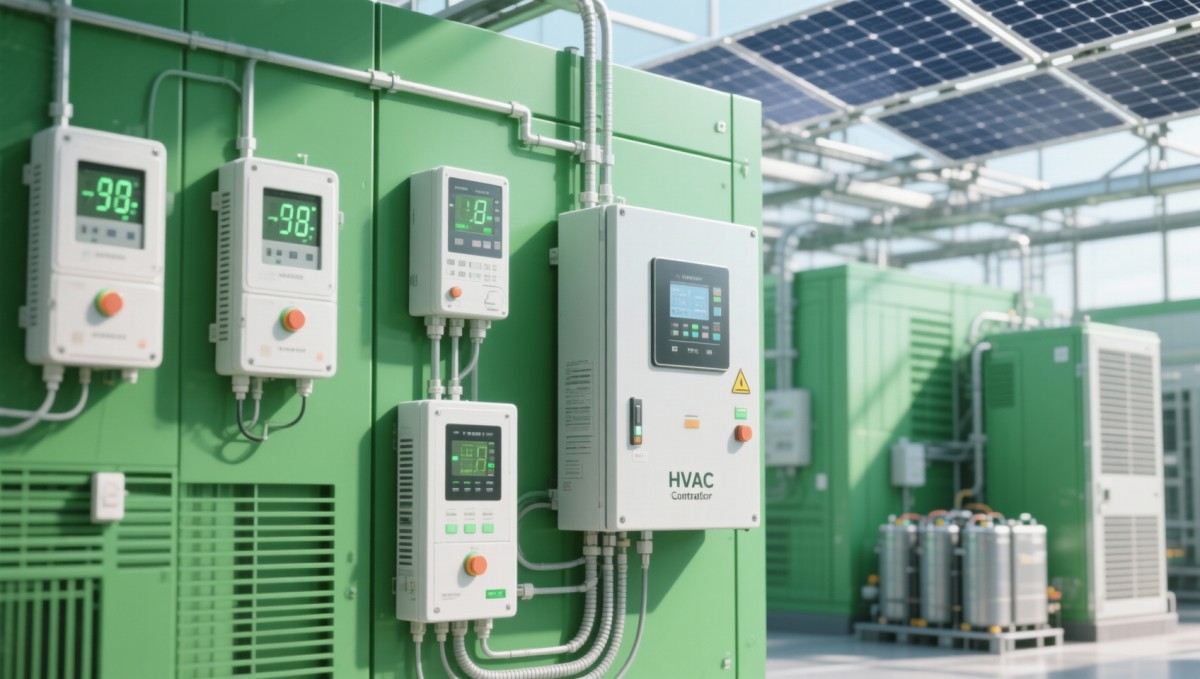
In renewable energy projects, HVAC automation controllers do more than switch heating or cooling. They sit between building loads, local energy generation, storage assets, and occupancy demand. That makes the first comparison point far more technical than simple unit price. For most buyers, the first 4 categories to compare are protocol compatibility, control logic stability, energy monitoring accuracy, and integration resilience under real building conditions.
This matters because controllers in solar-assisted commercial buildings or hybrid microgrid facilities must keep operating when data traffic rises, when wireless conditions degrade, and when demand response events change setpoints quickly. A controller that works in a brochure demo may struggle after 30–90 days of live operation if latency spikes, mesh routing becomes unstable, or PID tuning fails under variable thermal loads.
For operators, the practical question is simple: does the controller maintain comfort, protect equipment, and support energy efficiency without creating service headaches? For procurement teams, the question is broader: does the specification sheet reflect measurable field performance, realistic deployment complexity, and long-term interoperability with Matter, Zigbee, BACnet, Modbus, or gateway-based architectures?
NexusHome Intelligence approaches this evaluation as an engineering filter rather than a marketing channel. In a fragmented IoT landscape, the right first comparison is never “Which controller is cheapest?” but “Which controller can maintain stable, verifiable performance across protocols, loads, and renewable-energy operating scenarios?” That change in decision order reduces hidden integration cost and lowers the risk of underperforming climate control systems.
The first-screen checklist for technical and commercial teams
Before requesting samples or quotations, teams should align on a shared shortlist. This is especially useful when information researchers, facility operators, procurement staff, and commercial evaluators all influence the final decision. A 5-point screening method usually exposes weak options early and shortens supplier comparison cycles by 1–2 rounds.
- Check supported protocols and versions, not only protocol names. “Supports Matter” is less useful than knowing the exact transport layer, gateway dependency, and response behavior across multi-node paths.
- Review control method suitability, including PID behavior, stage control logic, sensor input range, and ability to handle variable-speed equipment or heat pump coordination.
- Compare measurable energy and telemetry functions, such as interval data granularity, alarm reporting, and compatibility with demand response or peak-load shifting workflows.
- Assess deployment conditions, including interference tolerance, cabinet environment, commissioning workflow, and maintenance burden over 12–24 months.
- Estimate integration cost, including gateways, engineering hours, firmware updates, and retraining needs for site operators.
Why protocol latency and interoperability matter in renewable-energy-ready buildings
HVAC automation controllers increasingly operate inside mixed ecosystems. A single building may combine rooftop solar, battery storage, occupancy sensors, smart relays, sub-meters, ventilation units, and cloud analytics. In that setting, interoperability is not a marketing bonus. It is a control requirement. If commands, telemetry, and state updates move slowly or inconsistently, comfort and energy optimization both degrade.
Latency is especially important when controllers participate in load shifting. During a peak tariff window or grid event, setpoint changes may need to be processed within seconds rather than minutes. Even when HVAC thermal inertia softens immediate impact, repeated communication delays across a 10–50 node environment can produce unstable coordination between zones, dampers, relays, and supervisory software.
Interoperability also affects future-proofing. Buyers often inherit protocol silos: some devices already use Zigbee, others rely on Modbus, and newer procurement requests mention Matter or Thread. A controller that only appears flexible on paper can create costly middleware dependence later. For commercial projects, that can expand commissioning time from 2–4 weeks to much longer if field adjustments, custom mapping, or gateway troubleshooting become routine.
NHI’s perspective is useful here because it focuses on verifiable protocol behavior. Instead of accepting generic compatibility claims, procurement and technical teams should compare how a controller behaves under interference, during multi-hop transmission, and when network density increases. In energy and climate control systems, packet delivery consistency can matter as much as nominal protocol support.
Which protocol questions should be asked first?
The table below helps procurement teams compare HVAC automation controllers beyond brochure language. It focuses on issues that directly affect renewable energy integration, site stability, and lifecycle management.
The key takeaway is that a controller should be judged by communication behavior in realistic site conditions, not just by a compatibility logo. For teams managing a 3-phase rollout across pilot, expansion, and standardization stages, this comparison framework reduces the chance of selecting a platform that becomes difficult to scale.
A practical interoperability warning
A common mistake is assuming that protocol support guarantees system-level compatibility. In practice, field issues often appear in edge cases: sensor updates arrive but write commands fail, alarms pass through but device status polling lags, or gateways support only part of the available point list. These are not minor details. They directly affect operator trust and service response time.
For commercial evaluators, this means RFQ documents should ask for integration boundaries, not just protocol declarations. Request details on supported functions, update methods, fallback behavior, and expected network architecture for small sites, mid-scale projects, and multi-building portfolios.
How should buyers compare technical performance beyond the datasheet?
The technical core of an HVAC automation controller is not only communication. It is the quality of control under changing thermal and electrical conditions. Renewable-energy-ready buildings often face variable occupancy, solar generation fluctuations, and dynamic tariff periods. Controllers therefore need stable PID behavior, consistent sensor reading, and reliable output logic across day and night operating cycles.
A strong comparison starts with 3 layers: control algorithm suitability, hardware robustness, and measurement fidelity. A controller may offer broad connectivity but still underperform if analog inputs drift, relays wear too quickly, or standby consumption conflicts with low-power efficiency goals in distributed installations. In retrofits, these small hardware weaknesses can create recurring maintenance calls every quarter.
For operators, comfort stability remains a practical benchmark. If room temperature repeatedly overshoots by 1–2°C, or if ventilation response is slow during occupancy changes, the controller may be poorly tuned or poorly matched to the equipment. For procurement personnel, it is useful to compare not only supported equipment types but also control interval logic, sensor calibration workflow, and fault handling under communication loss.
NHI’s focus on climate control benchmarking is relevant because energy performance claims often hide control instability. In renewable energy projects, true efficiency is not just lower consumption on paper. It is repeatable performance across seasons, especially in buildings where heat pumps, variable refrigerant systems, or mixed fresh-air strategies interact with local energy management goals.
Technical factors that influence long-term value
The next table outlines how buyers can evaluate HVAC automation controllers using performance-focused criteria that matter during operation, service, and expansion.
This comparison shows why the cheapest controller can become the most expensive option over a 12–24 month operating window. If it requires extra tuning, more service calls, or additional gateway hardware, total project cost rises even when the initial unit price looked attractive.
Recommended evaluation sequence for mixed teams
- Define the building control objective first: comfort stability, energy savings, demand response readiness, or retrofit interoperability.
- List existing protocols and supervisory systems already deployed on site or across the portfolio.
- Compare controller hardware and logic against actual equipment types, especially heat pumps, VAV systems, fresh-air units, and fan coil networks.
- Request documentation on commissioning steps, firmware maintenance, and alarm/event handling.
- Run a pilot in 1–3 representative zones before full deployment across the complete site.
This phased process is practical for buyers with budget controls and tight schedules. It gives business evaluators a clearer path to compare risk, expected service burden, and rollout pace without depending only on sales presentations.
Which application scenarios change the controller decision most?
Not every HVAC automation controller fits every renewable-energy project. The right selection depends heavily on building type, retrofit complexity, occupancy pattern, and the degree of energy-system integration. A controller suitable for a small smart office may be a weak choice for a multi-zone commercial building coordinating solar generation, battery discharge windows, and ventilation optimization.
Application analysis is where many purchasing teams save money. Instead of comparing every product at the same level, they can divide projects into 3 typical categories: retrofit buildings with legacy controls, new construction with mixed IoT protocols, and energy-optimized properties with active load management targets. Each category changes the importance of interoperability, local logic, and service access.
For operators, scenario fit determines daily usability. If the interface, alarm logic, or override workflow does not match the site’s real maintenance process, even technically capable controllers can create operational friction. For procurement teams, scenario fit also affects spare parts planning, installer training, and expected commissioning duration.
NHI’s broader supply-chain perspective helps here because hidden weaknesses often appear only when a device moves from lab claims into field diversity. In a fragmented ecosystem, scenario-based comparison is one of the fastest ways to separate flexible engineering from generic product positioning.
Scenario-based selection guide
- Retrofit commercial buildings: prioritize BACnet or Modbus mapping clarity, stable gateway integration, and fast commissioning support. Legacy constraints often matter more than advanced app features.
- Smart offices and mixed-use developments: prioritize Zigbee mesh capacity, occupancy-driven control, and scalable zone management across 20–100+ endpoints.
- Solar-plus-storage buildings: prioritize energy monitoring visibility, peak-load shifting support, and fast command coordination during tariff changes or local generation swings.
- Hospitality and residential portfolios: prioritize remote diagnostics, repeatable deployment workflow, and low-touch maintenance over large device fleets.
Typical procurement trade-offs by scenario
In retrofits, buyers often trade advanced protocol ambition for proven compatibility. In new builds, the balance shifts toward scalability and future onboarding. In energy-driven projects, controllers with stronger telemetry and demand coordination features may justify higher initial cost because they support measurable optimization over seasonal cycles.
A practical benchmark is to compare not only acquisition price but 3 cost layers: hardware, commissioning effort, and 12-month support burden. This is especially useful when evaluating controller families for medium-batch or large-batch deployment across multiple properties.
Another often overlooked factor is replacement flexibility. If a controller locks the project into one narrow ecosystem, future expansion can become expensive. For renewable-energy-ready buildings expected to add sub-metering, storage control, or occupancy analytics later, open integration pathways usually provide better long-term value.
What do procurement teams, operators, and business evaluators often overlook?
One major oversight is treating HVAC automation controllers as isolated devices rather than lifecycle assets. In practice, the purchase decision affects engineering hours, installer workload, operator training, fault diagnosis, and expansion strategy. A controller that saves a small amount at purchase can increase project friction for the next 6–18 months if documentation is weak or firmware maintenance is difficult.
A second oversight is relying too much on broad claims such as “smart,” “low power,” or “works with major platforms.” These phrases do not answer the real operational questions. Can the controller sustain communication in dense RF environments? Can it coordinate with energy management logic during peak periods? Can the site team troubleshoot it without specialist intervention every time a point goes offline?
A third oversight concerns acceptance criteria. Many projects define delivery and installation milestones but not controller performance benchmarks. Teams should set at least 4 acceptance areas: protocol behavior, control response, alarm/reporting workflow, and integration documentation quality. This creates a measurable handover process and protects both buyers and implementation partners.
Finally, some evaluators underestimate supply-chain transparency. In IoT and smart building procurement, the gap between manufacturing claims and field performance can be significant. NHI’s role as a data-driven benchmarking laboratory is valuable because it helps buyers examine verified IoT manufacturers analysis and climate control hardware benchmarking before committing to volume decisions.
Common misconceptions and better decision rules
“Price should be the first filter”
Price is important, but first filtering by price alone can hide larger integration cost. A better sequence is technical fit first, lifecycle cost second, commercial terms third. That order is more reliable for projects with 2–3 phases of rollout.
“If it supports the protocol, it will integrate smoothly”
Protocol labels do not guarantee smooth commissioning. Teams should verify command behavior, point exposure, firmware update process, and network stability in realistic site conditions, especially when 20+ connected devices share the same environment.
“Renewable-energy projects only need energy data”
Energy data alone is not enough. Without stable control logic, accurate sensing, and reliable device communication, the building cannot act on that data efficiently. Good optimization starts with dependable control hardware.
FAQ for real-world buyers
How many controllers should be piloted before full procurement?
For most commercial projects, piloting in 1–3 representative zones is a practical starting point. Choose areas with different occupancy loads or HVAC equipment types. Run the pilot long enough to observe normal scheduling, override events, and at least one period of higher thermal demand.
What delivery and implementation timeline is typical?
Timelines vary by protocol complexity and project size, but buyers commonly plan for 2–4 weeks for documentation alignment and sample review, followed by a pilot and then staged rollout. Complex retrofits or gateway-heavy architectures often require longer commissioning windows.
Which documents should be requested before purchase approval?
Request protocol support details, point lists, wiring guidance, commissioning steps, firmware maintenance process, alarm logic description, and environmental installation guidance. These documents often reveal maturity gaps faster than a marketing deck does.
Why choose a data-driven evaluation partner before final controller selection?
When teams compare HVAC automation controllers for renewable-energy-ready buildings, the biggest risk is not missing one feature. It is making a decision without enough verified engineering evidence. NexusHome Intelligence was built precisely for this gap. Its role is to bridge ecosystems through data, helping global buyers and technical teams cut through protocol silos, broad compatibility claims, and supplier-side marketing noise.
For information researchers, NHI provides a stronger basis for early-stage filtering. For operators, it highlights real performance factors that affect comfort, alarms, and maintenance. For procurement and commercial evaluators, it supports more defensible comparison across latency behavior, climate control benchmarking, and supply-chain credibility. That is particularly valuable when project decisions influence not just one site, but a portfolio rollout over 12 months or longer.
If you are reviewing HVAC automation controllers, you can use NHI to clarify parameter confirmation, protocol pathway selection, sample evaluation priorities, and deployment risk points before moving into bulk procurement. This is useful when your shortlist includes mixed ecosystems, unclear Matter implementation, uncertain Zigbee mesh behavior, or variable documentation quality from suppliers.
Contact NexusHome Intelligence to discuss controller comparison frameworks, renewable-energy building use cases, protocol and integration questions, expected delivery windows, sample support strategy, certification-related document review, and quotation communication priorities. A data-led shortlist built at the start usually saves more time, cost, and operational disruption than a price-led correction made later.
Protocol_Architect
Dr. Thorne is a leading architect in IoT mesh protocols with 15+ years at NexusHome Intelligence. His research specializes in high-availability systems and sub-GHz propagation modeling.
Related Recommendations
- Kenji Sato (Infrastructure Arch)How to Choose Smart Thermostat OEM Partners
- Kenji Sato (Infrastructure Arch)HVAC Automation Controllers: What to Compare First
- Kenji Sato (Infrastructure Arch)Climate Control Hardware Benchmarking Without the Hype
- Kenji Sato (Infrastructure Arch)VDE Releases New Energy Efficiency Standard for Matter-over-Thread HVAC Gateways
- Kenji Sato (Infrastructure Arch)How to Avoid Costly Mistakes in HVAC Controller Sourcing
- Kenji Sato (Infrastructure Arch)Climate Control Hardware Benchmarking: Which Data Matters
- Kenji Sato (Infrastructure Arch)Smart Thermostat OEM: What to Ask Before Signing
- Kenji Sato (Infrastructure Arch)How to Choose HVAC Automation Controllers That Last
- Kenji Sato (Infrastructure Arch)VDE Releases Matter-over-Thread HVAC Gateway Efficiency Standard VDE-AR-E 2053-10:2026
- Kenji Sato (Infrastructure Arch)VDE Launches Matter-over-Thread Gateway Energy Efficiency Standard
Analyst