
Vietnam Tightens Battery Clearance for Medical IoT Imports
author
On July 10, 2026, Vietnam’s Ministry of Industry and Trade (MOIT) issued Circular No. 18/2026/TT-BCT, setting a new documentation threshold for imported Medical IoT devices that use lithium cells or battery packs. From October 1, 2026, products such as CGM devices, portable monitors, and remote rehabilitation sensors will need both an IEC 62133-2:2024 test report issued by a CNAS-accredited laboratory in China and a VINASTAS review declaration in Vietnam. For importers, device makers, battery suppliers, and compliance teams, the rule is worth close attention because it links customs clearance to a dual-document process and opens only a short transition window, even though pre-review is already being accepted.
What the new circular requires
According to the provided information, MOIT released Circular No. 18/2026/TT-BCT on July 10, 2026. The rule will take effect on October 1, 2026.
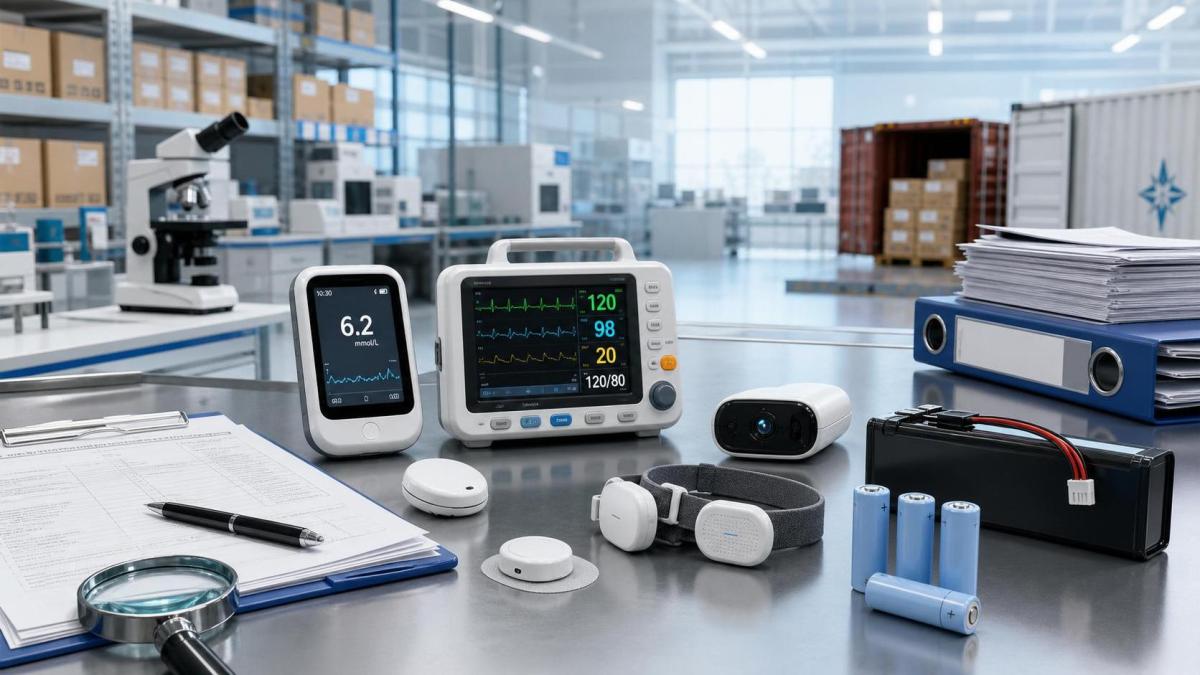
The requirement applies to imported Medical IoT devices, including CGM products, portable monitoring devices, and remote rehabilitation sensors, when they use lithium cells or battery packs.
For customs clearance, the batteries used in those imported products must be supported by two documents at the same time: an IEC 62133-2:2024 test report issued by a CNAS-accredited laboratory in China, and a VINASTAS review declaration in Vietnam.
The measure was disclosed three months in advance, and pre-review is already being accepted.
Where the impact is likely to appear first
Import and trading teams face a documentation gate at clearance
From an industry perspective, direct importers and trading companies are likely to feel the change first because the rule is tied to customs clearance. The immediate impact is not only product eligibility, but also whether the shipment file includes both the CNAS-based IEC 62133-2:2024 report and the VINASTAS review declaration in time.
What deserves closer attention is the coordination between product classification, battery documentation, and submission timing during import preparation and customs filing.
Device manufacturers and brand owners will need closer battery-file alignment
Manufacturers and brand owners selling Medical IoT products into Vietnam may be affected through product documentation management. The rule specifically points to the lithium cell or battery pack used in the device, which means technical file preparation for the battery becomes directly relevant to market entry.
Analysis shows that the practical pressure will likely sit in confirming whether the battery documentation on hand matches the required standard version and whether the supporting papers can be connected clearly to each imported device model.
Battery suppliers and upstream sourcing functions become part of the compliance chain
Battery suppliers, sourcing teams, and procurement functions may also be affected because the new rule refers to a report issued by a CNAS-accredited laboratory in China. In operational terms, this can shift attention upstream to whether the battery source already has compliant test documentation available.
Observably, the impact is likely to show up in supplier selection, document readiness, and communication between battery vendors and downstream device assemblers or exporters.
Service providers may see more pre-shipment coordination work
Compliance service providers, customs support teams, and supply chain coordinators may face a larger role in checking file completeness before shipment. Since pre-review is already open, the immediate business focus may move toward earlier document screening rather than waiting until goods are ready to clear.
The key change to watch is whether review timing and file consistency become a bottleneck in delivery schedules.
What companies should watch now
Track the effective date against shipment planning
The confirmed timeline matters: the circular was issued on July 10, 2026, and takes effect on October 1, 2026. Companies with Medical IoT shipments planned around that date should pay close attention to whether current and upcoming orders fall into the new clearance window.
Check whether battery documents match the stated requirement
Businesses should focus specifically on whether the lithium cell or battery pack in the imported device is backed by the required IEC 62133-2:2024 report from a CNAS-accredited laboratory in China, and whether the VINASTAS review declaration can be obtained in parallel. This is a document-specific requirement, so general product compliance files may not be enough on their own.
Use the pre-review window carefully
The provided information states that pre-review is already being accepted. Analysis shows that this is one of the most practical points for companies to act on now, because it may help identify documentation gaps before the October 1 implementation date.
Align supplier, importer, and customer communication early
What deserves closer attention is the handoff between battery suppliers, device manufacturers, importers, and downstream customers. Where documents are prepared by different parties, delays can come from file ownership and version control rather than from testing alone. Companies should therefore pay attention to who holds the CNAS report, who is responsible for the VINASTAS review step, and how those documents are tied to each shipment.
Why this reads as more than a routine filing update
Analysis shows that this development is not just a narrow paperwork change. It connects a recognized battery safety test report to a local review declaration and makes both relevant to customs clearance for imported Medical IoT devices. That gives the rule practical weight in real transaction flow, even though the available facts do not yet show how implementation will evolve in day-to-day enforcement.
It is more appropriate to understand this as a near-term compliance change with a broader policy signal behind it. The near-term part is clear: companies shipping covered Medical IoT products into Vietnam now have a defined effective date and a dual-document requirement. The broader signal is that battery documentation for connected medical devices is being treated as a front-end market access issue rather than only a backend technical matter.
At the same time, this remains a developing situation that still warrants observation. The input confirms that pre-review is open, but it does not provide further detail on review practice, document interpretation, or any later implementation guidance.
How to read the development at this stage
Based on the confirmed information, the main industry significance of this circular is that battery compliance paperwork for imported Medical IoT devices in Vietnam is moving into a clearer and more explicit clearance requirement. For businesses involved in covered product lines, the immediate issue is operational readiness rather than broad market speculation.
A neutral reading is that this is already a concrete short-term rule change, while its longer-term impact on sourcing, lead times, and documentation workflows still needs continued observation. Current attention is best placed on timing, document completeness, and coordination across the battery and device supply chain.
Basis of this article
This article is based on the user-provided news title, event date, and event summary regarding Vietnam MOIT’s new rule for Medical IoT battery clearance documentation.
For this type of industry update, commonly relevant source categories may include official government notices, company disclosures, industry association updates, authoritative media reporting, and standard-related documents. However, a specific official source link was not provided in the input, so the original document and any later implementation details still require ongoing verification.
Areas that remain worth monitoring include any further official wording, practical review expectations during pre-review, and whether additional clarification is issued around the required document pairing for covered Medical IoT imports.
Protocol_Architect
Dr. Thorne is a leading architect in IoT mesh protocols with 15+ years at NexusHome Intelligence. His research specializes in high-availability systems and sub-GHz propagation modeling.
Related Recommendations
- Dr. Sophia Carter (Medical IoT Specialist)IEC 60601 Compliance for ECG Wearable Patches: Tests, Design Risks, and Evidence
- Dr. Sophia Carter (Medical IoT Specialist)How to Evaluate a Medical Robot Arm OEM for Precision and Regulatory Readiness
- Dr. Sophia Carter (Medical IoT Specialist)How to Choose an ECG Wearable Patch Provider for Remote Patient Monitoring
- Dr. Sophia Carter (Medical IoT Specialist)How to Evaluate SpO2 Module Assemblies for Wearables and Medical IoT Devices
- Dr. Sophia Carter (Medical IoT Specialist)How to Choose Medical IoT Sensors for Vital Signs in Remote Patient Monitoring
- Dr. Sophia Carter (Medical IoT Specialist)What Drives Wearable Biosensors Project Cost in Medical IoT Deployment?
- Dr. Sophia Carter (Medical IoT Specialist)What Drives Blood Pressure Monitor Costs? Key Factors Buyers Should Compare
- Dr. Sophia Carter (Medical IoT Specialist)How Smart Wearable Devices Improve Remote Monitoring in Medical IoT Applications
- Dr. Sophia Carter (Medical IoT Specialist)Smart Wearable Technology for Hospitals: Use Cases, Integration Needs, and Data Risks
- Dr. Sophia Carter (Medical IoT Specialist)Medical IoT Application Analysis: Where Connected Devices Deliver Real Clinical Value
Analyst