
UL Launches Medical IoT Battery SOH Transparency Certification Pilot
author
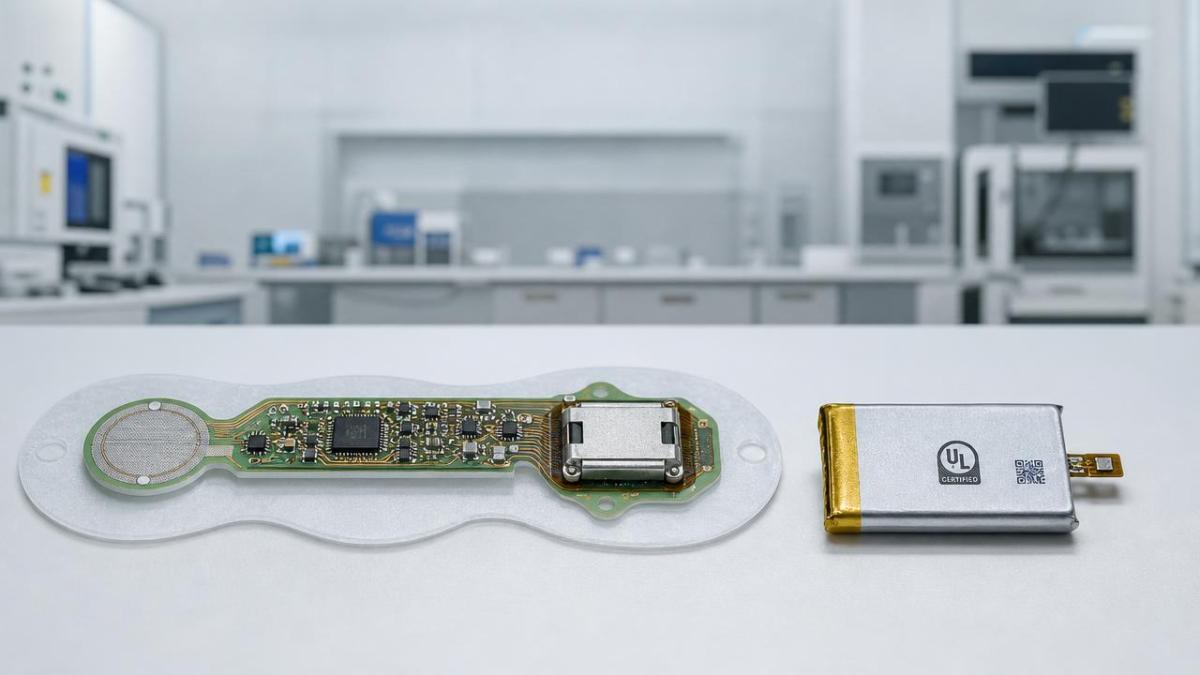
On May 8, 2026, UL Solutions initiated a pilot program for its Medical IoT Battery State-of-Health (SOH) Transparency Certification — a new requirement mandating real-time reporting of battery health status, remaining lifespan prediction, and thermal runaway alerts from embedded firmware in Class II medical IoT devices such as wearable ECG patches and remote glucose monitors. This development is especially relevant for manufacturers, ODMs, and regulatory compliance teams operating in the medical device, battery systems, and connected health technology sectors.
Event Overview
UL Solutions launched the Medical IoT Battery SOH Transparency Certification pilot on May 8, 2026. The pilot requires Class II medical IoT devices—including wearable ECG patches and remote glucose monitors—to embed firmware capable of continuously reporting battery State of Health (SOH), predicted remaining service life, and early thermal runaway signals. The initiative applies across all provisions of UL 2849 and UL 62368-1 Supplemental Clauses. Three Shenzhen-based medical IoT ODM firms have been confirmed as initial participants.
Industries Affected by Segment
Medical Device ODM/OEM Manufacturers
These firms are directly impacted because the certification applies to Class II medical IoT products they design or produce. Compliance requires firmware-level integration of battery telemetry logic, validation against UL’s updated test protocols, and alignment with both safety (UL 62368-1) and battery system (UL 2849) standards.
Battery Module & Pack Suppliers
Suppliers providing lithium-based cells or integrated battery modules to medical IoT OEMs must now support bidirectional communication interfaces (e.g., SMBus, I²C) and deliver calibrated SOH estimation algorithms compatible with UL’s transparency requirements. Firmware interoperability and traceable aging data become contractual expectations.
Regulatory & Compliance Service Providers
Firms offering certification support, test lab coordination, or technical documentation services face increased demand for UL 2849/62368-1 Supplemental Clause expertise — particularly around real-time telemetry validation, failure mode simulation, and SOH algorithm auditing.
What Relevant Enterprises or Practitioners Should Focus On and How to Respond Now
Monitor official updates to UL’s pilot scope and timeline
The pilot is currently limited to select Shenzhen ODMs and specific device categories. Stakeholders should track UL’s public announcements for expansion signals — including potential inclusion of Class III devices, broader geographic rollout, or formalization into a permanent certification scheme post-pilot.
Assess firmware architecture readiness for SOH telemetry integration
Manufacturers should audit existing battery management firmware for support of standardized SOH metrics (e.g., capacity retention %, impedance rise trends), time-synchronized logging, and secure data export. Gaps may require collaboration with battery IC vendors or firmware partners ahead of future audits.
Distinguish between pilot participation signals and enforceable requirements
As of May 2026, this remains a voluntary pilot — not a mandatory certification. Companies should avoid premature redesigns but begin documenting SOH-related design decisions and test methodologies to build internal readiness without overcommitting resources.
Prepare supply chain alignment on battery data specifications
Procurement and engineering teams should initiate dialogue with battery module suppliers to clarify data sheet coverage of SOH parameters, calibration frequency, and interface protocol compatibility — especially where UL 2849 Annex D (battery health monitoring) language appears in upcoming procurement RFPs.
Editorial Perspective / Industry Observation
Observably, this pilot represents an early institutional signal that functional safety for medical IoT is expanding beyond electrical and mechanical hazards to include predictive battery health assurance. Analysis shows UL is testing whether real-time SOH transparency can be standardized, audited, and scaled — not whether it’s technically feasible. From an industry perspective, it is more accurately understood as a regulatory stress test than an imminent compliance deadline. Continuous monitoring is warranted because successful pilot outcomes could accelerate harmonization with IEC 62304 software lifecycle expectations or FDA premarket submission guidance on battery reliability.
Conclusion: This initiative marks a procedural shift toward data-informed battery safety governance in regulated medical IoT. It does not yet constitute a binding requirement, but it establishes a clear trajectory for how battery health accountability may be verified in future market access pathways. Current stakeholders are better advised to treat it as a leading indicator — validating internal telemetry capabilities and supplier engagement models — rather than an immediate compliance event.
Source: UL Solutions official announcement (May 8, 2026); confirmed participant count and device scope per publicly disclosed pilot details. Note: Expansion timeline, eligibility criteria beyond initial ODMs, and formal certification pathway remain under observation.
Protocol_Architect
Dr. Thorne is a leading architect in IoT mesh protocols with 15+ years at NexusHome Intelligence. His research specializes in high-availability systems and sub-GHz propagation modeling.
Related Recommendations
- Dr. Sophia Carter (Medical IoT Specialist)UL Launches Medical IoT Battery SOH Transparency Certification Pilot
- Dr. Sophia Carter (Medical IoT Specialist)UL Launches Medical IoT Battery SOH Transparency Certification Pilot
- Dr. Sophia Carter (Medical IoT Specialist)UL Launches Medical IoT Battery SOH Transparency Certification Pilot
- Dr. Sophia Carter (Medical IoT Specialist)UL Launches Medical IoT Battery SOH Transparency Certification Pilot
- Dr. Sophia Carter (Medical IoT Specialist)UL Launches Medical IoT Battery SOH Transparency Certification Pilot
- Dr. Sophia Carter (Medical IoT Specialist)UL Launches Medical IoT Battery SOH Transparency Certification Pilot
- Dr. Sophia Carter (Medical IoT Specialist)UL Launches Medical IoT Battery SOH Transparency Certification Pilot
- Dr. Sophia Carter (Medical IoT Specialist)UL Launches Medical IoT Battery SOH Transparency Pilot
- Dr. Sophia Carter (Medical IoT Specialist)UL 2900-2-2:2026 Enforces AI Robustness Testing for Medical IoT in US Market
- Dr. Sophia Carter (Medical IoT Specialist)UL 2900-2-2 Updated: AI Models in Medical IoT Must Pass Adversarial Robustness Testing
Analyst