
UL Launches Medical IoT Battery SOH Transparency Certification Pilot
author
On May 8, 2026, UL Solutions launched its pilot program for ‘Medical IoT Battery State of Health (SOH) Transparency’ certification — a development with direct implications for manufacturers of connected medical devices, PCBA solution providers, and U.S. healthcare distribution stakeholders. This initiative introduces new interface-level transparency requirements for battery performance data, signaling a shift toward standardized, user-facing battery health reporting in regulated digital health products.
Event Overview
UL Solutions officially initiated the ‘Medical IoT Battery Health Status (SOH) Transparency’ certification pilot on May 8, 2026. The program mandates that devices such as continuous glucose monitors (CGMs) and portable electrocardiogram (ECG) devices display, in real time on their user interface: battery remaining capacity accuracy within ±3%, cycle-life degradation curves, and configurable battery replacement alert thresholds. Twelve China-based PCBA solution providers have been selected for the initial pilot phase. Successful participants will receive the UL ‘SOH Verified’ digital badge and gain priority access to U.S. Medicare-aligned distribution channels.
Industries Affected
PCBA Solution Providers (especially those serving U.S.-bound medical IoT OEMs)
These providers are directly impacted because they supply the core hardware platforms integrating battery management systems and firmware logic for SOH calculation and display. The pilot’s technical requirements — particularly real-time UI rendering of calibrated SOH metrics — demand close collaboration with battery IC vendors, firmware developers, and UI designers. Impact manifests in revised design specifications, added validation steps for battery telemetry accuracy, and potential firmware update cycles prior to certification submission.
Medical Device OEMs (focused on CGM, portable ECG, and similar Class II wireless devices)
OEMs face downstream compliance pressure as their chosen PCBA partners enter the pilot. Since SOH transparency is embedded at the device level and visible to end users and clinical evaluators, OEMs must verify that their product roadmaps align with UL’s UI and accuracy requirements. Failure to coordinate may delay FDA-cleared submissions where battery reliability claims intersect with usability and risk management documentation.
U.S. Healthcare Distribution & Payer-Integrated Channels
While not directly certifying, U.S. distributors and Medicare-partnered procurement programs are identified as early beneficiaries of the ‘SOH Verified’ digital badge. This implies future tender requirements or formulary preferences may begin referencing SOH transparency as a differentiator — particularly for devices deployed in remote patient monitoring programs where battery longevity affects clinical adherence and service cost.
What Relevant Enterprises or Practitioners Should Focus On
Monitor official UL guidance updates beyond the pilot announcement
The current scope — limited to CGM and portable ECG devices, and targeting only 12 Chinese PCBA firms — remains narrow. Stakeholders should track whether UL publishes formal test protocols, reference architectures, or firmware interface specifications before mid-2026, as these will define replicable implementation paths.
Assess SOH-related firmware and UI capabilities in existing product lines
Manufacturers should audit whether their current battery management firmware supports calibrated SOC estimation (±3% tolerance), stores cycle-count history, and exposes structured SOH data via APIs usable by embedded UI frameworks. Devices relying solely on voltage-based SOC estimates or lacking non-volatile cycle logging are unlikely to meet baseline eligibility.
Distinguish between pilot participation signals and near-term regulatory mandates
This is a voluntary UL certification pilot, not an FDA requirement or UL Standard publication. While it reflects emerging expectations for battery transparency in safety-critical IoT, no enforcement timeline or mandatory adoption date has been announced. Enterprises should treat this as a signal for strategic alignment — not an immediate compliance deadline.
Prepare cross-functional coordination between hardware, firmware, and regulatory teams
Implementing SOH transparency requires synchronized updates across battery selection, fuel-gauge IC configuration, firmware calibration routines, UI layer development, and clinical usability testing. Companies without integrated battery health workflows should initiate internal scoping discussions now — especially if supplying to U.S.-facing medical IoT brands.
Editorial Perspective / Industry Observation
Observably, this pilot is less about immediate certification rollout and more about establishing a verifiable benchmark for battery health communication in clinical-grade IoT. UL is testing whether standardized, user-visible SOH metrics can improve device trustworthiness, reduce premature replacements, and support value-based care models. Analysis shows the focus on PCBA-level qualification — rather than end-device OEMs — suggests UL aims to embed transparency upstream in the supply chain, where scalability and repeatability are highest. From an industry perspective, this initiative is best understood not as a new regulation, but as an early indicator of how battery performance accountability may evolve in digitally enabled medical devices — particularly where reimbursement pathways increasingly consider device uptime and maintenance predictability.
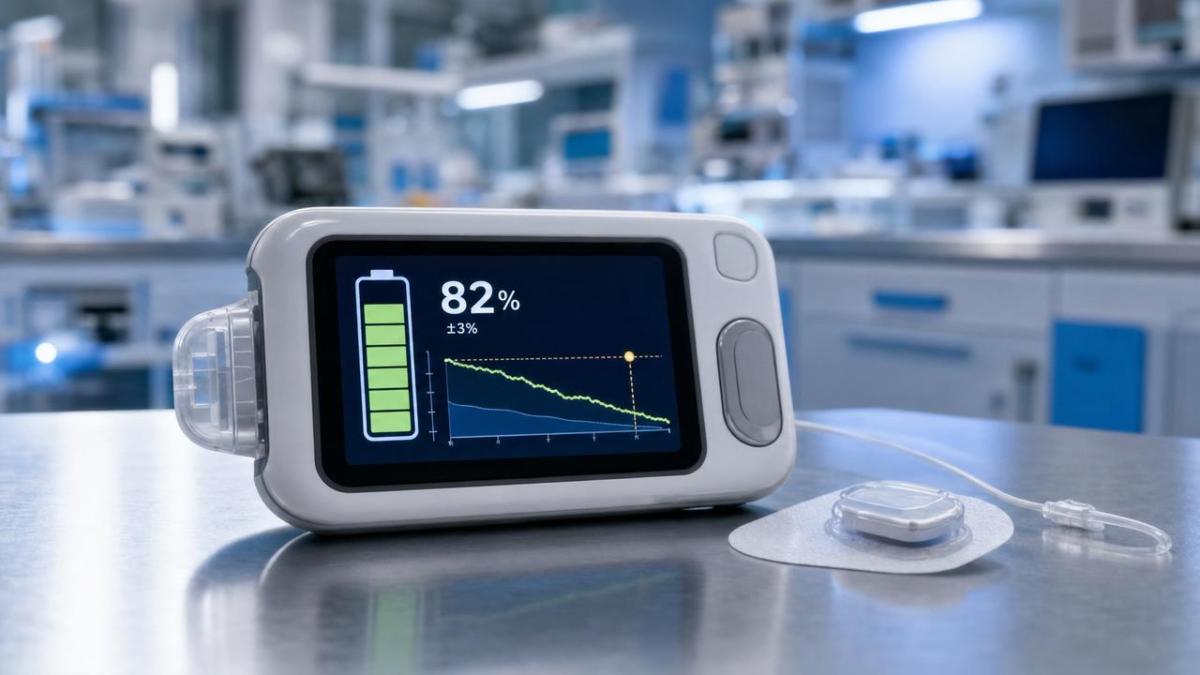
Conclusion: The UL SOH Transparency pilot marks a procedural step toward greater battery performance accountability in medical IoT — one that prioritizes interface-level clarity over abstract technical specifications. Its significance lies not in immediate enforceability, but in its framing of battery health as a clinically relevant, user-facing attribute. For now, it is more accurately interpreted as a market-readiness signal for interoperable battery intelligence, rather than a compliance milestone. Enterprises should monitor its progression closely, assess technical readiness incrementally, and avoid conflating pilot criteria with imminent regulatory requirements.
Source: UL Solutions official announcement (May 8, 2026).
Note: Certification protocol details, expansion timeline, and integration with U.S. Medicare distribution criteria remain pending further public updates from UL Solutions.
Protocol_Architect
Dr. Thorne is a leading architect in IoT mesh protocols with 15+ years at NexusHome Intelligence. His research specializes in high-availability systems and sub-GHz propagation modeling.
Related Recommendations
- Dr. Sophia Carter (Medical IoT Specialist)UL Launches Medical IoT Battery SOH Transparency Certification Pilot
- Dr. Sophia Carter (Medical IoT Specialist)UL Launches Medical IoT Battery SOH Transparency Certification Pilot
- Dr. Sophia Carter (Medical IoT Specialist)UL Launches Medical IoT Battery SOH Transparency Certification Pilot
- Dr. Sophia Carter (Medical IoT Specialist)UL Launches Medical IoT Battery SOH Transparency Certification Pilot
- Dr. Sophia Carter (Medical IoT Specialist)UL Launches Medical IoT Battery SOH Transparency Certification Pilot
- Dr. Sophia Carter (Medical IoT Specialist)UL Launches Medical IoT Battery SOH Transparency Certification Pilot
- Dr. Sophia Carter (Medical IoT Specialist)UL Launches Medical IoT Battery SOH Transparency Pilot
- Dr. Sophia Carter (Medical IoT Specialist)UL 2900-2-2:2026 Enforces AI Robustness Testing for Medical IoT in US Market
- Dr. Sophia Carter (Medical IoT Specialist)UL 2900-2-2 Updated: AI Models in Medical IoT Must Pass Adversarial Robustness Testing
- Dr. Sophia Carter (Medical IoT Specialist)UL 2900-2-2 Rev.4: AI Robustness Testing Mandatory for Medical IoT
Analyst