
Canada Enforces SOR/2026-45 for Medical IoT
author
On June 2, 2026, Health Canada announced the full entry into force of SOR/2026-45, creating a direct compliance shift for Medical IoT devices sold in Canada. The rule change centers on two concrete requirements: cryptographic key generation, storage, and rotation must be handled locally on the device rather than through the cloud, and AI-based anomaly detection must run at the edge without uploading raw physiological data. For device makers, importers, distributors, procurement teams, and compliance functions, this is worth close attention because it ties product architecture directly to market access and import eligibility.
What the rule now requires in the Canadian market
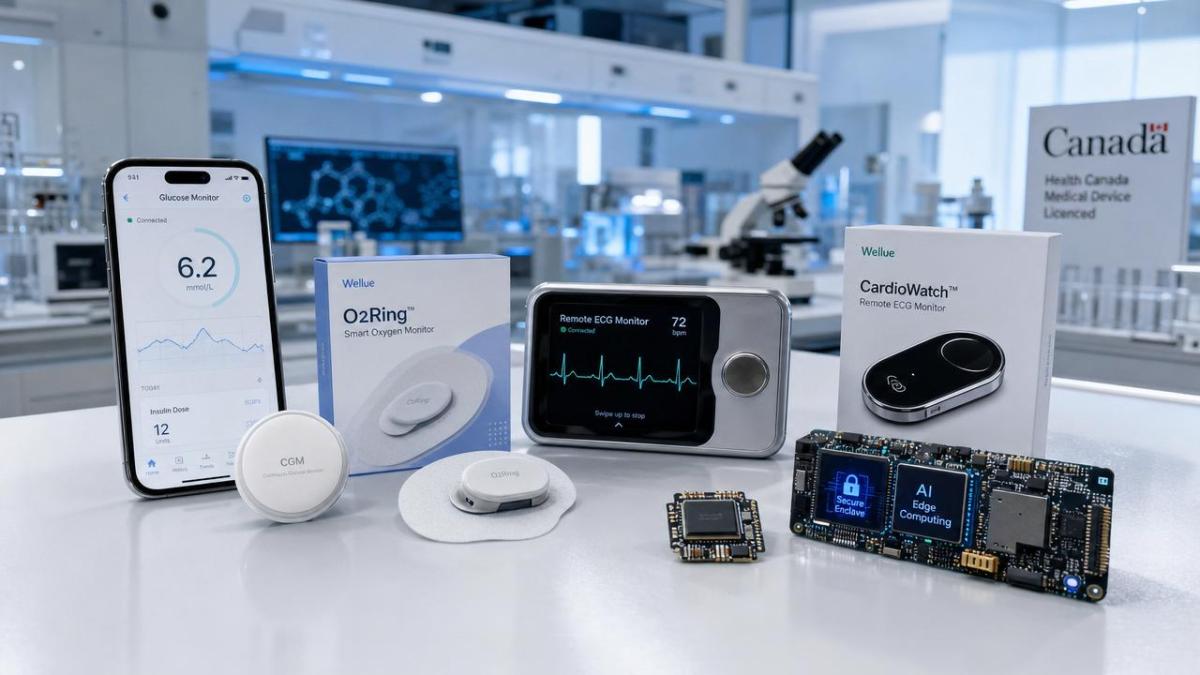
The confirmed facts are limited but clear. Health Canada announced on June 2, 2026 that SOR/2026-45 is fully in effect. The regulation applies to Medical IoT devices sold in Canada, including examples such as continuous glucose monitoring (CGM) devices, SpO2 patches, and remote ECG monitors.
Under the rule, the full lifecycle of key generation, key storage, and key rotation must be localized on the device and may not rely on the cloud. In parallel, AI anomaly detection algorithms must be deployed on the device side as Edge AI, and raw physiological data may not be uploaded. Non-compliant products face import prohibition and substantial fines.
Where the pressure will likely appear across the chain
Product design and manufacturing will be the first point of impact
From an industry perspective, manufacturers of Medical IoT devices are likely to be affected most directly because the new requirements are not limited to labeling or paperwork. They reach into device architecture, embedded security design, and onboard computing capability. What deserves closer attention is whether existing products intended for the Canadian market still depend on cloud-based key handling or cloud-centered anomaly detection workflows.
The practical effect may appear in redesign work, firmware changes, component selection, validation planning, and delivery schedules. Companies involved in processing and assembly should also watch whether localized key management and Edge AI execution create new technical documentation needs in compliance files, product specifications, and customer submissions.
Importers and channel operators face a market-access risk
For importers, brand representatives, and distribution channels, the change matters because the penalty is tied directly to import access. Analysis shows that this is not only a technical issue for engineering teams; it also becomes a trade and shipment risk. If a device sold into Canada does not meet the localization and Edge AI requirements, the commercial consequence is not limited to later correction but may affect whether the product can enter the market at all.
These parties should therefore pay closer attention to product declarations, technical dossiers, supplier statements, and compliance evidence provided before shipment. In procurement and channel contracts, the ability of the manufacturer to demonstrate local key control and on-device anomaly detection may become more important than before.
Procurement and tender review may become more technical
Buyers, healthcare procurement teams, and organizations evaluating connected medical devices may also feel the effect through specification review. Observably, when a rule addresses local key management and restrictions on raw physiological data upload, purchasing decisions may shift from general connectivity claims to more detailed security and data-processing architecture questions.
This may influence bid documents, technical specification alignment, and qualification review. Even where no new formal template has been provided in the input, companies should expect more attention to how a device handles cryptographic functions and where anomaly detection is executed.
Testing, certification, and service support may need updated evidence paths
Certification-related service providers, testing bodies, and after-sales support teams may also need to adapt their working focus. Analysis shows that when compliance is linked to on-device security processes and edge-side AI behavior, supporting materials such as technical descriptions, test records, and traceability documents may require closer review.
For service teams, the issue is not only initial entry. Maintenance, software updates, replacement cycles, and post-sale support may all need to avoid introducing cloud dependence into functions that the rule now requires to remain local.
What companies should review now
Check whether current product architecture still relies on the cloud
The first practical question is straightforward: does the device still depend on cloud services for key generation, storage, or rotation, or for primary anomaly detection processing? If the answer is yes, the product may face immediate compliance pressure in the Canadian market. Companies should review both marketed products and models already in late-stage development.
Re-examine technical files and compliance language
Companies should also review how product functions are described in technical files, declarations, sales materials, and tender responses. What deserves closer attention is consistency between actual device behavior and written compliance claims. If a supplier states that privacy or security functions are localized, supporting materials should not contradict that statement by showing cloud dependency for the same functions.
Prepare for procurement and delivery disruptions
Analysis shows that procurement plans and delivery timing may be affected where redesign, component changes, or software migration are needed. Even though the input does not provide detailed enforcement procedures, businesses should still watch for potential knock-on effects in production scheduling, export planning, inventory allocation, and customer commitments for the Canadian market.
Monitor later guidance and execution language
The current information confirms the rule and the consequence of non-compliance, but it does not provide detailed operational guidance in areas such as documentation format, review process, or evidence thresholds. It is more appropriate to understand this as an already effective rule that still requires continued monitoring of implementation language, procurement wording, and practical compliance expectations.
How this development is best understood at this stage
Observably, this development is more than a general policy signal. It points to a rule that has already taken effect and that connects cybersecurity design and data-handling architecture directly with import eligibility. At the same time, analysis also suggests caution: the input does not provide the full downstream enforcement framework, specific review procedures, or detailed certification pathways.
For that reason, the market should treat this as a live compliance requirement rather than a distant policy direction, while still keeping close watch on how the rule is interpreted in product review, procurement documents, and commercial practice.
A practical reading of SOR/2026-45
In practical terms, the June 2, 2026 announcement matters because it turns local key management and Edge AI processing into immediate market-access considerations for Medical IoT devices sold in Canada. The most rational conclusion for now is not to overstate market outcomes, but to recognize that device architecture, import planning, compliance review, and supplier coordination are now more tightly linked under this rule.
It is more appropriate to understand this event as an implemented regulatory change with direct operational consequences, while acknowledging that further observation is still needed on detailed execution, documentation expectations, and industry response.
Basis of this article and what still needs verification
This article is based on the user-provided news title, event date, and event summary. The information available here indicates that on June 2, 2026, Health Canada announced the full effectiveness of SOR/2026-45 and set requirements for localized key management and on-device AI anomaly detection for Medical IoT devices sold in Canada.
For events of this type, market participants would typically continue verifying official notices, regulator publications, customs or trade-administration information, industry association updates, standards-related documents, and reporting by authoritative media. A specific official source link was not provided in the input, so the underlying source path still requires ongoing verification. What also remains worth watching includes later implementation details, certification interpretation, changes in tender documents, industry feedback, and how companies execute compliance in practice.
Protocol_Architect
Dr. Thorne is a leading architect in IoT mesh protocols with 15+ years at NexusHome Intelligence. His research specializes in high-availability systems and sub-GHz propagation modeling.
Related Recommendations
- Dr. Sophia Carter (Medical IoT Specialist)Choosing an ECG Wearable Patch Manufacturer: Quality Checks and Lead Times
- Dr. Sophia Carter (Medical IoT Specialist)IEC 60601 Compliance for ECG Wearable Patches: Tests, Design Risks, and Evidence
- Dr. Sophia Carter (Medical IoT Specialist)How to Evaluate a Medical Robot Arm OEM for Precision and Regulatory Readiness
- Dr. Sophia Carter (Medical IoT Specialist)How to Choose an ECG Wearable Patch Provider for Remote Patient Monitoring
- Dr. Sophia Carter (Medical IoT Specialist)How to Evaluate SpO2 Module Assemblies for Wearables and Medical IoT Devices
- Dr. Sophia Carter (Medical IoT Specialist)How to Choose Medical IoT Sensors for Vital Signs in Remote Patient Monitoring
- Dr. Sophia Carter (Medical IoT Specialist)What Drives Wearable Biosensors Project Cost in Medical IoT Deployment?
- Dr. Sophia Carter (Medical IoT Specialist)What Drives Blood Pressure Monitor Costs? Key Factors Buyers Should Compare
- Dr. Sophia Carter (Medical IoT Specialist)How Smart Wearable Devices Improve Remote Monitoring in Medical IoT Applications
- Dr. Sophia Carter (Medical IoT Specialist)Smart Wearable Technology for Hospitals: Use Cases, Integration Needs, and Data Risks
Analyst