
Vision camera for PCB inspection and the defects it misses most
author
A vision camera for PCB inspection can boost speed and consistency, but it still misses critical defects when lighting, lens distortion, and real-world process variation are ignored. For engineers, buyers, and decision-makers in renewable energy electronics, this guide explains where machine vision for defect detection fails most often, how machine vision lens distortion test affects accuracy, and why edge AI for smart manufacturing matters for more reliable inspection outcomes.
In renewable energy manufacturing, PCB quality is not a secondary issue. Control boards inside solar inverters, battery management systems, EV charging modules, smart meters, and energy storage gateways often operate under vibration, thermal cycling, humidity, and long duty cycles of 5 to 15 years. A missed solder bridge, hairline crack, polarity error, or warped component can become a field failure that disrupts power conversion, telemetry, or grid communication.
That is why NexusHome Intelligence approaches inspection through measurable engineering truth rather than brochure claims. For procurement teams, operators, and technical decision-makers, the real question is not whether a vision camera can inspect a PCB. The real question is which defects it tends to miss, under what conditions accuracy degrades, and how to build a more reliable inspection workflow for renewable energy electronics.
Why PCB inspection matters more in renewable energy electronics
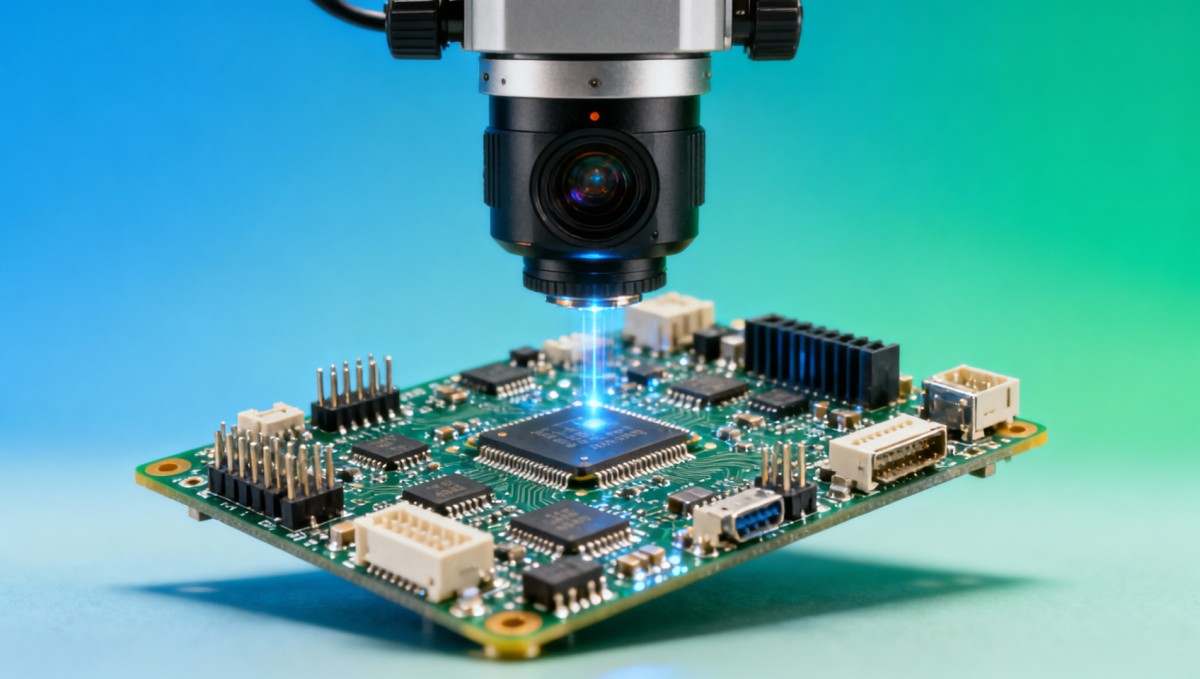
A PCB used in a residential smart thermostat and one used in a solar inverter do not face the same operating stress. Renewable energy boards often work across temperature windows such as -20°C to 60°C, with switching noise, current spikes, and outdoor deployment risks. When a defect survives factory inspection, the cost is not only scrap or rework. It can include truck rolls, downtime, safety events, and warranty exposure across distributed installations.
Vision camera for PCB inspection systems are widely deployed because they are fast. On a medium-speed SMT line, automated optical inspection can evaluate hundreds of solder joints in seconds and maintain repeatability across 2 or 3 shifts. However, repeatability is not the same as completeness. A system can be stable and still be blind to certain defect categories, especially when board reflectivity, coating, connector height, and component density vary from batch to batch.
For renewable energy products, this gap matters because electronics are increasingly integrated with connectivity modules such as Zigbee, BLE, Wi-Fi, Thread, and Matter-adjacent gateways. A visual miss on a power-stage PCB can coexist with communication failures later in the field. NHI’s data-driven view is that inspection should connect PCB-level quality with system-level reliability, especially in products that support grid balancing, home energy automation, or distributed storage.
The most common procurement mistake is buying an inspection platform based on nominal camera resolution alone. A 12 MP or 20 MP sensor does not guarantee defect capture if optics, lighting geometry, line speed, and calibration discipline are weak. In practice, false accepts often rise when product mix increases, especially where one line handles 4 to 8 board variants with different solder mask colors, copper exposure, and connector shadows.
High-risk renewable energy PCB applications
- Solar inverter control boards, where solder voids or lifted leads can destabilize power conversion and thermal management.
- Battery management system PCBs, where polarity errors, tombstoning, or poor wetting can affect cell monitoring accuracy and protection logic.
- Smart meter and gateway boards, where connector offset and fine-pitch defects can interrupt remote diagnostics and protocol communication.
- EV charger controller boards, where mixed-voltage sections and dense layouts make shadowing and reflective glare more severe.
Where missed defects become business risk
The table below maps common renewable energy electronics to the inspection consequences of a missed PCB defect. It helps purchasing teams align vision inspection investment with downstream service cost, not just line throughput.
The practical conclusion is straightforward: for renewable energy OEM and ODM programs, inspection value should be measured against field risk, serviceability, and long-life stability. A camera system that saves 8 seconds per board but misses low-contrast defects may cost more over a 12-month warranty cycle than a slower but better-calibrated setup.
The defects a vision camera for PCB inspection misses most often
Machine vision for defect detection performs best on repeatable, high-contrast targets. It struggles most where the defect is small, low-contrast, partially hidden, or process-dependent. In renewable energy boards, these conditions are common because many assemblies combine large power components, fine-pitch communication ICs, tall connectors, conformal coatings, and reflective metal shields on the same panel.
One major blind spot is subtle insufficient solder, especially when the fillet shape still looks acceptable in a 2D image. A joint may pass optical appearance checks but fail later under thermal cycling from daily load variation. Another frequent miss is hairline cracking near heavy components or terminals. If the crack width is close to the optical threshold, or the board is inspected before mechanical stress reveals the fracture, the defect can escape detection.
Shadow-driven misses are also common. Tall electrolytic capacitors, transformers, heat sinks, and terminal blocks can block light from neighboring joints. On high-density charger or inverter boards, even a 1 to 2 mm height difference between adjacent parts can change reflectivity enough to hide lifted leads or weak solder wetting. This problem worsens when one inspection recipe is reused across several board variants.
A further issue is cosmetic-to-functional confusion. Some AOI systems overreact to harmless surface texture or flux residue while underreacting to true functional risk. For operators, this creates fatigue through false calls. For managers, it leads to a dangerous assumption that a high alarm count means good protection. In reality, the missed defect rate can remain high even when total alarms increase by 20% or 30%.
Most frequently missed defect categories
- Low-volume insufficient solder on gull-wing leads and large thermal pads.
- Hairline cracks around connectors, shunts, or mechanically stressed corners.
- Lifted leads hidden by neighboring tall parts or angled reflections.
- Tombstoning at an early stage before final positional deviation exceeds recipe thresholds.
- Polarity or orientation errors on similar-looking passive or protection devices.
- Fine solder bridges in areas with glare, dark solder mask, or residue contamination.
Why these misses happen
The root causes usually combine three factors: optical limitation, process variation, and weak recipe governance. Optical limitation includes lens distortion, uneven illumination, insufficient depth of field, and pixel resolution that is too low for the defect scale. Process variation includes solder paste spread, board warp, oxidation, and lot-to-lot component finish changes. Recipe governance problems include infrequent revalidation, poor golden sample selection, and inadequate correlation with downstream failure analysis.
For renewable energy lines producing moderate volumes, one of the biggest risks is recipe drift over 6 to 12 months. A camera originally tuned for one BMS board may still be running after BOM substitutions, supplier changes, and coating adjustments. Inspection performance declines quietly unless teams track false reject, false accept, and escape categories by defect type rather than relying on headline yield alone.
How machine vision lens distortion test affects inspection accuracy
A machine vision lens distortion test is not a lab formality. It directly affects whether pad spacing, lead position, component geometry, and solder edge interpretation remain trustworthy across the full image field. In practical terms, barrel or pincushion distortion can alter dimensional judgment more at the edge of the frame than at the center. On large renewable energy PCBs, that means two identical defects may be interpreted differently depending on where they appear on the panel.
This matters even more when the board contains mixed scales. A single panel may include large power devices and 0.5 mm pitch control ICs. If the system is calibrated only for central targets, positional tolerance at the corners may drift beyond acceptable limits. A deviation of even 0.05 to 0.15 mm can be enough to confuse offset, coplanarity, or bridge detection in dense sections, especially when combined with vibration or line-speed blur.
Distortion testing should also be linked to lighting and working distance. A good lens on paper can still underperform if the installation angle, standoff height, or enclosure vibration changes after maintenance. In smart manufacturing environments, the best practice is to validate the full image chain: lens, camera, mount, illumination, conveyor stability, and calibration target quality. Testing one item in isolation rarely explains why escapes persist.
Key checks in a distortion validation routine
The table below shows a practical framework for buyers and line engineers evaluating machine vision lens distortion test quality on PCB inspection equipment used for renewable energy electronics.
For decision-makers, the key takeaway is simple: if a supplier cannot explain how lens distortion is tested, compensated, and revalidated on real boards, the quoted inspection accuracy is incomplete. In long-life renewable energy products, that gap can translate into delayed defect discovery and more expensive returns.
Questions buyers should ask suppliers
- What calibration artifact is used, and how often is recalibration recommended in production?
- Is distortion compensation applied across the full field or mainly near the center?
- How does the system handle board warp, vibration, and variable reflectivity on dark green or black masks?
- Can the supplier show defect-capture results on tall-component renewable energy boards rather than flat demo panels?
Why edge AI for smart manufacturing improves real inspection outcomes
Traditional rule-based vision systems are useful, but they depend heavily on manually defined thresholds. In renewable energy electronics, process variation is often too complex for fixed rules alone. Edge AI for smart manufacturing helps by processing inspection data near the production line, learning from real defect images, and adapting more effectively to changing solder appearance, board finish, and component mix without sending sensitive manufacturing data to remote systems.
This local intelligence is especially relevant for factories building IoT-enabled energy devices. Products such as smart relays, battery gateways, microinverter modules, and protocol-bridging controllers combine power electronics with communication hardware. Their failure modes are not limited to visible geometry. Edge AI can correlate recurring visual anomalies with electrical test outcomes, helping teams identify which “minor” visual patterns are actually predictive of later failure.
From an operations standpoint, edge AI reduces latency and supports faster feedback loops. Instead of waiting for centralized review, a model can flag unusual solder texture, rare orientation drift, or emerging lot-specific patterns within seconds. On lines running 3,000 to 10,000 assemblies per shift, even a modest reduction in false rejects or escapes can materially improve throughput and engineering response time.
However, edge AI is not a magic replacement for optical discipline. It works best when image quality is already controlled. If lighting is unstable or lens distortion is unresolved, the model simply learns from noisy inputs. NHI’s benchmarking philosophy applies here as well: smart manufacturing must be data-driven, stress-tested, and connected to measurable defect categories, not marketed as a generic “AI upgrade.”
Where edge AI adds the most value
- Classification of borderline defects that generate high operator disagreement.
- Detection of rare patterns that appear only after supplier, paste, or coating changes.
- Adaptive tuning for multi-variant lines producing 4 to 12 PCB families.
- Correlation between AOI images, ICT results, and field-return failure codes.
Rule-based vision versus edge AI-assisted inspection
The comparison below is useful for procurement and engineering teams planning inspection upgrades for renewable energy electronics assembly.
For most renewable energy manufacturers, the most effective path is hybrid. Keep deterministic rules for obvious dimensional defects, and use edge AI for borderline, low-contrast, or historically escaped conditions. This approach improves trust because operators can see where each method contributes rather than relying on an opaque all-in-one promise.
A practical selection and implementation framework for buyers and factory teams
Selecting a vision camera for PCB inspection should start with failure modes, not brochure specifications. Procurement teams in renewable energy should first identify the 5 to 10 defect types with the highest field risk, then ask whether the proposed system has been validated on comparable board architecture. A platform optimized for consumer electronics may underperform on thick copper boards, heavy connectors, coated surfaces, or mixed-height layouts common in power and energy control assemblies.
Implementation should also be staged. In many factories, a 3-phase rollout works better than a full-line switch. Phase 1 covers baseline imaging, recipe creation, and distortion validation. Phase 2 links optical findings with rework and electrical test data over 2 to 6 weeks. Phase 3 introduces AI-assisted classification, operator retraining, and periodic recipe governance. This structure reduces disruption while producing measurable evidence of improvement.
For NHI-aligned supplier evaluation, transparency is critical. Vendors should be able to explain detection limits, image archive policy, calibration discipline, and how their system performs under interference from reflective surfaces and variable ambient conditions. This matters in global supply chains where manufacturing partners, component sources, and board revisions change faster than many inspection programs are updated.
Finally, operators need a closed-loop process. If review technicians override alarms without structured coding, the line loses learning value. Every escape, false reject, and recurring nuisance alarm should feed back into a defect library. Over a 90-day period, that library becomes one of the most valuable assets for both quality improvement and future sourcing decisions.
Recommended evaluation checklist
- Verify camera, lens, and lighting as a single optical package rather than separate line items.
- Request evidence from boards with similar copper weight, component height, and solder mask color.
- Define acceptable false reject and false accept ranges before pilot approval.
- Check whether distortion calibration can be repeated by factory staff within a practical maintenance window.
- Ensure image retention supports root-cause analysis for at least several production cycles.
Procurement decision factors
The table below summarizes practical decision criteria for enterprises sourcing machine vision for defect detection in renewable energy electronics production.
A disciplined selection process helps buyers avoid the common trap of comparing only capital cost. In renewable energy manufacturing, lifecycle quality cost, service exposure, and data transparency usually matter more than the initial equipment quote.
Frequently asked questions
How often should a machine vision lens distortion test be repeated?
A practical range is every 1 to 4 weeks, plus any time the lens, mount, lighting angle, or product recipe changes. High-mix lines or environments with vibration and maintenance intervention may need more frequent checks.
Is 2D vision enough for renewable energy PCB inspection?
For simple, stable boards it may be enough, but many inverter, BMS, and charger assemblies benefit from a broader strategy that combines 2D vision, optical calibration, selective 3D methods, and electrical test correlation. The more mixed the component heights, the less reliable a purely 2D approach becomes.
What is the biggest mistake during procurement?
Choosing by camera resolution or advertised AI capability alone. Buyers should instead ask for board-specific validation, defect library evidence, false accept analysis, and calibration routines tied to actual renewable energy products.
For renewable energy electronics, the value of a vision camera for PCB inspection depends on what it fails to see as much as what it detects. The highest-risk gaps usually appear in low-contrast solder issues, hairline cracks, hidden leads, and geometry errors amplified by weak calibration. A disciplined machine vision lens distortion test, paired with better lighting strategy and closed-loop defect review, can significantly improve trust in inspection data.
When edge AI for smart manufacturing is added with care, manufacturers gain a more adaptive system for mixed-product lines, evolving suppliers, and increasingly connected energy devices. That aligns with NHI’s data-first approach: engineering truth should be verified through measurable performance, not generic claims. If you are evaluating inspection upgrades for solar, storage, smart grid, or energy automation electronics, contact us to discuss a more transparent selection framework, request a tailored evaluation checklist, or explore data-driven benchmarking options for your production environment.
Protocol_Architect
Dr. Thorne is a leading architect in IoT mesh protocols with 15+ years at NexusHome Intelligence. His research specializes in high-availability systems and sub-GHz propagation modeling.
Related Recommendations
- Lina Zhao(Security Analyst)What Is a Good starlight night vision lux rating?
- Lina Zhao(Security Analyst)What sets a safe lidar payload weight limit today?
- Lina Zhao(Security Analyst)DeepSeek-V4-Pro API Price Cut to 25% of Original
- Lina Zhao(Security Analyst)EN 303 646-2:2026 Enforced: Edge Inference Latency Testing for Vision AI Devices
- Lina Zhao(Security Analyst)Middle East Vision AI White List Launches Q1 Review with Edge Power Cap
- Lina Zhao(Security Analyst)EU EN 303 646-2:2026 Enforces Edge AI Performance for Vision Devices
- Lina Zhao(Security Analyst)EU EN 303 646-2:2026 Enforces Local Edge AI Certification for Vision Cameras
- Lina Zhao(Security Analyst)Middle East Vision AI White List Re-Review Launched
- Lina Zhao(Security Analyst)South Korea Enforces Localized Edge Processing for Vision AI Cameras
- Lina Zhao(Security Analyst)UArizona Breaks Mirror-Reflection Recognition Barrier in 3D Vision AI
Analyst