
Middle East Vision AI Whitelist Re-Review Launched
author
On May 12, 2026, the Emirates Authority for Standardization and Metrology (ESMA) and the Saudi Standards, Metrology and Quality Organization (SASO) jointly initiated the annual re-review of the Middle East Vision AI device whitelist. This development directly affects manufacturers and exporters of smart access cameras, biometric sensors, and smart lock vision modules — particularly those relying on cost-optimized Vision AI solutions. It signals a tightening of technical compliance requirements in the Gulf region, with measurable implications for power efficiency, supply chain readiness, and market access.
Event Overview
On May 12, 2026, ESMA and SASO jointly issued a notice launching the annual re-review of the Vision AI device whitelist for the Middle East. Starting July 2026, all listed products — including smart access cameras, biometric sensors, and smart lock vision modules — must submit, on a quarterly basis, an ‘Edge AI Inference Power Consumption Test Report’ issued by an ISO/IEC 17025-accredited laboratory. The report must verify that under continuous 1080p@30fps identification workload, the combined standby power consumption of SoC and ISP does not exceed 85 mW. Devices failing to meet this requirement will be removed from the whitelist and barred from customs clearance.
Industries Affected
Direct Exporters and Trade Enterprises
Exporters shipping Vision AI hardware to the UAE and Saudi Arabia face immediate compliance risk. Since whitelist removal triggers customs suspension, failure to submit valid quarterly reports may halt shipments without advance warning. Impact is concentrated on companies whose product portfolios include entry-level or budget-tier edge AI devices — especially those designed without rigorous thermal or low-power validation for sustained inference workloads.
Original Equipment Manufacturers (OEMs) and Contract Manufacturers
OEMs supplying white-label or private-label Vision AI modules are exposed through downstream certification liability. If their designs rely on SoC platforms with known power management limitations (e.g., unthrottled ISP clocks or inefficient memory access patterns), they may need to revise firmware, adjust sensor configuration, or revalidate thermal design — all before the July 2026 deadline.
Component Sourcing and Supply Chain Service Providers
Suppliers of SoCs, ISP chips, or power management ICs may see revised demand signals: increased preference for components with documented low-power inference performance at 1080p@30fps. However, no new component-level certification is mandated — only system-level validation. Thus, impact is indirect but observable via OEM procurement shifts toward proven low-power reference designs.
Key Focus Areas and Recommended Actions
Monitor official test protocol updates from ESMA and SASO
The notice references ISO/IEC 17025 lab reports but does not yet publish standardized test methodology (e.g., ambient temperature, frame buffer settings, or inference trigger frequency). Stakeholders should track upcoming technical annexes or FAQs expected before June 2026.
Identify and prioritize affected SKUs ahead of July 2026
Products certified under prior whitelist cycles — especially those launched before Q4 2025 — should undergo internal power profiling against the 85 mW / 1080p@30fps benchmark. Prioritize SKUs with known thermal constraints, non-optimized ISP pipelines, or legacy SoCs lacking dynamic voltage/frequency scaling (DVFS) support.
Distinguish between policy signal and operational enforcement
This is a formalized compliance mechanism, not a one-time audit. Quarterly reporting implies recurring lab costs, documentation overhead, and potential version control challenges across hardware revisions. Companies should treat it as a sustained operational requirement — not a transitional hurdle.
Prepare lab engagement and reporting workflows now
ISO/IEC 17025-accredited labs with Vision AI testing capability remain limited in the region. Lead times for scheduling, test setup, and report issuance may extend beyond four weeks. Firms should initiate lab outreach and sample submission by early June 2026 to ensure first-report readiness for Q3 2026 (July–September).
Editorial Perspective / Industry Observation
Observably, this initiative functions less as a sudden regulatory shift and more as a formalized escalation of existing technical expectations. While power efficiency has long been a design consideration for edge AI, its codification into a mandatory, quarterly, system-level pass/fail metric marks a structural change in market access criteria. Analysis shows the 85 mW threshold is stringent — comparable to best-in-class ultra-low-power vision SoCs operating in optimized idle states — suggesting ESMA and SASO are deliberately filtering out solutions with marginal thermal or power architecture. From an industry perspective, this reflects growing regional emphasis on device longevity, deployment scalability, and infrastructure compatibility — not just functional capability. It is not yet a de facto ban on specific vendors or platforms, but rather a procedural gate that favors disciplined engineering over rapid time-to-market.
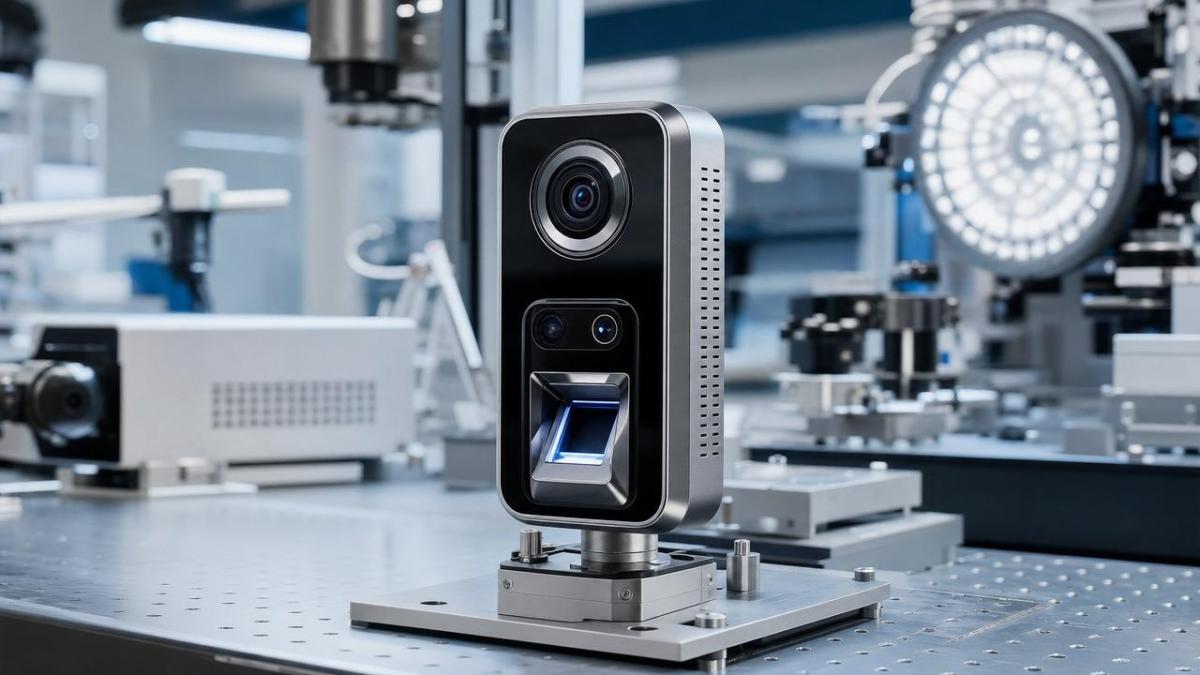
Conclusion: This whitelist re-review establishes a new, quantifiable benchmark for Vision AI device sustainability in the Middle East. Its significance lies not in novelty — power-aware design has been discussed for years — but in enforceability: quarterly reporting transforms theoretical efficiency into an auditable, recurring business process. Current interpretation should emphasize procedural preparedness over technical panic; firms with robust validation practices and lab-aligned documentation workflows are unlikely to face disruption. For others, the timeline is short but actionable — and the standard is explicit.
Source: Joint notification issued by ESMA and SASO on May 12, 2026. No additional technical annexes or test methodology documents have been published as of the date of this article. Continued observation is recommended for official guidance on test protocols, accredited laboratories, and transition timelines.
Protocol_Architect
Dr. Thorne is a leading architect in IoT mesh protocols with 15+ years at NexusHome Intelligence. His research specializes in high-availability systems and sub-GHz propagation modeling.
Related Recommendations
- Lina Zhao(Security Analyst)How to Design a Smart Building Security Ecosystem That Integrates Access, Video, and Energy Data
- Lina Zhao(Security Analyst)How Lidar-Camera Fusion Improves Autonomous Inspection Robots for Solar Farms
- Lina Zhao(Security Analyst)How to Choose AI Security Cameras for Apartments Without Compromising Privacy
- Lina Zhao(Security Analyst)How to Evaluate a Commercial AI Camera Supplier for Long-Term Project Reliability
- Lina Zhao(Security Analyst)How to Plan Smart Security for Warehouses: Access Control, AI Monitoring, and ROI
- Lina Zhao(Security Analyst)How to Choose a Smart Traffic Sensor for Intersections: Key Specs and Deployment Factors
- Lina Zhao(Security Analyst)How to Evaluate Custom AMR AGV Navigation for Complex Warehouse Routes
- Lina Zhao(Security Analyst)METI Tightens Audit Rules for Vision AI Security Devices
- Lina Zhao(Security Analyst)Smart Camera Infrared Range Explained: What Affects Night Detection Distance?
- Lina Zhao(Security Analyst)Vision AI for Renewable Energy: 7 Inspection Tasks It Can Automate
Analyst