
Trampoline Park Design Mistakes That Hurt Visitor Flow
author
In renewable-energy-aware leisure projects, trampoline park design now influences far more than fun. It shapes visitor flow, queue pressure, HVAC demand, lighting efficiency, maintenance cycles, and overall operating stability.
When circulation fails, congestion rises quickly. That means longer dwell time in bottlenecks, higher cooling loads, more lighting waste, and greater staff intervention across the facility.
The most expensive mistakes usually happen before construction. A weak layout can reduce throughput, increase energy intensity per visitor, and limit future smart-building upgrades.
This guide explains the most common trampoline park design errors that hurt movement, safety, and long-term performance, while connecting each issue to practical renewable energy and facility-efficiency goals.
Why a Structured Review Matters in Trampoline Park Design
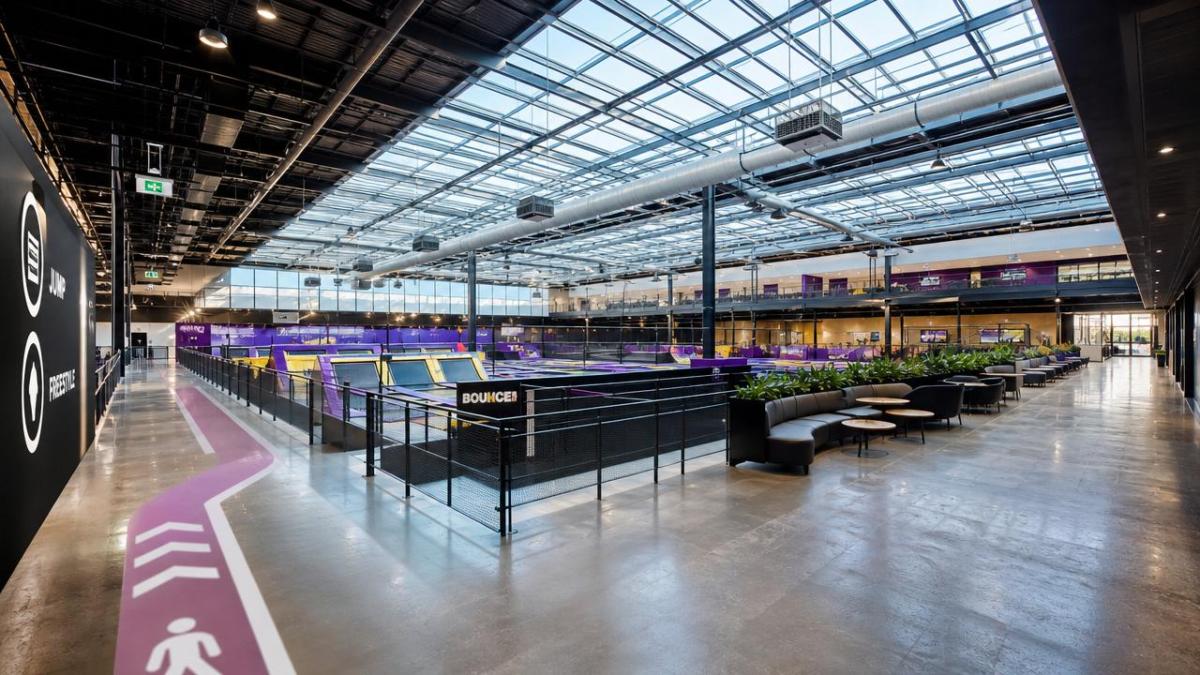
A structured review prevents isolated decisions. Entrance planning, jump zones, spectator seating, power systems, and climate control must work together, not as separate design packages.
In modern leisure buildings, visitor flow and energy use are linked. Poor routing increases door openings, idle equipment hours, and uneven occupancy loads across conditioned spaces.
For that reason, trampoline park design should be checked against both movement logic and building-performance logic. That approach supports safer operations and better sustainability outcomes.
Core Trampoline Park Design Checks That Prevent Flow Failures
- Separate arrival, waiver, sock purchase, and check-in paths so entry tasks do not merge into one choke point during peak attendance periods.
- Place lockers, restrooms, and hydration points outside primary circulation lanes to prevent stop-and-go movement near active trampoline zones.
- Avoid a single gateway into all attractions; distribute access points so crowds split naturally instead of compressing into one decision node.
- Design clear sightlines between staff stations and high-traffic zones, reducing response time and limiting unnecessary walking routes for supervision teams.
- Keep spectator seating close enough for visibility but outside the jump circulation loop, preventing family groups from blocking transition areas.
- Match emergency exits with real occupancy patterns rather than code minimums alone, especially where birthday rooms or party clusters create temporary surges.
- Zone HVAC and lighting controls by activity density so low-use areas do not consume the same energy as fully occupied jump sections.
- Reserve service corridors for maintenance, cleaning, battery storage, and equipment access to avoid crossing public routes during operating hours.
These checks improve more than movement. They also support lower peak cooling loads, better daylight use, and easier integration with smart energy monitoring systems.
The Most Common Layout Mistakes That Quietly Damage Performance
1. Oversized Front Desk, Undersized Arrival Space
Many projects focus on a prominent reception counter but ignore queue spread. The result is a polished entrance that blocks itself during weekend and event spikes.
In trampoline park design, the arrival zone must absorb digital check-in, group pauses, stroller parking, and footwear changes without interfering with exit traffic.
2. Mixing Active and Passive Zones
When party rooms, cafes, and seating overlap active circulation, movement becomes unpredictable. People stop, watch, eat, and reorient exactly where others need continuous passage.
This also affects energy efficiency. Mixed-use congestion often forces overcooling because crowded edge spaces gain heat faster than planned.
3. Poor Transition Planning Between Attractions
Visitors rarely stay in one zone. They rotate between dodgeball, foam pits, free-jump areas, and climbing elements. Weak transitions create crossing conflicts and hesitation.
Good trampoline park design creates directional flow. It should reduce reverse walking, dead ends, and repeated crossings over central paths.
4. Ignoring Building Orientation and Energy Loads
A park may function operationally while still wasting energy. Large glazed areas, poorly shaded waiting zones, and uneven ventilation planning raise cooling demand dramatically.
In renewable-energy-conscious facilities, trampoline park design should align occupancy hotspots with efficient HVAC zoning, rooftop solar planning, and lower daytime thermal stress.
5. No Space for Smart Infrastructure Expansion
Many venues now adopt occupancy sensors, submetering, smart lighting, and demand-response controls. Designs without cable pathways or control access limit these upgrades later.
That creates hidden retrofit costs. Flexible infrastructure is now a core part of durable trampoline park design.
How These Issues Change Across Real Project Scenarios
Urban Indoor Parks
Urban sites often have compact footprints and expensive conditioned space. Every circulation meter matters, especially where vertical access and shared parking already create delays.
Here, trampoline park design should prioritize short wayfinding routes, zoned ventilation, and energy-efficient waiting areas that avoid crowding near doors and elevators.
Mixed-Use Family Entertainment Centers
When trampolines share space with arcades, dining, or climbing attractions, flow complexity rises sharply. Shared circulation often causes attraction spillover and confused routing.
A better approach separates anchor attractions while linking them through clear, wide transition zones. This reduces cross-traffic and allows smarter energy scheduling by zone.
Retrofit Projects in Existing Buildings
Retrofits face structural columns, low ceilings, and legacy mechanical systems. These constraints often force compromises that weaken circulation and increase operating inefficiency.
In these cases, trampoline park design should start with movement modeling and utility mapping, not attraction placement. That order protects both safety and retrofit economics.
Often Overlooked Risks That Deserve Early Attention
Wayfinding is often treated as graphics only. In reality, poor directional logic slows movement, increases staff interruptions, and causes repeated wandering through conditioned areas.
Acoustic buildup is another hidden issue. Loud zones near check-in or seating create confusion, longer transaction times, and more clustering around communication points.
Cleaning logistics are frequently ignored. If floor care teams must cross guest routes, early-morning preparation and in-day maintenance become disruptive and inefficient.
Storage placement also matters. Supplies, spare parts, and safety equipment should never consume movement corridors that were intended for guests or emergency use.
Finally, renewable energy systems need operational coordination. Solar generation, battery support, and smart controls deliver less value when occupancy flows remain unpredictable.
Practical Steps to Improve Trampoline Park Design Before Construction
- Map hourly visitor journeys from parking to exit, then test where groups stop, merge, wait, and reverse direction during peak operation.
- Overlay occupancy heat maps with HVAC, lighting, and sensor zones to reveal where movement errors will also raise energy consumption.
- Run weekend and event scenarios separately because party traffic patterns often differ from normal public admission behavior.
- Protect future flexibility by reserving pathways for data cabling, submeters, controls, and battery-backed emergency systems.
If possible, compare the draft layout against real operational data from similar facilities. Movement assumptions are often less accurate than teams expect.
FAQ on Trampoline Park Design and Visitor Flow
What is the biggest trampoline park design mistake?
The biggest mistake is treating visitor flow as a secondary issue. Poor circulation affects safety, staffing, comfort, and energy performance at the same time.
How does trampoline park design connect to renewable energy goals?
Efficient flow reduces unnecessary HVAC demand, lighting waste, and occupancy imbalance. That makes solar generation, smart controls, and energy monitoring more effective.
Should smart-building systems be planned early?
Yes. Early planning supports sensors, zoned controls, submetering, and predictive maintenance without disruptive retrofits or compromised circulation space.
Final Takeaway and Next Action
Strong trampoline park design is not only about attraction placement. It is a building-performance decision that shapes visitor flow, safety quality, and renewable-energy efficiency.
Review the layout early, test movement under realistic occupancy, and align circulation with HVAC zoning, smart controls, and future energy upgrades.
When these factors are solved together, the result is a facility that moves better, costs less to run, and performs more reliably over time.
Protocol_Architect
Dr. Thorne is a leading architect in IoT mesh protocols with 15+ years at NexusHome Intelligence. His research specializes in high-availability systems and sub-GHz propagation modeling.
Related Recommendations
- Lina Zhao(Security Analyst)How to Design a Smart Building Security Ecosystem That Integrates Access, Video, and Energy Data
- Lina Zhao(Security Analyst)How Lidar-Camera Fusion Improves Autonomous Inspection Robots for Solar Farms
- Lina Zhao(Security Analyst)How to Choose AI Security Cameras for Apartments Without Compromising Privacy
- Lina Zhao(Security Analyst)How to Evaluate a Commercial AI Camera Supplier for Long-Term Project Reliability
- Lina Zhao(Security Analyst)How to Plan Smart Security for Warehouses: Access Control, AI Monitoring, and ROI
- Lina Zhao(Security Analyst)How to Choose a Smart Traffic Sensor for Intersections: Key Specs and Deployment Factors
- Lina Zhao(Security Analyst)How to Evaluate Custom AMR AGV Navigation for Complex Warehouse Routes
- Lina Zhao(Security Analyst)METI Tightens Audit Rules for Vision AI Security Devices
- Lina Zhao(Security Analyst)Smart Camera Infrared Range Explained: What Affects Night Detection Distance?
- Lina Zhao(Security Analyst)Vision AI for Renewable Energy: 7 Inspection Tasks It Can Automate
Analyst