
China Cycle 2026: Wi-Fi 7 IoT & Vision AI Safety Systems in Focus
author
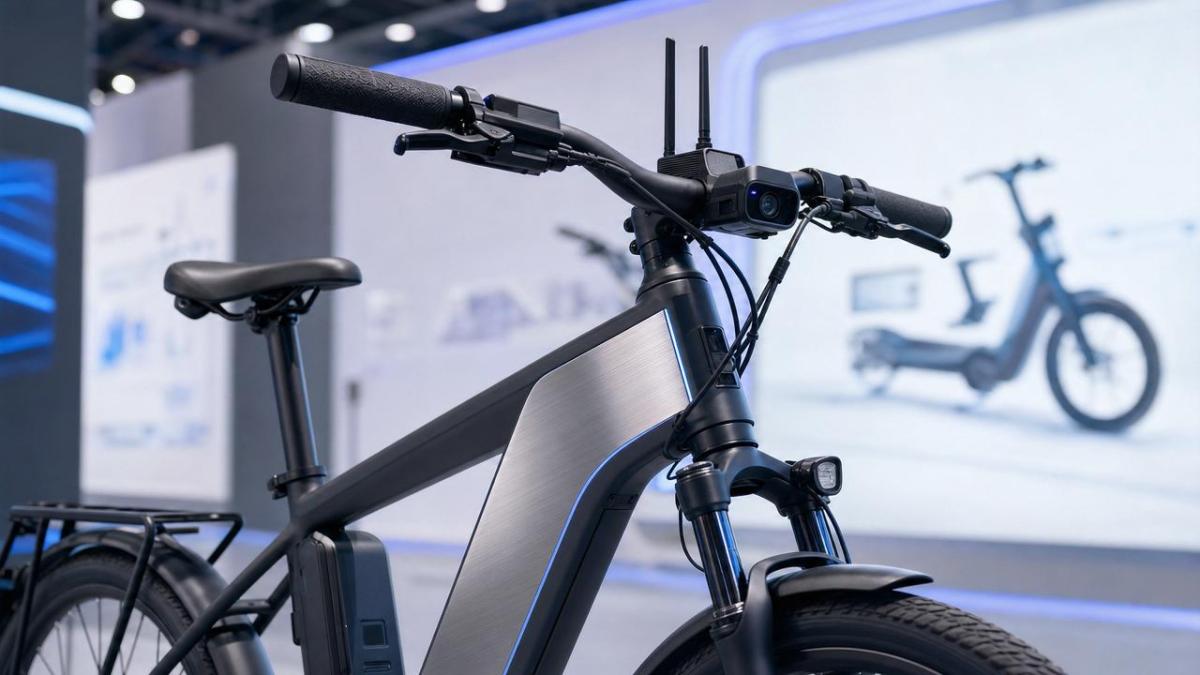
China Cycle 2026 — the leading international bicycle and e-mobility trade fair — opens on May 5, 2026, with over 120 Chinese manufacturers showcasing integrated Wi-Fi 7 IoT and Vision AI-based cycling safety systems. This development signals growing convergence of connectivity infrastructure and real-time perception technologies in active mobility hardware — a shift relevant to smart device exporters, EU/US/SEA regulatory compliance specialists, and global OEM procurement teams.
Event Overview
The 2026 China International Bicycle Exhibition (China Cycle) will open on May 5, 2026. Over 120 Chinese manufacturers have confirmed participation with exhibits featuring intelligent cycling systems that integrate Wi-Fi 7 for low-latency data transmission and Vision AI for real-time fall/collision detection. During the event, the White Paper on Export Compliance for Smart Cycling Devices will be released, covering technical and regulatory requirements under EU EN ISO 13849, US CPSC 16 CFR Part 1512, and key market access considerations for Southeast Asia. Overseas buyers will be able to assess China’s latest capabilities in end-to-end technology integration at the exhibition.
Impact on Specific Industry Segments
Direct Trading Enterprises
These firms — especially those exporting finished smart cycling devices or subsystems — face immediate implications from the regulatory scope outlined in the upcoming white paper. The inclusion of both EU functional safety standards (EN ISO 13849) and US mechanical safety rules (CPSC 16 CFR Part 1512) means dual-track compliance planning is no longer optional for market access. Impact manifests in pre-shipment testing timelines, documentation depth, and third-party certification dependencies.
Manufacturing & OEM Suppliers
Suppliers providing core components (e.g., AI vision modules, Wi-Fi 7 chipsets, or embedded controllers) are seeing rising demand for interoperability validation and safety-aware firmware design. Because the exhibited systems combine real-time sensing with wireless control, manufacturers must now align not only with connectivity specs but also with functional safety boundaries — particularly where AI outputs trigger safety-critical responses (e.g., emergency braking or alerting).
Supply Chain & Logistics Service Providers
Service providers supporting cross-border shipment of smart cycling hardware may encounter new classification and labeling expectations. As Vision AI–enabled devices increasingly qualify as “intelligent personal protective equipment” or “cyber-physical safety products” in certain jurisdictions, customs declarations, tariff codes, and post-import conformity checks may evolve — especially for shipments entering the EU or ASEAN markets referenced in the white paper.
What Relevant Enterprises Should Monitor and Act On
Track official release and scope of the compliance white paper
The White Paper on Export Compliance for Smart Cycling Devices is scheduled for release during the exhibition. Enterprises should prioritize reviewing its final version — particularly annexes detailing test methods, required documentation formats, and jurisdiction-specific interpretation notes — rather than relying on pre-event summaries.
Map current product portfolios against three regulatory frameworks cited
Companies should conduct an internal gap analysis mapping existing or planned products against EN ISO 13849 (for safety-related control systems), CPSC 16 CFR Part 1512 (for bicycle structural and mechanical requirements), and emerging SEA national standards (e.g., Singapore SS 631 or Thailand TIS 1960). Prioritization should reflect near-term export targets — not theoretical coverage.
Distinguish between technical demonstration and commercial readiness
While over 120 exhibitors are presenting Wi-Fi 7 + Vision AI integrations, the event serves primarily as a technology showcase. Analysis shows most implementations remain at prototype or limited-batch production stage. Enterprises evaluating sourcing options should verify volume scalability, firmware update mechanisms, and long-term support commitments — not just feature parity.
Prepare for multi-layered supplier qualification
Procurement teams engaging Chinese suppliers should anticipate expanded due diligence: verification of chipset-level Wi-Fi 7 certification (e.g., IEEE 802.11be conformance), AI model training data provenance (especially for collision/fall datasets), and evidence of safety lifecycle management per IEC 61508 or ISO 13849–1. Standard supplier questionnaires may require revision to capture these dimensions.
Editorial Perspective / Industry Observation
Observably, this edition of China Cycle reflects a transitional phase — not full market maturity — for AI-integrated cycling safety hardware. The concentration of Wi-Fi 7 and Vision AI demonstrations signals strong R&D momentum among Chinese hardware developers, yet the simultaneous emphasis on regulatory white paper publication suggests industry awareness of implementation barriers ahead. From an industry perspective, the event functions less as a signal of widespread commercial deployment and more as a coordination point for aligning technical capability with evolving compliance expectations across fragmented regional regimes. Continued monitoring is warranted not because adoption is imminent, but because regulatory alignment efforts — once initiated — tend to cascade into downstream procurement and certification practices within 12–18 months.
China Cycle 2026 does not mark the arrival of mass-market AI-powered cycling safety systems, but it does formalize a shared reference point for technical ambition and regulatory preparedness. For stakeholders, the value lies not in immediate product uptake, but in early identification of compliance pathways, supplier capability thresholds, and regional divergence in safety governance — all of which shape strategic planning cycles longer than a single trade show season.
Source: Official announcements from China Cycle 2026 organizing committee; confirmed exhibitor list and white paper title as publicly disclosed prior to May 5, 2026. Note: Full content of the White Paper on Export Compliance for Smart Cycling Devices remains pending official release and is subject to post-event updates.
Protocol_Architect
Dr. Thorne is a leading architect in IoT mesh protocols with 15+ years at NexusHome Intelligence. His research specializes in high-availability systems and sub-GHz propagation modeling.
Related Recommendations
- Lina Zhao(Security Analyst)EU CE-RED Update: Vision AI Camera Inference Latency Tightened to ≤75ms
- Lina Zhao(Security Analyst)Middle East 6-Nation AI Security Whitelist Enforces Quarterly Power-Accuracy Reporting
- Lina Zhao(Security Analyst)Trampoline Park Design Mistakes That Hurt Traffic Flow
- Lina Zhao(Security Analyst)EU CE-RED Adds 85ms AI Inference Latency Requirement for Vision Cameras
- Lina Zhao(Security Analyst)Trampoline Park Design Mistakes That Hurt Visitor Flow
- Lina Zhao(Security Analyst)EU CE-RED Adds AI Inference Latency Check for Vision AI Cameras
- Lina Zhao(Security Analyst)GCC Six-Nation Vision AI Security Procurement White List Released
- Lina Zhao(Security Analyst)EU CE-RED Adds AI Latency Check for Vision AI Cameras
- Lina Zhao(Security Analyst)EU CE-RED Adds AI Latency Spot Checks for Vision AI Cameras
- Lina Zhao(Security Analyst)EU CE-RED Update: Vision AI Cameras Must Pass 85ms End-to-End AI Latency Check
Analyst