
Vietnam Requires VAST-2026 Certification for Smart Locks
author
On June 27, 2026, Vietnam’s Directorate for Standards, Metrology and Quality (STAMEQ) issued Circular 12/2026/TT-BKHCN, setting a new compliance threshold for imported smart locks. The rule requires these products to pass VAST-2026 voice interaction localization certification before the measure becomes mandatory on December 1, 2026. For smart lock importers, manufacturers, channel partners, and service providers linked to market entry and product delivery in Vietnam, this is worth close attention because the requirement is tied not only to product access, but also to specific localized voice performance indicators and testing through locally authorized laboratories.
What the New Requirement Covers
According to the information provided, the new measure applies to all imported smart locks. Under Circular 12/2026/TT-BKHCN, these products must obtain certification under the VAST-2026 voice interaction standard.
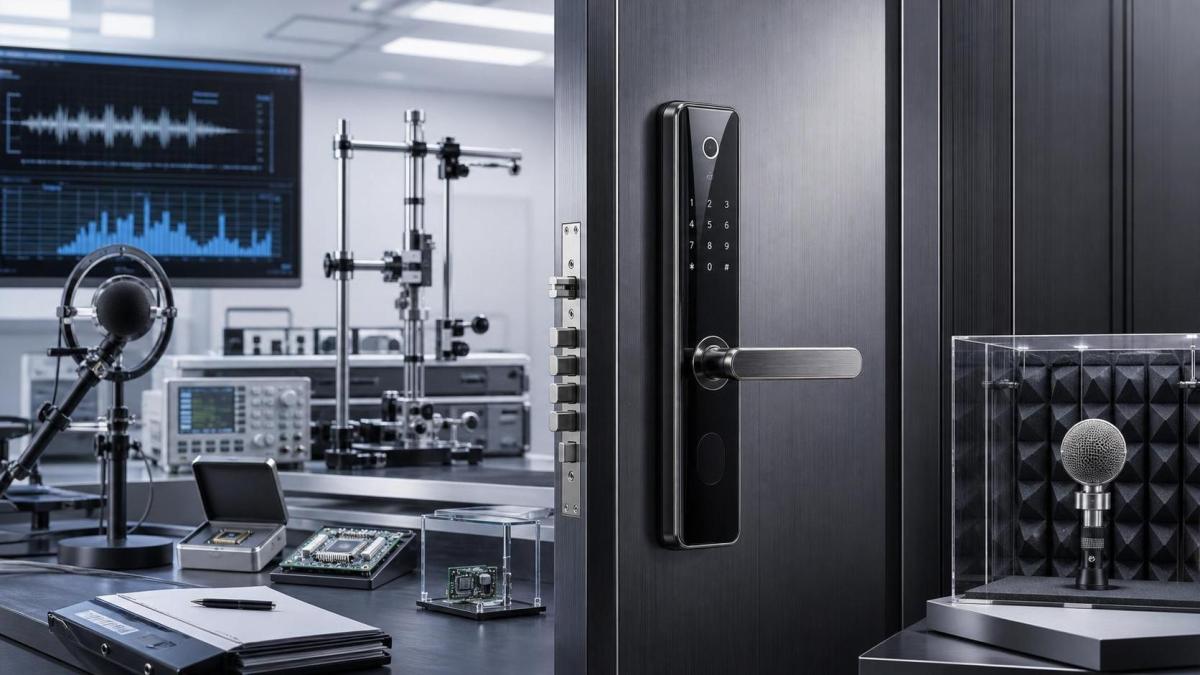
The certification includes three stated technical thresholds: adaptation to Vietnamese voiceprint characteristics, dialect recognition accuracy of at least 92%, and offline voice response latency of no more than 800 milliseconds.
The rule was released on June 27, 2026, and is scheduled for mandatory implementation on December 1, 2026. The certification process must be carried out by laboratories locally authorized in Vietnam.
Where the Pressure Points Are Emerging
Import and market-entry workflows
From an industry perspective, import-focused businesses are likely to feel the impact first because the rule directly targets imported smart locks. The main pressure point is market-access readiness: whether products intended for Vietnam can complete the required certification in time and align with the local laboratory pathway specified in the rule.
What deserves closer attention is the practical link between certification timing and shipment planning. Businesses involved in import scheduling, product listing, and customer delivery will need to monitor how the December 1, 2026 enforcement date affects order sequencing and product release plans.
Product development and manufacturing alignment
For manufacturers supplying smart locks into Vietnam, the impact is likely to center on product configuration and technical validation. Analysis shows that the stated thresholds are not generic documentation requirements; they point to measurable voice interaction performance in Vietnamese, including dialect recognition and offline response speed.
This means the affected business stages may include product adaptation, testing preparation, and coordination with certification-related documentation. Companies serving multiple export markets may also need to distinguish between a globally standard product version and a Vietnam-specific compliance version.
Channel partners and delivery-side coordination
Distributors, resellers, and other circulation-side participants may be affected through product availability, launch timing, and client communication. If certification status becomes a condition for lawful market entry, channel-side businesses will need to pay closer attention to whether upstream suppliers have completed the required process through Vietnam-authorized laboratories.
The operational focus here is less about product design and more about sell-through readiness, inventory timing, and confirmation of compliance status before commercial commitments are made.
Service and support roles around compliance execution
Supply chain service providers and compliance support roles may also be drawn into the process because the rule specifically requires testing through locally authorized laboratories in Vietnam. Observably, this creates a defined local execution point that could affect coordination around testing, paperwork, scheduling, and delivery expectations.
For these participants, the main issue is not the technical threshold itself, but whether certification arrangements can be synchronized with commercial timelines.
What Companies Should Track Now
Watch for any further official clarification
Companies should first track whether STAMEQ or related official channels issue additional clarifications on how the VAST-2026 requirement will be implemented in practice. Analysis shows that the published rule sets out the core requirement and performance indicators, but businesses still need to distinguish between the policy statement itself and the detailed execution steps that may affect filings, testing flow, or supporting materials.
Identify affected product lines early
Businesses with smart lock products bound for Vietnam should identify which imported models fall within the scope of the rule and whether their current voice interaction functions align with the stated thresholds. This is especially relevant where product portfolios include different feature sets, firmware versions, or localization levels.
Prepare for laboratory and delivery timing risks
Because certification must be completed by laboratories locally authorized in Vietnam, companies should pay attention to how testing capacity, appointment timing, and document preparation could affect fulfillment cycles. From an operational standpoint, this matters for procurement plans, shipment sequencing, and customer-facing delivery commitments ahead of the December 1, 2026 enforcement date.
Keep customer and supplier communication precise
Businesses involved in cross-border supply and channel sales should keep communication with suppliers and customers closely tied to the actual rule language. What deserves closer attention is avoiding assumptions beyond the confirmed text while still preparing counterparties for possible impacts on lead times, compliance checks, and product readiness for the Vietnam market.
Why This Looks Like More Than a Routine Filing Change
Analysis shows that this development is more appropriately understood as a targeted localization compliance signal rather than a simple administrative update. The rule is notable because it combines three elements in one requirement: mandatory certification for imported smart locks, measurable Vietnamese voice interaction thresholds, and local testing through authorized laboratories in Vietnam.
At the same time, it would be premature to extend the meaning of this measure beyond the confirmed facts. Observably, the immediate result is clear only at the level of compliance obligation for imported smart locks. Broader implications for product strategy, market structure, or supplier selection still require continued observation as implementation approaches.
How to Read the Development at This Stage
At this stage, the most balanced reading is that Vietnam has set a concrete compliance condition for imported smart locks with voice-related localization requirements that cannot be treated as a paperwork formality. For the industry, the significance lies in the combination of technical thresholds, a fixed enforcement date, and mandatory use of Vietnam-authorized laboratories.
It is more appropriate to understand this as an actionable near-term regulatory change with possible longer-term signaling value. The immediate priority is compliance preparation and execution readiness; the broader industry meaning should continue to be assessed as official implementation details and market responses become clearer.
Basis of This Article
This article is based on the user-provided news title, event date, and event summary concerning Vietnam’s new smart lock certification requirement. In reporting of this kind, relevant source types typically include official notices, standards documents, industry association releases, company disclosures, and reporting by authoritative media.
A specific official source link was not provided in the input, so the original document path and any subsequent explanatory materials still need to be verified on an ongoing basis. Areas that warrant continued attention include any further official clarification on implementation, the practical certification workflow through locally authorized laboratories in Vietnam, and any additional compliance details tied to the December 1, 2026 enforcement date.
Protocol_Architect
Dr. Thorne is a leading architect in IoT mesh protocols with 15+ years at NexusHome Intelligence. His research specializes in high-availability systems and sub-GHz propagation modeling.
Related Recommendations
- Lina Zhao (Security Analyst)What Smart Lock Data Should Home Hardware Teams Collect to Improve Security and Reliability?
- Lina Zhao (Security Analyst)Choosing a Z-Wave Smart Lock: Hub Compatibility, Security, and Backup Access
- Lina Zhao (Security Analyst)Door Access Control for Solar Farms: Choosing Reliable Systems for Remote Sites
- Lina Zhao (Security Analyst)EN 303 645:2026 Takes Effect, Making Matter Certification Mandatory for Smart Lock Exports
- Lina Zhao (Security Analyst)EU EN 303 645:2026 Takes Effect for Smart Locks
- Lina Zhao (Security Analyst)EU CE Update Makes Matter Testing Mandatory for Smart Locks
- Lina Zhao (Security Analyst)EN 303 645:2026 Takes Effect for Smart Locks
- Lina Zhao (Security Analyst)How to Choose Thread for Smart Locks in Multi-Unit Residential Projects
- Lina Zhao (Security Analyst)Japan Tightens EMI Test Rules for Imported Smart Locks
- Lina Zhao (Security Analyst)Project Specification Support for Smart Security: How to Define Devices, Protocols, and Scope
Analyst