
Smart Lock OEM China Options Look Similar Until Testing
author
Smart lock OEM China options often look identical on spec sheets, yet real differences emerge under smart home hardware testing. For buyers navigating the IoT supply chain, NexusHome Intelligence applies IoT hardware benchmarking, Matter protocol data, and biometric false rejection rate FRR analysis to separate verified IoT manufacturers from marketing noise—turning sourcing decisions into evidence-based procurement.
Why similar smart lock OEM offers behave differently in renewable energy projects
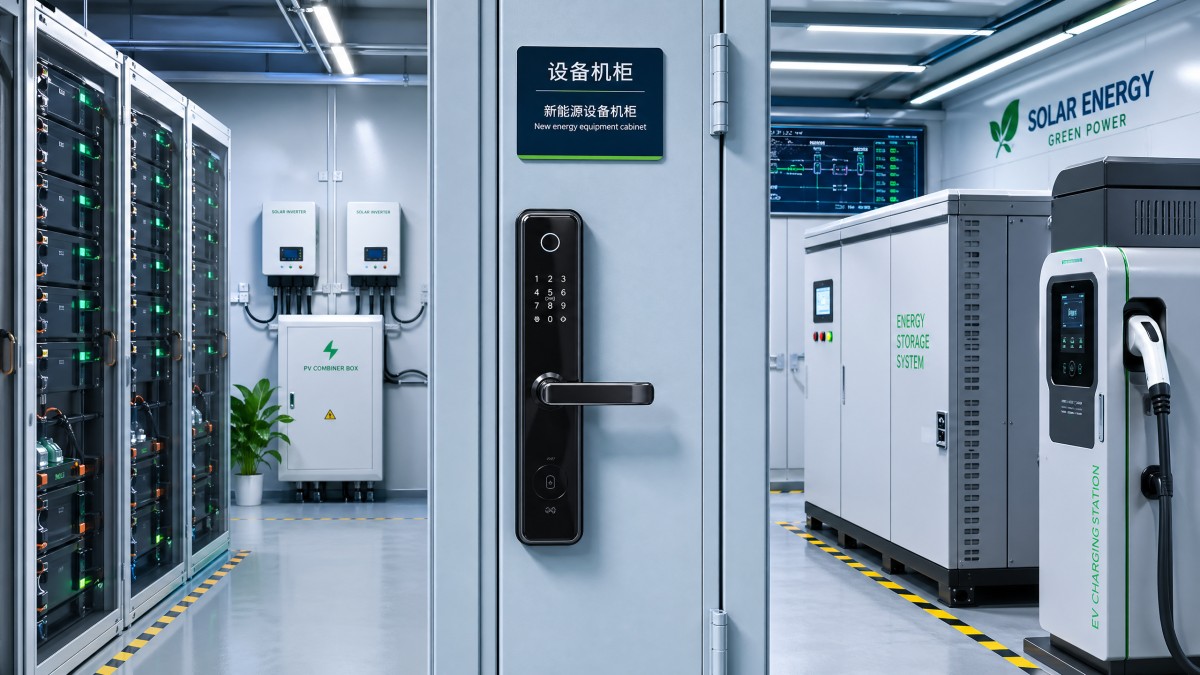
In renewable energy facilities, smart lock OEM China sourcing is not only about access control. Locks often sit at the edge of distributed energy infrastructure: solar inverter rooms, battery storage cabins, EV charging compounds, microgrid control rooms, and remote maintenance gateways. In these sites, a lock must tolerate unstable network conditions, wide temperature swings, and irregular service schedules. Two suppliers may present the same fingerprint, BLE, or Matter-ready feature list, yet field outcomes diverge within 3 to 12 months.
This is where testing matters more than brochure language. A procurement team may see similar battery claims, similar IP ratings, and similar app screenshots. An operator sees something else: delayed unlock events during shift changes, failed biometric reads after dust exposure, or battery drain accelerating in cabins with daily thermal cycling. For a renewable energy asset manager, these are not minor inconveniences. Every failed access event can disrupt inspection routes, contractor workflows, and incident response timing.
NexusHome Intelligence approaches these sourcing decisions through measurable engineering behavior. Instead of accepting “works with Matter” or “industrial grade” at face value, NHI examines protocol latency, radio stability under interference, standby consumption, PCB consistency, and false rejection rate FRR trends. In renewable energy applications, these metrics affect service continuity, maintenance labor, and site security more directly than appearance or catalog descriptions.
For information researchers, users, procurement managers, and enterprise decision-makers, the key question is simple: which differences become expensive after deployment? In most projects, the answer falls into 4 categories—connectivity resilience, authentication reliability, energy efficiency, and supply chain transparency. Once those are measured, many “similar” smart lock OEM China options stop looking interchangeable.
Where renewable energy sites create hidden stress for smart locks
- Remote solar and storage installations often rely on mixed networks, including BLE for local commissioning, gateway-based connectivity, and sometimes Thread, Zigbee, or Wi-Fi in segmented building systems.
- Access events may cluster into narrow windows, such as 20 to 40 unlock attempts during maintenance shifts, which reveals latency and authentication bottlenecks quickly.
- Enclosures exposed to dust, moisture, and repeated temperature variation can distort biometric consistency and battery discharge curves far earlier than office or residential environments.
- Multi-site operators need consistent data export and permission management, especially when contractors, utilities, and internal engineers share infrastructure access.
These conditions explain why renewable energy buyers should treat smart lock sourcing as a technical systems decision, not a commodity hardware purchase. NHI’s role is to reduce protocol ambiguity and convert field risk into a structured evaluation path.
What to compare first when testing smart lock OEM China suppliers
Before asking for quotations, buyers should define which test dimensions matter to their site architecture. In renewable energy environments, an attractive unit price can hide downstream costs in truck rolls, battery replacement, firmware support, and failed integration. The table below summarizes practical screening criteria that separate catalog similarity from deployable performance.
The strongest lesson from NHI benchmarking is that procurement should start with operating conditions, not with supplier claims. If a lock is intended for 50 distributed energy cabinets, the right question is not whether it supports multiple protocols, but how that support behaves under traffic, interference, and irregular maintenance cycles.
Three filters that help buyers shortlist faster
First, ask for a repeatable test plan rather than a generic datasheet. A serious OEM should support sample validation across 2 to 4 weeks, including firmware confirmation, unlock event logging, and battery monitoring. If the supplier cannot define test conditions, the risk shifts entirely to the buyer.
Second, match the lock to the access workflow. A utility technician arriving with gloves, tools, and limited connectivity needs a different authentication flow than a staffed control room. Biometric convenience can be valuable, but fallback methods such as app credentials, PIN, or credential cards must be tested under realistic use.
Third, review integration readiness. For renewable energy portfolios, access control often touches BMS, EMS, remote maintenance software, or audit logging systems. NHI places strong emphasis on whether APIs, event exports, protocol mappings, and firmware update procedures are clear enough for enterprise deployment rather than pilot-only use.
Shortlist checklist for procurement teams
- Define 3 core scenarios: indoor energy room, semi-exposed equipment cabinet, and remote unmanned site.
- Request 2 or more samples from the same batch to check consistency rather than one showcase unit.
- Run at least 30 to 50 access events per scenario and record latency, failed attempts, and recovery behavior.
- Confirm how firmware updates, key management, and audit logs are handled across multiple sites.
This approach saves time because it reveals which suppliers can support engineering-grade procurement and which ones depend on sales language alone.
How NHI testing clarifies protocol, FRR, and energy behavior
NHI’s value is not in repeating manufacturer specifications. It lies in turning fragmented IoT claims into comparable evidence. For smart lock OEM China projects, especially those linked to renewable energy infrastructure, NHI organizes verification around connectivity, smart security, energy behavior, and component-level consistency. This reduces the gap between lab promise and field operation.
Protocol verification is a priority because many deployment failures begin with hidden latency or unstable handshakes. A lock may technically support Matter, BLE, or Zigbee, yet response time can vary significantly when routed through gateways or mixed building networks. In a maintenance compound, even a small delay repeated across 20 daily operations can frustrate users and create pressure for unsafe workarounds such as shared credentials or propped-open doors.
Biometric evaluation is equally important. NHI focuses on false rejection rate FRR under environmental stress rather than promotional fingerprint speed. For renewable energy sites, realistic tests should examine repeated use after dust exposure, light moisture, or skin condition changes across morning and afternoon shifts. A lock that reads well in a showroom can become unreliable when operators are moving between inverter racks, battery rooms, and outdoor service points.
Energy performance is the third area that buyers underestimate. In distributed assets, a lock’s standby draw and wake-up behavior influence battery service intervals. If a model requires more frequent replacement than expected, the hardware price advantage disappears. NHI therefore treats battery and low-power design as procurement issues, not only engineering details.
What a practical benchmark matrix should include
A useful benchmark matrix should compare not just supported features but operating thresholds. Buyers often need side-by-side evidence for pilot selection, and the following structure helps keep evaluation grounded in site reality.
This kind of matrix gives decision-makers a better basis for approval. It also helps operators communicate field experience back to procurement in a language that engineering and finance teams can both use.
Why protocol silos matter even for access hardware
Renewable energy sites rarely run as isolated lock deployments. They sit inside fragmented ecosystems where Zigbee, BLE, Wi-Fi, Thread, and emerging Matter layers may overlap. A lock that works well as a standalone product can still become a weak link when connected to broader smart building or microgrid infrastructure.
NHI’s manifesto is especially relevant here: protocol claims must be translated into observed behavior. If a supplier cannot explain gateway dependency, local fallback logic, or event synchronization limits, buyers should assume additional integration work. That is not a reason to reject a supplier immediately, but it is a reason to price project risk more realistically.
In practical terms, protocol clarity affects three things: deployment speed, operator trust, and long-term maintainability. These are strategic concerns for enterprise decision-makers managing energy assets across multiple regions.
Which procurement model fits pilot, scale-up, and multi-site rollout
Not every buyer needs the same smart lock OEM China strategy. A pilot for 10 cabinets has different priorities than a phased rollout across 5 to 20 renewable energy locations. The most effective sourcing model depends on volume, integration depth, customization needs, and the internal maturity of the buyer’s technical team.
For pilot projects, the priority is validation speed. Buyers should seek sample support, protocol documentation, and clear failure logging. For scale-up projects, batch consistency, firmware maintenance, and supply continuity become more important. For enterprise rollouts, API behavior, remote credential management, and compliance mapping often move to the center of the decision.
One common mistake is choosing solely on initial unit cost. In remote energy environments, the real cost includes replacement visits, retraining, manual override incidents, and integration rework. A lock that is slightly cheaper at purchase can become more expensive over 12 to 24 months if its field behavior is unstable.
NHI helps buyers frame procurement by lifecycle stage, which is especially useful when internal stakeholders disagree. Researchers want comparable data, users want reliability, procurement wants negotiation clarity, and executives want reduced deployment risk. A structured model aligns those interests.
Recommended sourcing priorities by project stage
This stage-based view prevents overbuying in early pilots and under-specifying in large deployments. It also gives procurement teams a stronger basis for supplier comparison than unit price alone.
Compliance and implementation points buyers should not skip
- Confirm whether data handling, access logs, and user credential storage align with your local privacy and cybersecurity requirements.
- Review environmental fit for enclosure type, door material, power approach, and expected maintenance frequency.
- Define a 4-step implementation plan: sample validation, pilot deployment, operational review, and volume release.
- Set 6 acceptance items in advance, such as unlock consistency, log accuracy, battery behavior, fallback access, firmware update path, and operator usability.
Even when exact standards differ by region, these checks keep the project grounded in real deployment requirements rather than attractive but incomplete claims.
FAQ and next step: how to turn testing into confident sourcing
Many buyers already suspect that smart lock OEM China offers look too similar. The challenge is deciding what to ask next. The following questions come up frequently in renewable energy sourcing, especially when access hardware must integrate with a broader IoT or smart building strategy.
How should buyers evaluate smart lock OEM China options if specifications look the same?
Start with a scenario-based test plan, not a feature checklist. Define at least 3 operating conditions, run 30 to 50 access events per condition, and record protocol latency, FRR behavior, log completeness, and battery trend. This quickly shows whether the supplier’s performance is repeatable outside a demo environment.
Are biometric smart locks suitable for renewable energy facilities?
They can be suitable, but only when biometric reliability is validated under actual field conditions. Facilities with dust, moisture, gloves, and frequent contractor access should test fallback methods carefully. A mixed authentication strategy is often more practical than relying on one method alone.
What is the usual sample and validation timeline?
For engineering-led procurement, a sample evaluation window of 2 to 4 weeks is common. That period is usually enough to verify installation fit, access flow, event reporting, and early battery behavior. More complex integration projects may need longer if gateways, software platforms, or multi-site permissions are involved.
Which mistakes cause the most expensive procurement failures?
The most frequent mistakes are choosing on price alone, accepting unsupported protocol claims, testing only one polished sample, and ignoring maintenance economics. In distributed renewable energy assets, repeated service visits can outweigh the initial unit-price difference surprisingly fast.
Why choose NHI before placing an OEM order?
NHI acts as an engineering filter between manufacturing claims and enterprise procurement decisions. Our benchmarking mindset focuses on protocol behavior, biometric FRR risk, low-power performance, and supply chain transparency. That is especially valuable when your team must compare multiple suppliers, justify purchasing decisions internally, and avoid hidden rollout costs across renewable energy sites.
Contact us for parameter confirmation, supplier screening, and pilot planning
If your team is comparing smart lock OEM China suppliers for solar, storage, EV charging, microgrid, or energy management facilities, NHI can help you structure the decision with evidence instead of guesswork. You can consult us on protocol fit, biometric suitability, battery-service expectations, enclosure use cases, and sample test design.
We can also support procurement discussions around customization scope, expected validation steps, common delivery checkpoints, firmware review questions, and quote comparison logic. For buyers managing pilot quantities or multi-site expansion, this shortens the path from product search to deployment-ready selection.
A productive conversation usually starts with 5 items: your application scenario, preferred protocol path, user workflow, expected rollout volume, and compliance or reporting requirements. With those inputs, NHI can help you identify which smart lock OEM candidates deserve deeper testing and which ones are likely to create avoidable risk later.
Protocol_Architect
Dr. Thorne is a leading architect in IoT mesh protocols with 15+ years at NexusHome Intelligence. His research specializes in high-availability systems and sub-GHz propagation modeling.
Related Recommendations
- Lina Zhao (Security Analyst)Choosing Weatherproof Smart Locks: IP Ratings, Temperature Limits, and Battery Life
- Lina Zhao (Security Analyst)What Smart Lock Data Should Home Hardware Teams Collect to Improve Security and Reliability?
- Lina Zhao (Security Analyst)Choosing a Z-Wave Smart Lock: Hub Compatibility, Security, and Backup Access
- Lina Zhao (Security Analyst)Door Access Control for Solar Farms: Choosing Reliable Systems for Remote Sites
- Lina Zhao (Security Analyst)EN 303 645:2026 Takes Effect, Making Matter Certification Mandatory for Smart Lock Exports
- Lina Zhao (Security Analyst)EU EN 303 645:2026 Takes Effect for Smart Locks
- Lina Zhao (Security Analyst)EU CE Update Makes Matter Testing Mandatory for Smart Locks
- Lina Zhao (Security Analyst)EN 303 645:2026 Takes Effect for Smart Locks
- Lina Zhao (Security Analyst)How to Choose Thread for Smart Locks in Multi-Unit Residential Projects
- Lina Zhao (Security Analyst)Japan Tightens EMI Test Rules for Imported Smart Locks
Analyst