
EU NANDO Update Puts 17 EN 18031 Bodies Into Effect
author
On June 17, 2026, the annual update of the EU NANDO database confirmed a narrower list of bodies recognized for full EN 18031 type assessment, turning what had been a certification planning issue into an immediate execution issue for exporters and buyers. For suppliers of smart locks, Wi-Fi 7 IoT gateways, Matter bridges and related products, the update matters because certification route selection, customs acceptance, delivery timing and importer due diligence may now depend on whether the issuing body is on the effective authorized list.
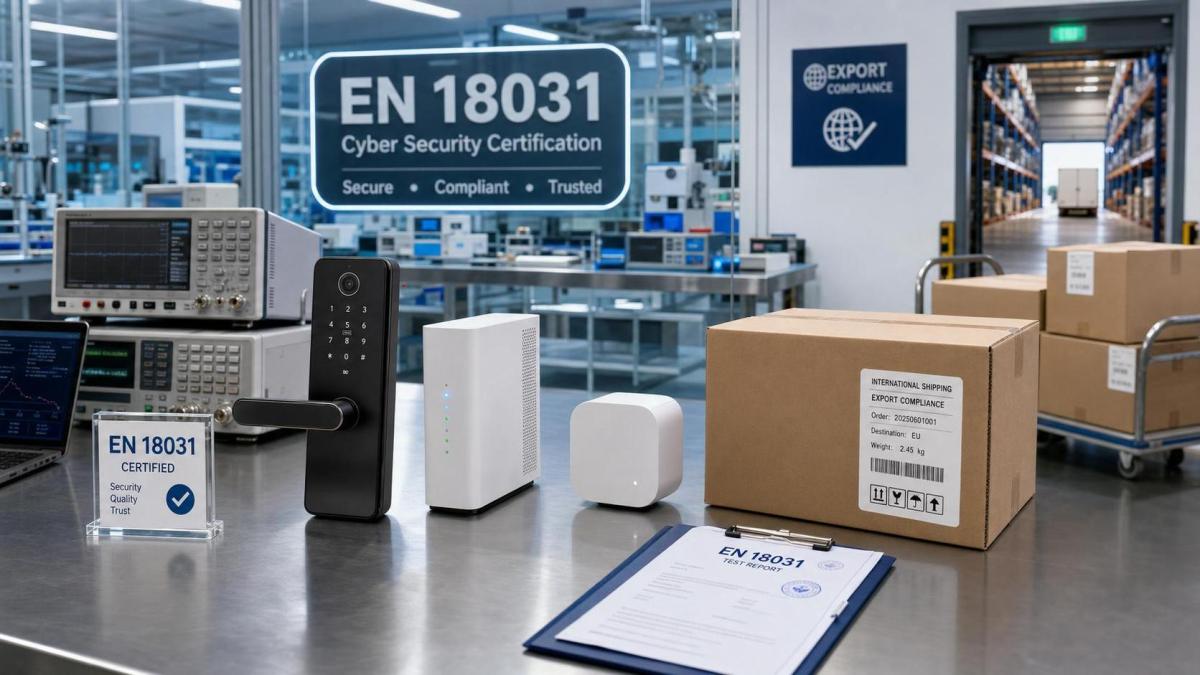
What the June 17 update formally confirms
The confirmed facts are limited but commercially significant. The NANDO database completed its annual update on June 17, 2026 and confirmed that only 17 bodies worldwide hold qualification for full EN 18031 type assessment. Among them, only three have local laboratories in China. The update directly affects the certification path and timing for exporters of products such as smart locks, Wi-Fi 7 IoT gateways and Matter bridge devices. It also means that certificates issued by non-authorized bodies will not be recognized by customs authorities in the Netherlands and Germany. Overseas importers are therefore required to reassess supplier compliance capability and delivery risk on that basis.
Where the pressure now appears in the supply chain
For export-facing device manufacturers
These companies are the most directly exposed because their route to market may depend on whether their existing or planned certification partner is among the recognized EN 18031 bodies. The main impact is likely to fall on certification scheduling, technical file preparation, customs-facing documentation and shipment readiness for products bound for affected EU markets.
For overseas importers and brand buyers
Importers now face a more immediate screening task when reviewing supplier readiness. From an industry perspective, what deserves closer attention is not only whether a supplier has a certificate, but whether that certificate is issued by an authorized body that will be accepted at the border in relevant markets such as the Netherlands and Germany. This shifts part of the compliance burden into sourcing decisions, contract review and delivery-risk assessment.
For certification and testing coordination teams
Internal compliance teams, third-party certification coordinators and testing service providers may need to adjust project sequencing. Analysis shows that the practical issue is no longer just technical completion of assessment work, but alignment between the selected assessment body, acceptance by customs authorities and the timing of export commitments. Where local laboratory access is limited, scheduling and resource allocation may become more sensitive.
What companies should check now
Verify the status of the issuing body
Companies should first review whether current or planned EN 18031 certification work is tied to one of the 17 confirmed bodies. This is especially relevant for shipments intended for markets where customs non-recognition has already been stated for certificates from unauthorized bodies.
Recheck delivery plans tied to pending certificates
Observably, products close to shipment may face the greatest uncertainty if certification routing has not been locked in. Exporters, buyers and supply-chain coordinators should examine whether production, booking and handover schedules rely on certificates that could face acceptance issues.
Review supplier qualification and bid documents
For importers and procurement teams, supplier evaluation may need to move beyond a general claim of compliance. What deserves closer attention is whether tender files, supplier onboarding documents, product qualification records and transaction paperwork clearly match the recognized certification path.
Keep watching execution language and market response
The input does not provide detailed enforcement procedures beyond the customs non-recognition point already stated, so companies should avoid assuming that all practical outcomes are fully settled. It is more appropriate to monitor how official wording, transaction requirements, customer requests and implementation practice continue to develop around this update.
Why this reads as an execution signal
Analysis shows that this development is better understood as an effective market-access signal than as a theoretical standards update. The reason is that the issue now reaches customs recognition, supplier qualification and delivery risk at the same time. At the same moment, it is still too early to overstate the full commercial impact beyond the facts provided. Continued attention is warranted because the gap between formal recognition and day-to-day execution often appears in document review, buyer requirements and shipment clearance practice.
How the market may interpret the change
A measured reading of this update is that EN 18031 body selection has become a more visible compliance checkpoint for affected product categories. It should not be treated as proof that every project will face disruption, but it is reasonable to view it as a concrete rule-in-use signal for exporters, importers and certification planners. For now, the most practical interpretation is that authorization status, certificate acceptability and delivery planning must be reviewed together rather than handled as separate tasks.
Basis of this article and points that still need verification
This article is generated from the user-provided news title, event date and event summary. For developments of this kind, relevant source types typically include official regulatory notices, releases from supervisory authorities, customs or trade authority information, industry association updates, standards organization documents and reporting by established professional media. A specific official source link was not provided in the input, so the precise source chain still requires ongoing verification. Further observation should focus on any detailed policy wording, certification interpretation, tender document changes, market feedback and how companies implement the requirement in actual export and procurement workflows.
Protocol_Architect
Dr. Thorne is a leading architect in IoT mesh protocols with 15+ years at NexusHome Intelligence. His research specializes in high-availability systems and sub-GHz propagation modeling.
Related Recommendations
- Lina Zhao (Security Analyst)What Smart Lock Data Should Home Hardware Teams Collect to Improve Security and Reliability?
- Lina Zhao (Security Analyst)Choosing a Z-Wave Smart Lock: Hub Compatibility, Security, and Backup Access
- Lina Zhao (Security Analyst)Door Access Control for Solar Farms: Choosing Reliable Systems for Remote Sites
- Lina Zhao (Security Analyst)EN 303 645:2026 Takes Effect, Making Matter Certification Mandatory for Smart Lock Exports
- Lina Zhao (Security Analyst)EU EN 303 645:2026 Takes Effect for Smart Locks
- Lina Zhao (Security Analyst)EU CE Update Makes Matter Testing Mandatory for Smart Locks
- Lina Zhao (Security Analyst)EN 303 645:2026 Takes Effect for Smart Locks
- Lina Zhao (Security Analyst)How to Choose Thread for Smart Locks in Multi-Unit Residential Projects
- Lina Zhao (Security Analyst)Japan Tightens EMI Test Rules for Imported Smart Locks
- Lina Zhao (Security Analyst)Project Specification Support for Smart Security: How to Define Devices, Protocols, and Scope
Analyst